
Dragon flying over Mount Fuji — History & Facts
In the final year of his life, Katsushika Hokusai painted Dragon flying over Mount Fuji, a work that stands as one of his last artistic testaments. Hokusai, already renowned for his iconic Thirty-six Views of Mount Fuji, was said to be obsessed with the mountain, believing it to be a source of immortality and spiritual power. The dragon motif, too, had haunted his imagination for decades; in Japanese folklore, dragons are messengers between heaven and earth.
This painting, created in 1849, is often discussed by scholars as a summation of his lifelong fascination with myth and nature, and some even see it as a visual prayer for longevity—Hokusai himself wrote, "Until the age of one hundred and ten, I will continue to improve my art." The scene captures the moment a sinuous dragon, wreathed in clouds, coils above the snow-capped peak of Mount Fuji. The dragon’s body twists dynamically, its claws extended as if grasping at the sky, while the mountain stands serene and immovable below. In Japanese art, the dragon is a symbol of power and transformation, and its flight over Fuji suggests a meeting of earthly permanence and celestial energy.
The swirling clouds, rendered with Hokusai’s characteristic vigor, blur the boundary between the creature and the heavens. Unlike Western depictions—such as Albrecht Dürer’s rigid, armored dragons—Hokusai’s beast is fluid, almost part of the weather itself, emphasizing the Japanese belief in the interconnectedness of all things. The medium of Dragon flying over Mount Fuji remains uncertain, though some believe it to be ink and color on paper, in keeping with Hokusai’s late works. There are no records of a specific patron, and the painting’s early history is obscure, likely passing through the hands of private collectors in Edo (modern Tokyo).
Since the late 19th century, it has been reproduced in numerous catalogues and exhibitions, fueling debates about its dating and authenticity, especially given the proliferation of forgeries after Hokusai’s death. Today, the painting is recognized as a late masterpiece, a testament to the artist’s restless creativity even in old age, and it continues to inspire viewers with its bold vision and mythic resonance.
More Artworks by Katsushika Hokusai

The Great Wave off Kanagawa
Katsushika Hokusai
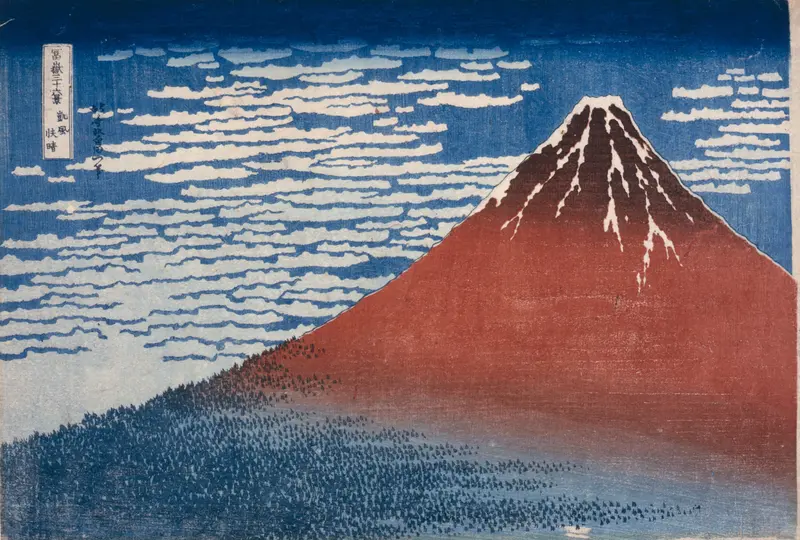
Fine Wind, Clear Morning (Red Fuji)
Katsushika Hokusai
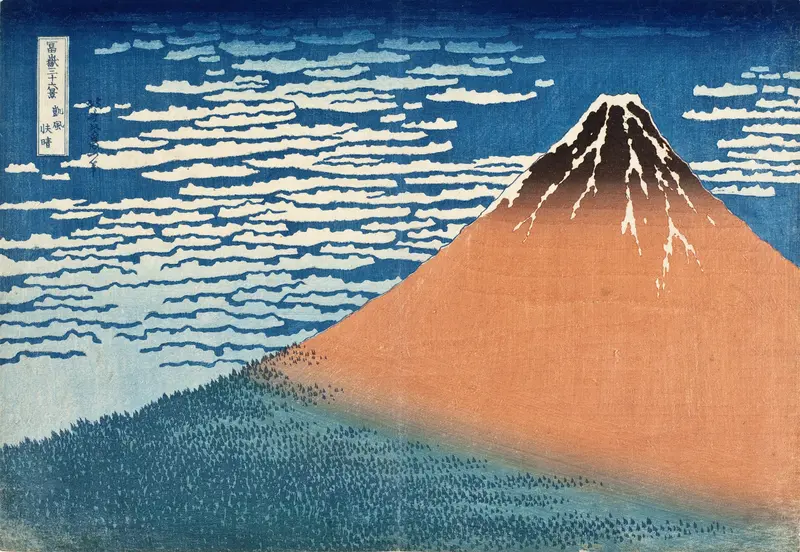
South Wind, Clear Dawn
Katsushika Hokusai
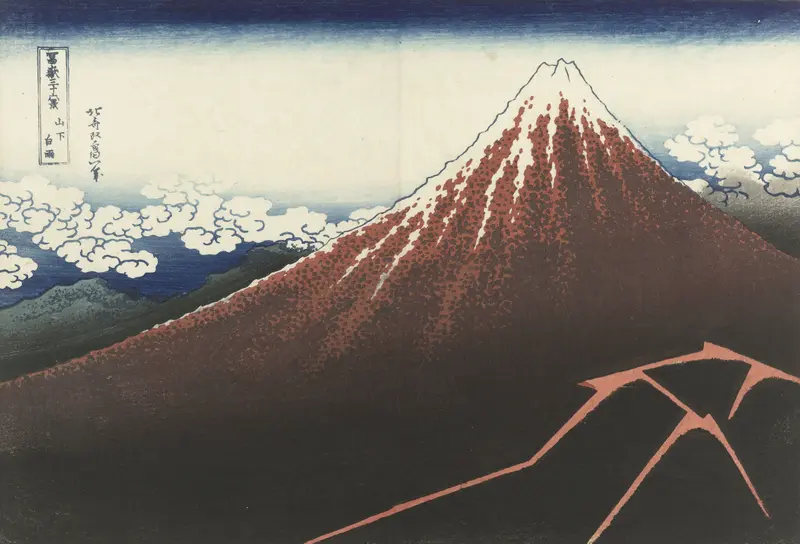
Rainstorm Beneath the Summit
Katsushika Hokusai
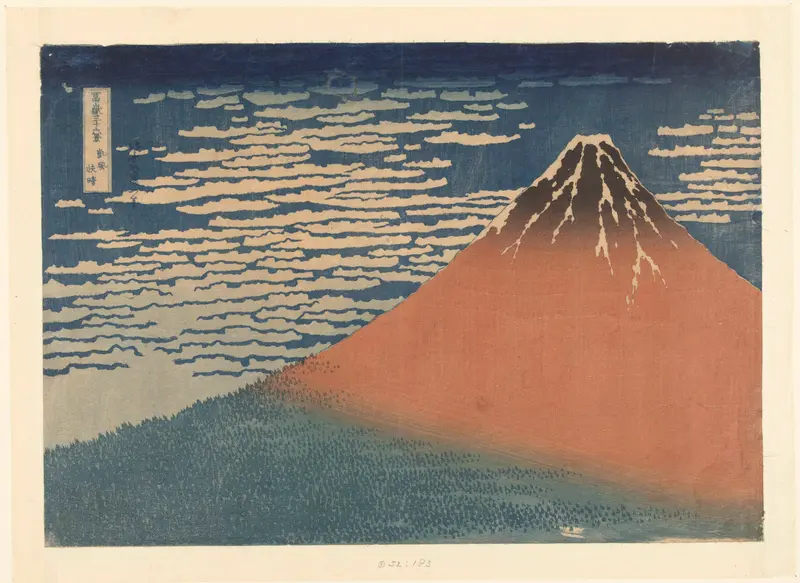
Clear Weather with a Southerly Wind
Katsushika Hokusai
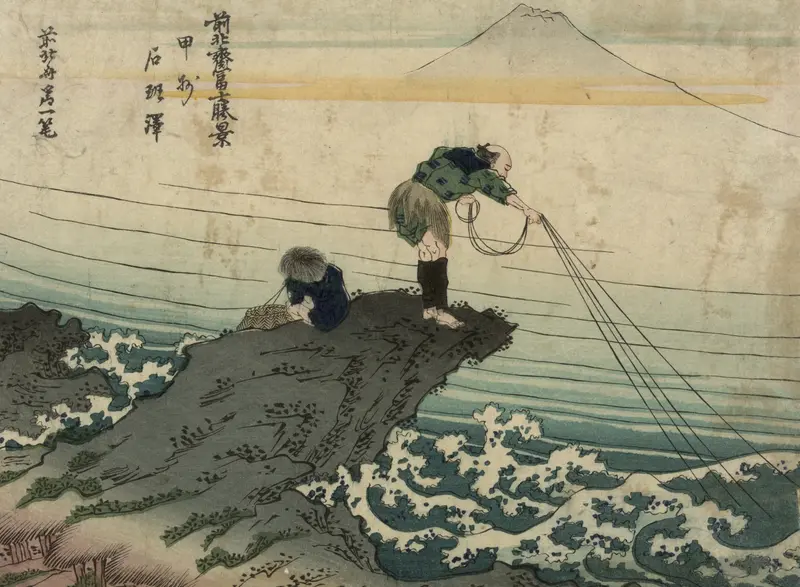
Kōshū kajikazawa
Katsushika Hokusai
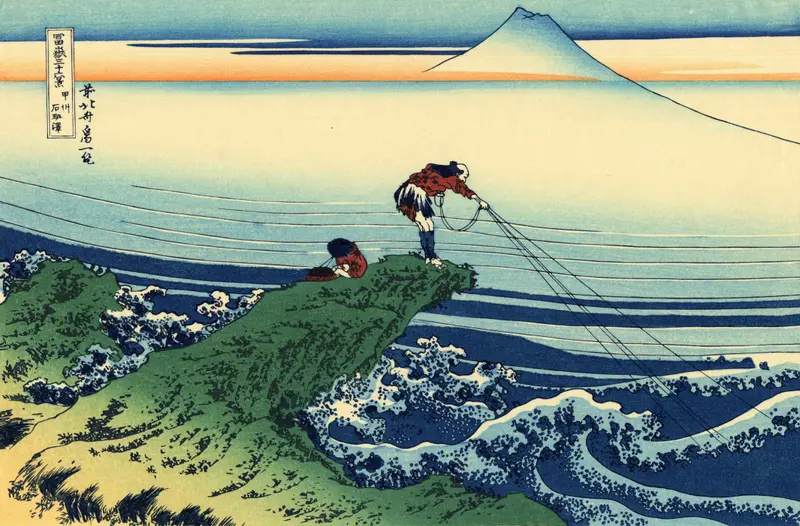
Kōshū kajikazawa 2
Katsushika Hokusai
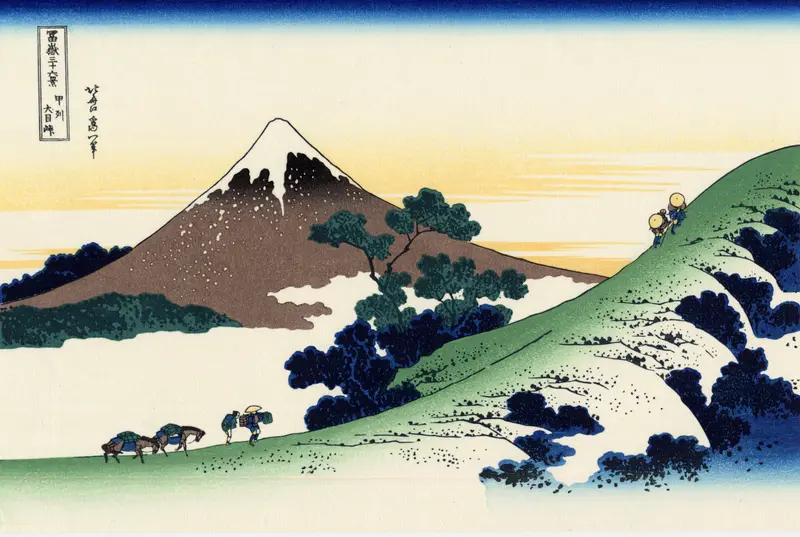
Inume Pass in Kai Province (Kôshû inume-tôge)
Katsushika Hokusai

Yoro Falls in Mino Province (Mino no Yoro no taki), from the series "A Tour of Waterfalls in Various Provinces (Shokoku taki meguri)"
Katsushika Hokusai
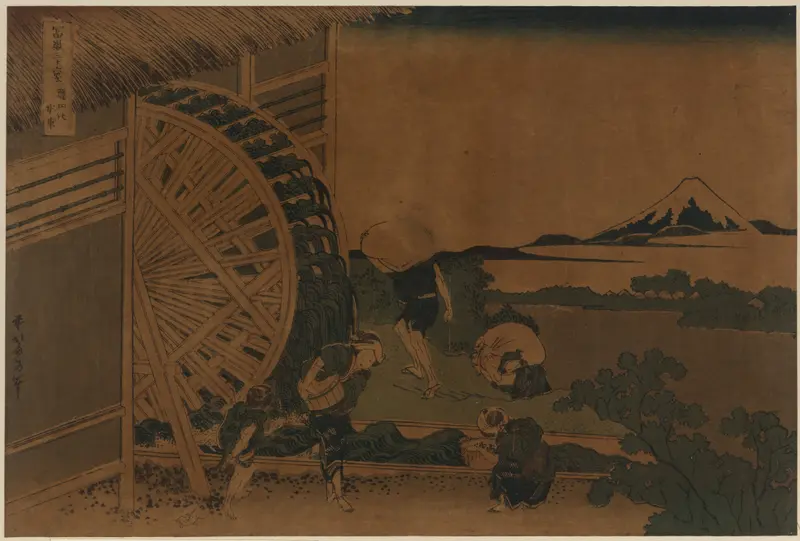
Onden no suisha
Katsushika Hokusai





