Elizabethan Ornament No. 1 — History & Facts
What first seizes the eye in Elizabethan Ornament No. 1 by Owen Jones is the sheer density of invention: a page transformed into a miniature garden of scrolling leaves, coiled beasts, and interlocking shapes, each detail inviting closer inspection. The chromolithograph’s pale golds and silvery blues shimmer with a quiet energy, guiding the viewer’s gaze from one intricate compartment to the next.
Every panel is a world unto itself—here, a lion’s head emerges from a thicket of acanthus; there, a stylized strawberry nestles among curling vines. The repetition of curves and counter-curves is not mere decoration, but a visual rhythm that echoes the exuberance and order of the Elizabethan age. Works like this belong to a time when ornament was both a language and a science, and Owen Jones stood at the forefront of its study. Published in London in 1910, this plate is part of a larger project to catalogue and celebrate the grammar of historical design, drawing on the rich legacy of English Renaissance ornament.
Such chromolithographs were prized by architects, designers, and students eager to unlock the secrets of beauty from past centuries. Today, preserved in the Polona Digital Library, this sheet is a reminder of how pattern can speak across ages—inviting us, even now, to lose ourselves in its labyrinth of forms.
More Artworks by Owen Jones

Greek Ornament No. 1
Owen Jones
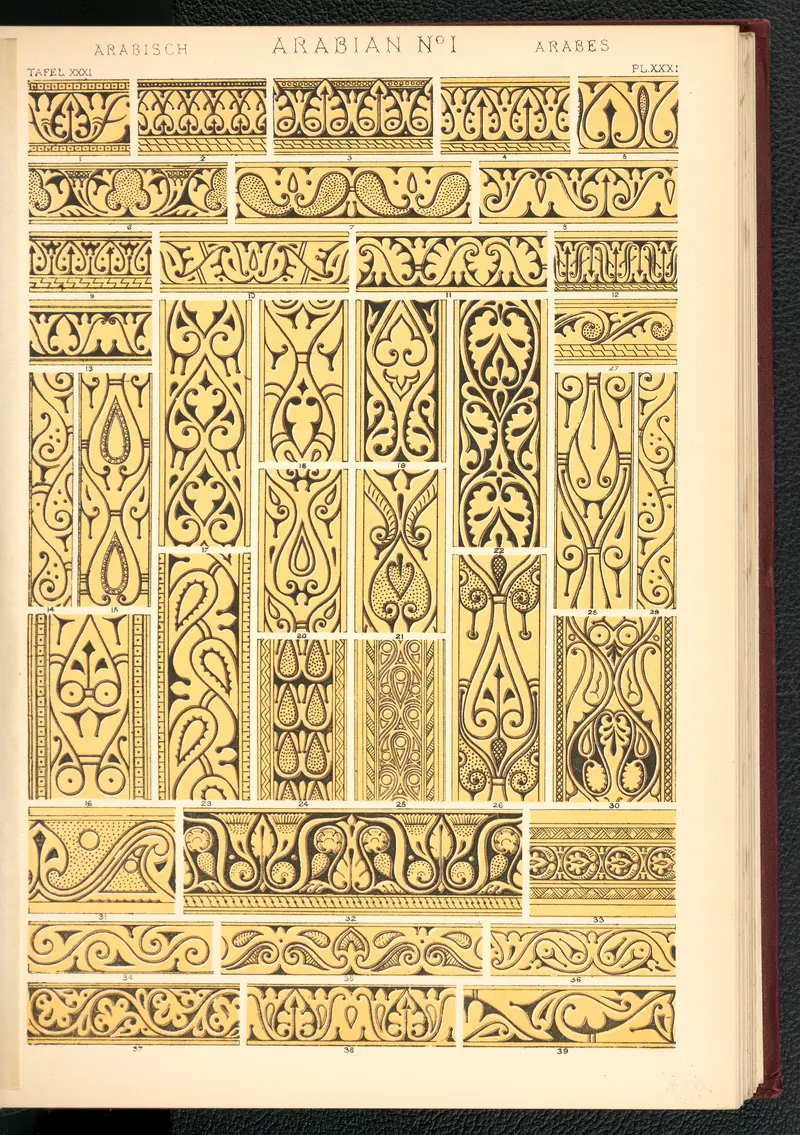
Arabian Ornament No. 1
Owen Jones
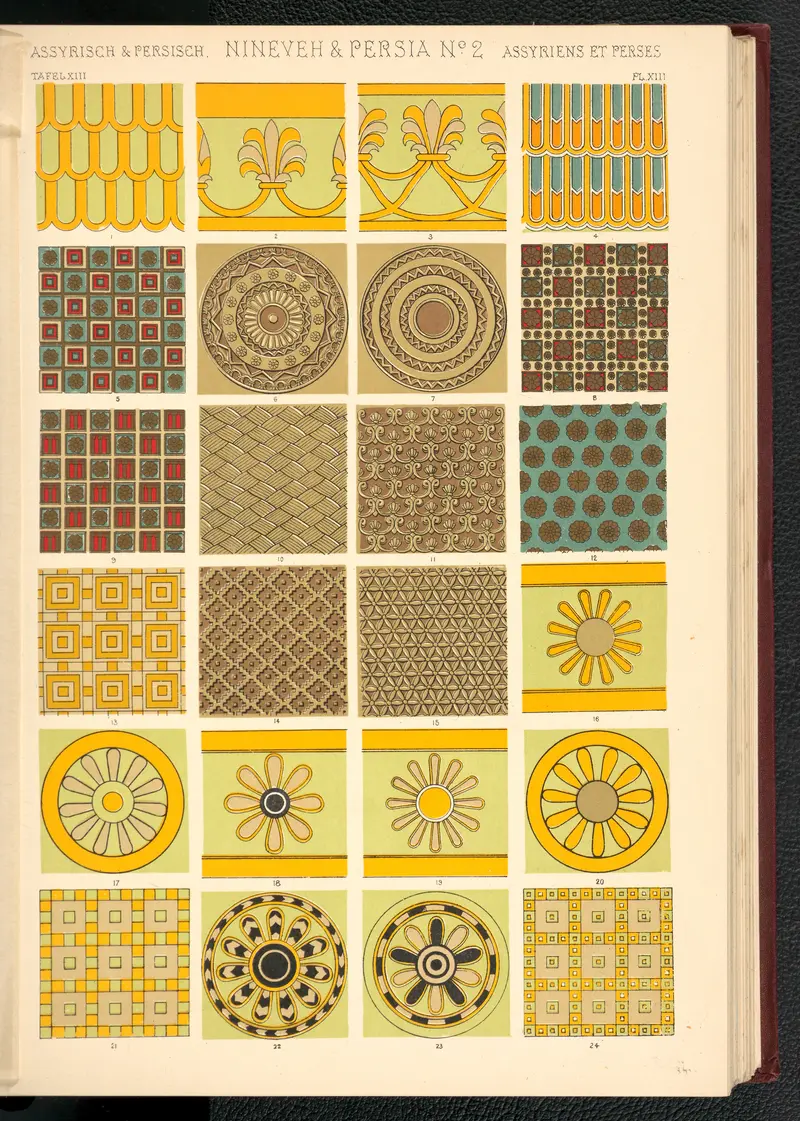
Assyrian Ornament No. 2
Owen Jones

Egyptian Ornament No. 3
Owen Jones
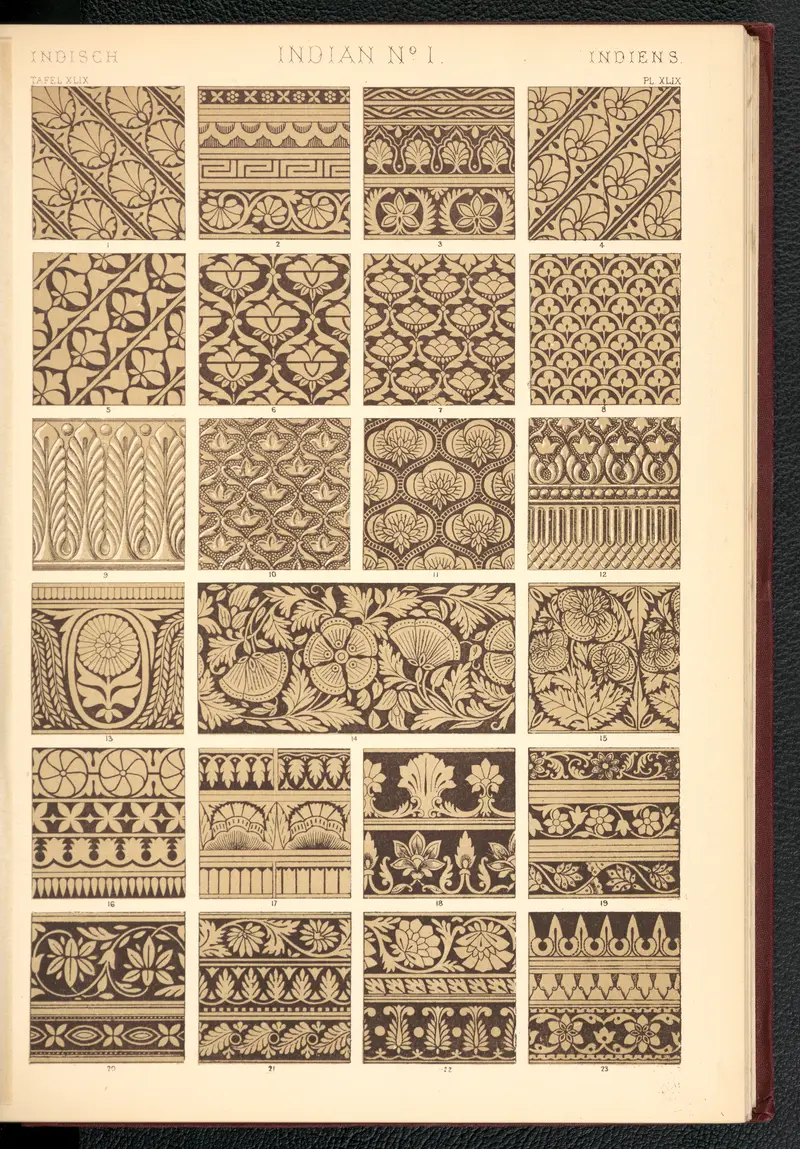
Indian Ornament No. 1
Owen Jones
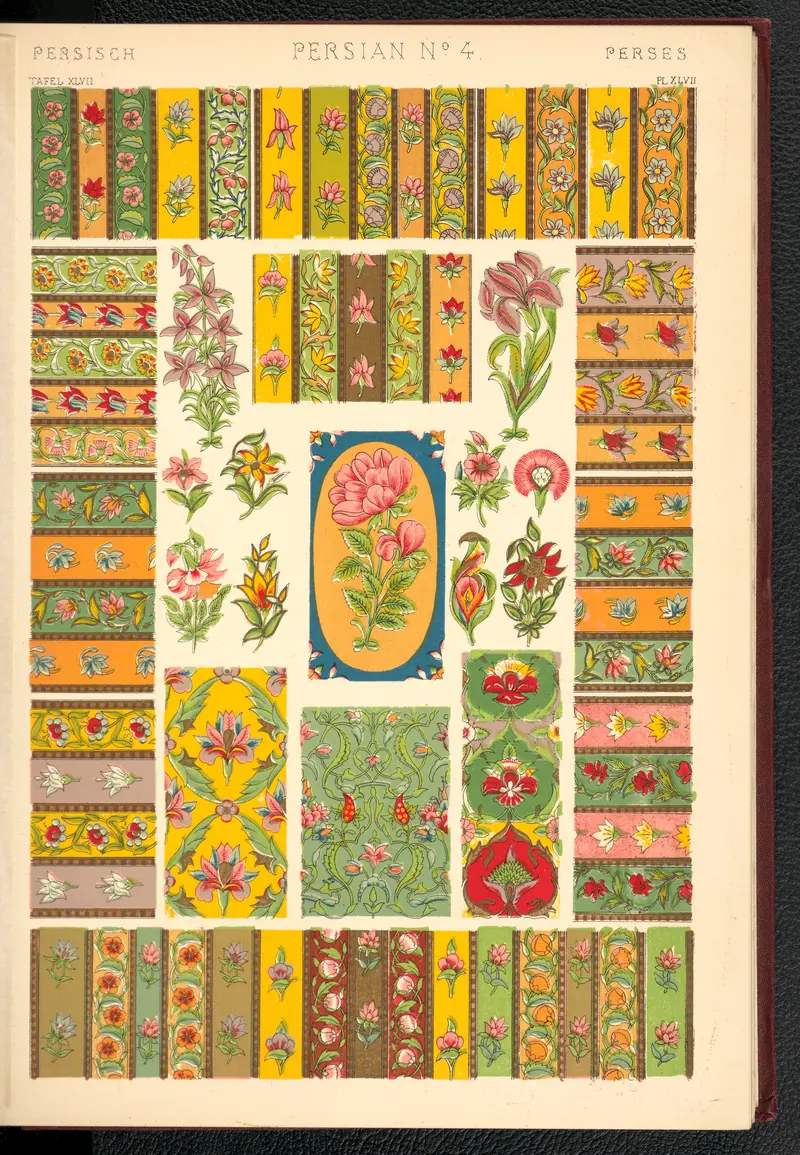
Persian Ornament No. 4
Owen Jones
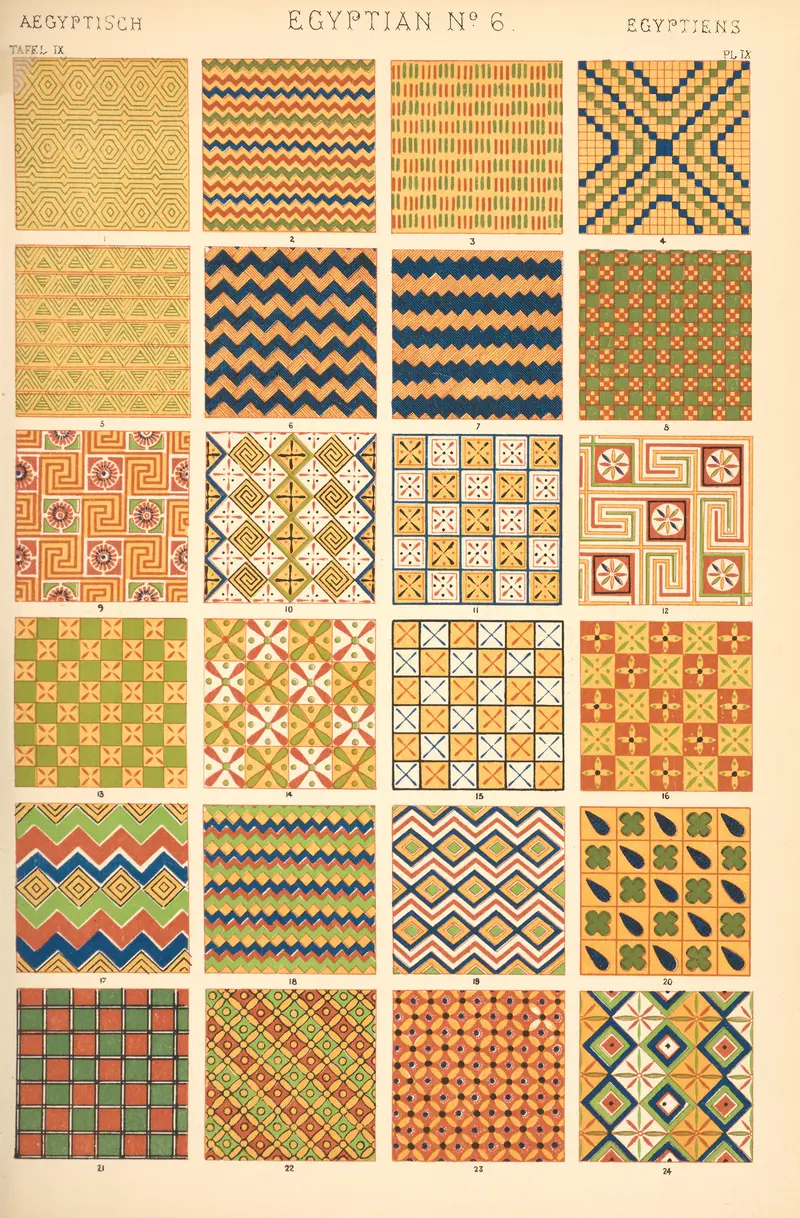
Egyptian Ornament No. 6
Owen Jones
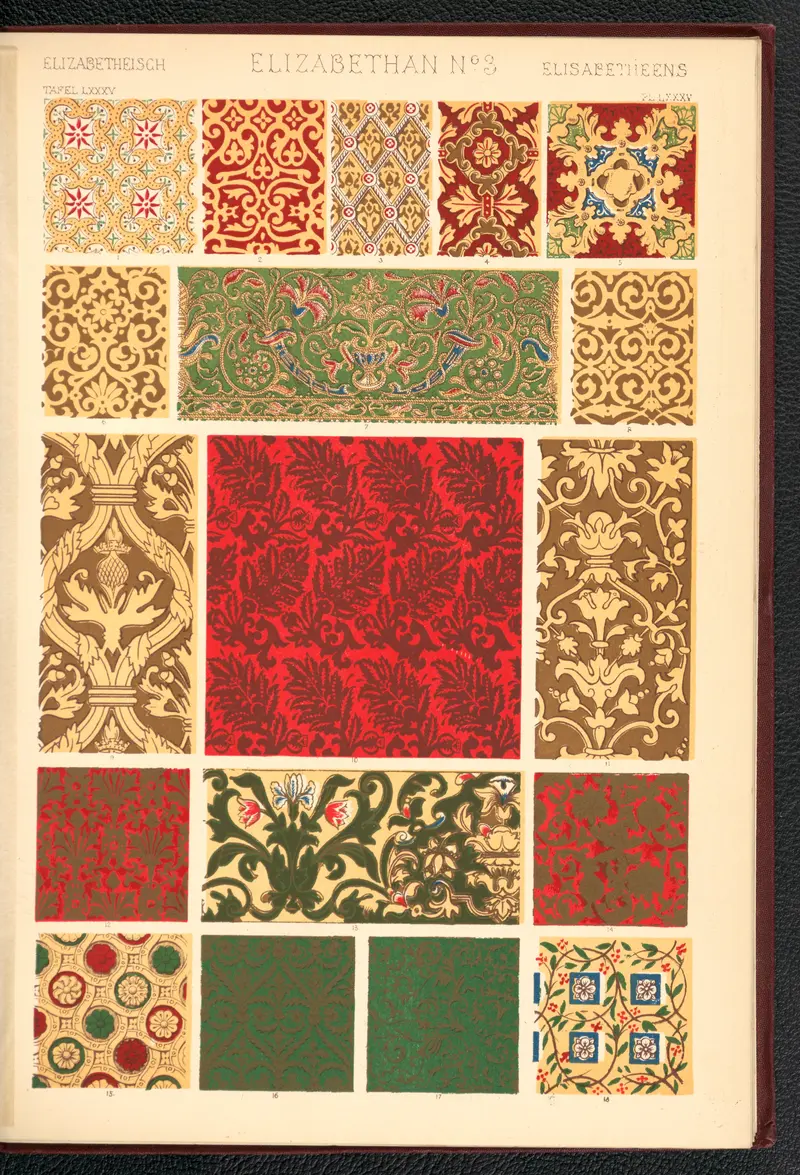
Elizabethan Ornament No. 3
Owen Jones
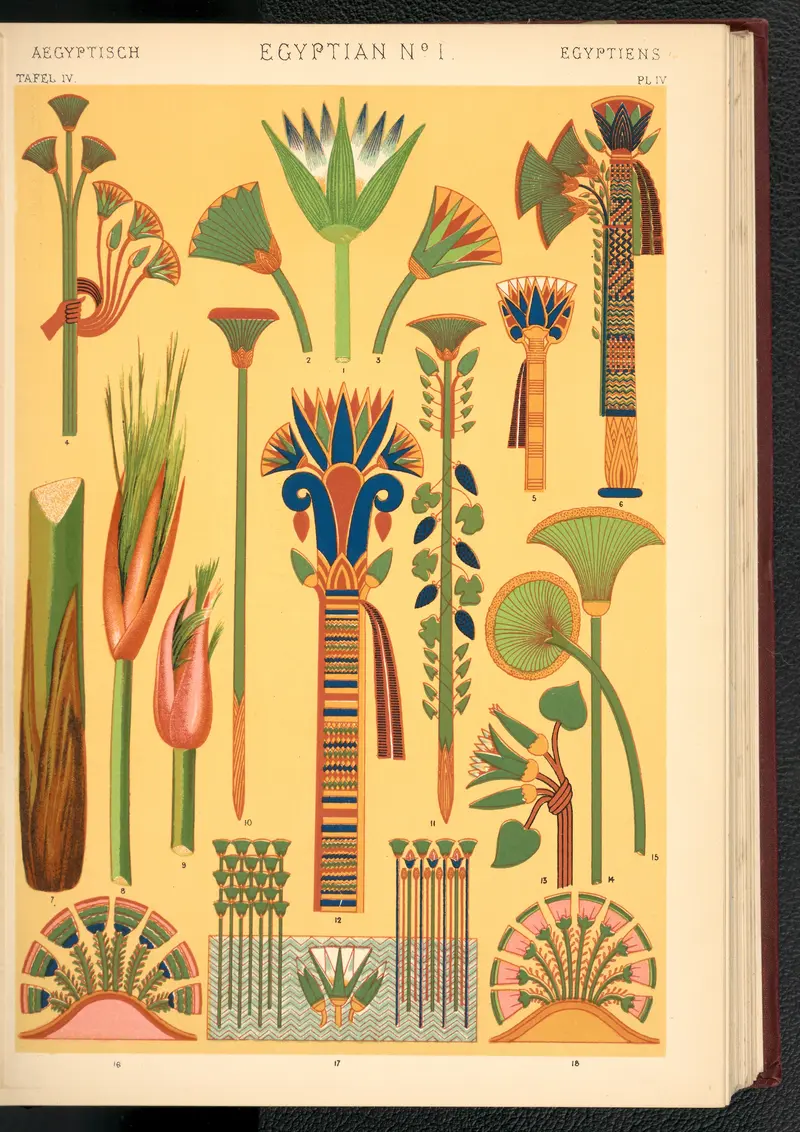
Egyptian Ornament No. 1
Owen Jones
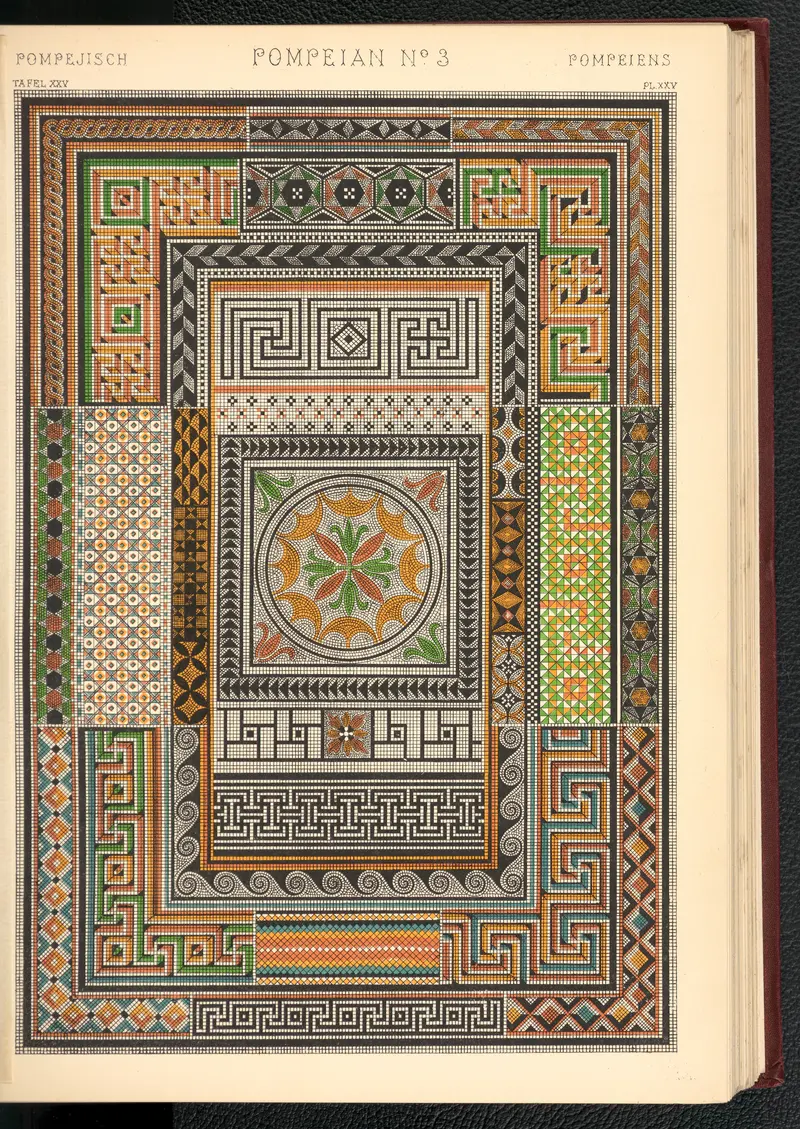
Pompeian Ornament No. 3
Owen Jones