
Esquisse pour l'escalier des Fêtes de l'Hôtel de Ville de Paris , La Musique — History & Facts
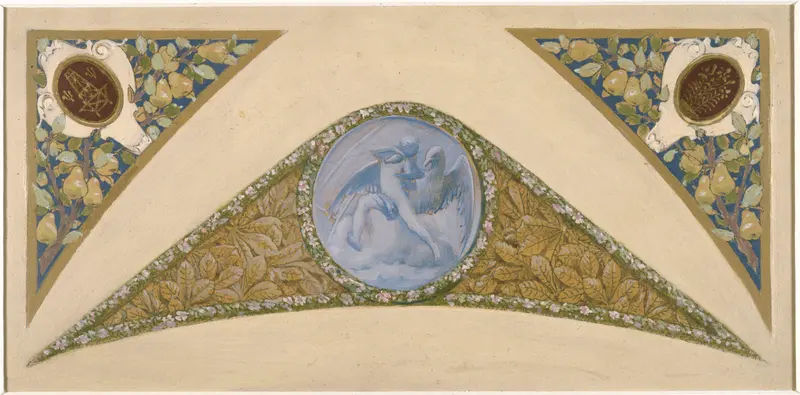
The first thing to catch the eye in Esquisse pour l'escalier des Fêtes de l'Hôtel de Ville de Paris, La Musique is the sense of performance frozen in mid-movement—a goddess-like figure, draped in pale blue, stands poised as if she has just summoned the music of the spheres. Her head tilts, eyes half-closed, lost in an inner melody, while one arm is raised in a gesture that feels both commanding and celebratory. At her feet, a cherubic putto pipes a tune, his wings catching the light, while a golden horn spills flowers across the plinth.
The palette is fresh and luminous, with the coolness of her robes set against the warmth of the gilded ornament and the leafy green above, guiding the viewer’s gaze upward and outward, as if the music itself is about to take flight. Painted in 1888, this work belongs to a world where allegory and grandeur still shaped the ambitions of public art. Such esquisses—preparatory sketches for grand decorative schemes—were often commissioned for civic buildings like the Hôtel de Ville, where art was meant to embody the virtues and aspirations of the city. The motto “Fluctuat nec mergitur,” woven into the decorative borders, anchors the image in the spirit of Paris: tossed by waves, never sunk.
Little is recorded about the fate of this specific design by Luc-Olivier Merson, but it stands as a testament to the era’s belief in art as both ornament and moral lesson. Look again, and you may hear the echo of that distant, ideal music.
More Artworks by Luc-Olivier Merson

Esquisse pour l'escalier des fêtes de l'Hôtel de Ville de Paris , Bélier
Luc-Olivier Merson
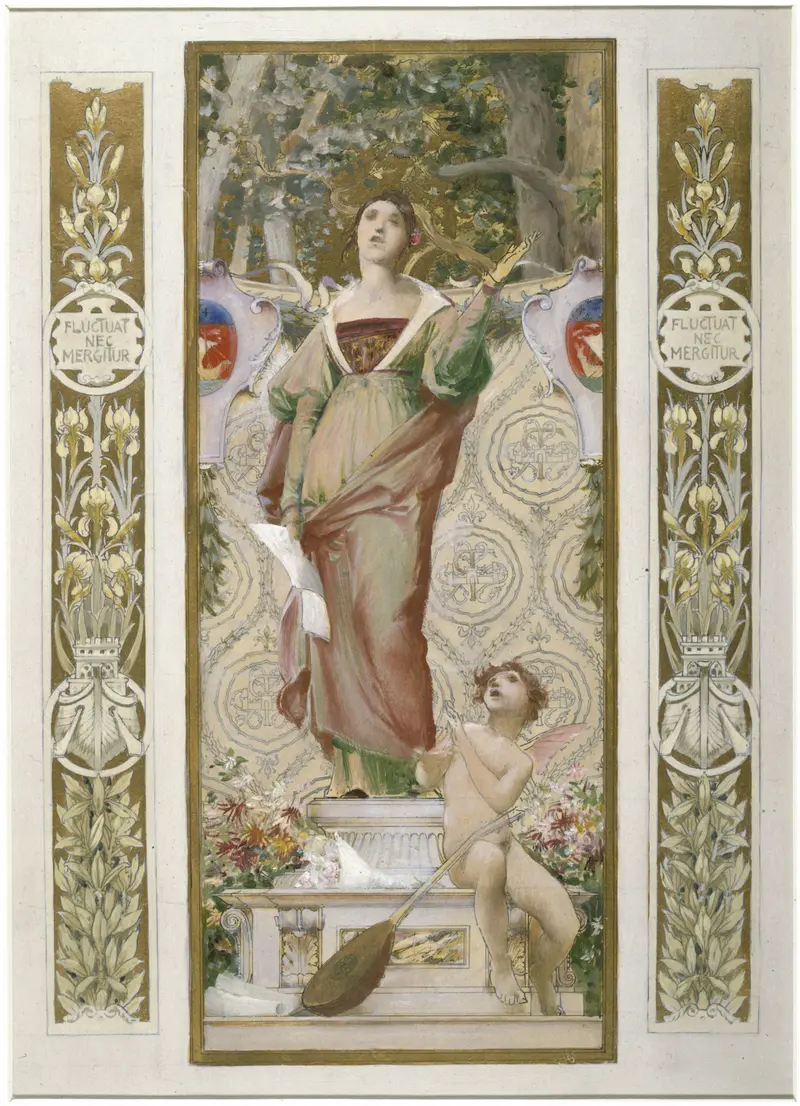
Esquisse pour l'escalier des Fêtes de l'Hôtel de Ville de Paris , Le Chant
Luc-Olivier Merson
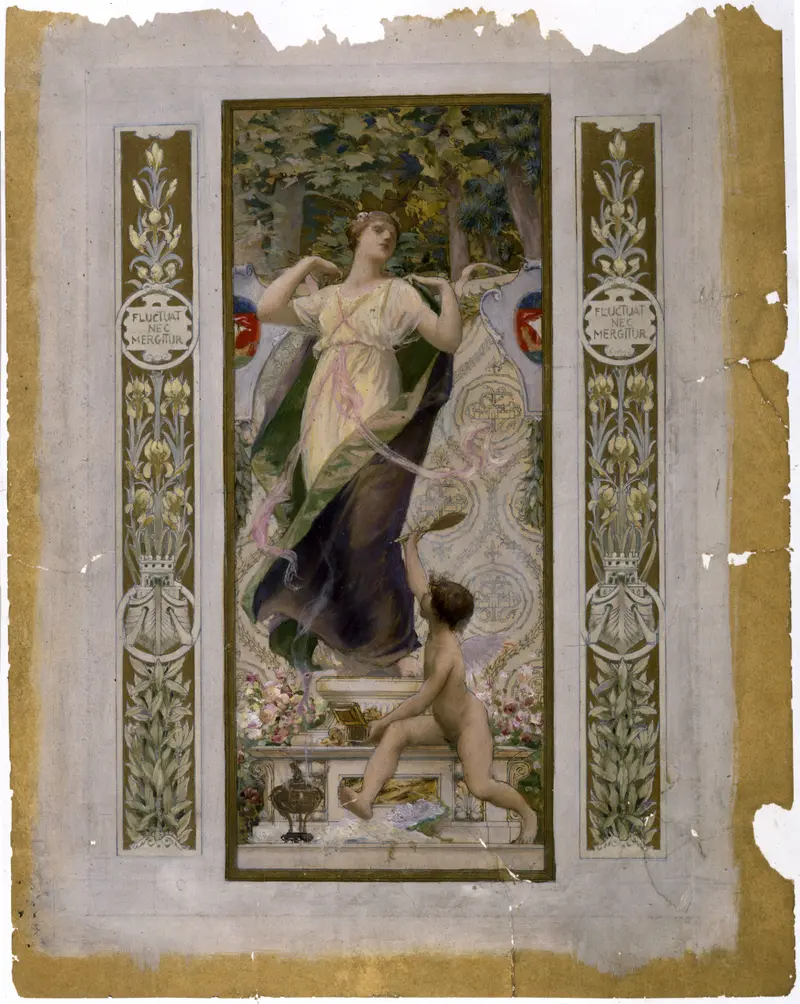
Esquisse pour l'escalier des Fêtes de l'Hôtel de ville de Paris , La Toilette féminine
Luc-Olivier Merson
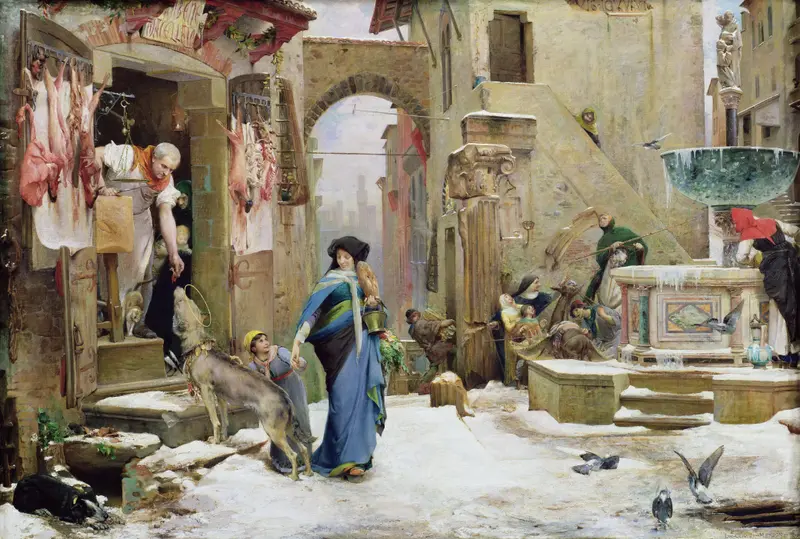
The Wolf of Gubbio
Luc-Olivier Merson
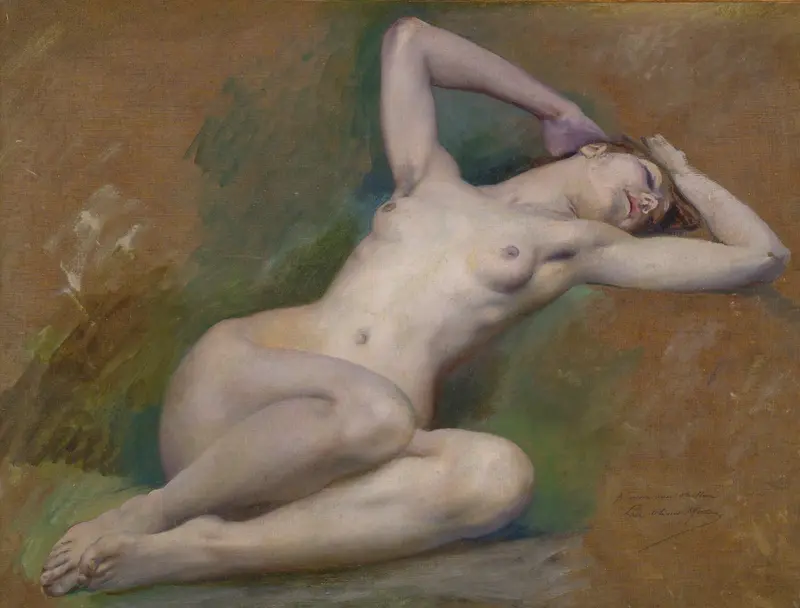
Luc Olivier Merson Study for the figure of Spring
Luc-Olivier Merson
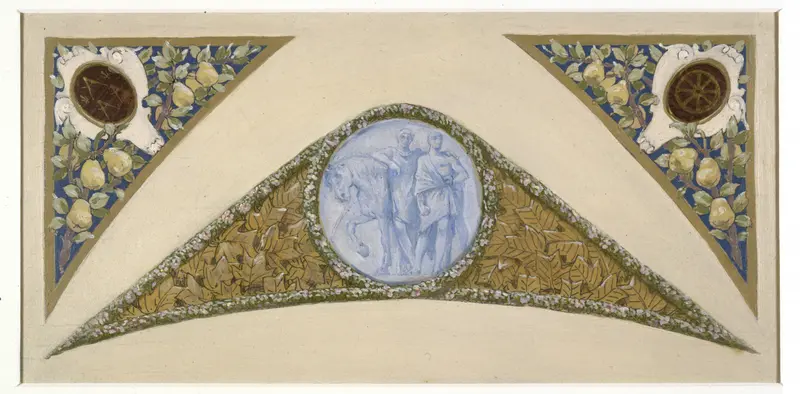
Esquisse pour l'escalier des Fêtes de l'Hôtel de Ville de Paris , Gémeaux
Luc-Olivier Merson
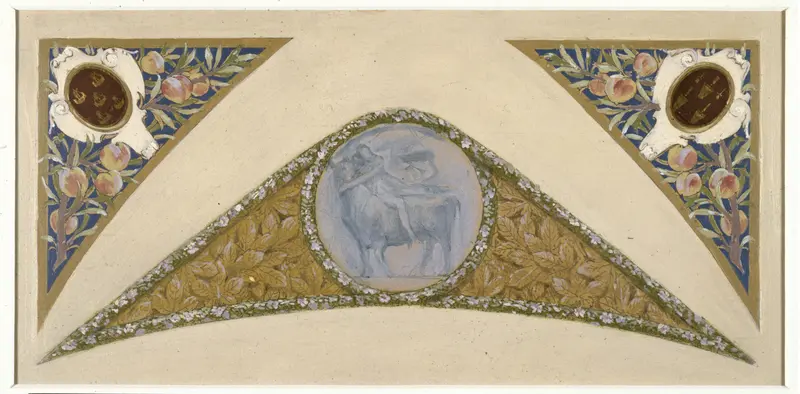
Esquisse pour l'escalier des Fêtes de l'Hôtel de Ville de Paris , Taureau
Luc-Olivier Merson
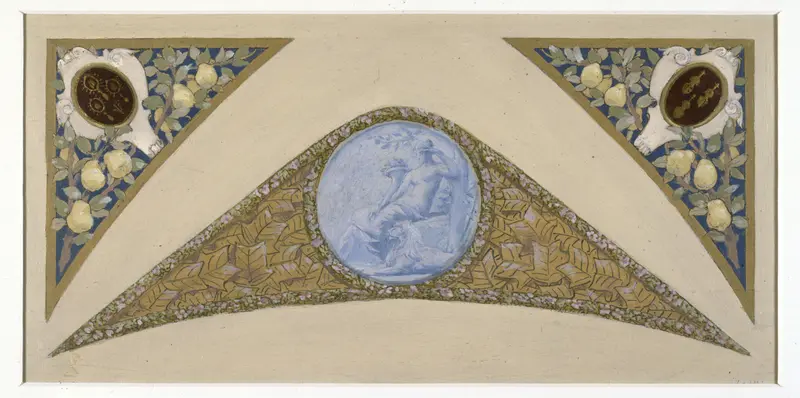
Esquisse pour l'escalier des Fêtes de l'Hôtel de Ville de Paris , Vierge
Luc-Olivier Merson
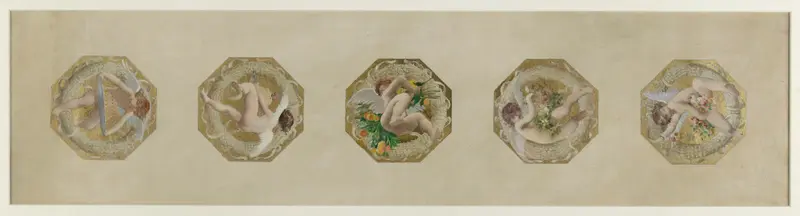
Esquisse pour l'Hôtel de Ville de Paris, escalier des Fêtes , les génies des fêtes
Luc-Olivier Merson
Esquisse pour l'escalier des Fêtes de l'Hôtel de Ville de Paris , Verseau
Luc-Olivier Merson





