
Étal de poissons - Abraham van Beyeren - PBAL P 301 — History & Facts
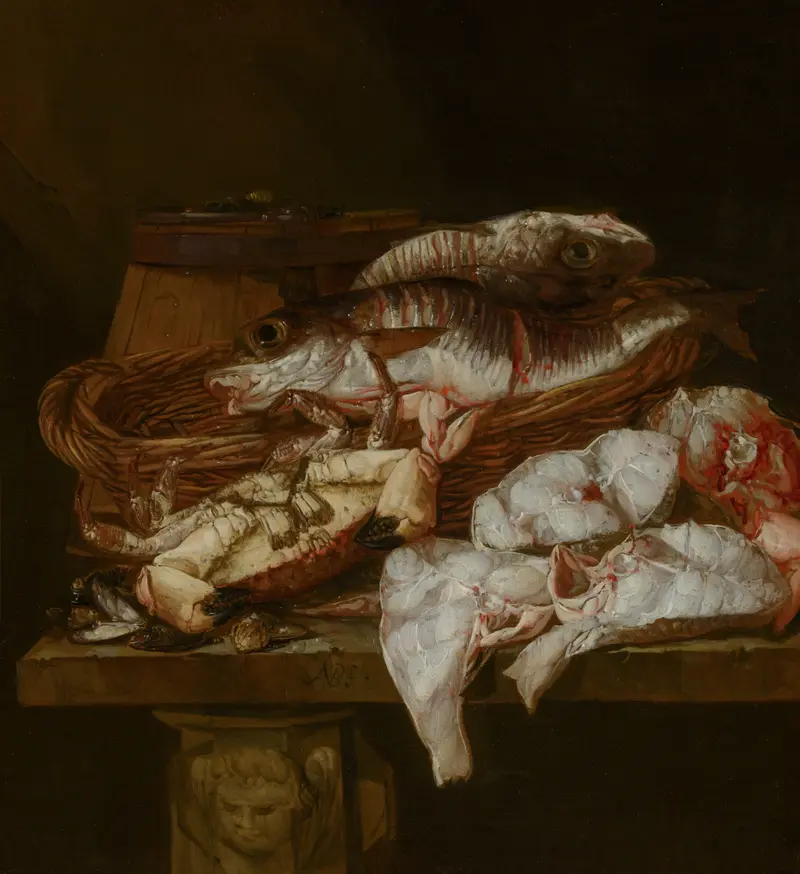
A heap of sea creatures sprawls across a wooden table, their scales and shells catching the faint, cool light that slices through the darkness. The eye is drawn first to the gleaming, glassy stare of the central fish, then to the tangle of crabs and the leathery, almost prehistoric presence of a ray anchoring the lower edge. Each element is rendered with a precision that borders on the scientific, yet the arrangement is anything but clinical: the basket tilts, the fish overlap, and a slab of red flesh punctuates the composition with a jolt of color.
The shadows press in close, turning the scene intimate, almost secretive, as if the bounty has just been hauled in from the market and set down for a fleeting moment of contemplation before the bustle resumes. Painted by Abraham van Beyeren around 1660, this still life belongs to a world where the Dutch Republic’s prosperity was measured in the abundance of its tables and the reach of its trade. Such paintings were prized by wealthy merchants and burghers, both as displays of affluence and as reminders of the fleeting nature of plenty. The genre flourished in the seventeenth century, when artists like van Beyeren made a specialty of transforming the ordinary into the extraordinary, elevating fish, shellfish, and even kitchen scraps into objects of meditation.
Today, Étal de poissons resides in the Palais des Beaux Arts de Lille, its surface still glistening with the promise—and the warning—that wealth, like freshness, is always at risk of slipping away.
More Artworks by Abraham van Beyeren

Still Life
Abraham van Beyeren
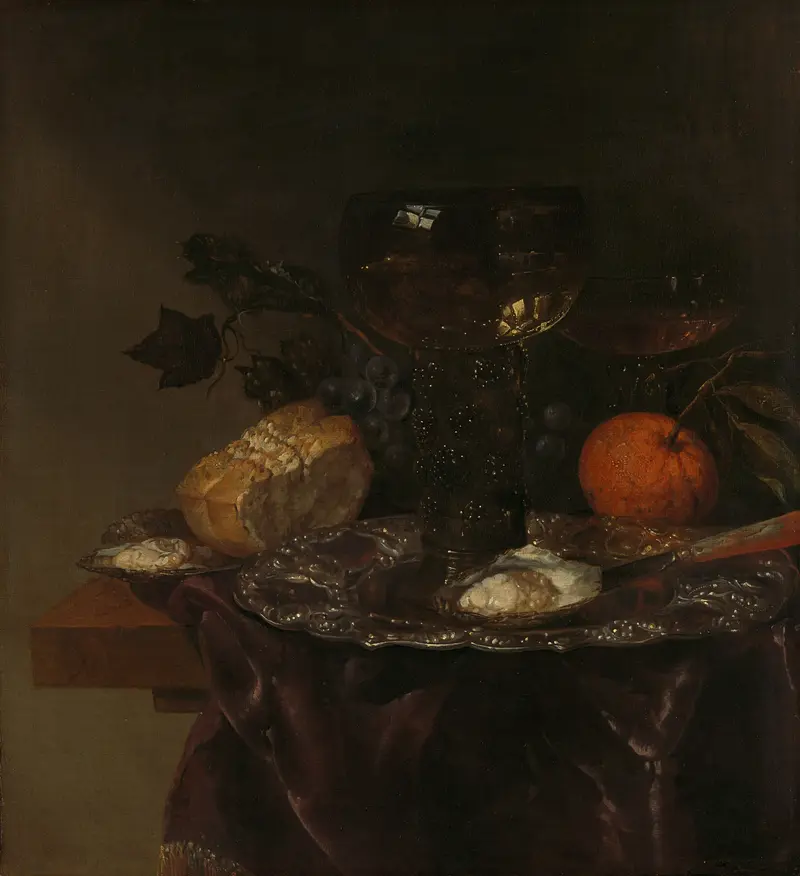
Still Life
Abraham van Beyeren
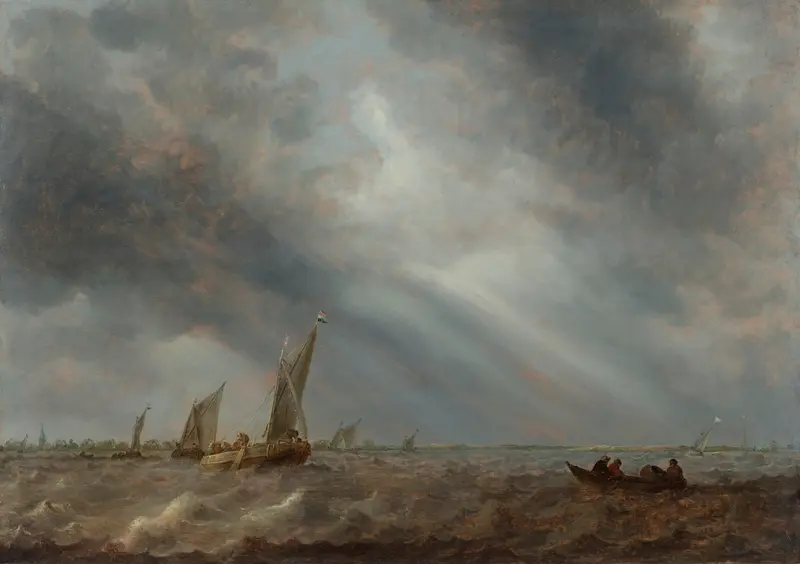
Various sailing vessels and a rowing boat with fishermen on choppy waters under a stormy sky
Abraham van Beyeren
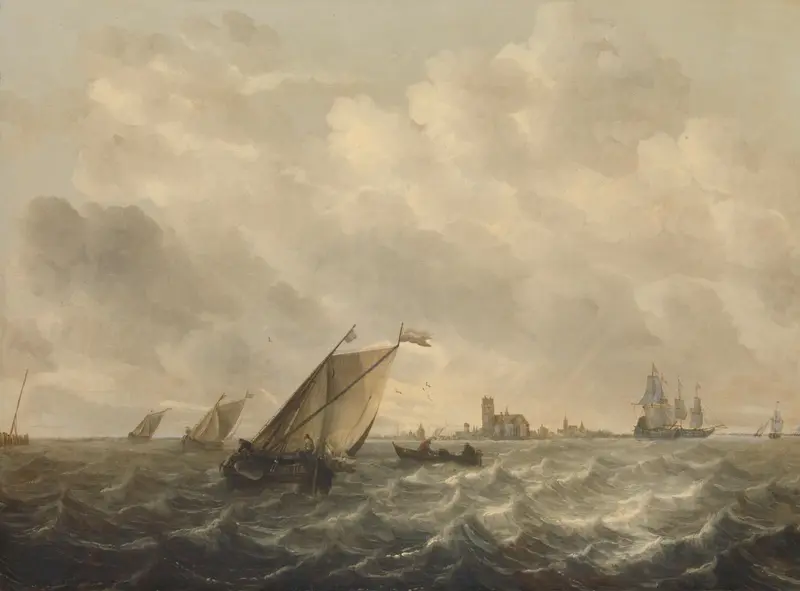
River View
Abraham van Beyeren
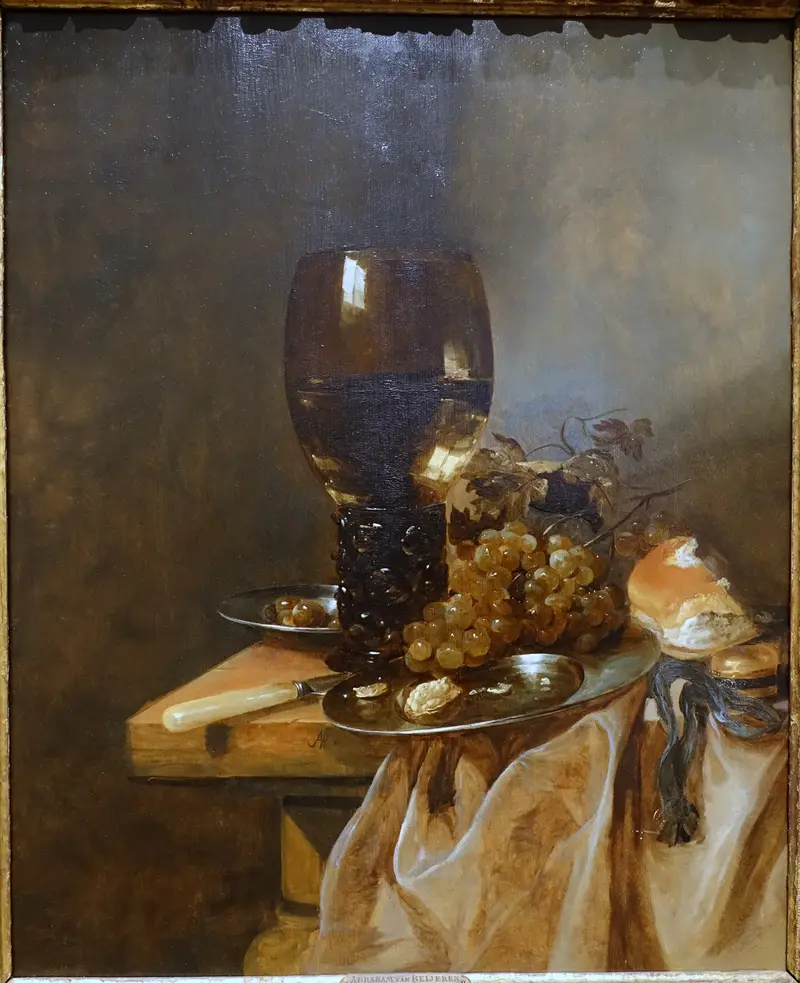
A Roemer with Grapes, a Pewter Plate and a Roll
Abraham van Beyeren
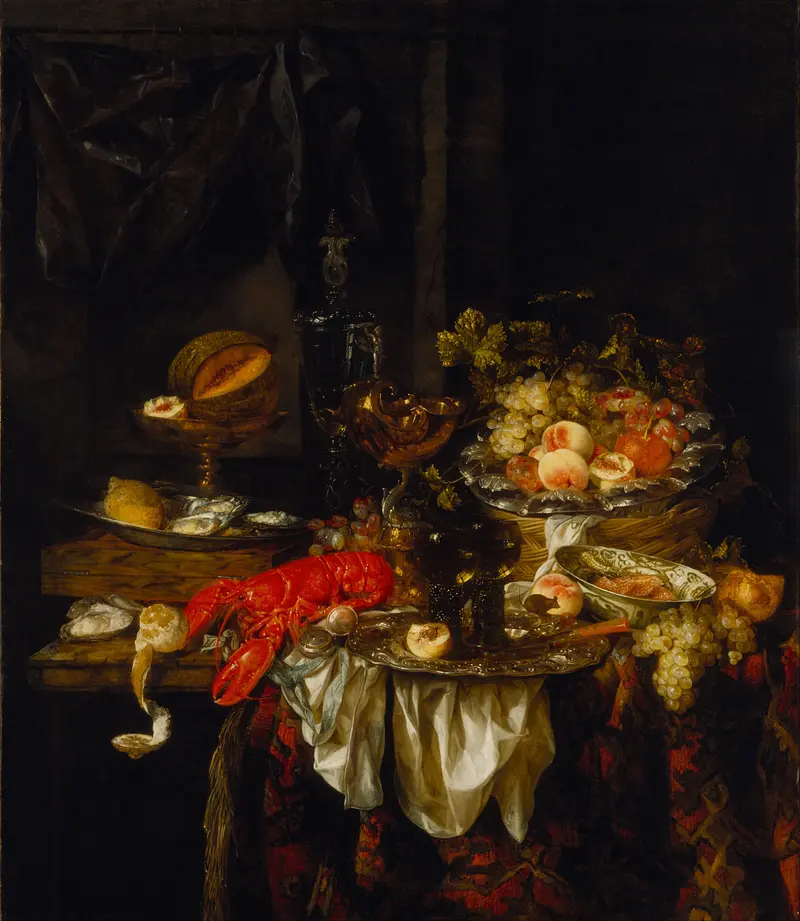
Banquet Still Life
Abraham van Beyeren
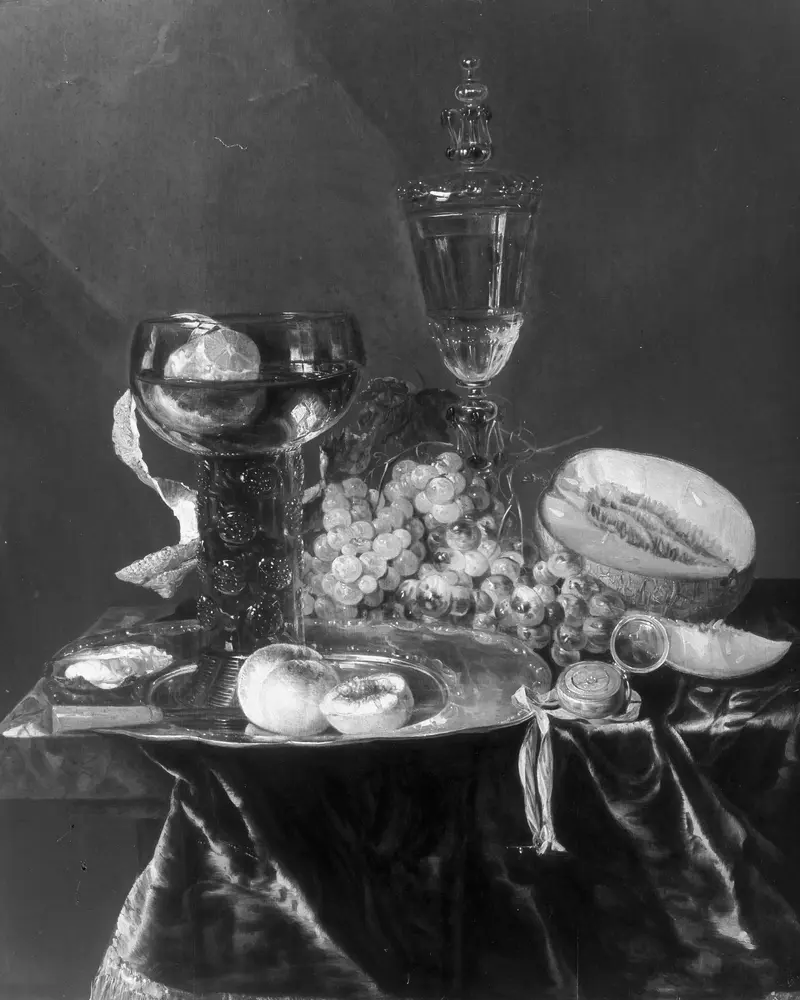
Still life with a glass lid goblet
Abraham van Beyeren
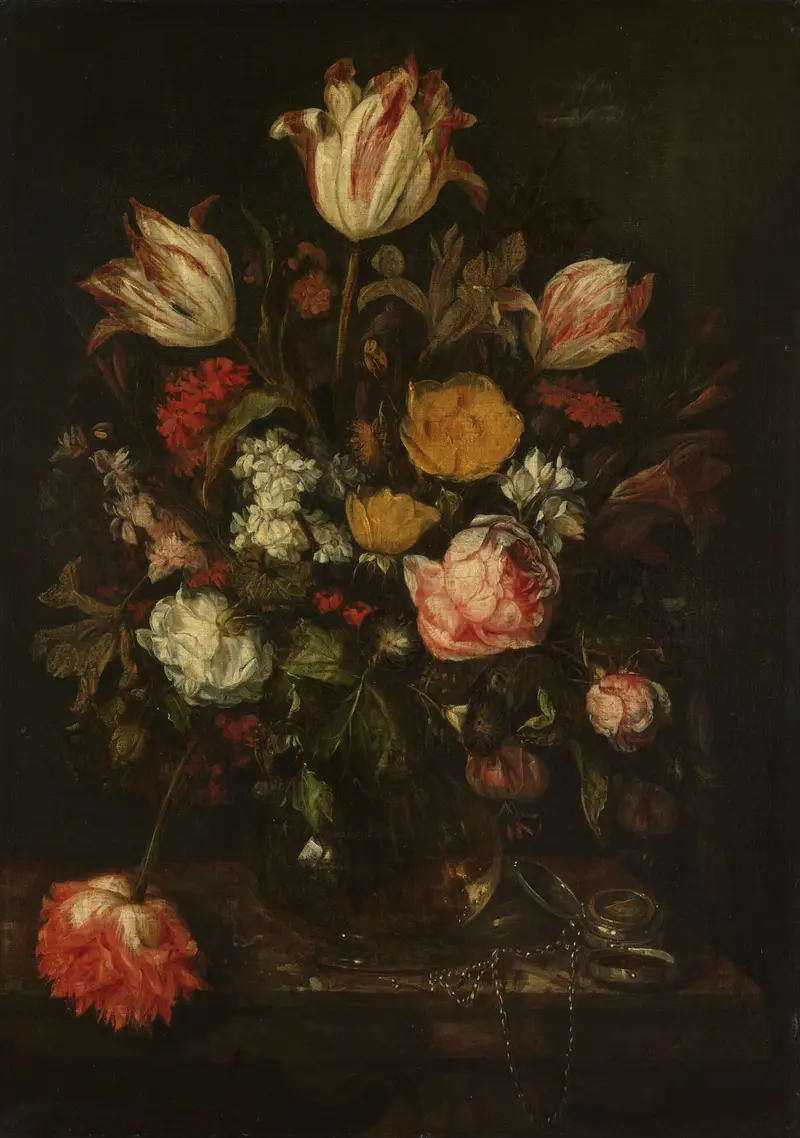
Still life with flowers
Abraham van Beyeren
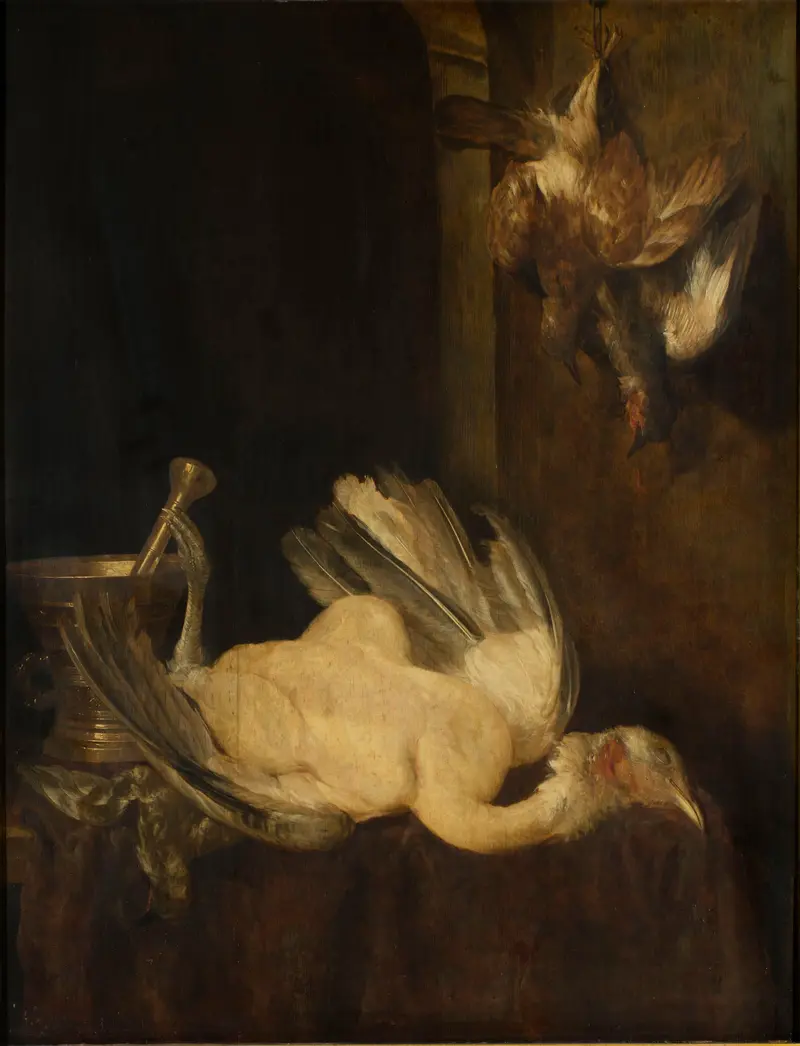
Still life with dead birds
Abraham van Beyeren
Still Life with Seafood
Abraham van Beyeren





