
Fair in Tyniec — History & Facts
A swirl of hats, coats, and eager faces draws the viewer into the heart of Fair in Tyniec, where the painter’s eye lingers not on spectacle, but on the charged hush of negotiation. The crowd leans in, drawn together by the promise of trade or perhaps the thrill of gossip, while a single figure—half-standing, half-crouched—gestures with the urgency of someone making a point that matters. The light pools around this central group, picking out the textures of worn cloth and the anxious tilt of a head, while the background dissolves into a softer bustle of tents, children, and distant stonework.
Every gesture is loaded: the man’s outstretched hand, the sideways glance of his companion, the bent figure at the edge who seems to plead or pray. The palette, warm and earthbound, roots the scene in the dust and promise of a rural gathering, where every detail—the curl of smoke, the faded blue of a coat—signals a life lived close to the land. Painted in 1858, Fair in Tyniec belongs to a moment in Polish art when scenes of everyday rural life began to claim their place on canvas, reflecting a world in flux. The mid-nineteenth century saw artists like Aleksander Kotsis turn their attention to fairs, markets, and village gatherings, capturing not just the customs but the social tensions and fleeting alliances of a changing countryside.
Such works were rarely grand commissions; instead, they found their way into collections like the National Museum in Warsaw, where they stand as records of a world often overlooked by official history. The fair was more than a market—it was a crossroads of news, hope, and hardship, and in this painting, the viewer is invited to step into the crowd, to listen for the bargains struck and the stories exchanged under the restless Polish sky.
More Artworks by Aleksander Kotsis

Trip in the Tatra Mountains
Aleksander Kotsis

Fair in Nowy Targ
Aleksander Kotsis
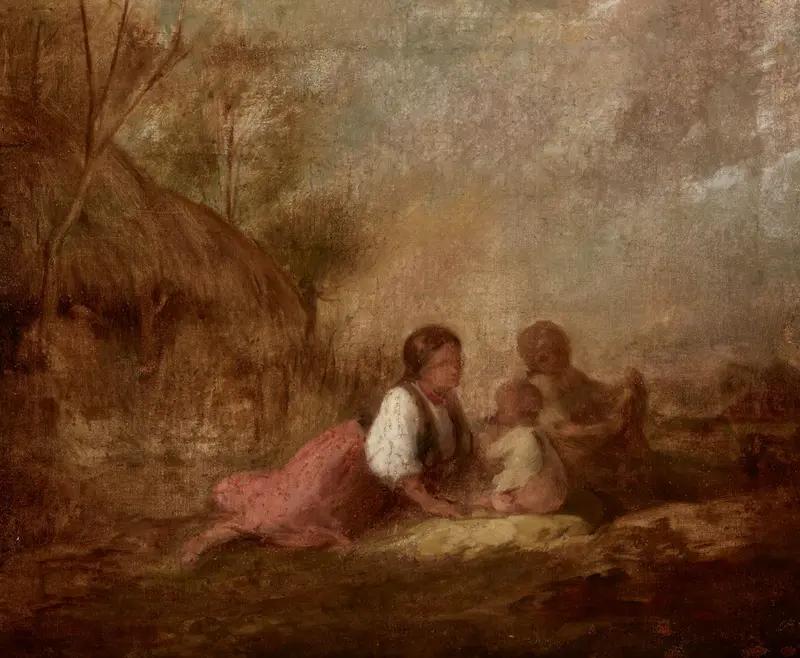
Pastoral Scene
Aleksander Kotsis
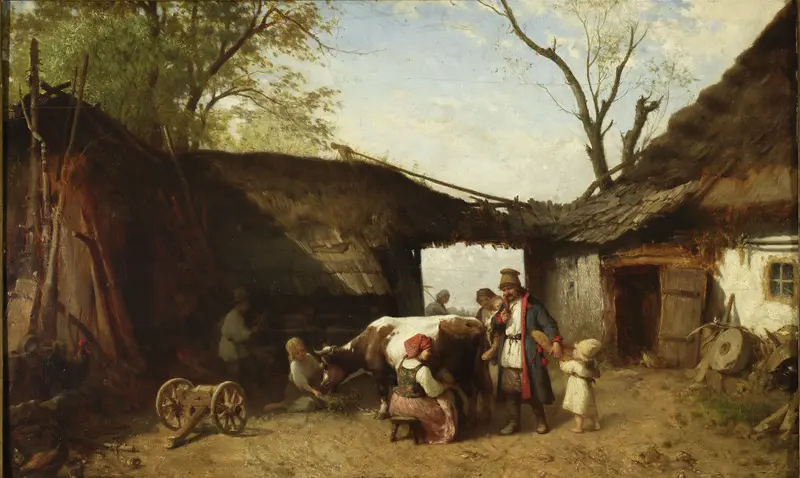
In the farmyard
Aleksander Kotsis
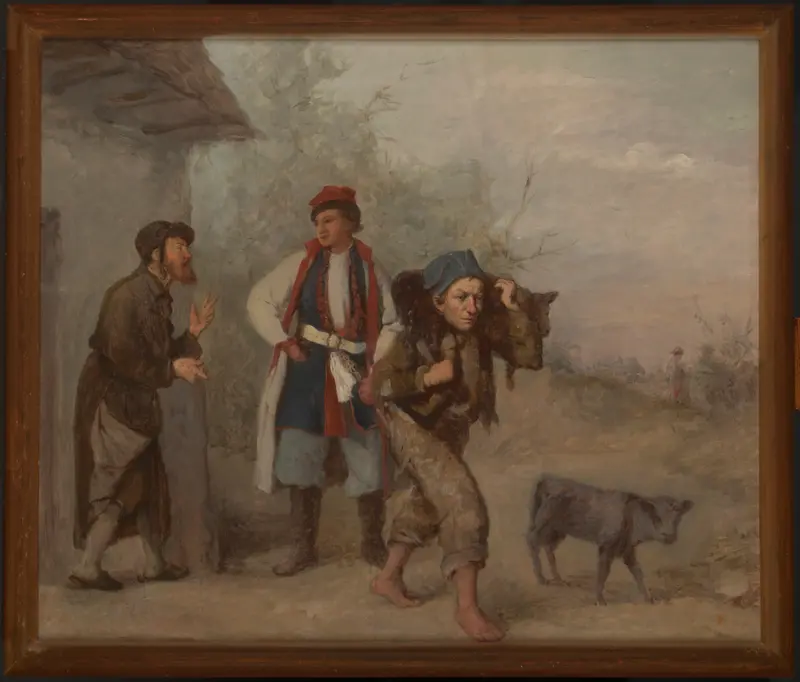
Haggling over a Calf
Aleksander Kotsis
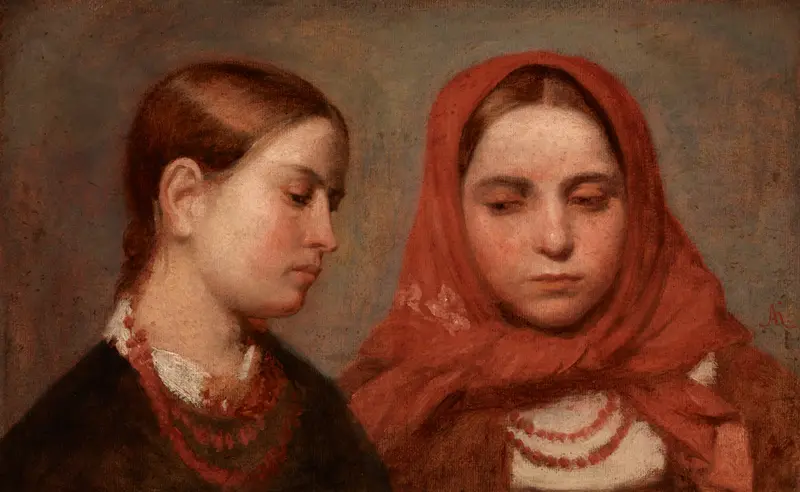
Heads of Two Young Girls
Aleksander Kotsis
Haymaker
Aleksander Kotsis
Highlander in Front of a Hut
Aleksander Kotsis
Gypsies
Aleksander Kotsis
A Highlander's Funeral
Aleksander Kotsis
More Genre Scene Art

Banquet of the Officers of the St George Civic Guard
Frans Hals

Rembrandt and Saskia in the Scene of the Prodigal Son
Rembrandt van Rijn

Bal du moulin de la Galette
Pierre-Auguste Renoir

Quadrille at the Moulin Rouge
Henri de Toulouse-Lautrec

A Burial at Ornans
Gustave Courbet

When Will You Marry?
Paul Gauguin