
Farmyard — History & Facts
A hush falls over this farmyard, broken only by the imagined cluck of hens and the distant bleat of livestock. The eye is drawn not to a single dramatic event, but to the quiet choreography of rural life: a figure stands in a doorway, half-caught in shadow, while animals wander freely in the open yard. The palette is restrained, nearly monochrome, with deep shadows pooling beneath the eaves and a pale sky pressing down from above.
This use of darkness is not just a backdrop; it is a participant, shaping the mood and isolating each humble form. The light, such as it is, seems to gather around the figure and the animals, lending them a fragile presence against the brooding architecture. Works like this by Alexandre-Gabriel Decamps belong to a moment in nineteenth-century French painting when artists turned their gaze from grand history to the everyday world. While the exact date and medium of Farmyard remain unknown, its subject and style speak to a fascination with rural labor and the poetry of ordinary places.
Such scenes were rarely painted for the wealthy urban elite; instead, they appealed to a growing audience hungry for images of authenticity and simplicity, often exhibited in salons or acquired by collectors who valued the unvarnished truth of country life. Now part of the collection at the Museum of Fine Arts, Boston, this modest canvas invites us to linger over the overlooked, and to find meaning in the light that falls across a farmyard at rest.
More Artworks by Alexandre-Gabriel Decamps

Still Life with Herring, Bread, and Cheese
Alexandre-Gabriel Decamps
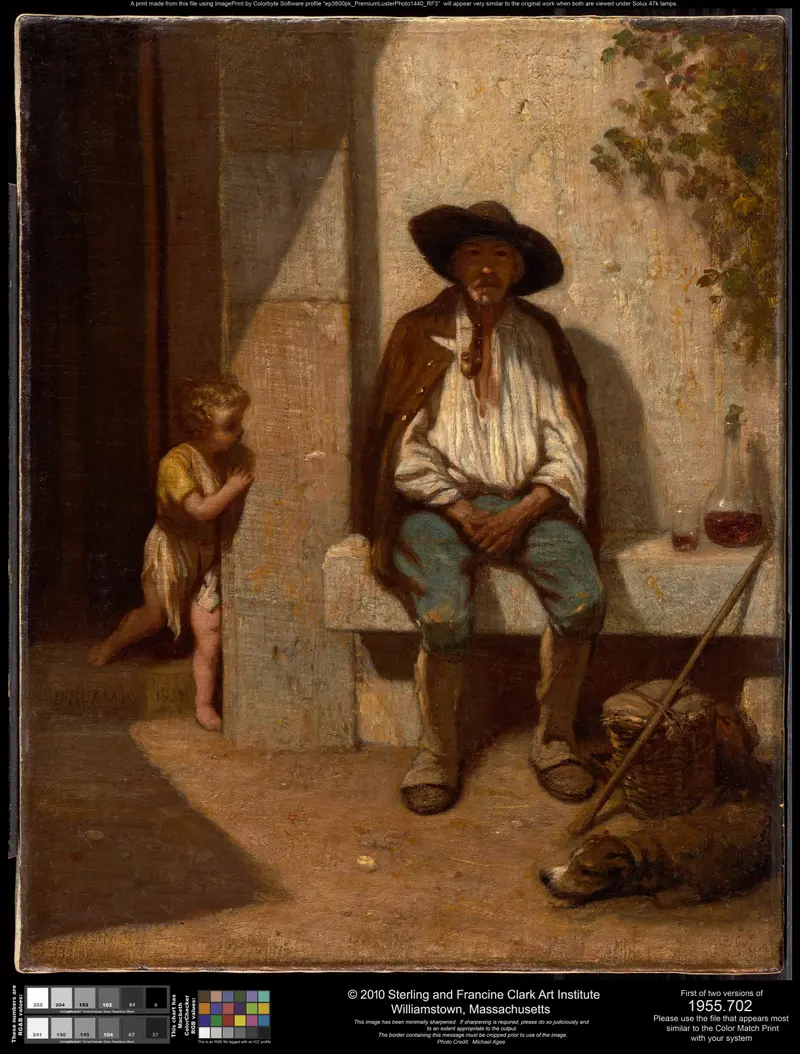
Italian Peasant
Alexandre-Gabriel Decamps
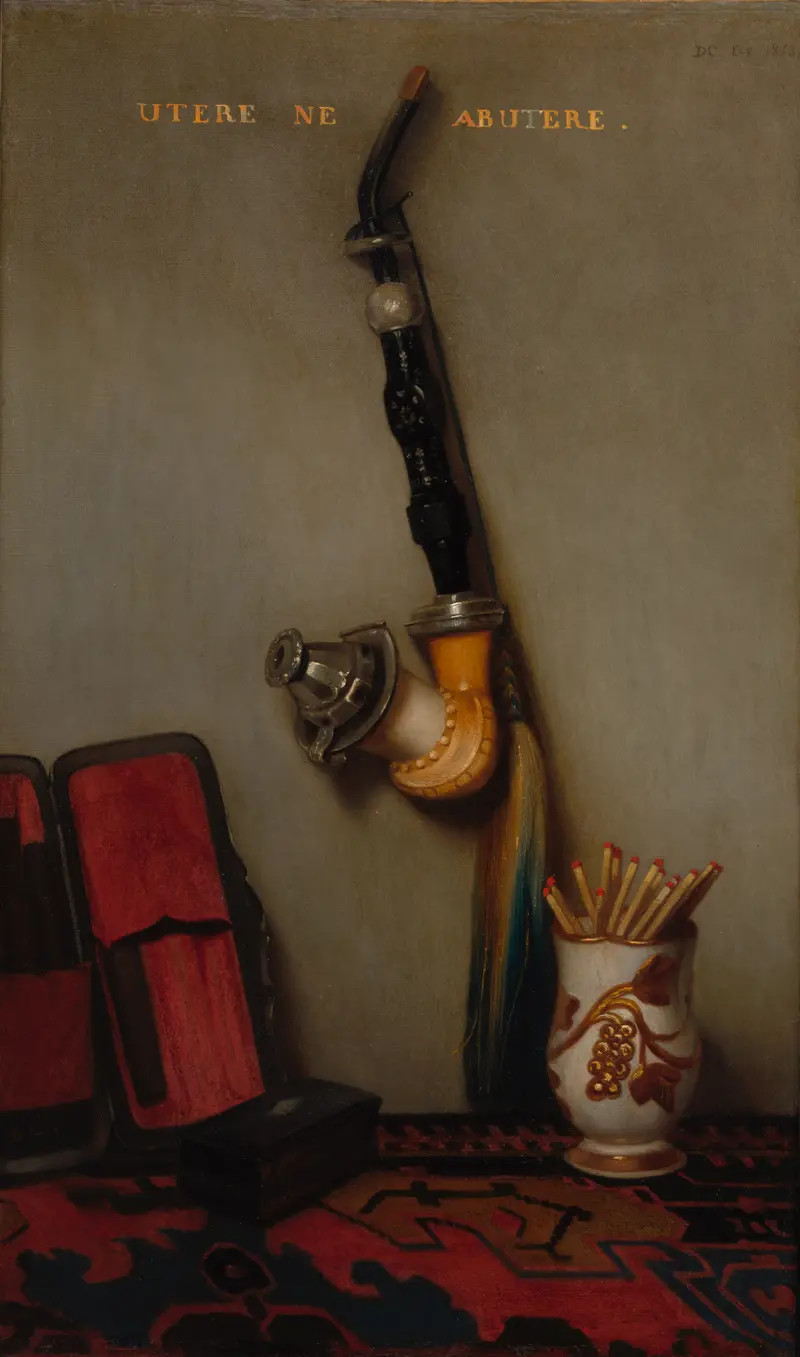
Still Life with Pipe and Matches
Alexandre-Gabriel Decamps
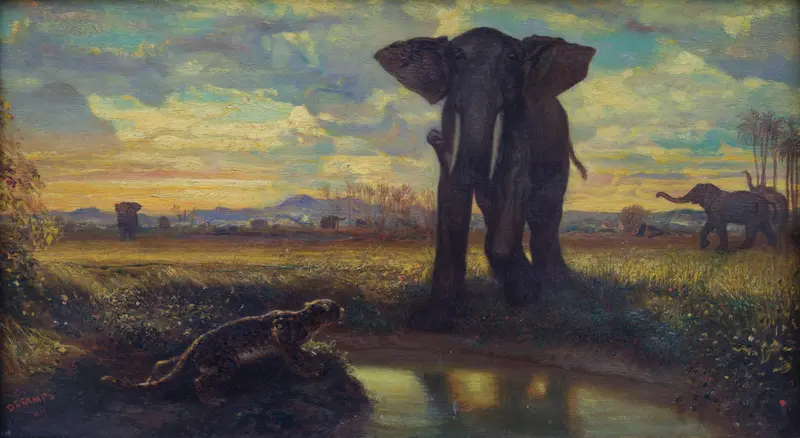
Tigre et éléphant à la source Musée du Louvre Peintures RF
Alexandre-Gabriel Decamps
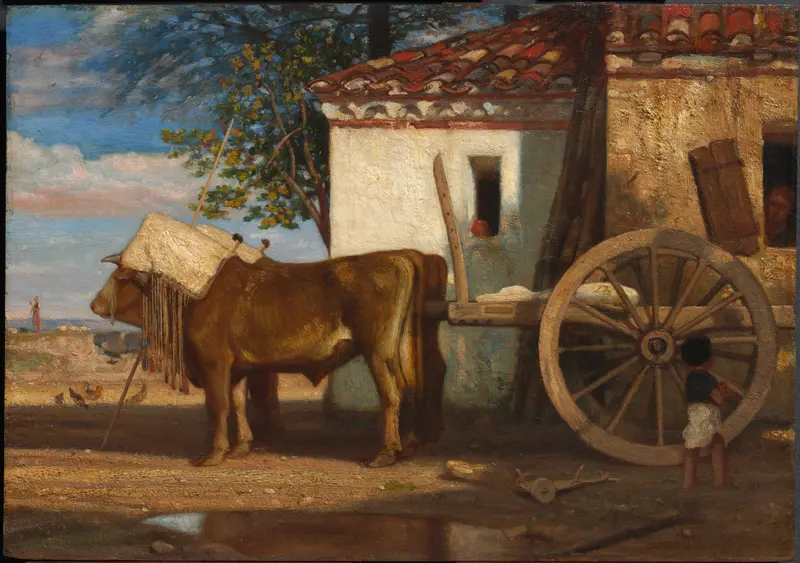
Oxen before a Farmhouse at Le Verrier
Alexandre-Gabriel Decamps
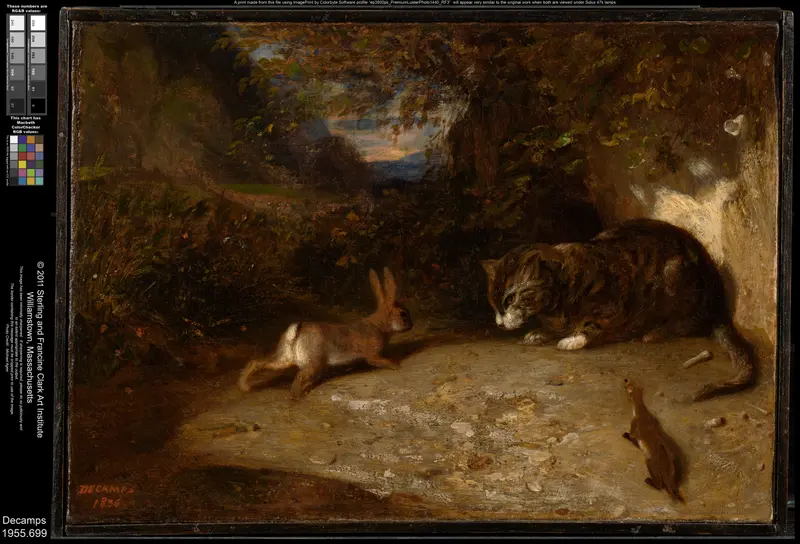
Cat, Weasel, and Rabbit
Alexandre-Gabriel Decamps
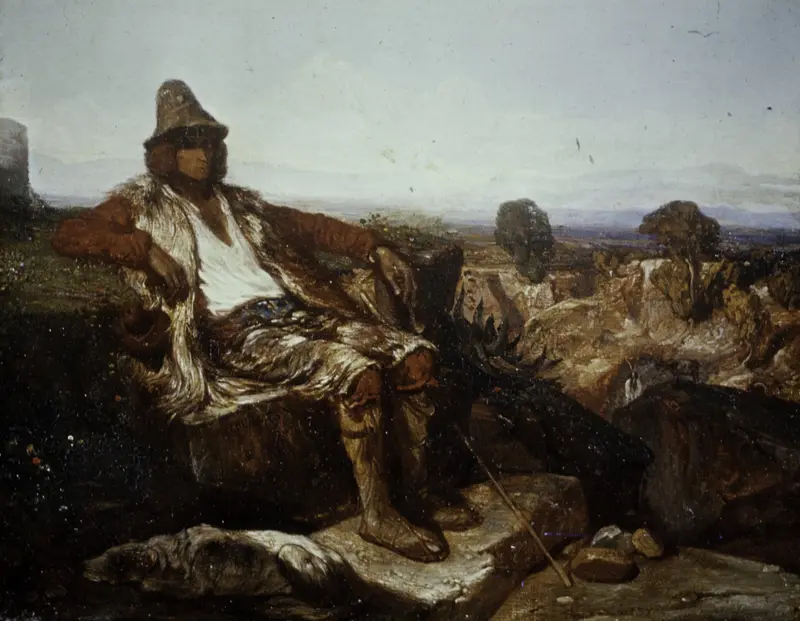
Goatherd of the Abruzzi
Alexandre-Gabriel Decamps
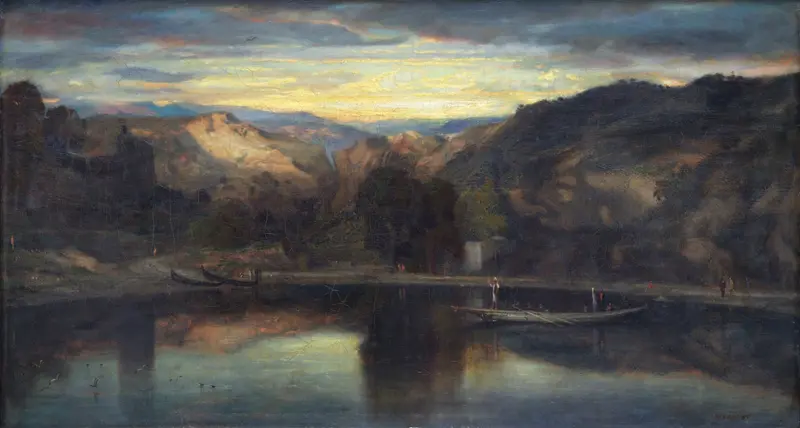
Jésus sur le lac de Génésareth Musée du Louvre Peintures RF
Alexandre-Gabriel Decamps

Espagnols jouant aux cartes Musée du Louvre Peintures RF
Alexandre-Gabriel Decamps
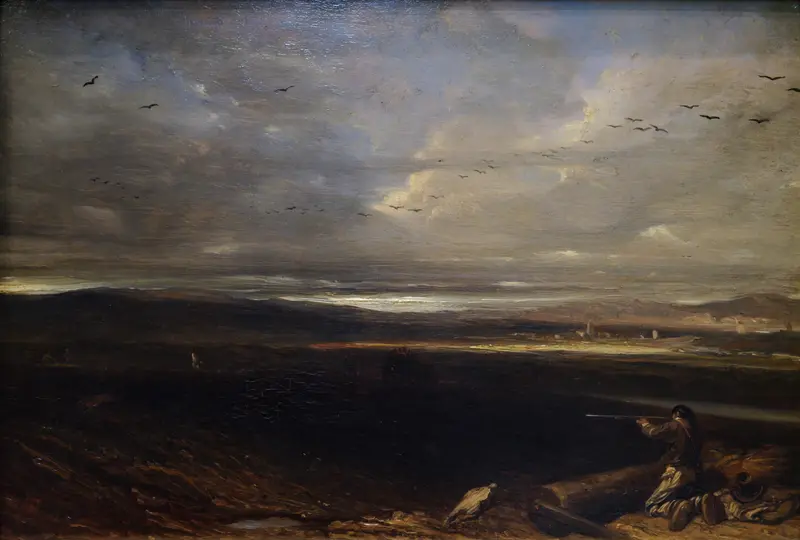
La battue en plaine Musée du Louvre Peintures RF
Alexandre-Gabriel Decamps
More Genre Scene Art

Banquet of the Officers of the St George Civic Guard
Frans Hals

Rembrandt and Saskia in the Scene of the Prodigal Son
Rembrandt van Rijn

Bal du moulin de la Galette
Pierre-Auguste Renoir

Quadrille at the Moulin Rouge
Henri de Toulouse-Lautrec

A Burial at Ornans
Gustave Courbet

When Will You Marry?
Paul Gauguin