
Fishing Boats at Anchor — History & Facts
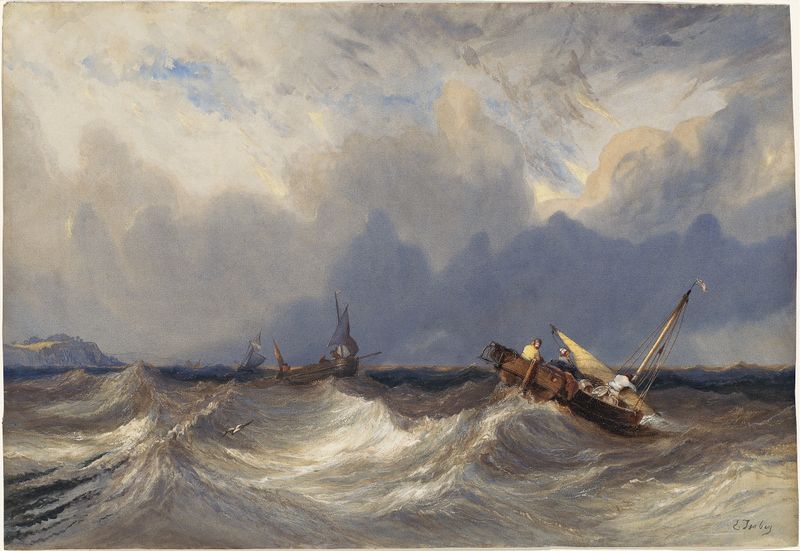
What if silence could speak through light? In Fishing Boats at Anchor, the stillness of the water reflects a world held in quiet contemplation, inviting the viewer to listen closely to the whispers of the scene. Focus on the calm water's surface, where gentle ripples catch the light, creating a shimmering tapestry of blues and greens. Notice how the boats, anchored gracefully, lean slightly as if engaged in a hushed conversation with the waves. The sky looms above, softly painted in muted pastels that blend harmoniously, invoking a sense of peace.
The composition draws the eye to the horizon, creating a feeling of limitless possibility. Yet, within this tranquility lies an intricate dance of contrasts. The boats, sturdy and steadfast, juxtapose against the fluidity of water, embodying the tension between man-made structures and nature's ever-changing surface. Revealed in the subtleties of shadow and light, there's a hint of vulnerability in the scene—these vessels rely on the sea’s mercy, a reminder of nature's power over human endeavors.
Each stroke of paint communicates a deeper narrative about coexistence and the fragility of life. Eugène Isabey created this piece in 1836, during a pivotal period in France where Romanticism was flourishing. Emerging from a backdrop of social upheaval, Isabey’s focus on marine subjects reflected both a personal affinity for the sea and the broader artistic trend of exploring the sublime. His works often evoked emotional responses, capturing fleeting moments in time amidst a rapidly changing world, marking a notable phase in his artistic journey.
More Artworks by Eugène Isabey
Browse all →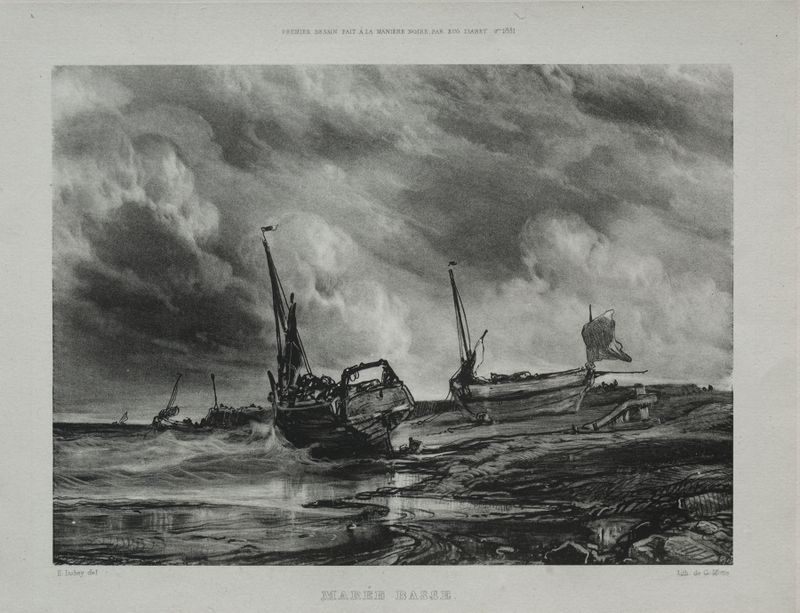
Marée basse
Eugène Isabey

Shipwreck
Eugène Isabey

Shipwreck
Eugène Isabey

The Wreck
Eugène Isabey
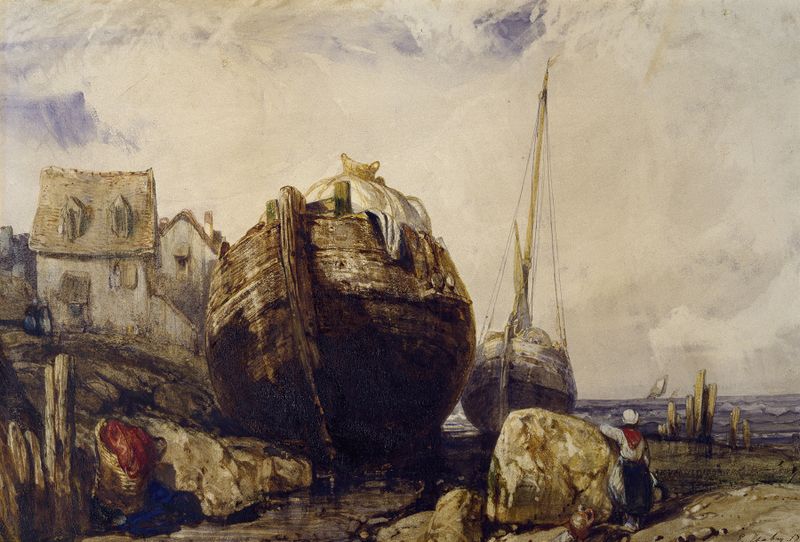
Fishing Boats
Eugène Isabey
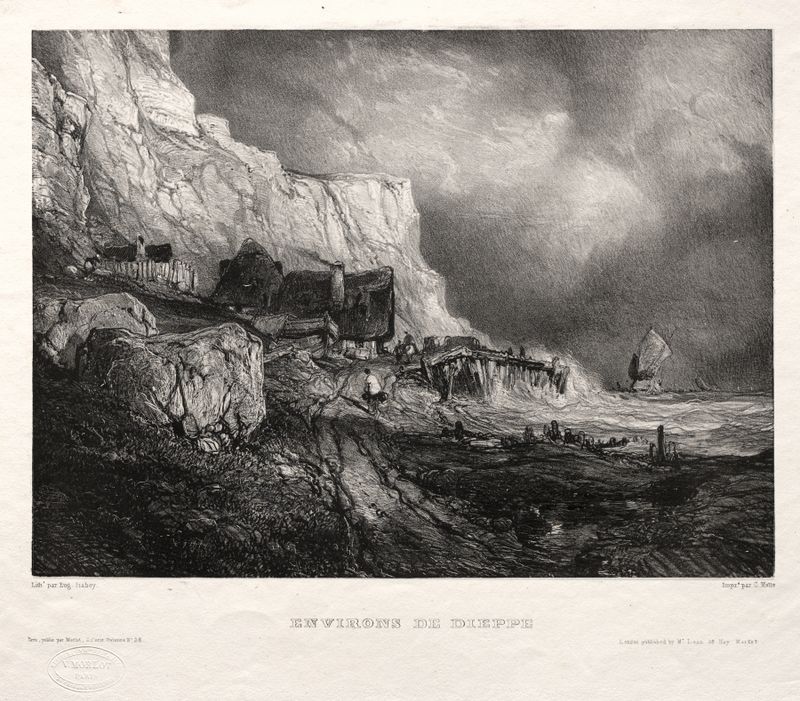
Environs de Dieppe
Eugène Isabey
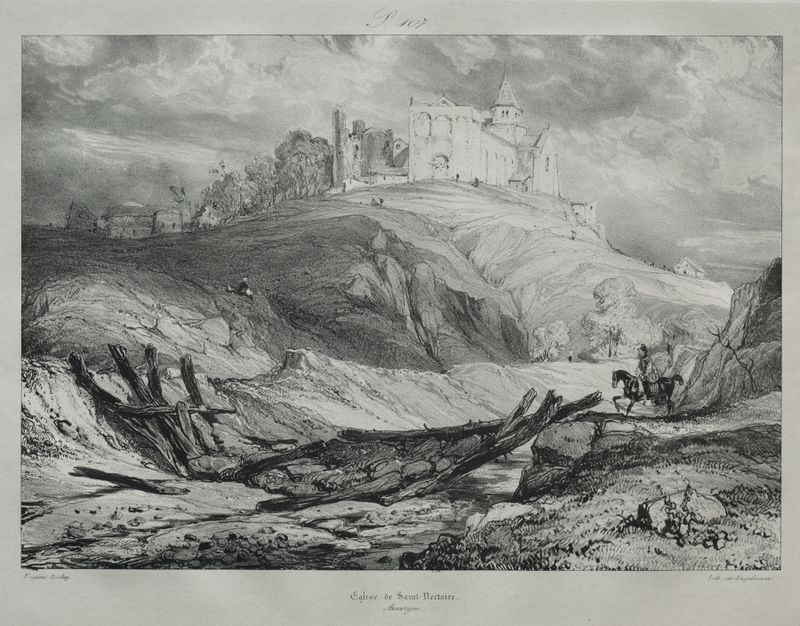
Église de St. Nectaire
Eugène Isabey

Fishing boat at the seaside
Eugène Isabey

Sunset on the Normandy Coast
Eugène Isabey
Fishing Boats Tossed before a Storm
Eugène Isabey





