
Floral Garland with Mother and Child — History & Facts
What first catches the eye is the riot of color: a garland of flowers so vivid and varied that it seems almost to pulse against the dark, still air of the background. But it is the quiet, stone-gray Madonna and Child at the center that draws you in, their gentle forms sheltered by this living halo. The painter, Abraham Jansz.
van Diepenbeeck, has staged a meeting between the animate and the eternal—each blossom a brief, fragrant offering, each petal a counterpoint to the cool, enduring calm of the Virgin’s gaze. The flowers do not simply decorate; they frame and venerate, their curling stems and luminous petals guiding the viewer’s attention ever inward, toward the heart of the image. This kind of devotional painting was born in the Catholic Low Countries of the seventeenth century, where faith and artistry were closely entwined. Works like this, dated 1646 and now in a private collection, were often intended for private chapels or the homes of prosperous believers, serving as both ornament and act of worship.
The floral garland—so carefully observed, so brilliantly colored—was a specialty of Flemish painters, who delighted in the symbolic language of blooms: roses for love, lilies for purity, tulips for fleeting beauty. Little is recorded about the specific journey of this painting, but its combination of sacred subject and natural abundance is a window onto a world where art was both a celebration of earthly beauty and a gesture toward the divine. Look closely, and the flowers seem to whisper their own prayers.
More Artworks by Abraham Jansz. van Diepenbeeck
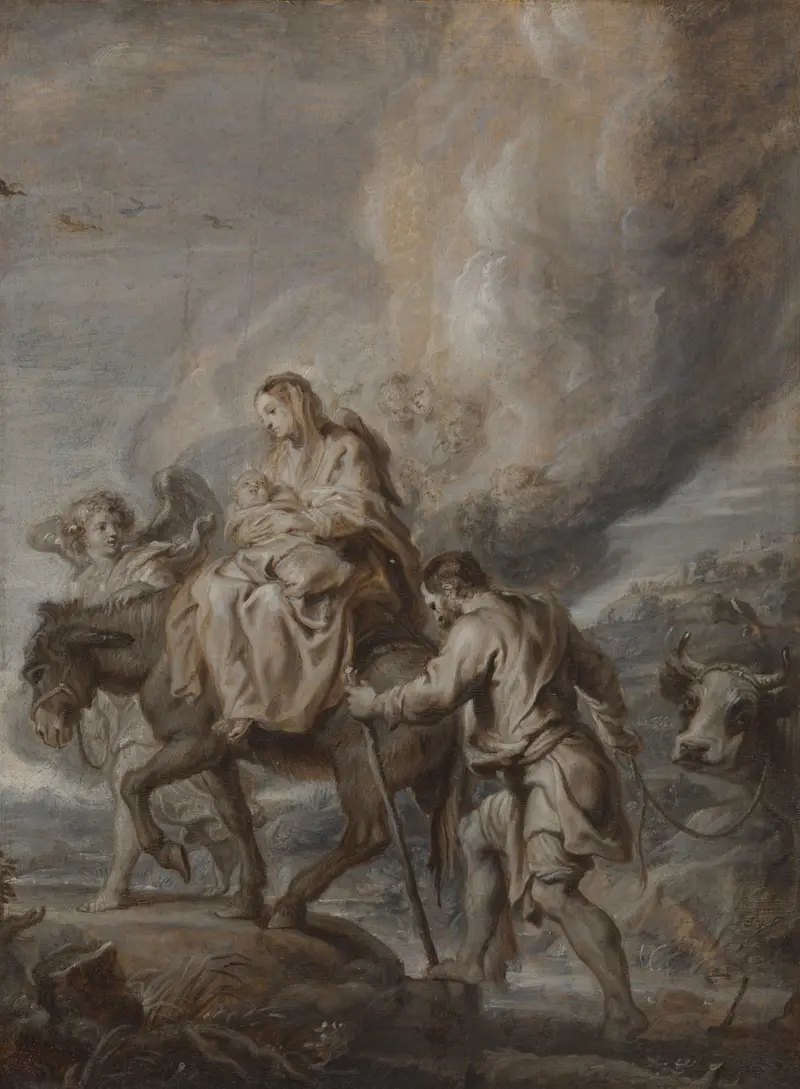
The Flight into Egypt
Abraham Jansz. van Diepenbeeck
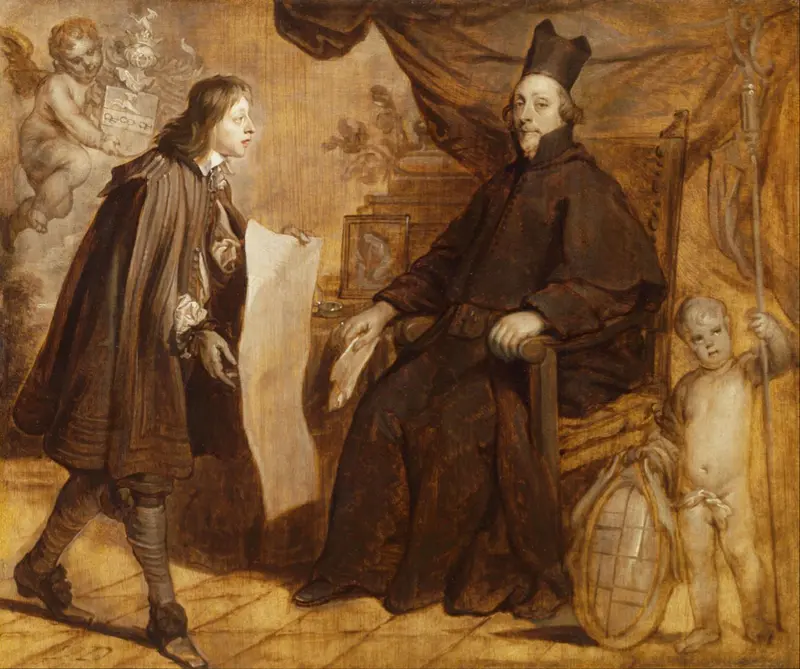
Portrait of a Prelate and a Young Man
Abraham Jansz. van Diepenbeeck
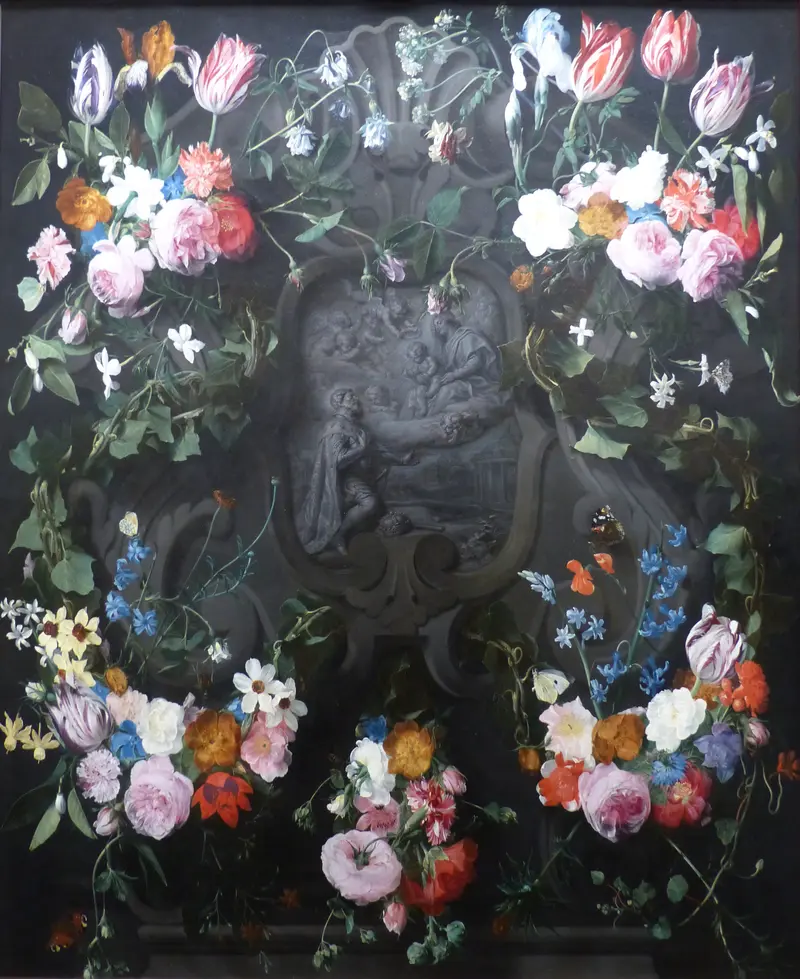
Guirlande de fleurs avec l'apparition de la Vierge-à-l'Enfant à St Léopold
Abraham Jansz. van Diepenbeeck
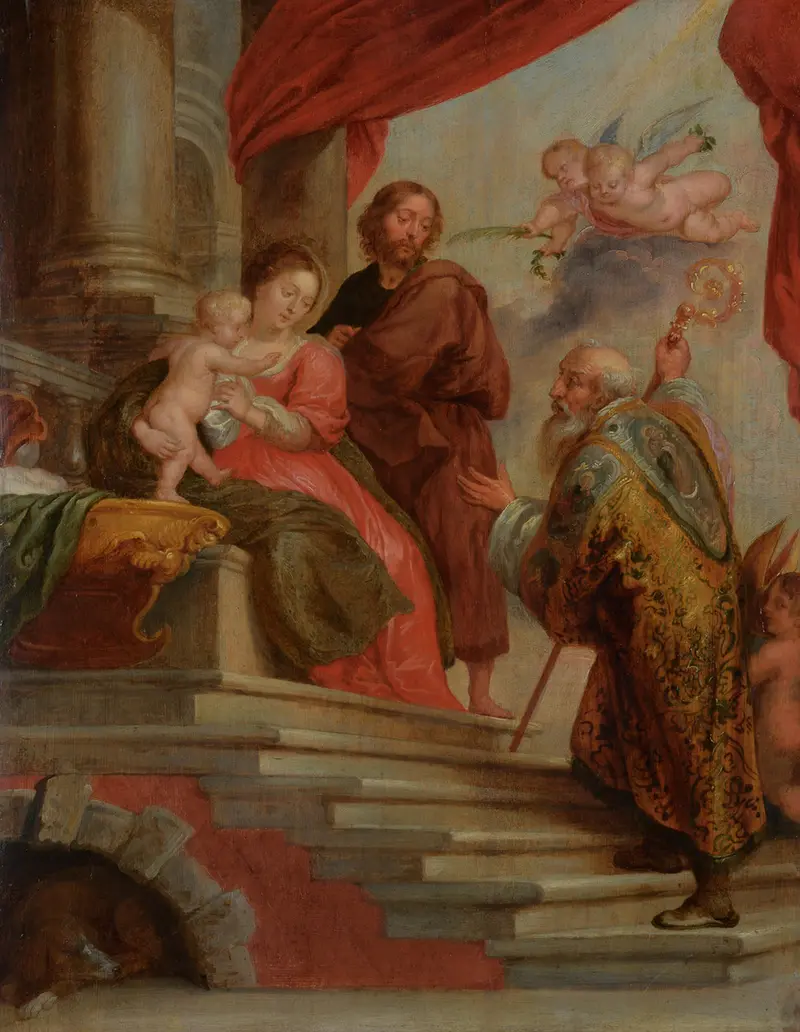
Holy family and Saint Willibrord
Abraham Jansz. van Diepenbeeck
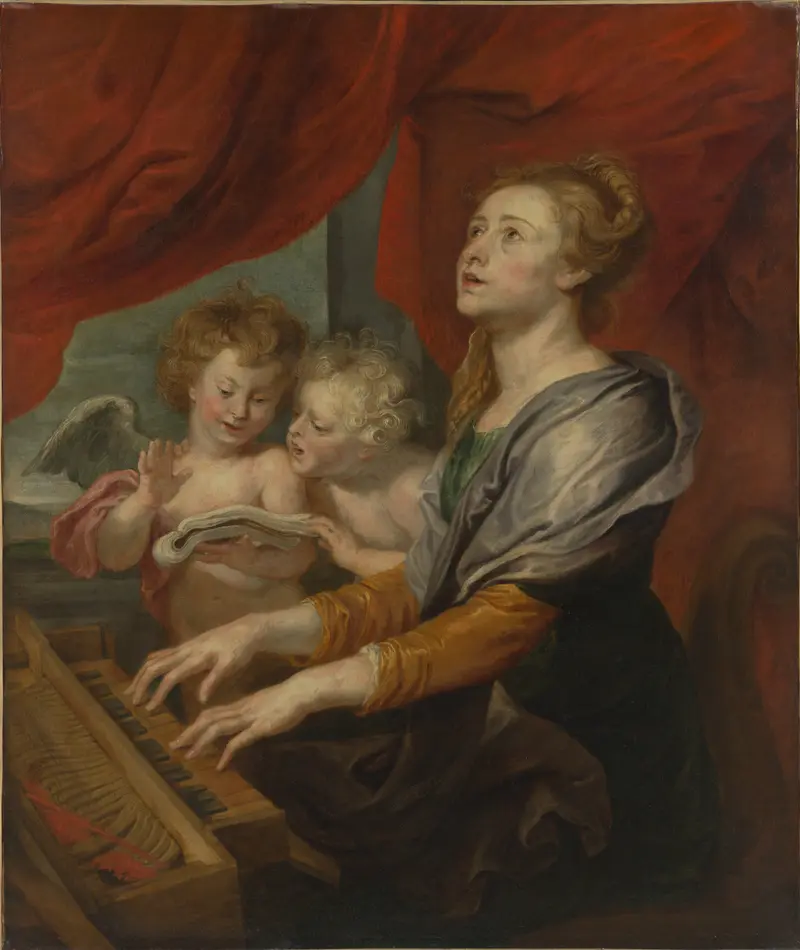
Saint Cecilia
Abraham Jansz. van Diepenbeeck
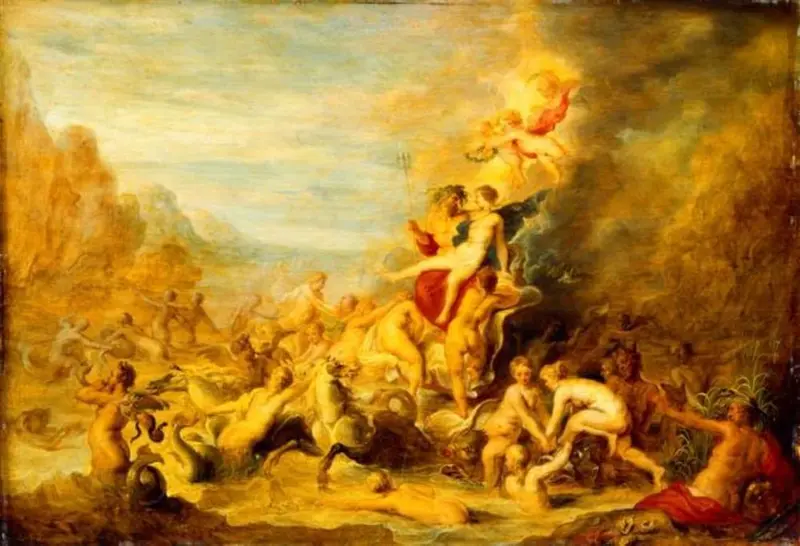
Triumph of Neptune and Amphitrite
Abraham Jansz. van Diepenbeeck
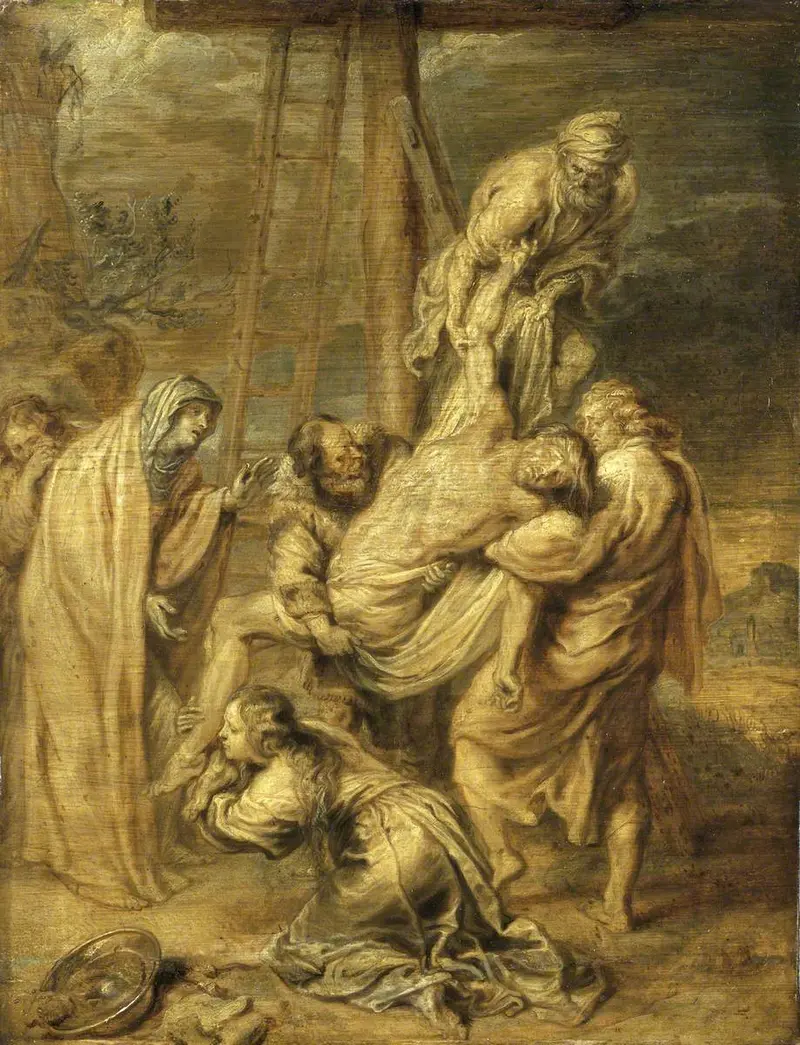
The Deposition
Abraham Jansz. van Diepenbeeck
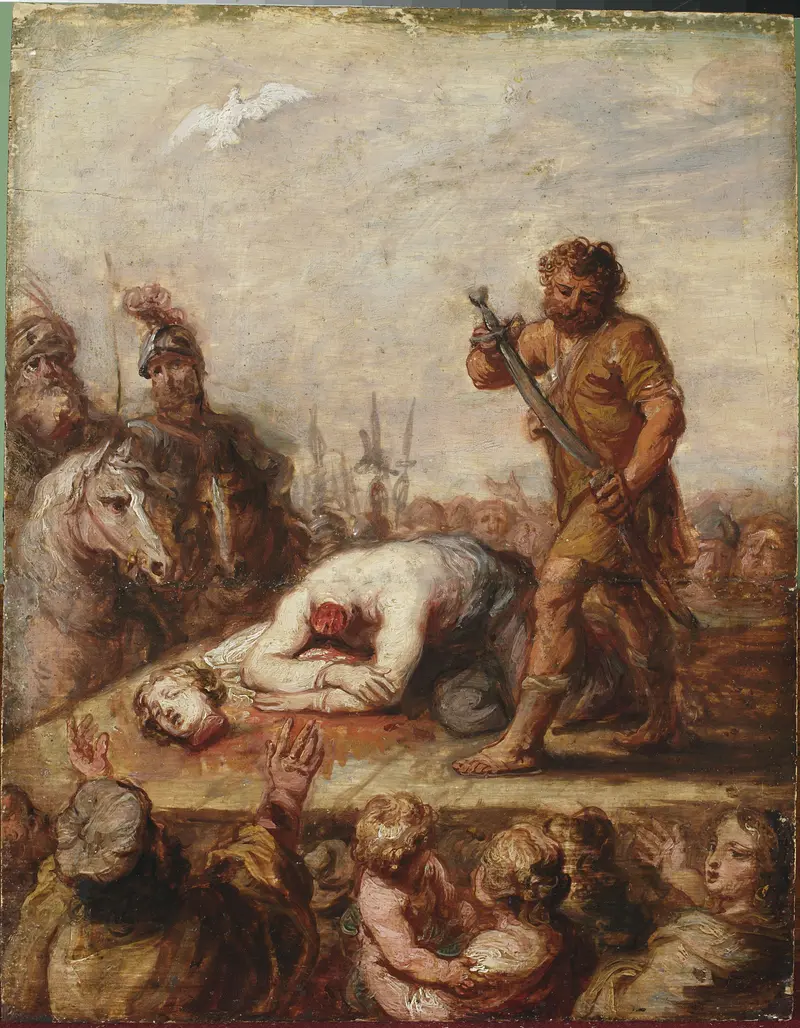
Sketch for a Decapitation of a Saint Woman (St. Catherine?)
Abraham Jansz. van Diepenbeeck
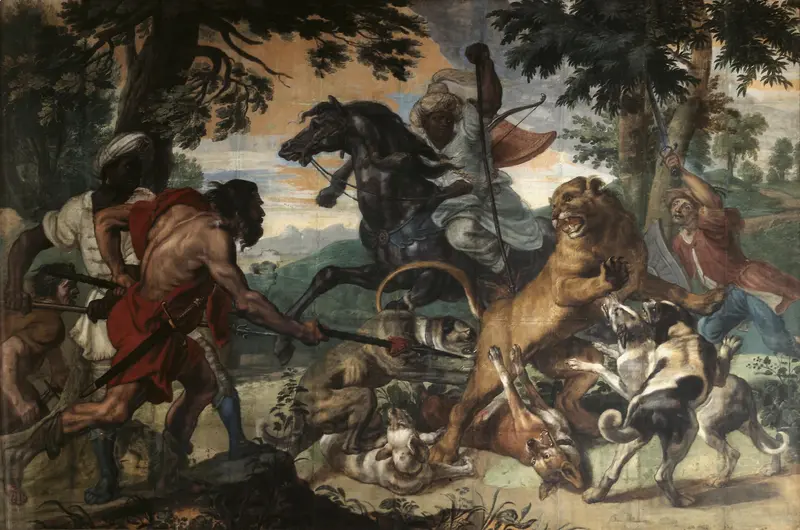
Lion Hunting
Abraham Jansz. van Diepenbeeck
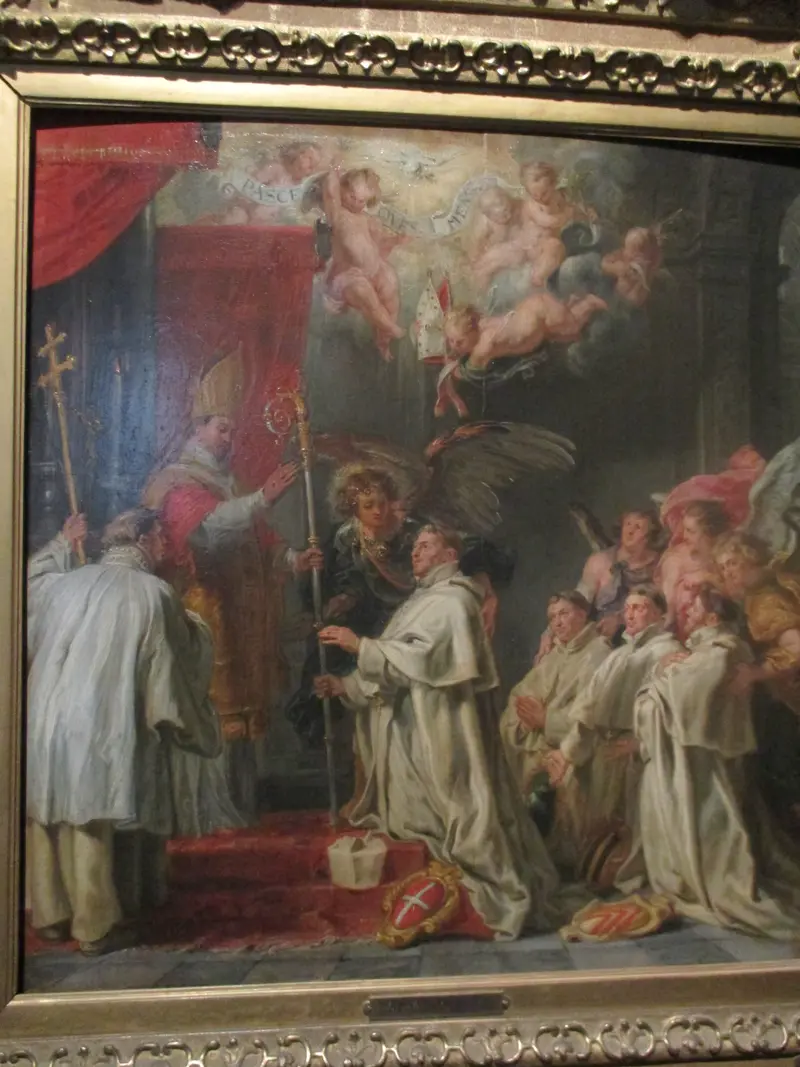
The archangel Michael supports the blessed Waltmann, who is being consecrated abbot by Saint Norbert
Abraham Jansz. van Diepenbeeck





