Forested River Bank, Hill Town and Mountain Peaks in Distance — History & Analysis
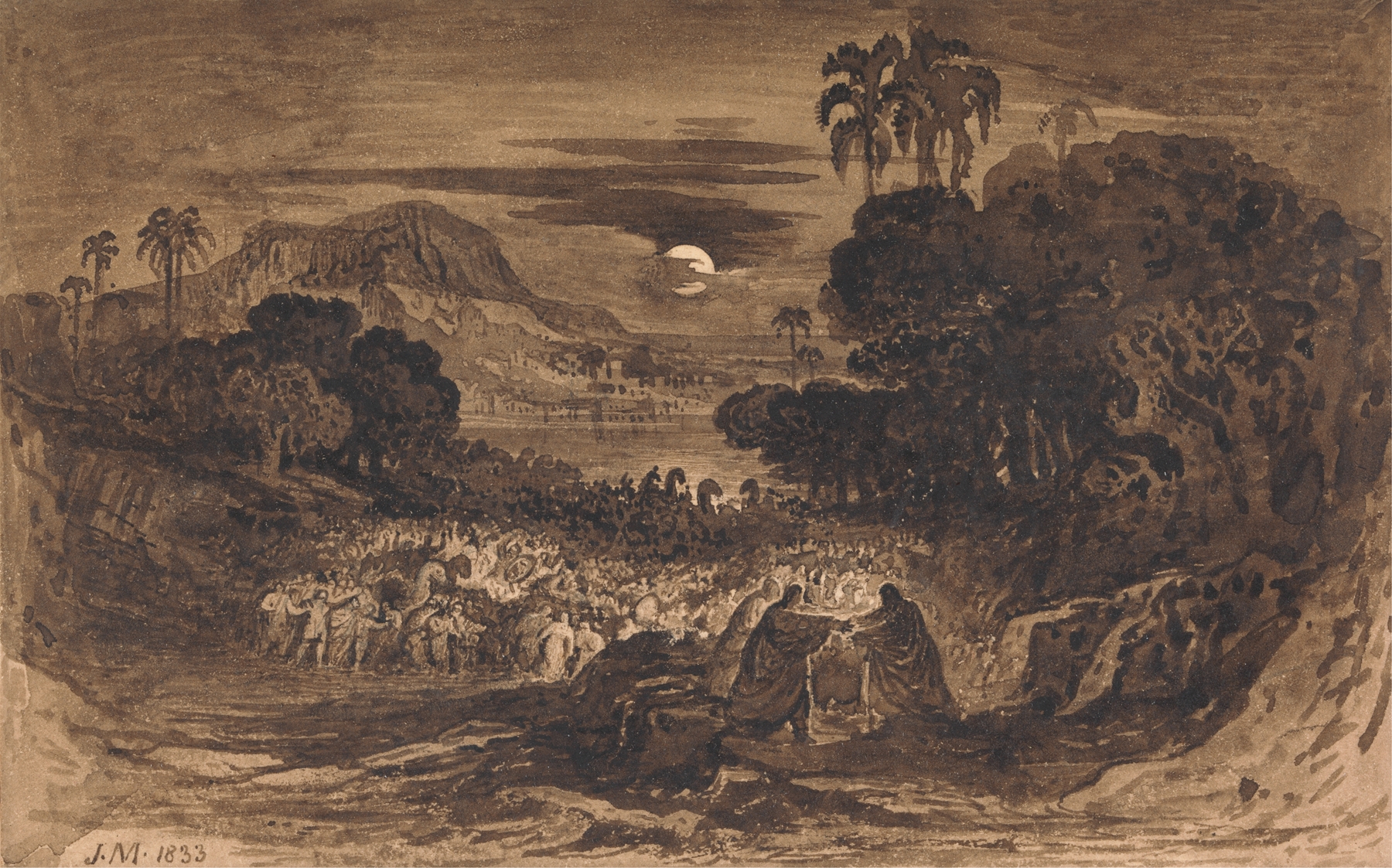
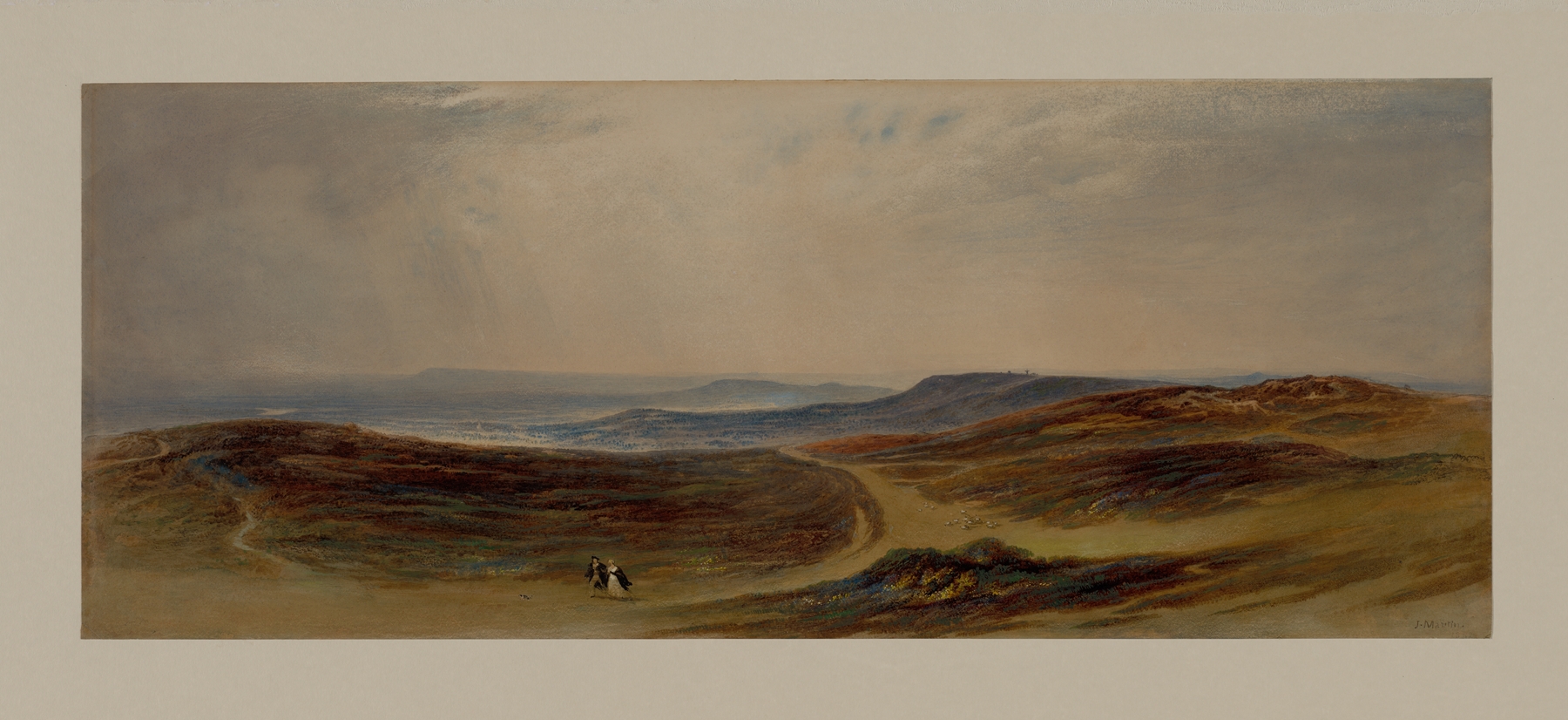
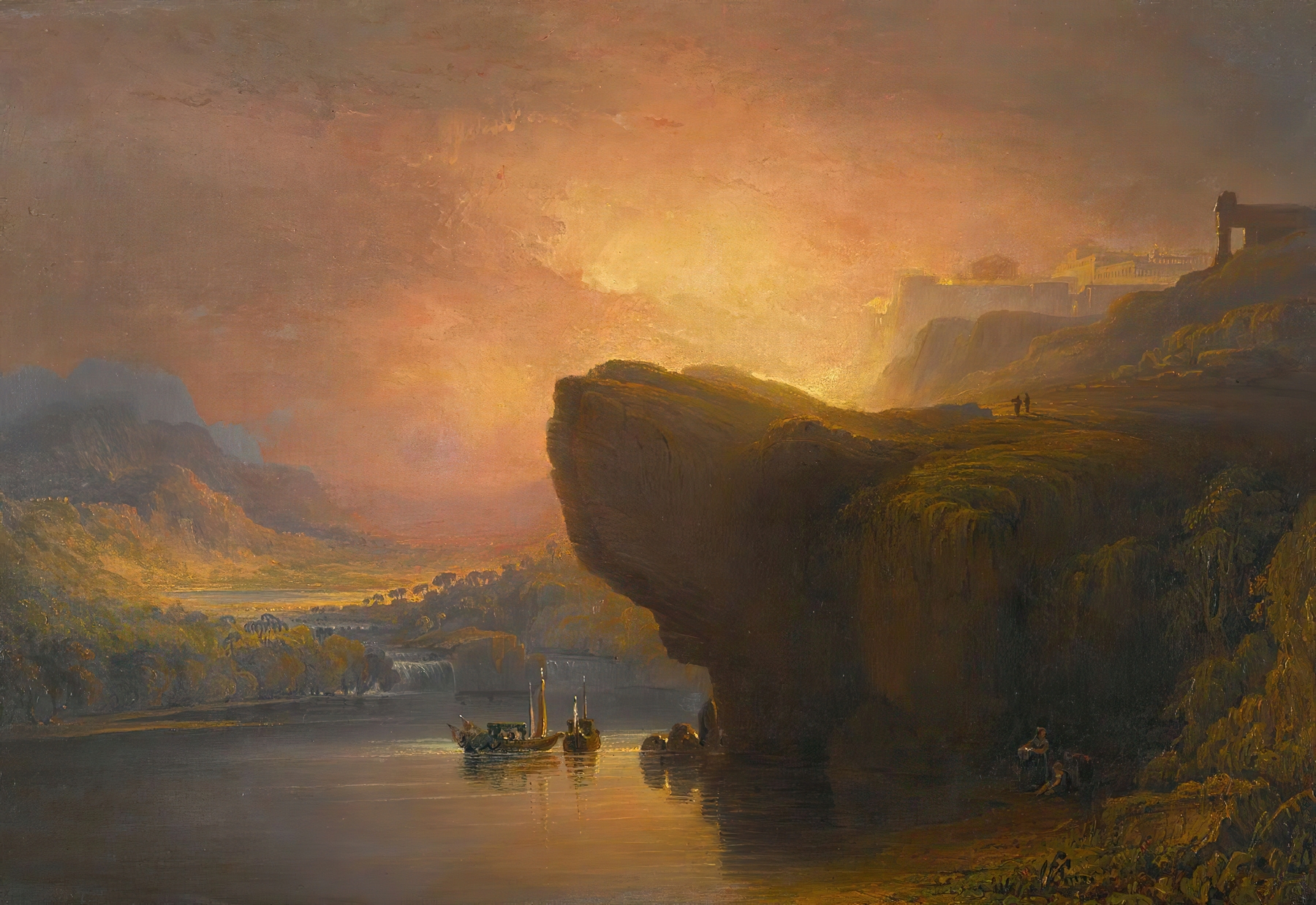
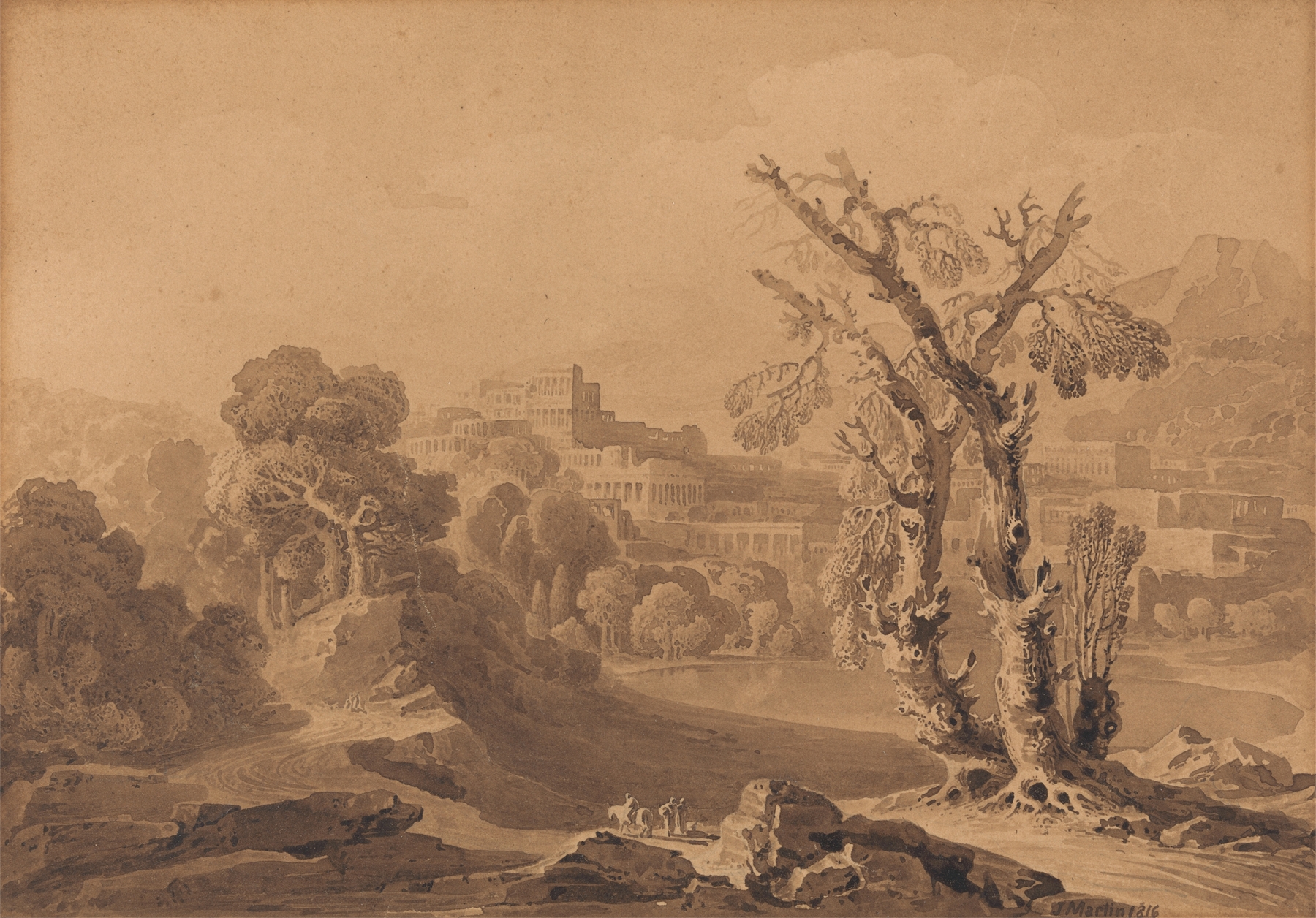
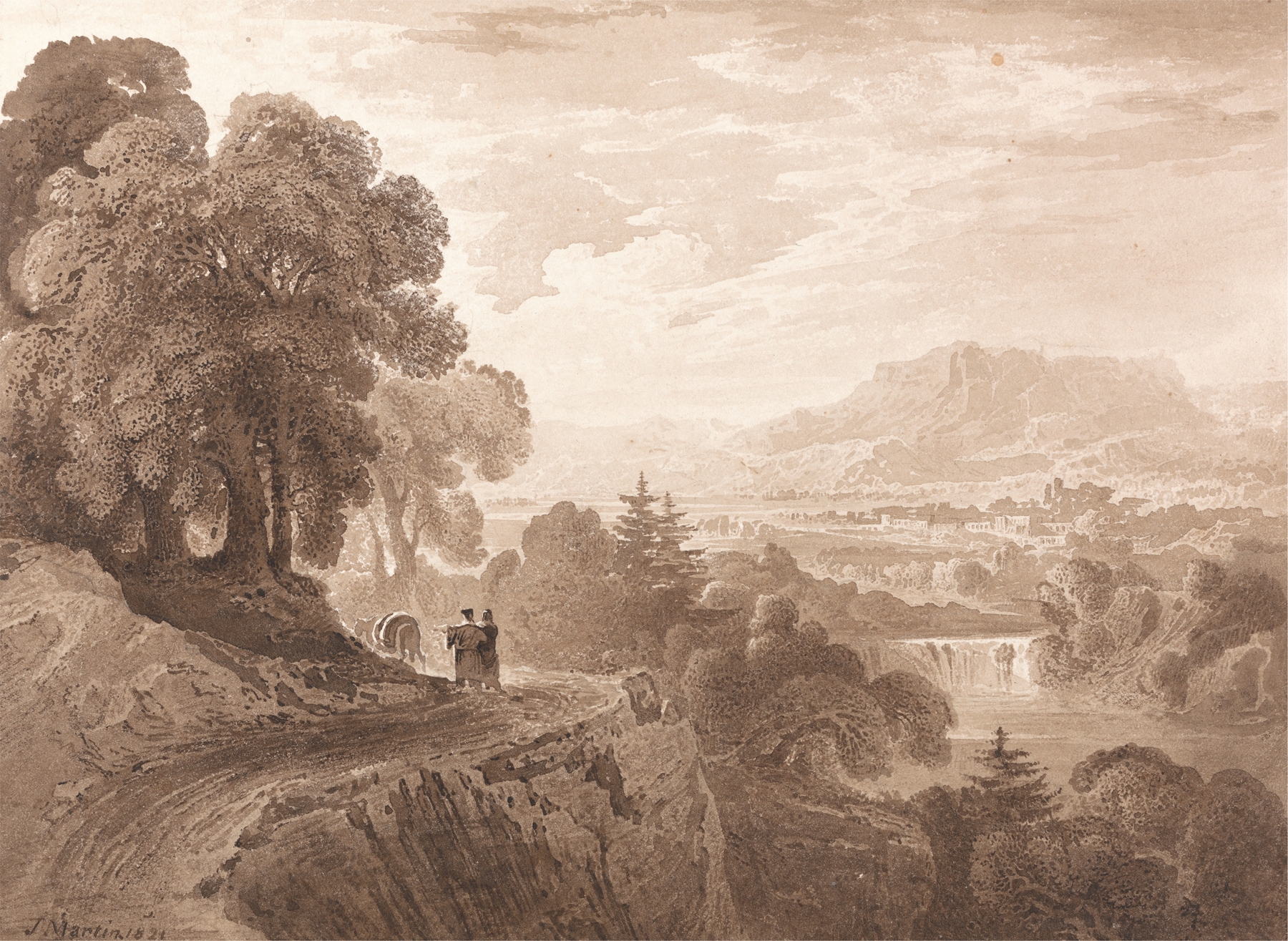
Could a single brushstroke hold eternity? In the quiet expanse of a landscape, we find a poignant reflection of solitude, where nature's grandeur meets the human condition. Look to the left at the delicate interplay of light and shadow that dances across the forested riverbank. The vibrant greens of the trees contrast with the somber, muted browns of the earth, drawing the eye along the river's gentle curve.
Notice how the distant mountain peaks loom, their jagged outlines softened by a veil of mist, suggesting both distance and the yearning for connection. The composition, with its layered depth, invites the viewer to traverse the space, while the ethereal sky casts a serene yet melancholic glow over the entire scene. In this vast landscape, the loneliness of the human experience resonates through the contrast between the lush foreground and the imposing mountains. The river, winding like a ribbon of introspection, suggests a passage through time and emotion, while the hills in the distance symbolize the unattainable aspirations we often chase.
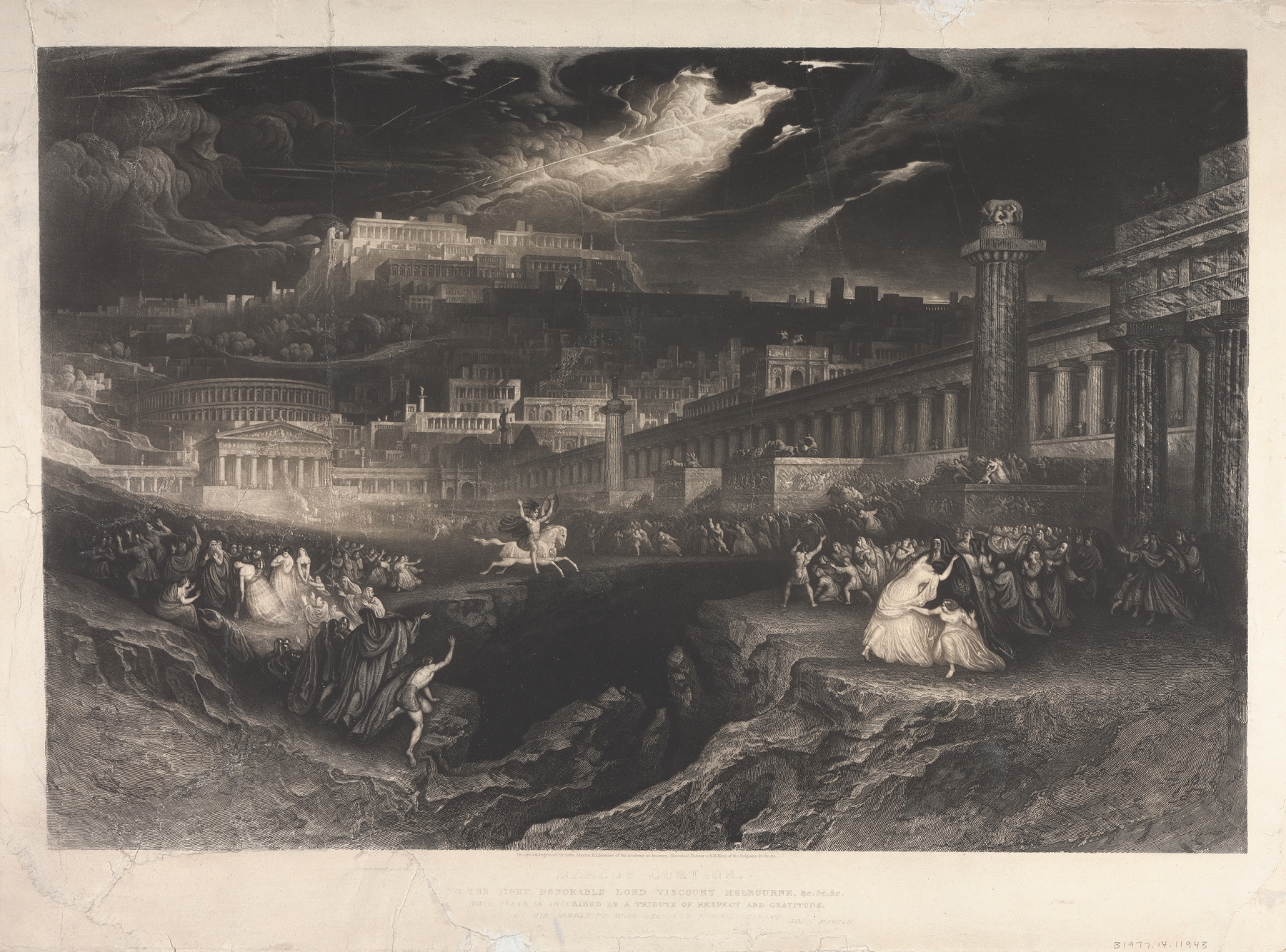
Each element, from the solitary tree to the sweeping sky, amplifies the sense of isolation, offering a contemplative space for reflection and self-awareness. During this undefined period in his career, John Martin was exploring the sublime in nature, capturing its beauty and terror. Living amidst the Romantic movement in early 19th-century England, he sought to evoke emotional responses through dramatic landscapes. This painting reflects his fascination with the vastness of the natural world and the smallness of individual existence, echoing the sentiments of a society grappling with rapid industrialization and the loss of connection to nature.