
Friedrich Gottlieb Klopstock (1724–1803) — History & Facts
When William Blake painted Friedrich Gottlieb Klopstock (1724–1803) in 1802, he was capturing not just a likeness, but a living link between two poetic visionaries who never met. The portrait stands as one of the rare instances where Blake—himself a poet and artist—chose to depict a fellow poet, and a German one at that, whose epic verse had stirred the intellectual circles of late Enlightenment Europe. The work’s creation coincided with a period of renewed interest in Klopstock in England, as translations of his poetry began to circulate among the Romantics.
There is no surviving record of a commission or sitting, and the medium remains uncertain, adding an air of mystery to this already unusual project in Blake’s career. In the portrait, Klopstock appears caught in a moment of introspective intensity, his gaze directed not at the viewer but into some private realm of thought. Blake renders the poet with a luminous forehead and searching eyes, perhaps alluding to the spiritual aspirations that suffuse Klopstock’s verse, especially his celebrated epic The Messiah. The sparse background and subtle play of light focus all attention on the sitter’s face, while the absence of distracting props or symbols sets this apart from more decorative literary portraits of the era, such as Sir Joshua Reynolds’s treatments of English poets.
Here, the sitter’s expression and posture become the sole conveyors of meaning: the slightly parted lips and tense brow suggest a mind in the throes of inspiration. The physical history of Friedrich Gottlieb Klopstock (1724–1803) is shrouded in some uncertainty, as the work does not appear in early exhibition catalogues or correspondence from Blake’s lifetime. Scholars believe it may have been produced either for a private patron or as part of Blake’s own circle of admirers, who valued both his art and poetry. The portrait resurfaced in the twentieth century, by which time it was recognized as a rare example of Blake’s engagement with contemporary literary figures outside Britain.
Today, it stands as a testament to the cross-cultural currents of the Romantic era, and to Blake’s unique approach to portraiture—one that sought to reveal not just the features, but the inner fire of his subject.
More Artworks by William Blake
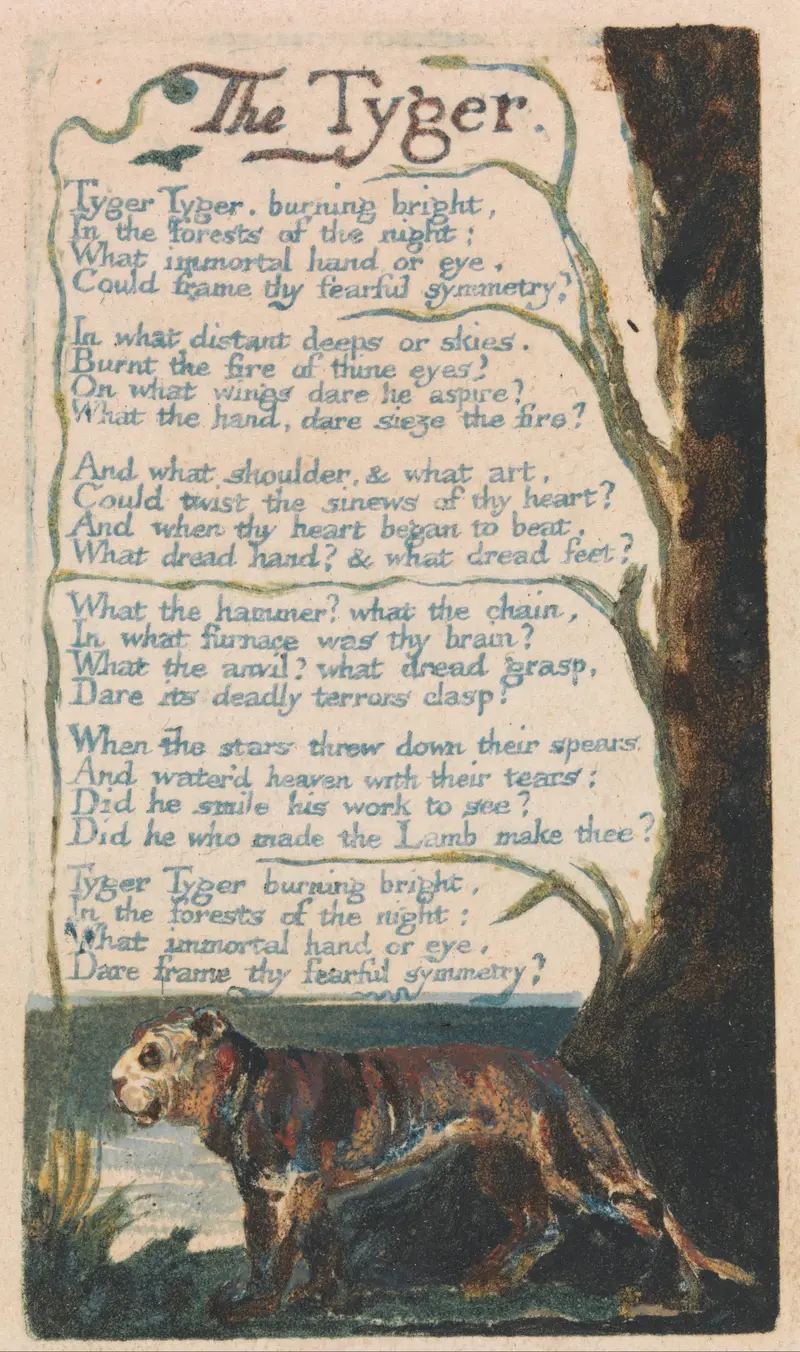
The Tyger
William Blake

Christ Blessing
William Blake
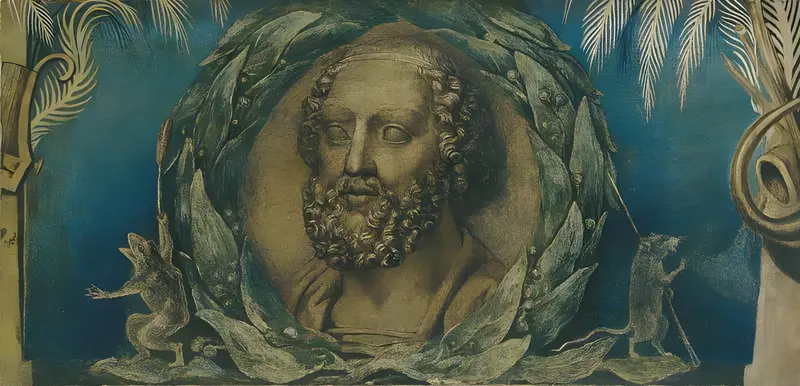
Homer
William Blake
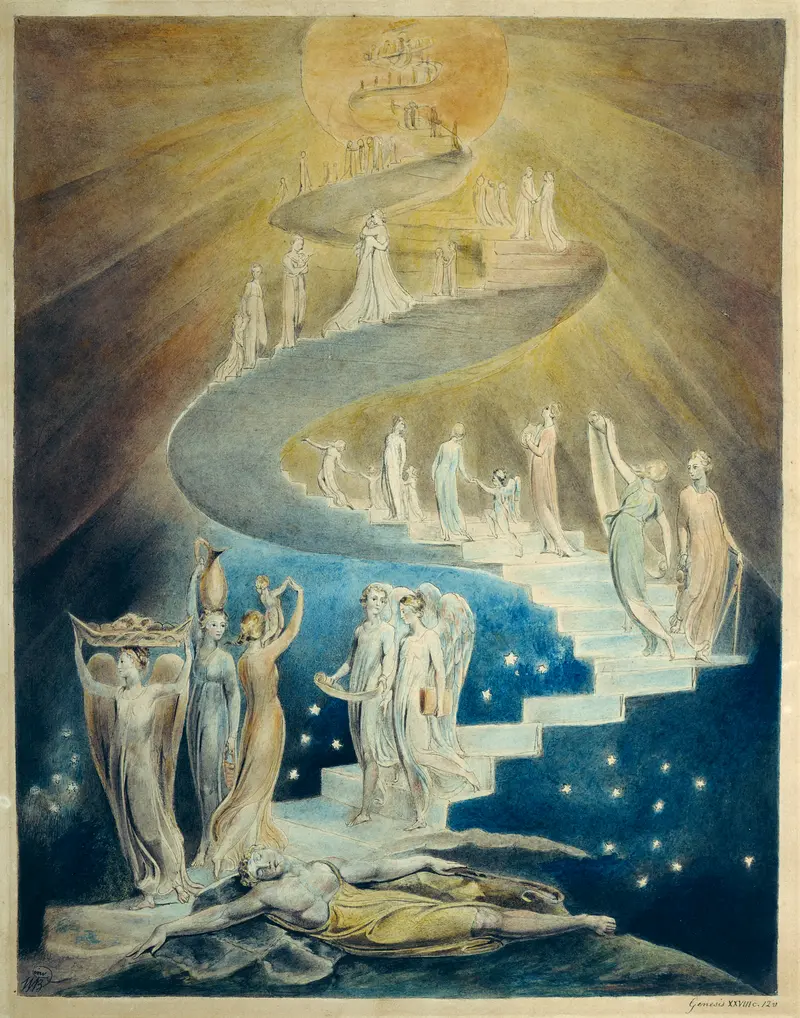
Jacob's Ladder
William Blake
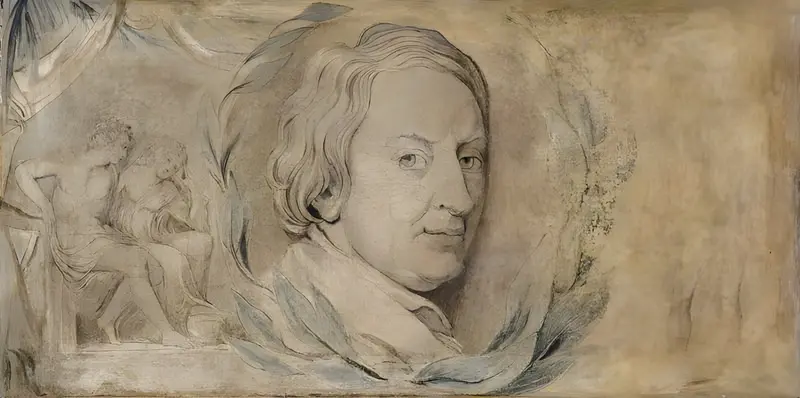
John Dryden (1631–1700)
William Blake

Landscape near Felpham
William Blake
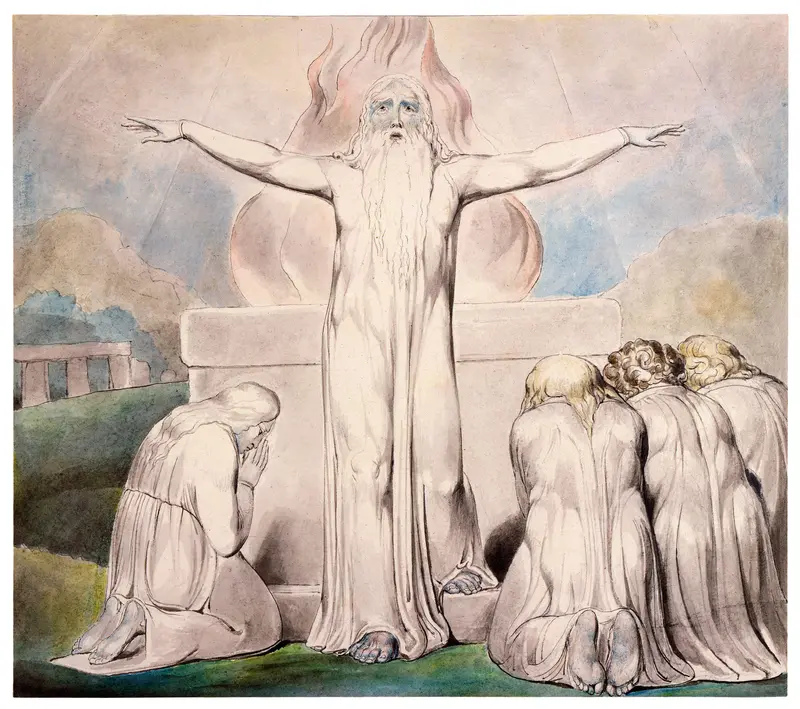
Sacrifice of Job
William Blake
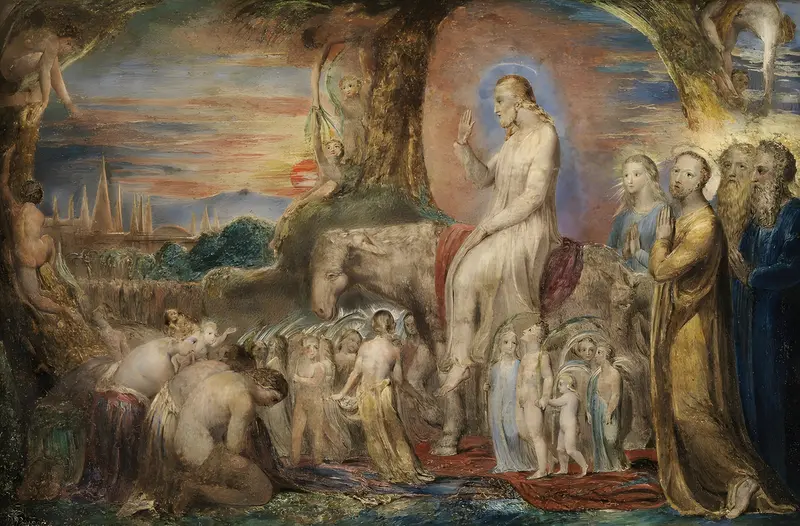
Christ's Entry into Jerusalem
William Blake
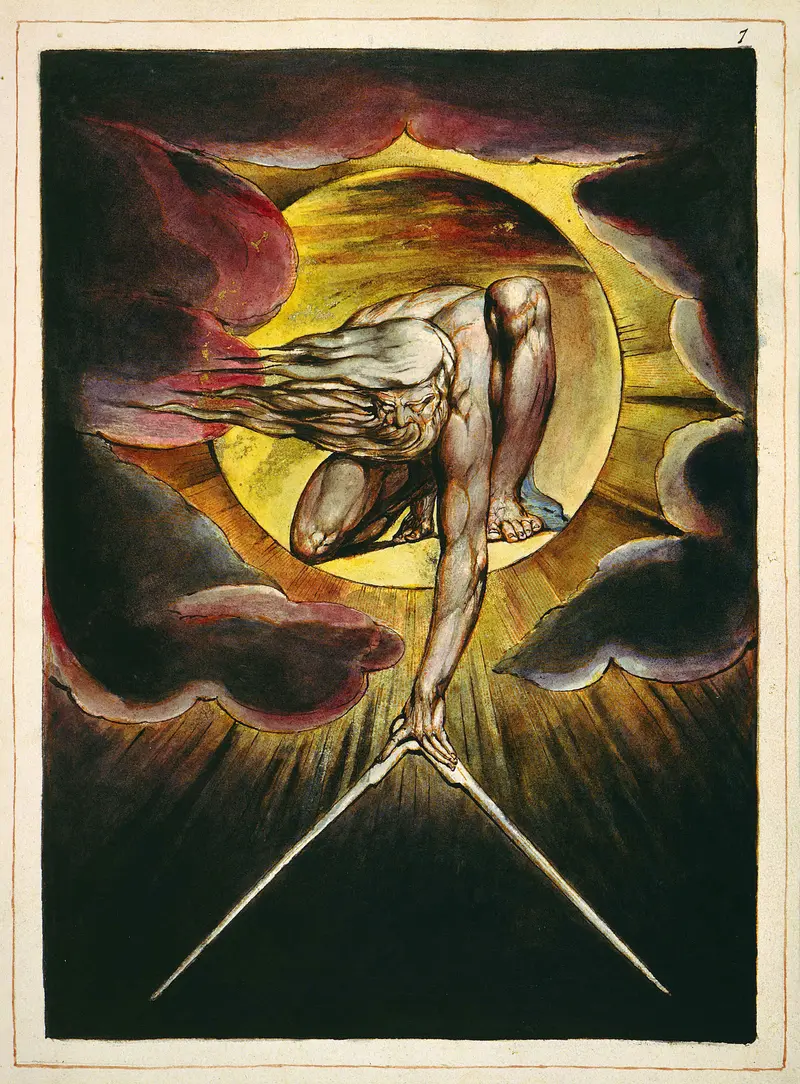
The Ancient of Days
William Blake
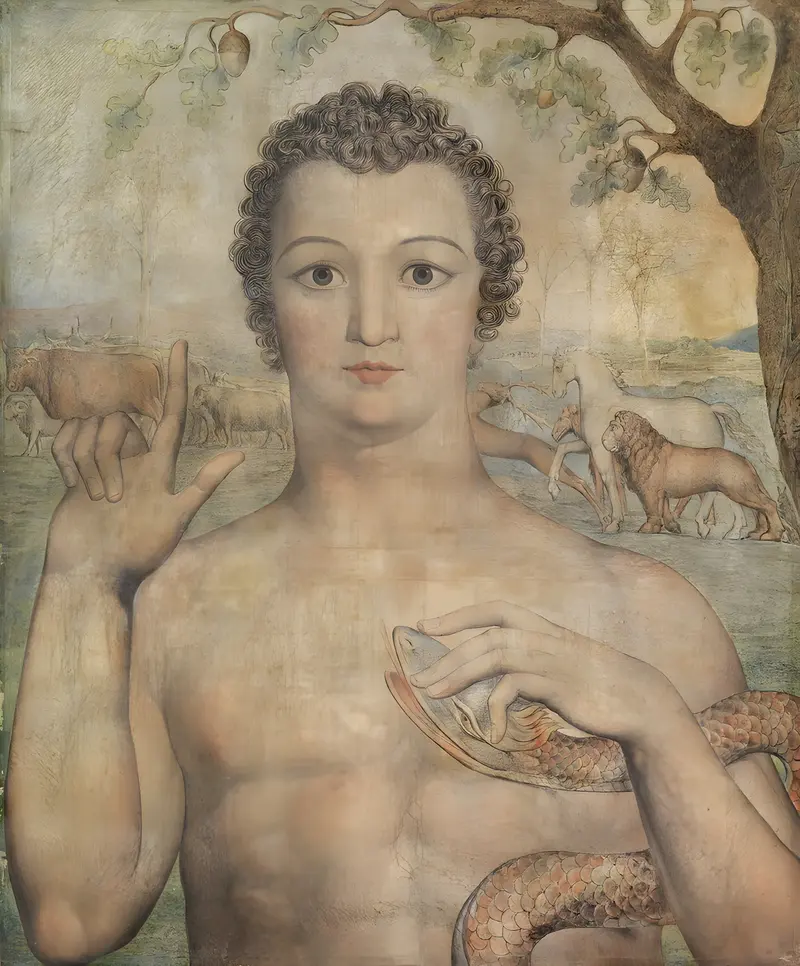
Adam Naming the Beasts
William Blake





