Fruit harvest in the Palatinate (The pear tree) — History & Facts
Did the painter know this moment would outlive them? As the brushstrokes captured the essence of life, they echoed the beauty of fleeting time, forever preserved in vibrant hues. Look to the left where a delicate pear tree stands resilient, its branches heavy with ripe fruit. The artist’s deft use of light artfully highlights the warm yellows and greens of the pears, creating a luminous contrast against the cool blues of the sky. Notice how the sun filters through the leaves, casting intricate shadows that dance playfully on the ground, inviting the viewer to step into the sun-soaked landscape. Beneath the surface, a deeper narrative unfolds.
The juxtaposition of abundance and the quiet solitude of the harvest speaks to the cycles of life — a pause within nature's embrace. The harmonious composition suggests a utopian tranquility, yet hints at the laborious efforts of those who tend to these trees, weaving together themes of joy and toil. Each element, from the fruits to the distant hills, conveys the weight of the moment, urging reflection on our connection to the earth. Created in 1917, during a period marked by the turbulence of World War I, this work emerged as Max Slevogt sought solace in rural landscapes.
Living in Germany, he embraced Impressionism while experimenting with light and color to communicate emotion. This painting not only captures a serene moment in nature but also reflects the artist’s desire for peace amidst chaos. It became a visual reprieve for both the painter and the viewer, a reminder of simpler joys amid the storm.
More Artworks by Max Slevogt
Browse all →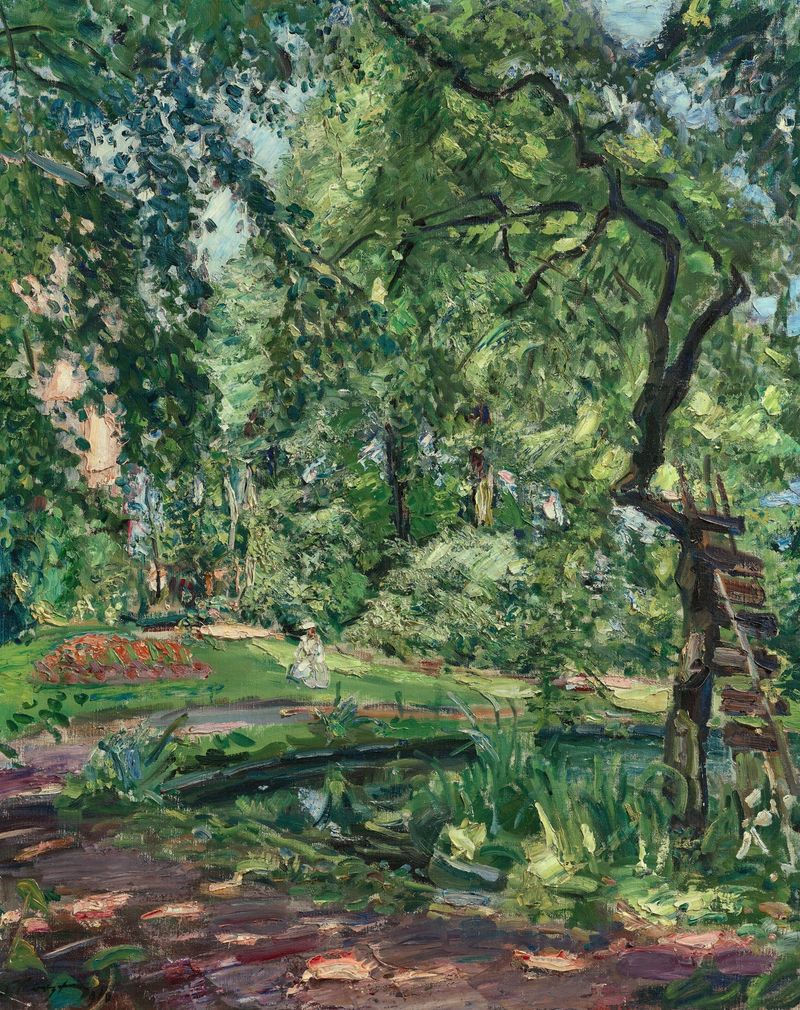
Garten in Godramstein mit verwachsenem Baum und Weiher
Max Slevogt
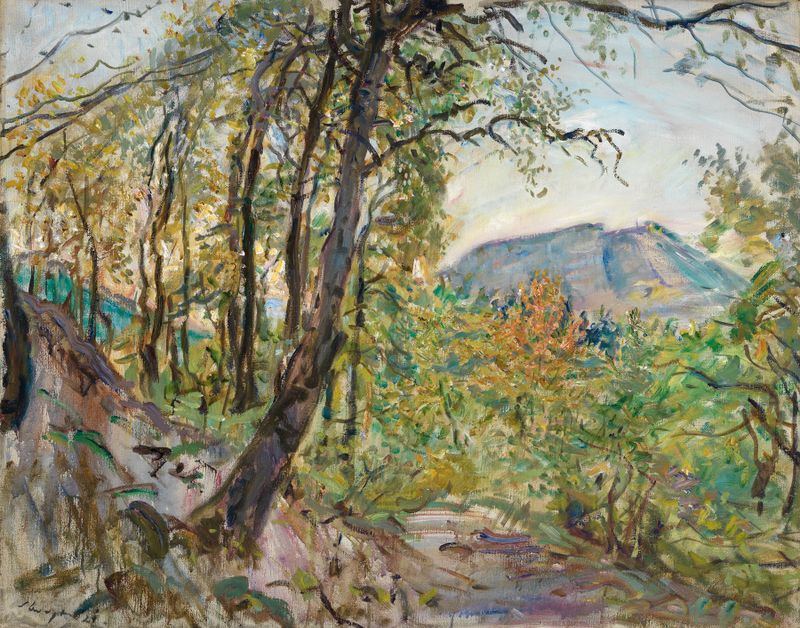
Pfälzische Landschaft
Max Slevogt
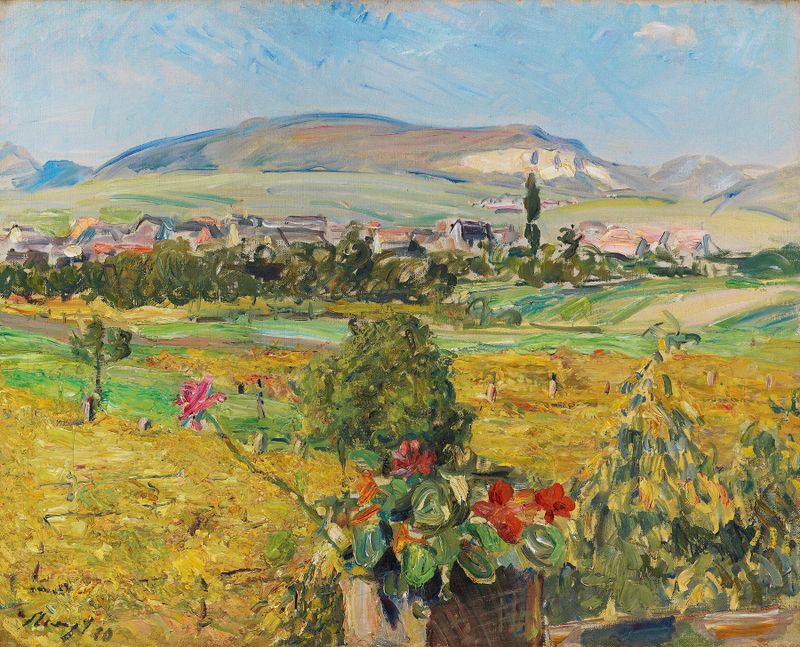
Pfälzer Landschaft
Max Slevogt

Kinder am Weiher (Garten in Godramstein)
Max Slevogt
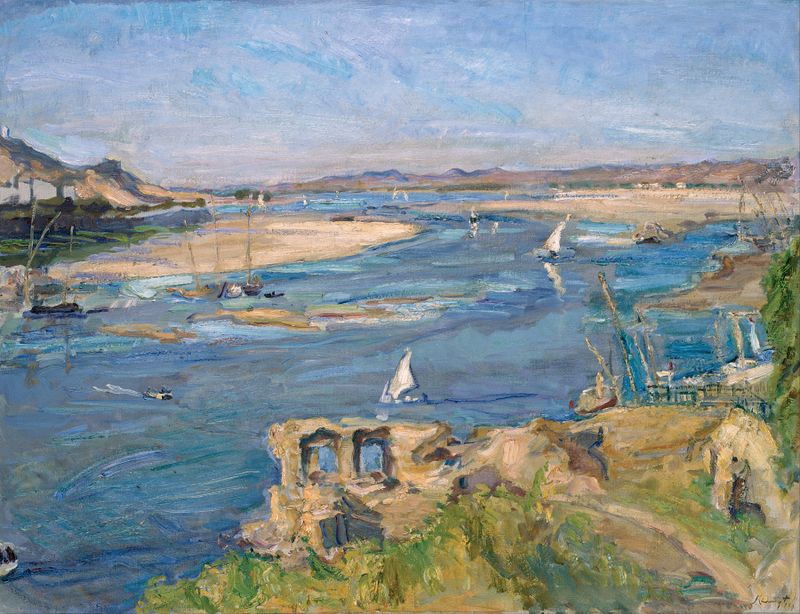
The Nile near Aswan
Max Slevogt
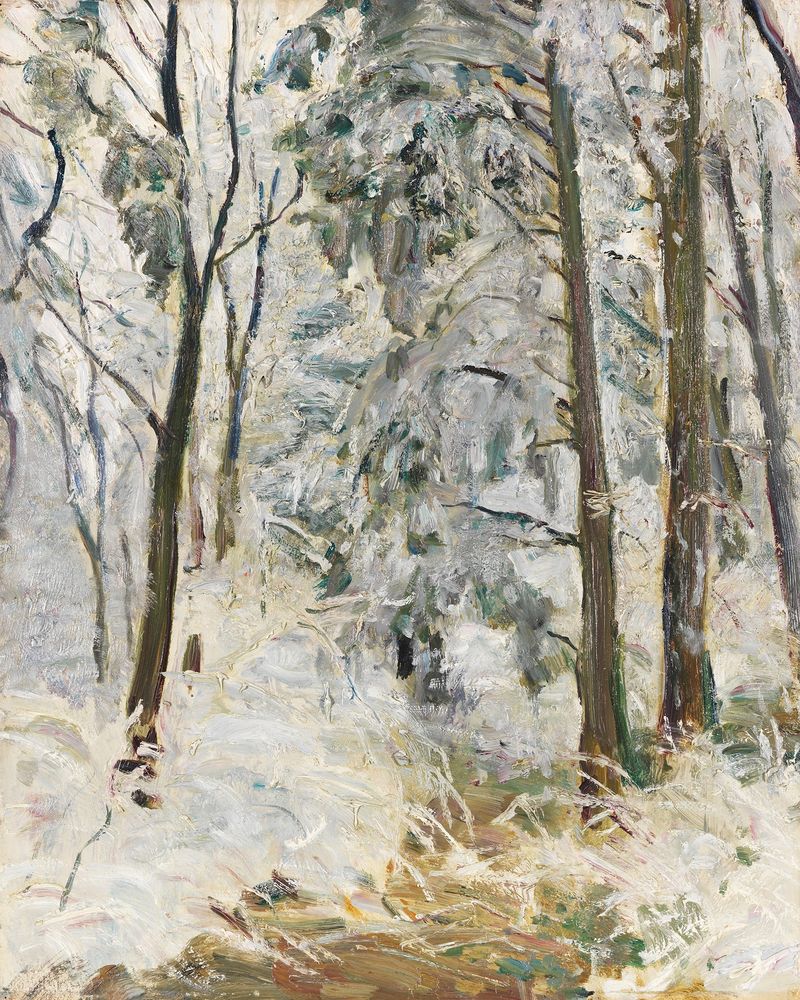
Verschneiter Waldweg
Max Slevogt
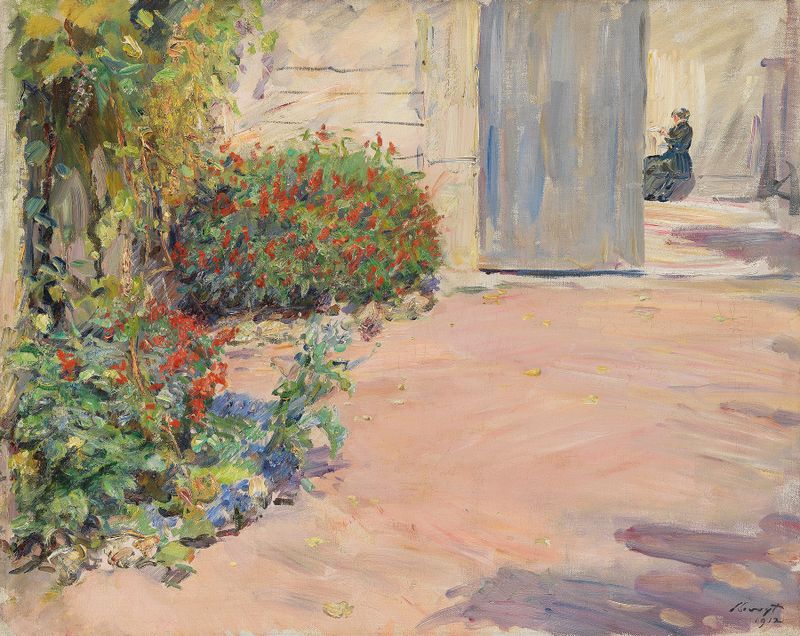
Gartenweg zum Sommerhaus (Godramstein)
Max Slevogt

Grape harvest at Neukastel
Max Slevogt
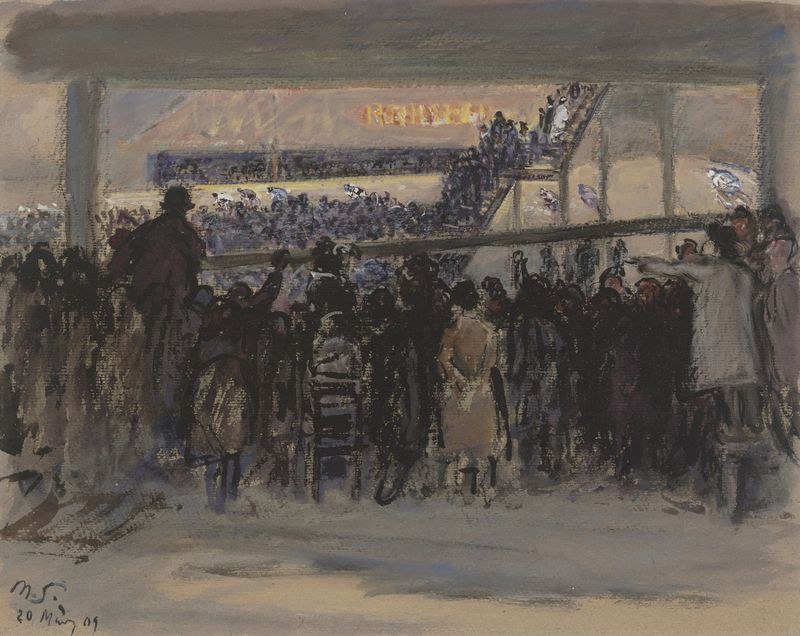
Berliner Sechstagerennen
Max Slevogt
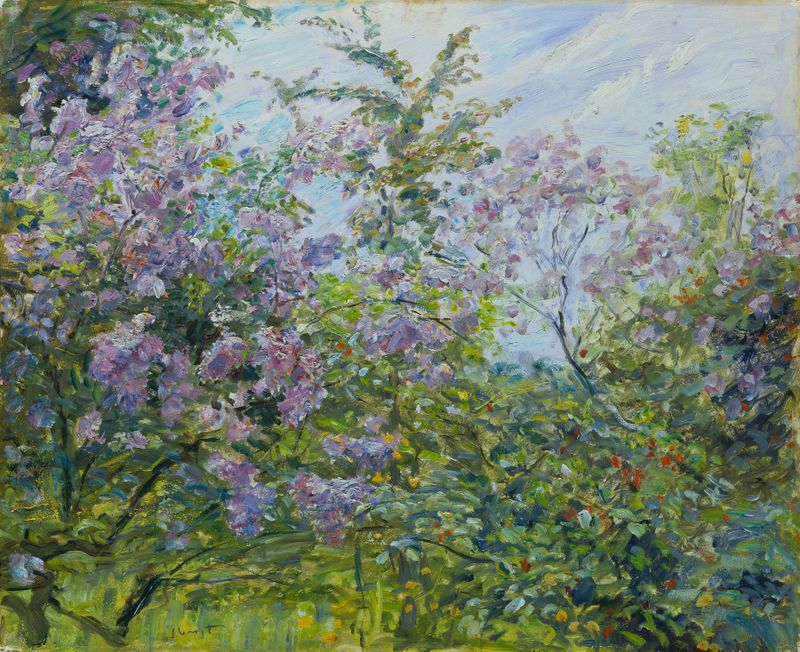
Blossoming Lilac
Max Slevogt