
Géricault - The Village Forge, c. — History & Facts
When Théodore Géricault exhibited The Village Forge, c. in 1821, critics were startled to see the young artist—fresh from the controversy of The Raft of the Medusa—turn his gaze from shipwrecked bodies to the everyday world of rural labor. This shift baffled some, but others saw in it a bold statement: the drama of ordinary life was worthy of the same seriousness as historical tragedy. The painting’s reception marked a turning point in Géricault’s career, as he moved away from grand narrative canvases to scenes drawn from contemporary experience. At the heart of The Village Forge, c., a blacksmith hammers at his anvil, the red glow of the forge casting flickering shadows across the cramped interior.
The moment is one of intense physical action: the smith’s raised arm, the tensed bodies of his assistants, and the attentive gaze of a young boy all draw the viewer into the heat and noise of the scene. Horses wait patiently in the gloom, their presence a reminder of the forge’s place at the center of village life. The composition’s dramatic lighting—reminiscent of Caravaggio—spotlights the laborers and their tools, transforming a humble workshop into a stage for human effort and cooperation.
Unlike the refined, idealized smithies of Jean-Baptiste Greuze, Géricault’s forge is gritty and real, its workers anonymous but dignified. The precise history of this painting’s commission and early ownership remains uncertain, as is often the case with Géricault’s lesser-known works. Scholars believe it was painted during his final years in France, a period marked by declining health but intense productivity. While the medium is not definitively recorded, it is likely oil on canvas, in keeping with his other genre scenes of the time.
Today, The Village Forge, c. is recognized as a key example of Géricault’s interest in the realities of working life, bridging the heroic narratives of his early career and the unvarnished realism that would soon define Courbet and the Realist movement. Its current location is not firmly established, but it remains a touchstone for those tracing the evolution of French painting in the 1820s.
More Artworks by Théodore Géricault
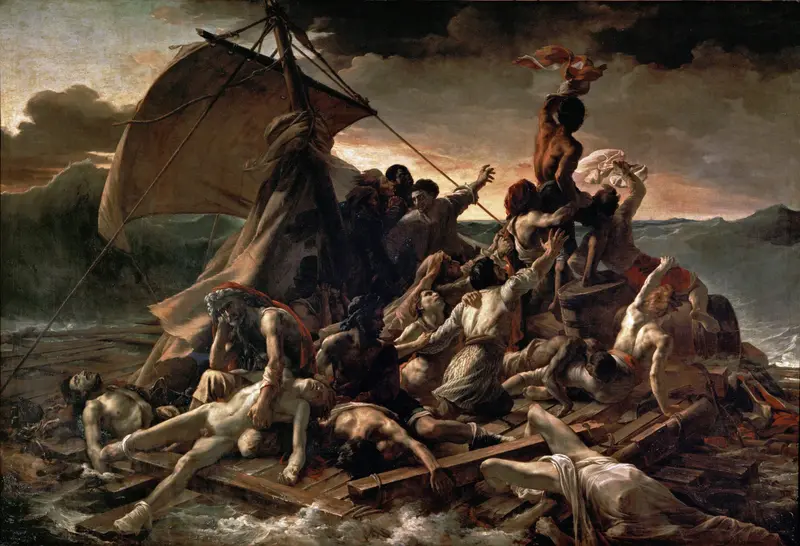
The Raft of the Medusa
Théodore Géricault

Géricault - Le naufrage du radeau de la Méduse, MBA 790
Théodore Géricault
Cattle Market
Théodore Géricault
Evening; Landscape with an Aqueduct
Théodore Géricault
Horse Race
Théodore Géricault

Horses Standing in a Mews
Théodore Géricault
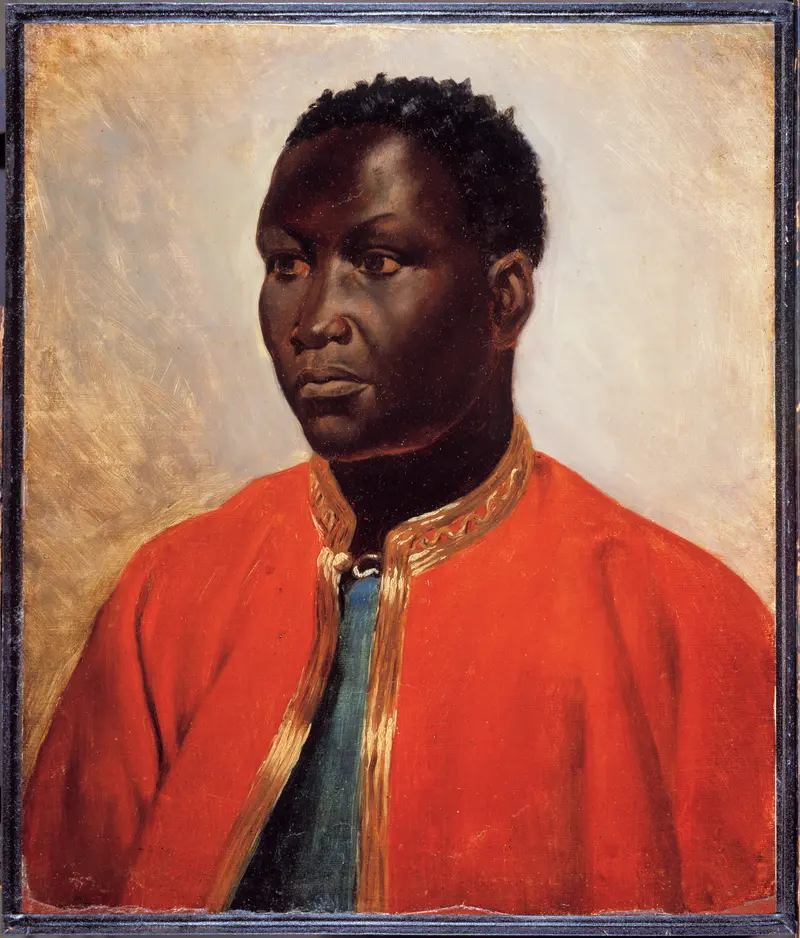
Portrait of a Negro
Théodore Géricault
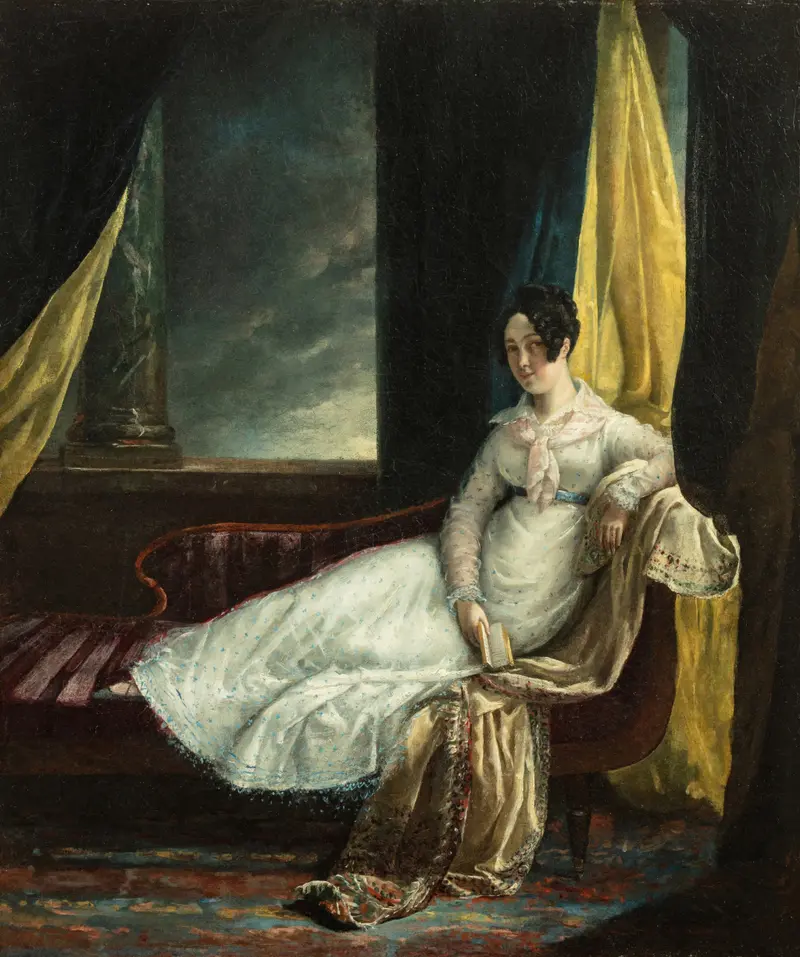
Portrait of Zoë Elmore
Théodore Géricault
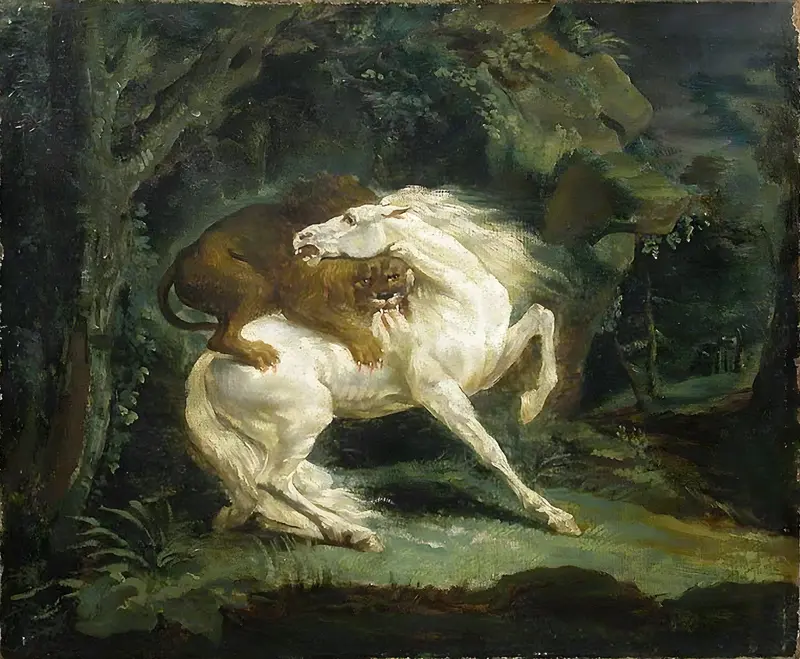
Cheval attaqué par un lion
Théodore Géricault
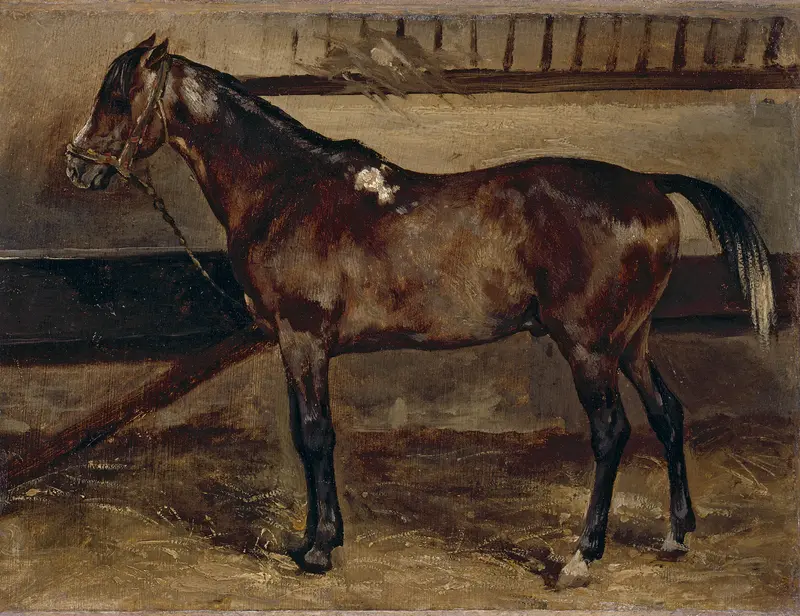
Cheval brun à l'écurie
Théodore Géricault
More Genre Scene Art

Banquet of the Officers of the St George Civic Guard
Frans Hals

Rembrandt and Saskia in the Scene of the Prodigal Son
Rembrandt van Rijn

Bal du moulin de la Galette
Pierre-Auguste Renoir

Quadrille at the Moulin Rouge
Henri de Toulouse-Lautrec

A Burial at Ornans
Gustave Courbet

When Will You Marry?
Paul Gauguin