
Girl in a Bonnet Tied with a Large Pink Bow — History & Facts
When Mary Cassatt exhibited Girl in a Bonnet Tied with a Large Pink Bow in 1909, it marked one of her last public showings before her eyesight began to fail, drawing attention from critics who sensed the closing of a remarkable career. The painting’s subject—a young girl with her face framed by a lavish pink ribbon—captured the Parisian public’s fascination with childhood innocence and fashionable dress. Unlike many of her male contemporaries, Cassatt consistently centered girls and women not as decorative objects, but as individuals with interior lives.
The work’s title alone, with its vivid description, was enough to draw crowds eager to see the latest vision from the American in Paris. The moment Cassatt chose is intimate and unguarded: the girl, cheeks flushed, gazes slightly away from the viewer, her expression caught between curiosity and reserve. The oversized pink bow, rendered with broad, confident strokes, dominates the composition, its color echoing in the child’s lips and the soft blush of her skin. Light falls gently across her face, picking out the textures of her bonnet and the crisp folds of her dress, while the background dissolves into loose, impressionistic brushwork.
Unlike Renoir’s more decorative portraits of children, Cassatt’s approach is direct and unsentimental, inviting us to wonder what the girl is thinking rather than simply admiring her appearance. Although the exact patron or provenance of Girl in a Bonnet Tied with a Large Pink Bow is not fully documented, the painting typifies Cassatt’s late period, when she focused almost exclusively on portraits of children and mothers. Works from this era were often exhibited in Paris and New York, sometimes sold to American collectors eager to bring a piece of Impressionism home. Today, the painting is celebrated as a testament to Cassatt’s enduring interest in the private worlds of women and children, and her ability to combine modern technique with psychological depth.
Its current location is not widely publicized, but it remains a favorite in exhibitions exploring the role of women artists in the Impressionist movement.
More Artworks by Mary Cassatt

The Child's Bath
Mary Cassatt
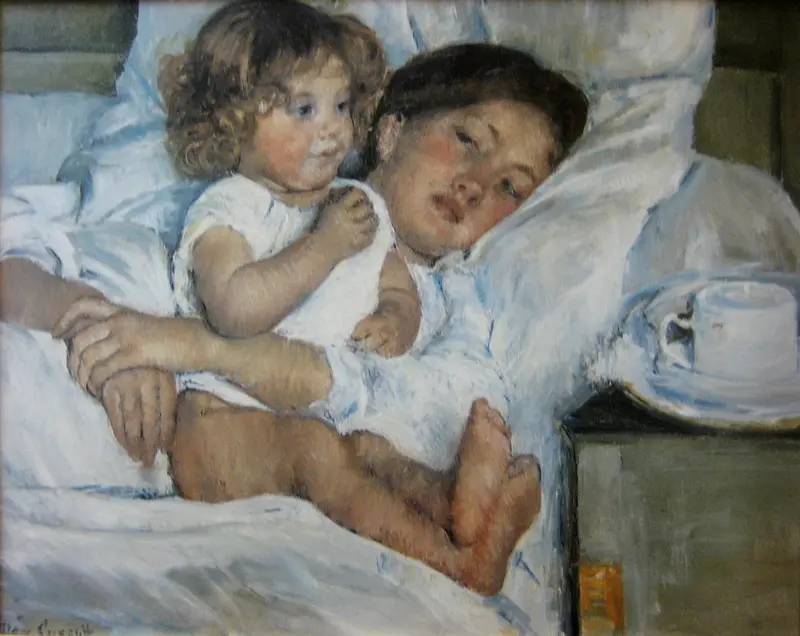
Breakfast in Bed
Mary Cassatt

Mother and Child (Baby Getting Up from His Nap)
Mary Cassatt
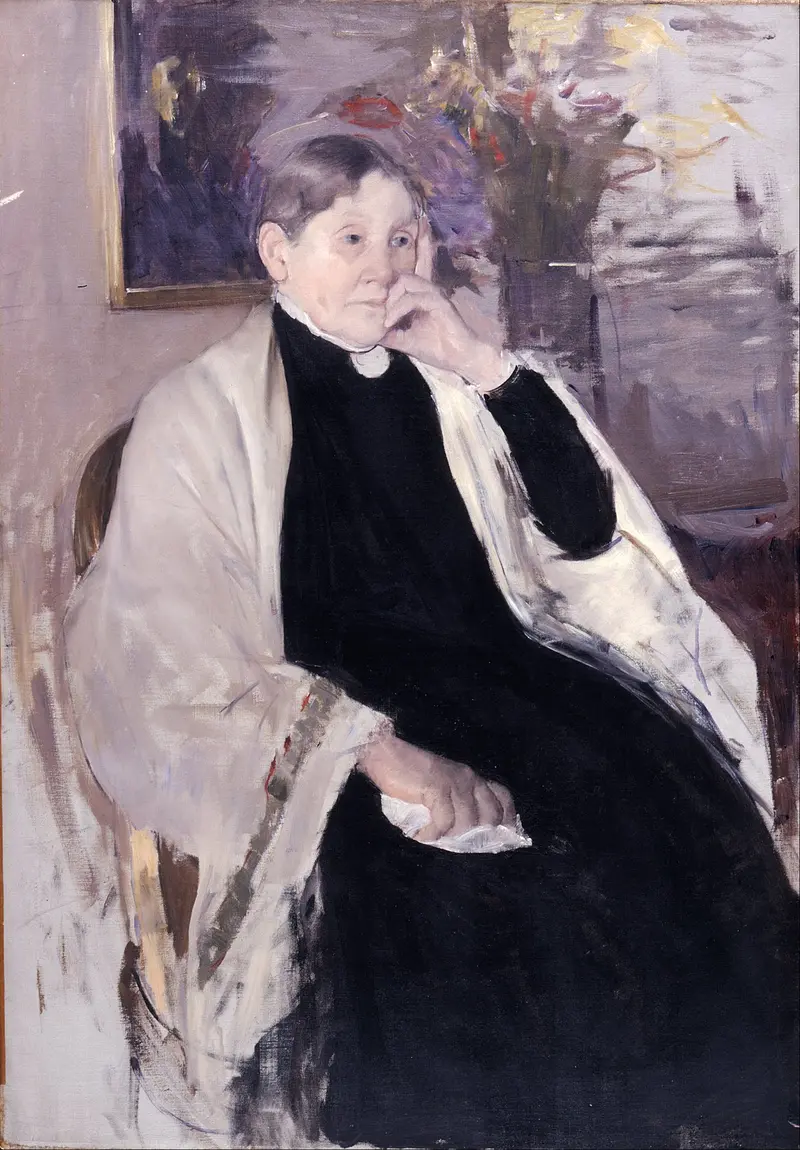
Mrs. Robert S. Cassatt, the Artist's Mother
Mary Cassatt
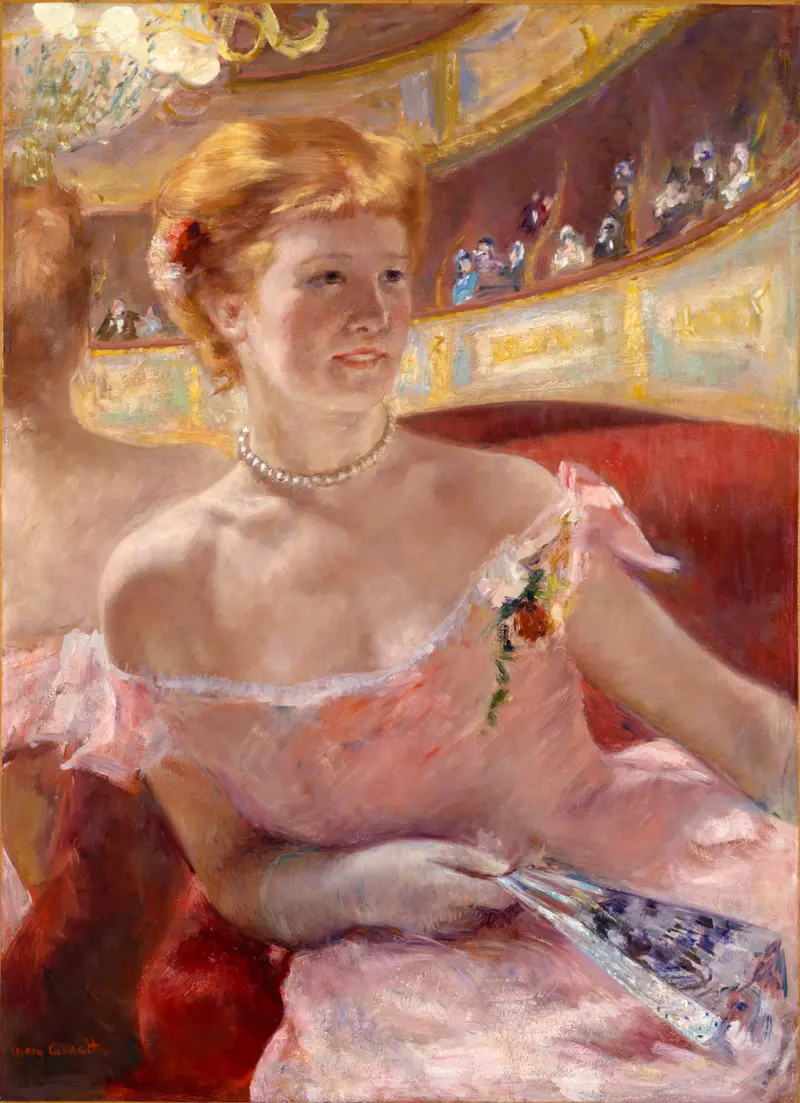
Woman with a Pearl Necklace in a Loge
Mary Cassatt
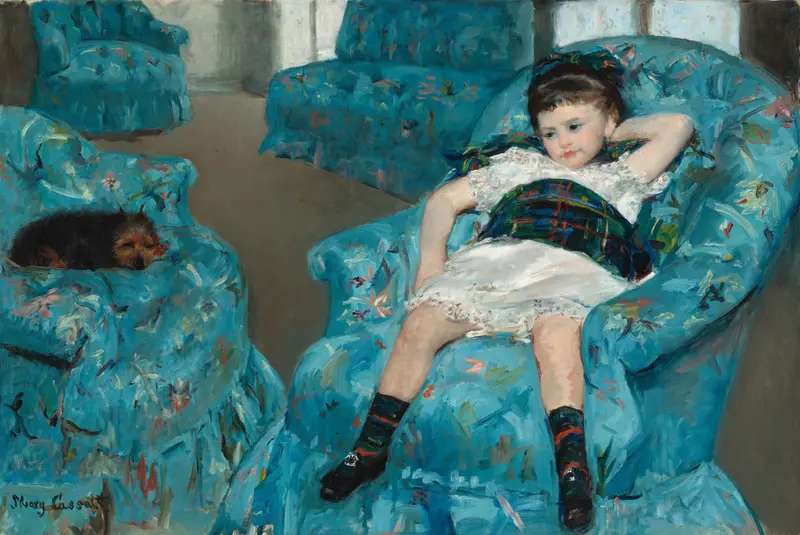
Little Girl in a Blue Armchair
Mary Cassatt
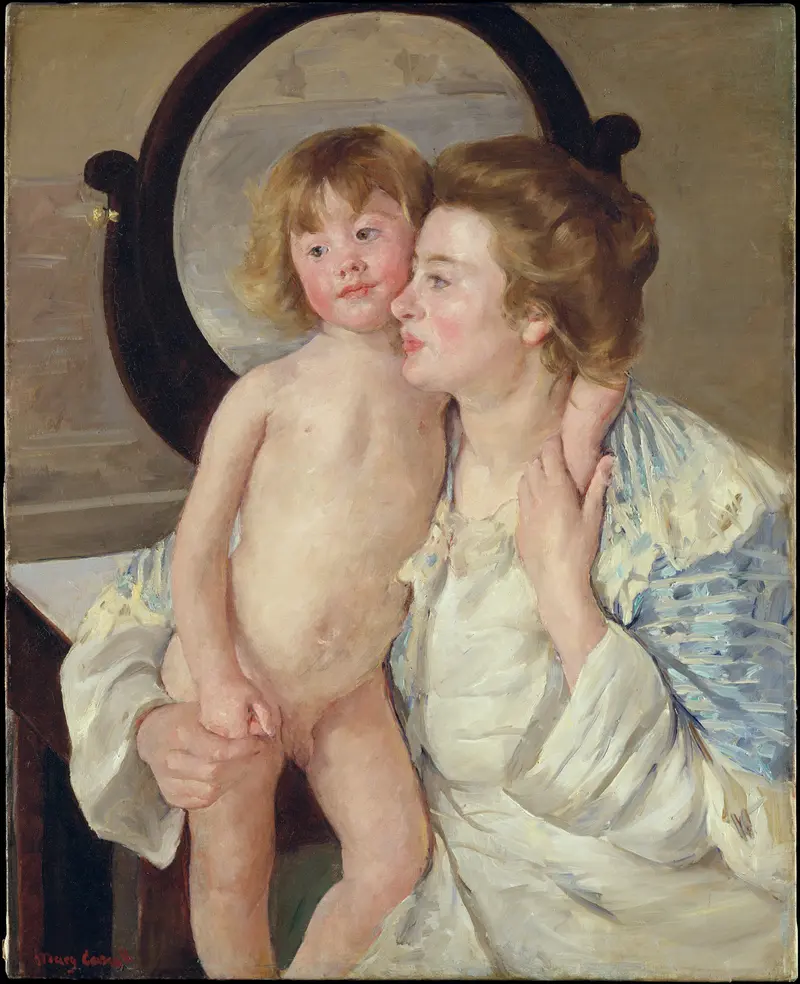
Mother and Child (The Oval Mirror)
Mary Cassatt
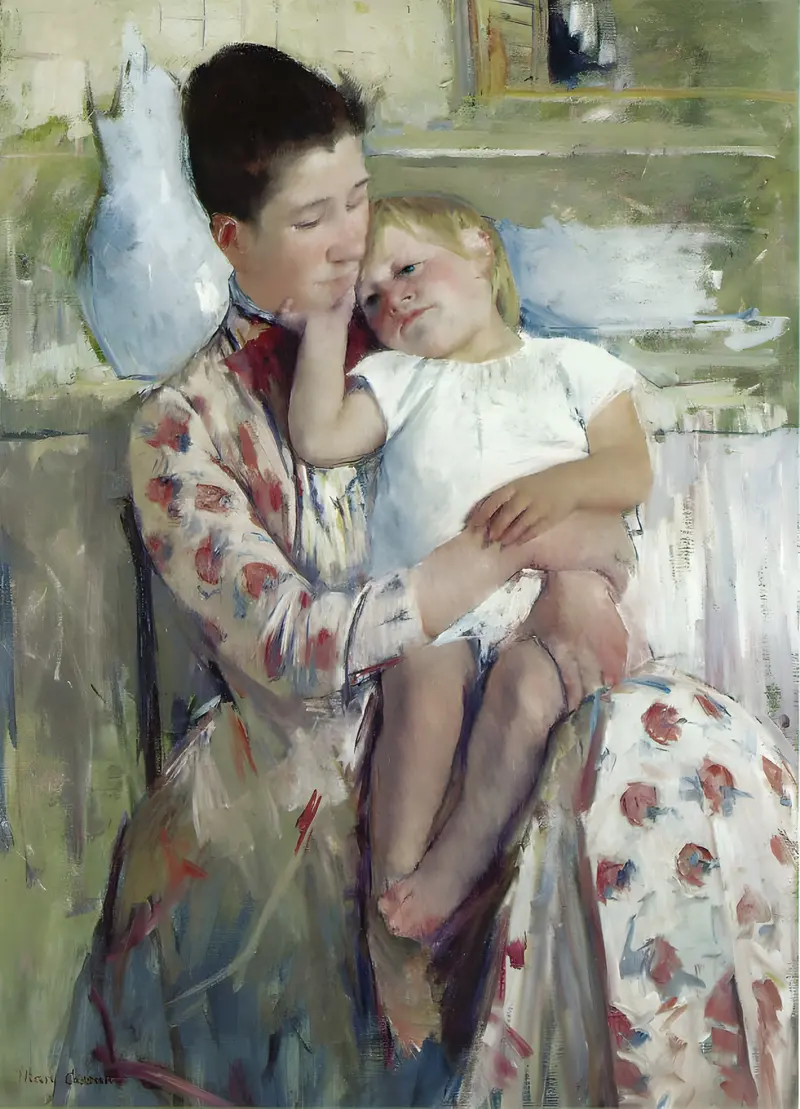
Mother and Child
Mary Cassatt
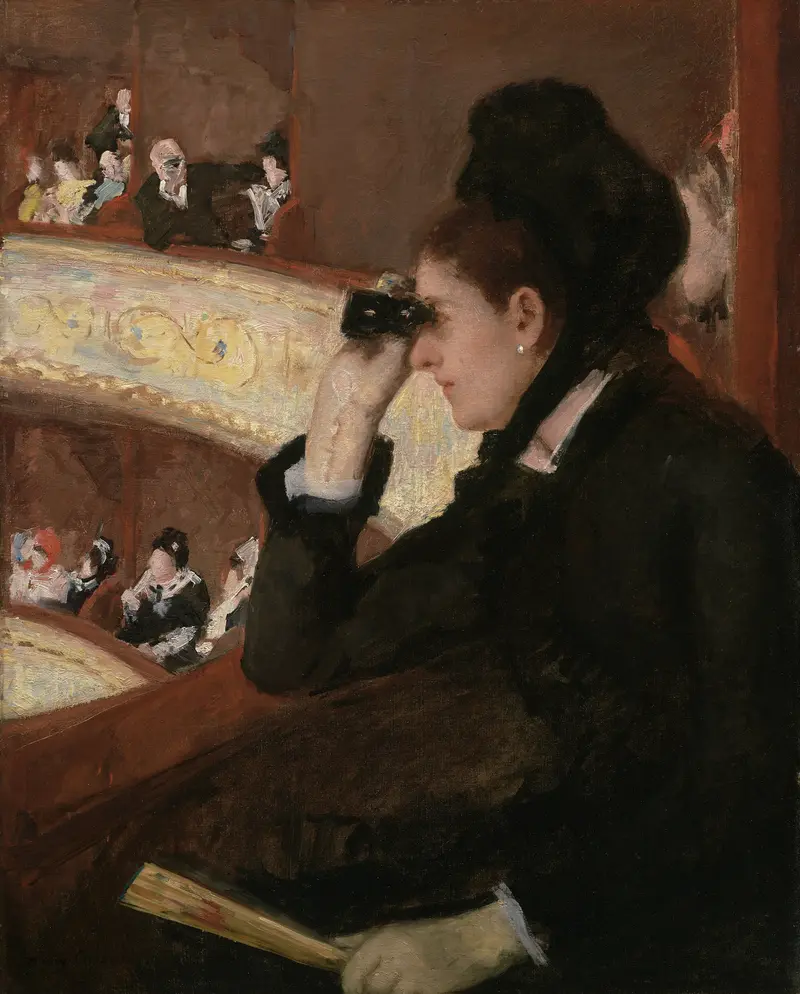
In The Loge
Mary Cassatt
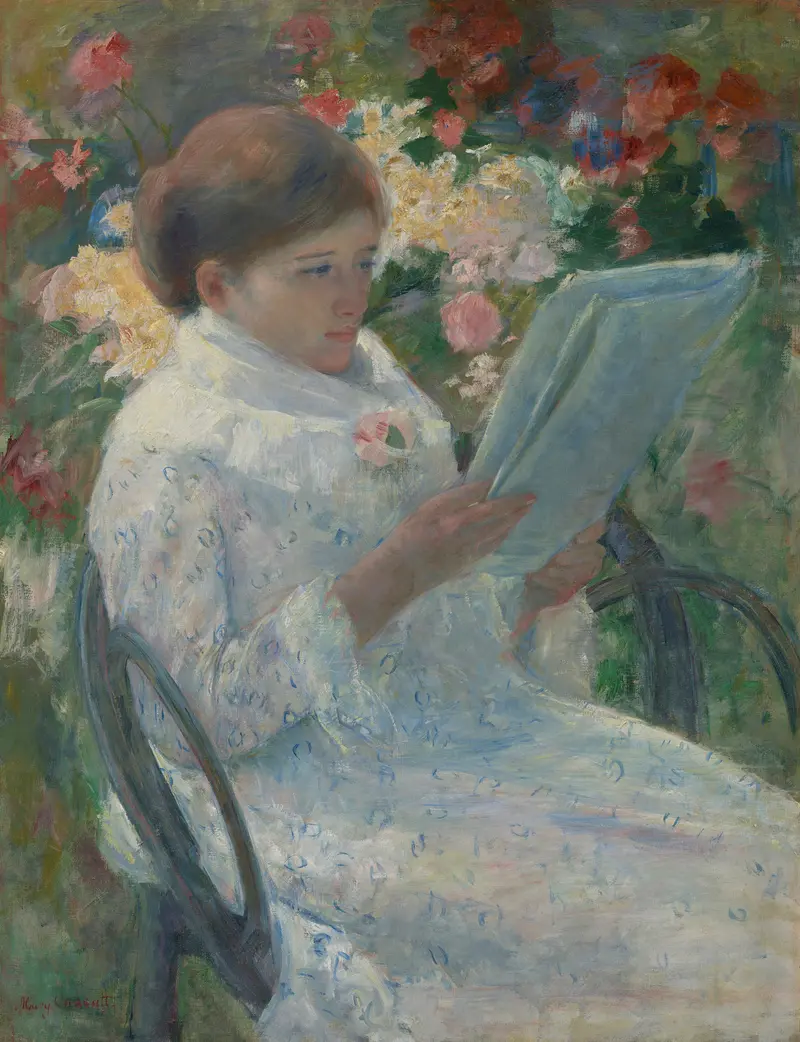
On a Balcony
Mary Cassatt





