
Head of St. John the Baptist — History & Facts
What first grips the viewer in Head of St. John the Baptist is the extraordinary stillness: a human face, eyes closed, floats in a roundel of deep green, encircled by a thin, luminous gold border. The features are rendered with a quiet precision—half-parted lips, a gentle beard, a brow marked by a faint wound—inviting the eye to linger on the tension between peace and violence.
The artist, Aelbert Bouts, has chosen not the moment of martyrdom nor the spectacle of the platter, but the aftermath: the hush after the story’s climax, when all that remains is the presence of the saint himself. Light falls from above, caressing the forehead and cheekbones, modeling the face into a mask of sleep rather than death. The absence of narrative clutter draws us in, making the viewer a silent witness to a relic’s transformation into an icon. Works like this, created in the late fifteenth or early sixteenth century, were often intended for private devotion or as reliquaries, their intense focus on a single holy subject designed to foster meditation and prayer.
In the world of the Northern Renaissance, artists such as Bouts responded to a growing demand for images that brought the sacred close—intimate, tangible, and immediate. The round format and gilded edge suggest a precious object, perhaps once set into a larger altarpiece or carried in procession. History has kept few traces of this particular work, now found only in digital reproduction on pl.pinterest.com, but its haunting presence is a testament to an age when art served as a window onto the mysteries of faith.
The longer you look, the more the silence of the saint’s face seems to ask: what do you see reflected in this circle of gold?
More Artworks by Aelbert Bouts
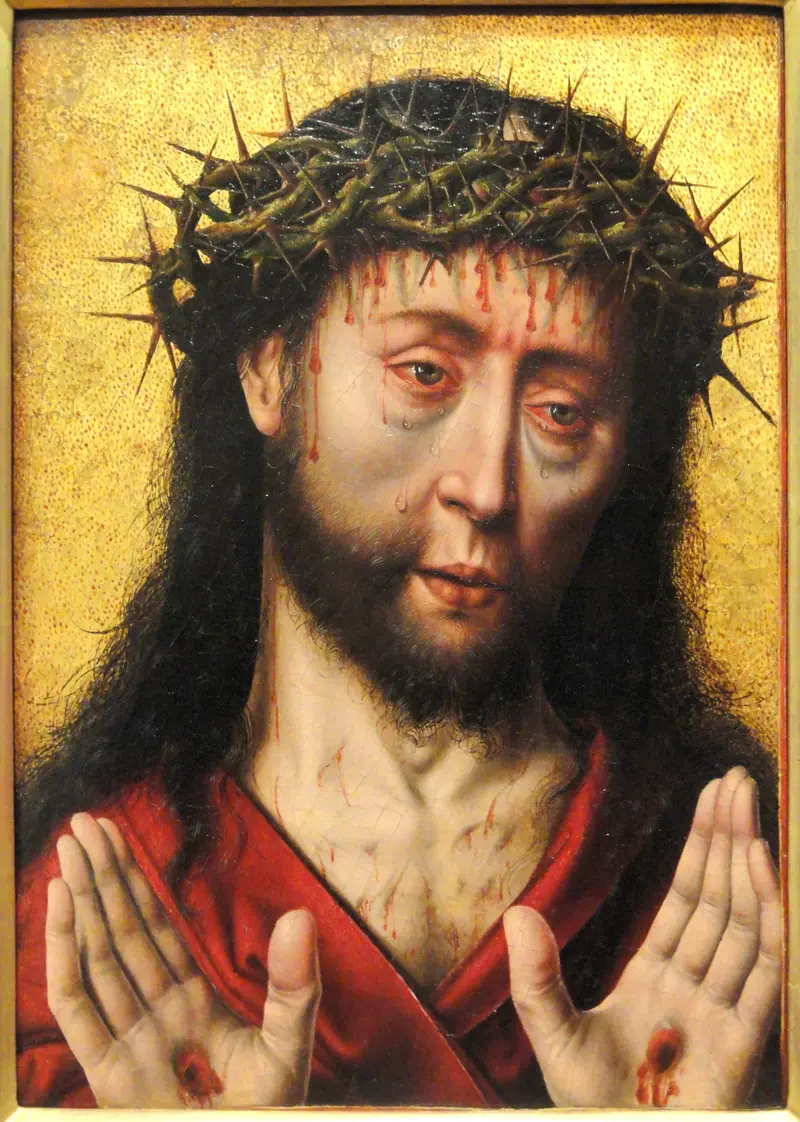
The Man of Sorrows
Aelbert Bouts
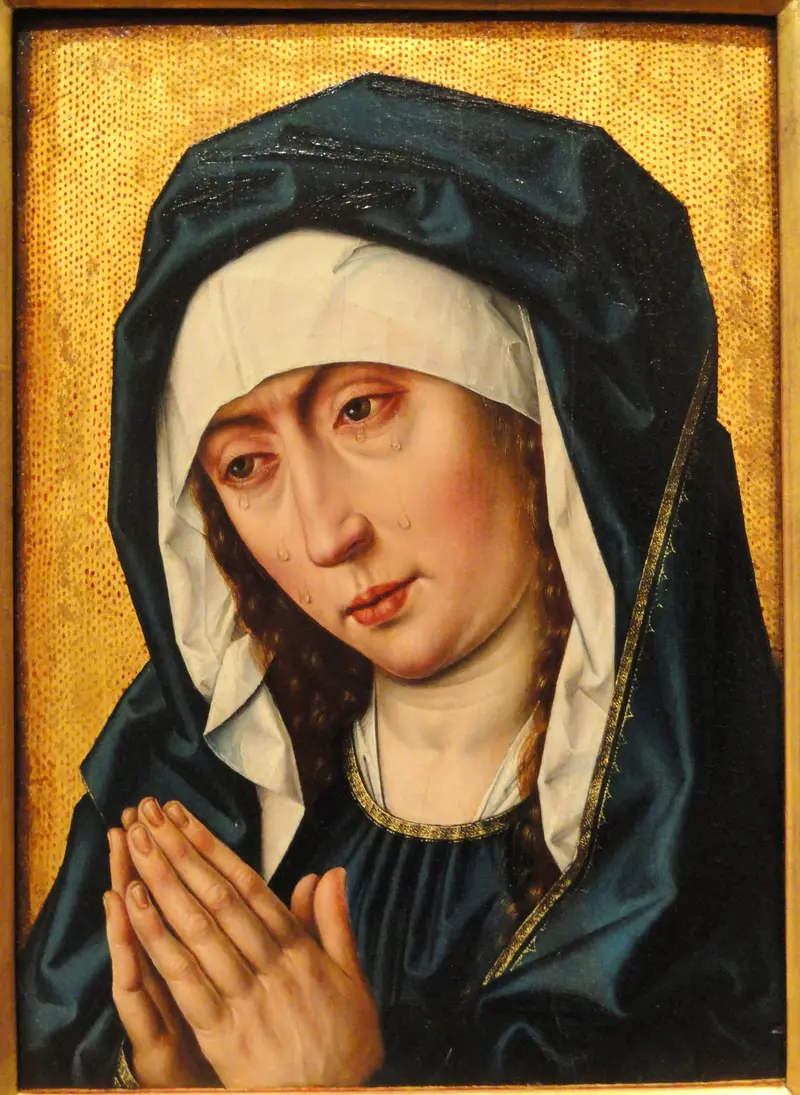
The Mater Dolorosa
Aelbert Bouts
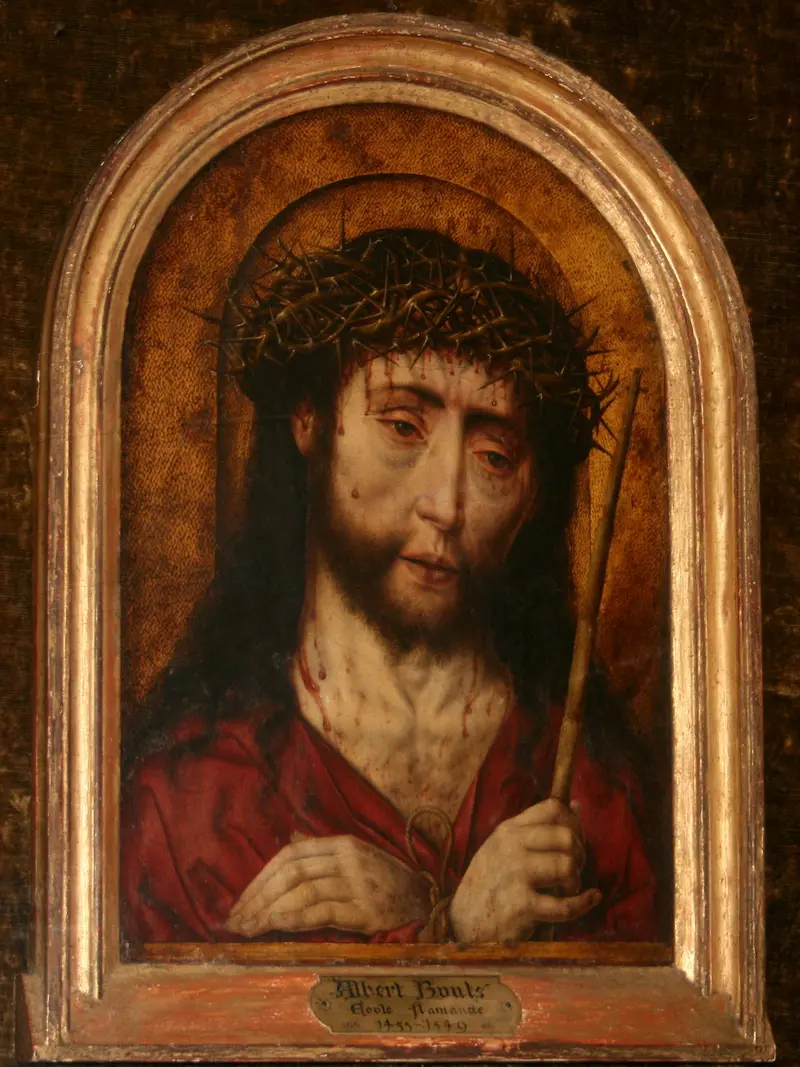
The Mocking of Christ
Aelbert Bouts
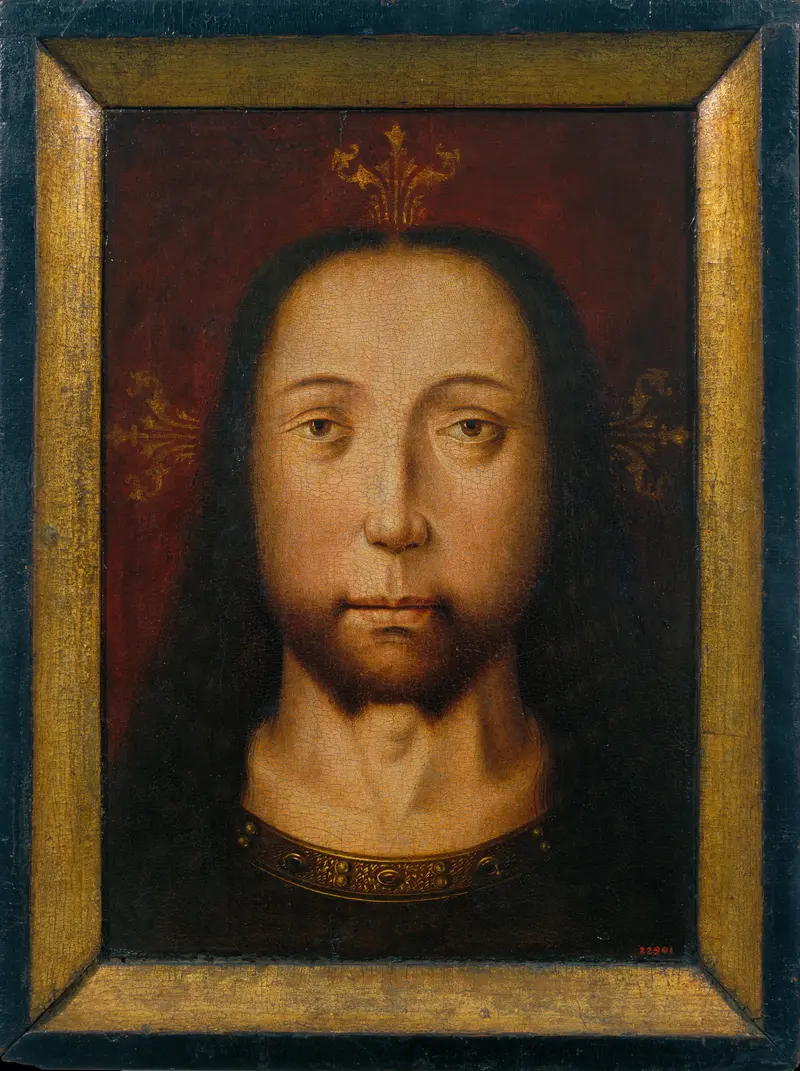
Holy Countenance
Aelbert Bouts
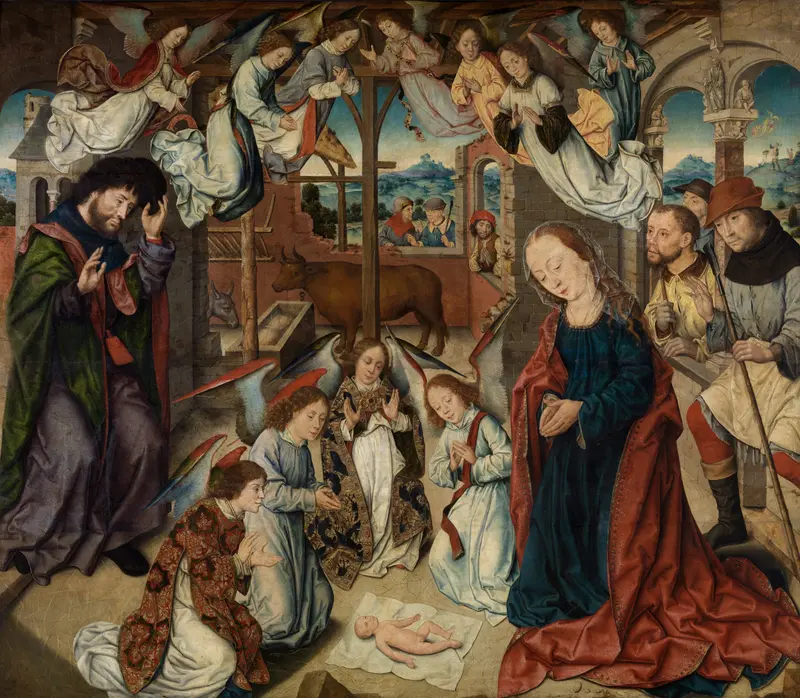
The Adoration of the Shepherds
Aelbert Bouts
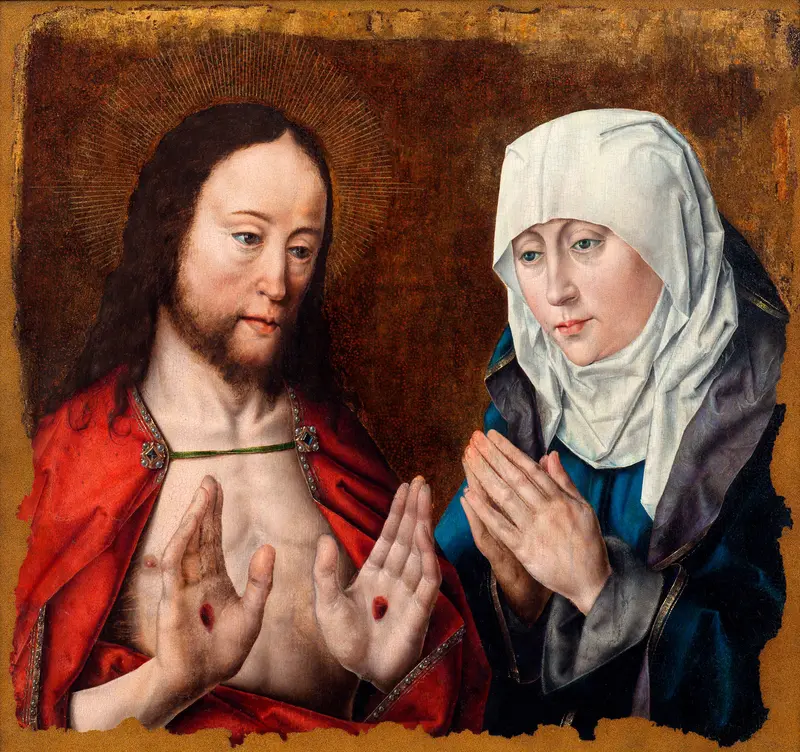
Christ appears to Mary
Aelbert Bouts
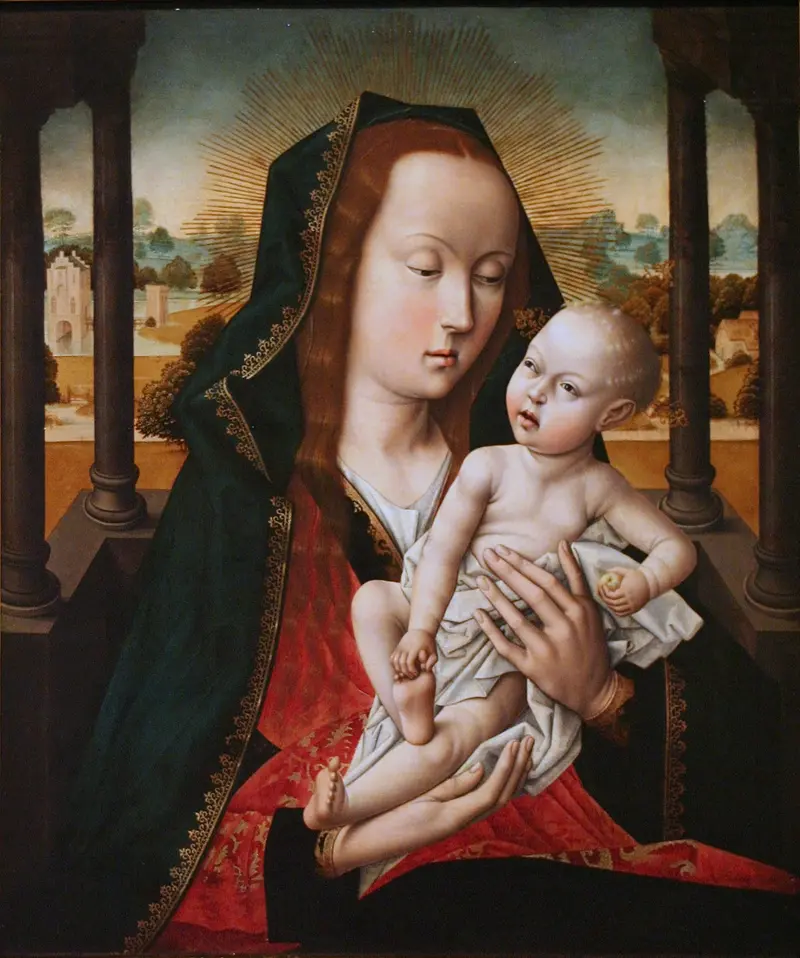
Madonna and Child
Aelbert Bouts
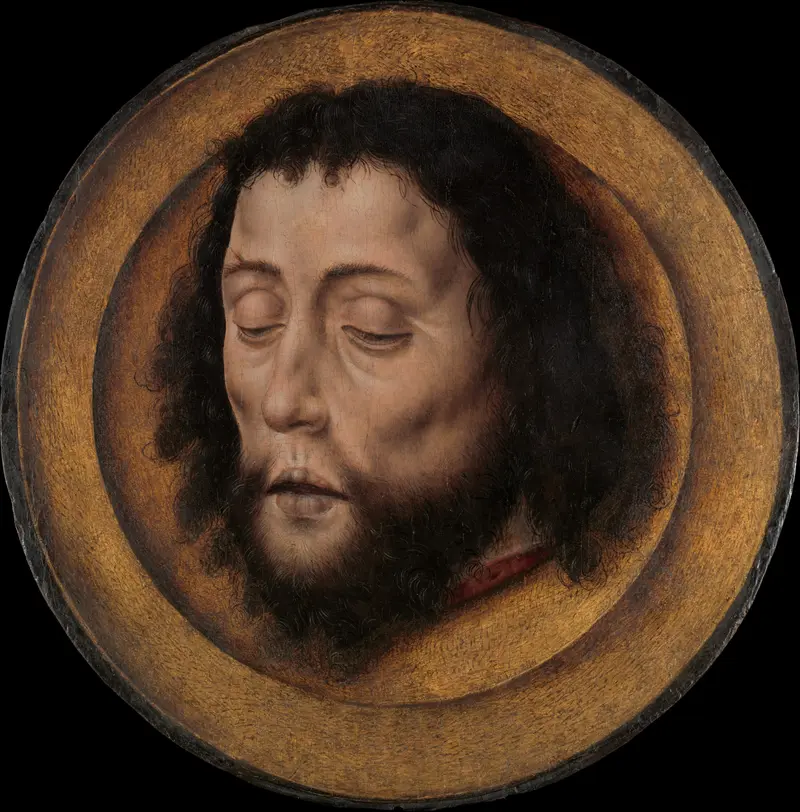
Head of Saint John the Baptist on a Charger
Aelbert Bouts
Head of Christ
Aelbert Bouts
Lamentation of Christ
Aelbert Bouts





