
Holy Countenance — History & Facts
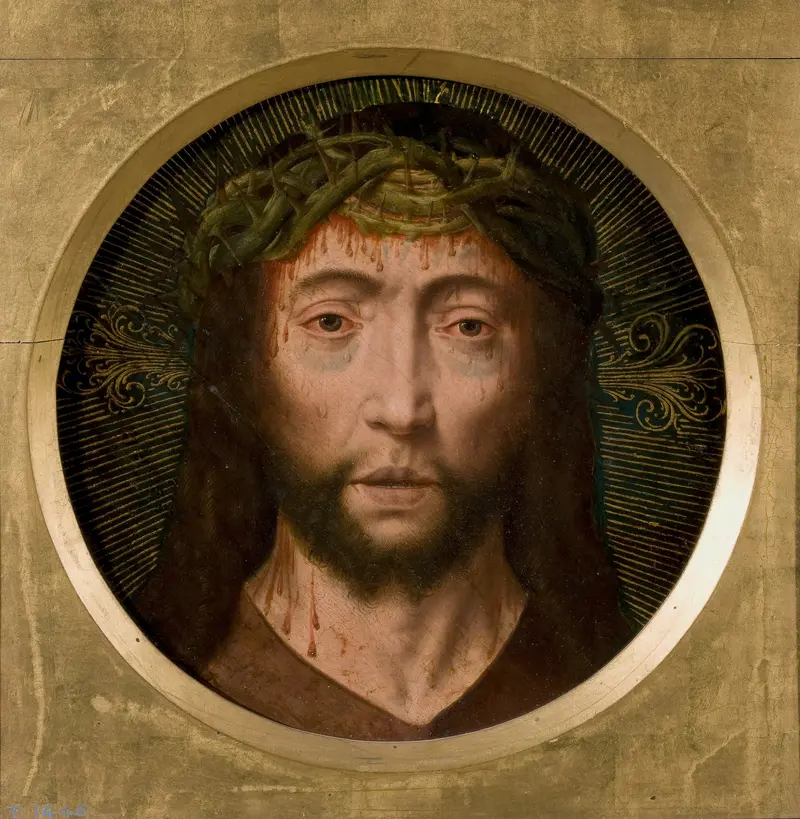
A face emerges from the darkness, suspended between presence and absence, confronting the viewer with a gaze that is both intimate and remote. In Holy Countenance, Aelbert Bouts anchors the image with the directness of Christ’s eyes, framed by a delicate nimbus of gold against a deep red ground. The flesh is rendered with a cool, almost waxen clarity, every pore and shadow carefully modeled, while the hair falls in dark, even waves, undistracted by background or narrative.
The faint, symmetrical fleur-de-lis motifs radiate from behind the head, hinting at sanctity without resorting to a full halo, and the plain gold border draws the eye inward, as if this face were an icon behind glass. This kind of image, known as the Veil of Veronica, was a touchstone of late medieval devotion: not a scene of action, but a relic made visible, the miraculous imprint of Christ’s features left on a cloth. Around 1500, such images multiplied across Northern Europe, serving as objects for private prayer and contemplation. The stillness, the frontal pose, and the absence of narrative detail all invite the viewer to linger on the face itself, to search for meaning in the symmetry and the faint sadness of the eyes.
While history has kept few traces of this particular panel’s journey, its form and function are unmistakable, carrying the devotional intensity of its time straight to the present moment—challenging us, even now, to meet that steady gaze.
More Artworks by Aelbert Bouts
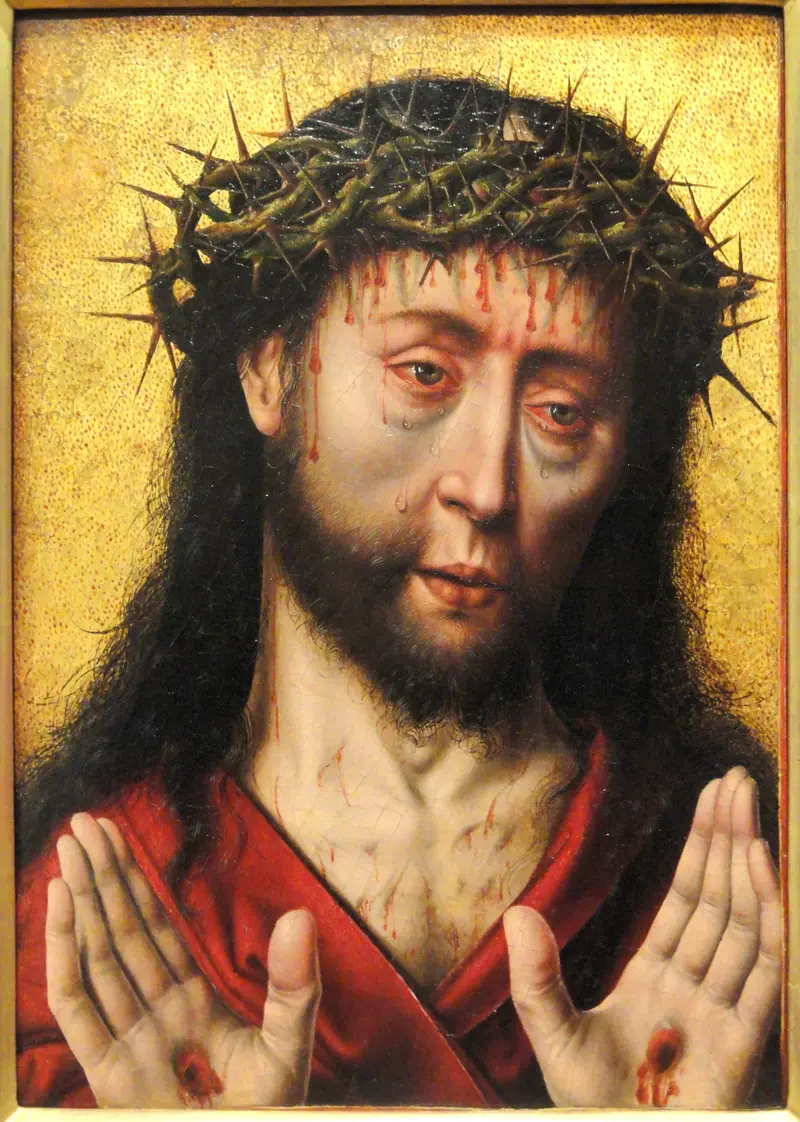
The Man of Sorrows
Aelbert Bouts
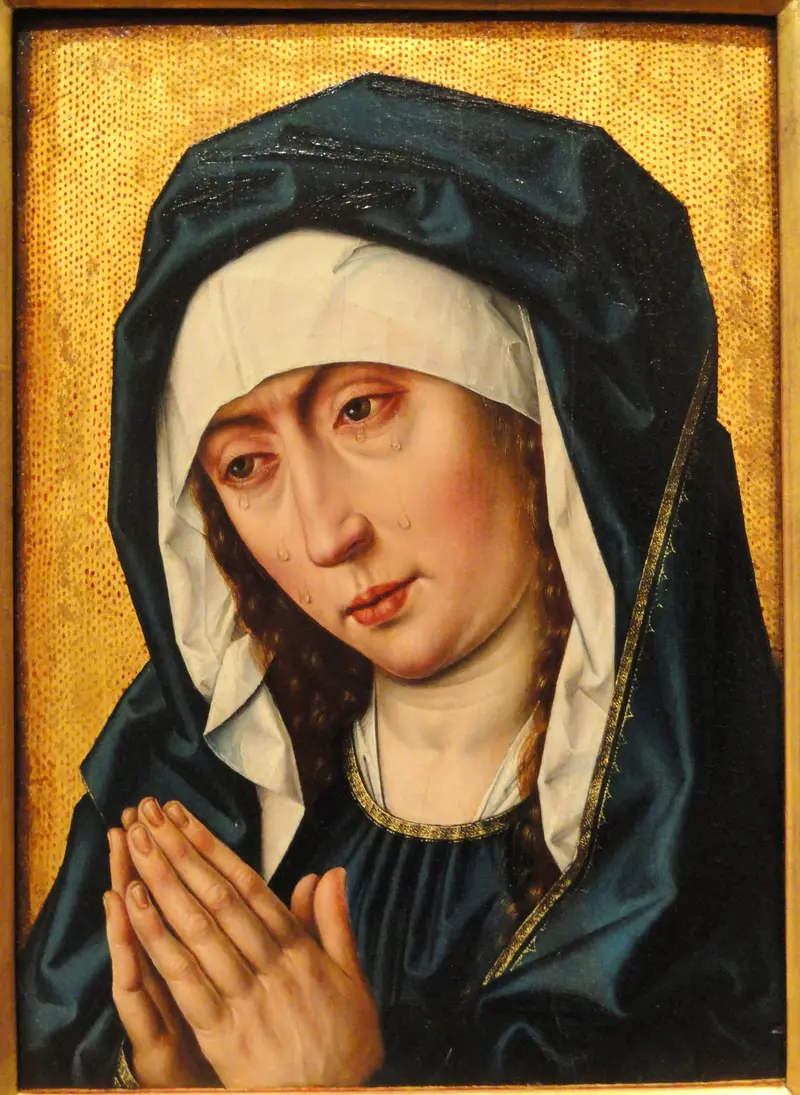
The Mater Dolorosa
Aelbert Bouts
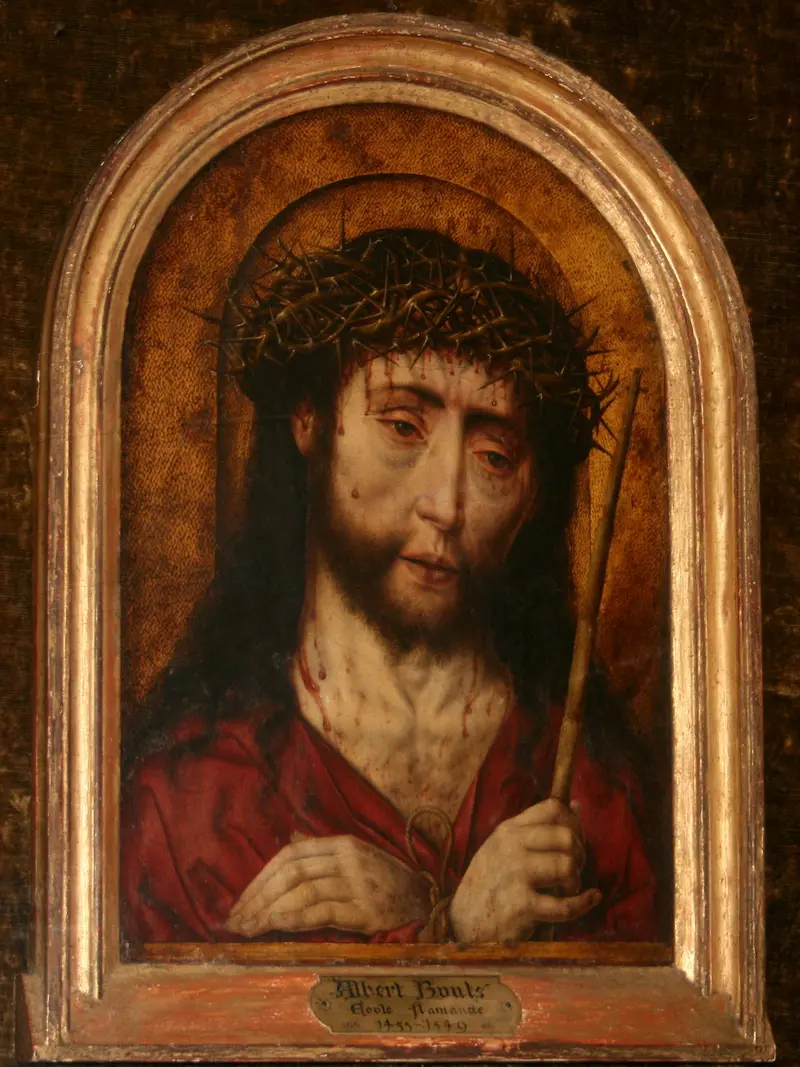
The Mocking of Christ
Aelbert Bouts
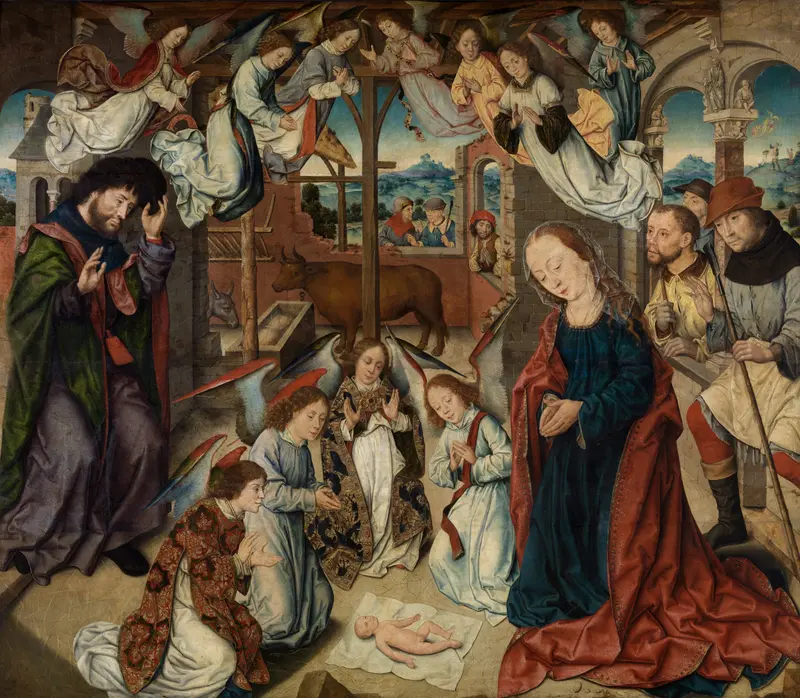
The Adoration of the Shepherds
Aelbert Bouts
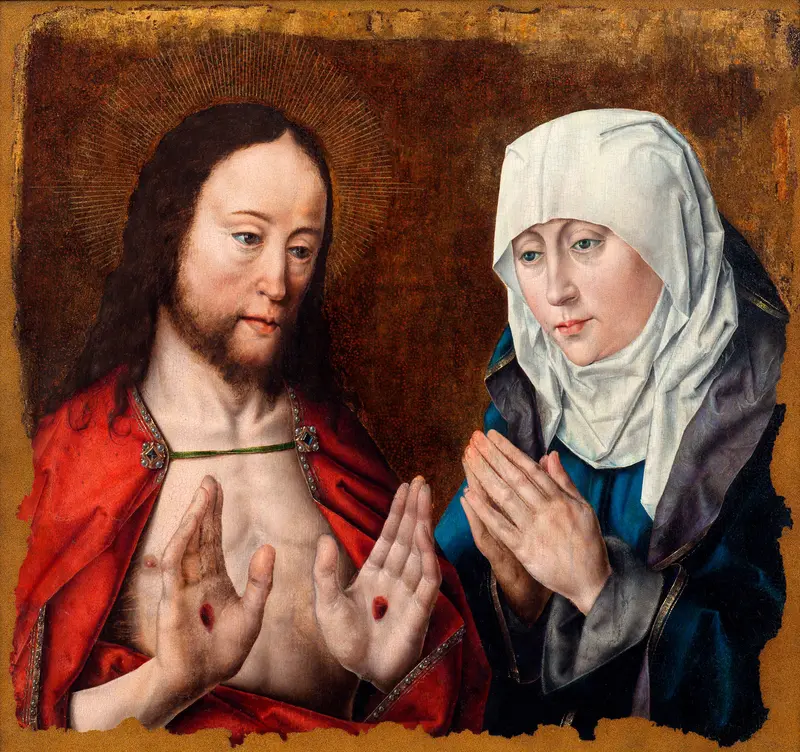
Christ appears to Mary
Aelbert Bouts
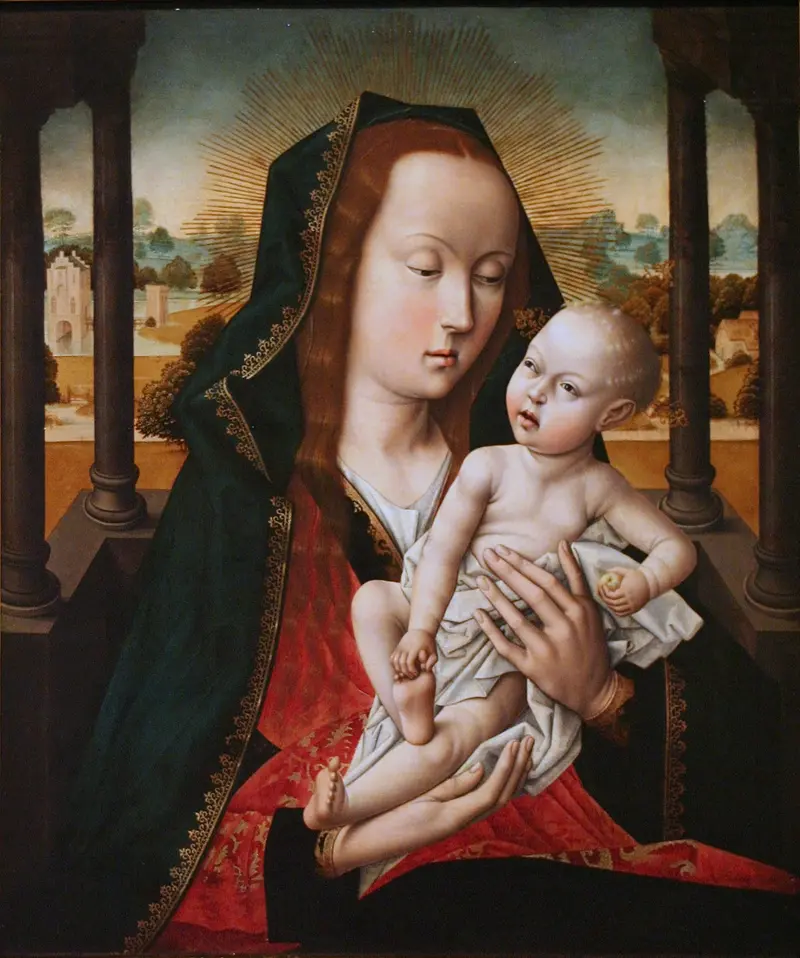
Madonna and Child
Aelbert Bouts
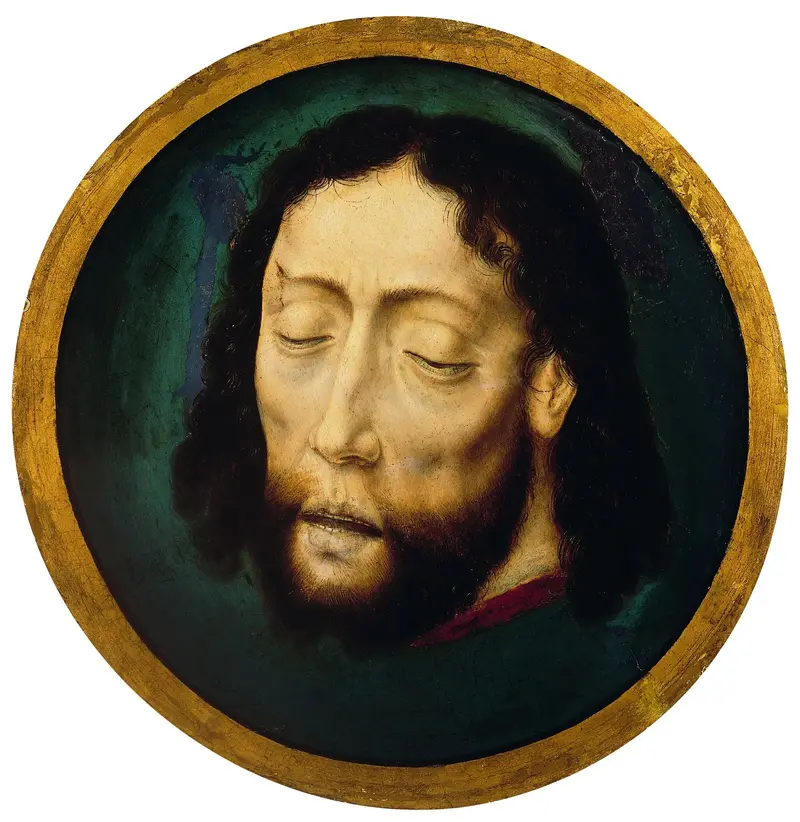
Head of St. John the Baptist
Aelbert Bouts
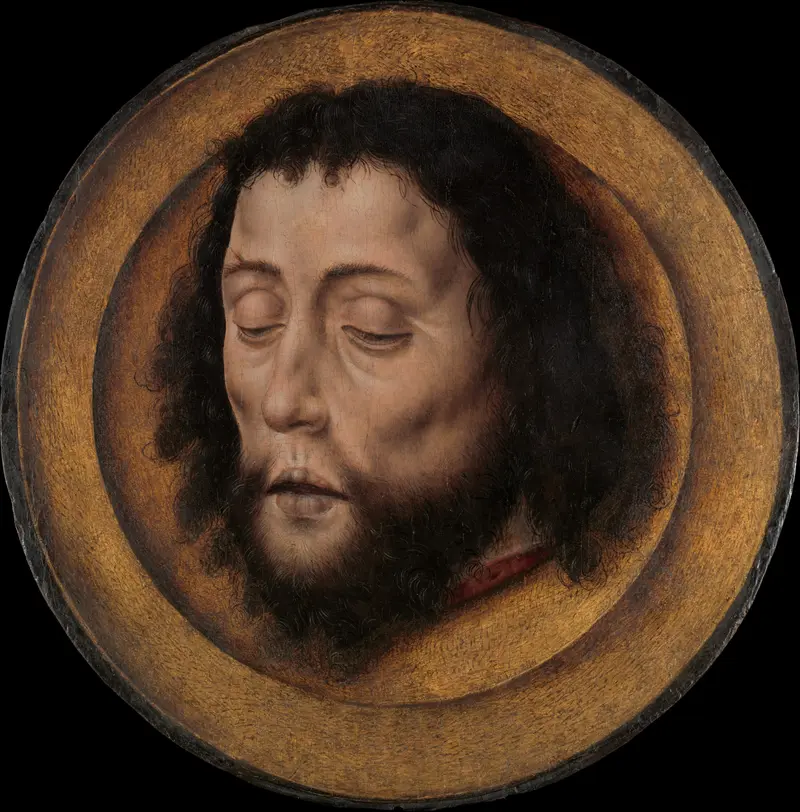
Head of Saint John the Baptist on a Charger
Aelbert Bouts
Head of Christ
Aelbert Bouts
Lamentation of Christ
Aelbert Bouts





