
Hercules Kicking Faunus out of Omfale's Bed — History & Facts
A tangle of limbs, startled faces, and velvet drapery draws the viewer straight into the heat of a mythological mishap. The eye is first caught by the muscular figure at the center, his grip firm and his gaze intent, as he pushes away the half-human intruder scrambling from the bed. The woman, half-reclining and exposed in the golden light, seems caught between surprise and resignation, while putti below cower and clutch at each other, amplifying the confusion.
Every object is charged with meaning: the spilled mask, the upturned vessel, and the lush bouquet in the shadows all hint at a night of revelry gone awry. The palette—rich flesh tones against deep, theatrical shadows—throws every gesture into sharp relief, making the drama feel immediate and lived. Painted in 1607 by Abraham Bloemaert, this work belongs to a moment when Dutch and Flemish artists delighted in retelling ancient tales with a sensual, sometimes comic twist. Scenes from classical mythology, especially those involving gods and mortals in compromising situations, were prized by collectors eager to display both their learning and their taste for the risqué.
The presence of Hercules, Faunus, and Omphale—all recurring figures in Renaissance and Baroque art—signals a fascination with power, disguise, and mistaken identity, themes that resonated in a Europe negotiating its own shifting social and religious boundaries. Little is recorded about the journey of this specific painting, now documented in a modern collection, but its exuberance and sly wit speak directly to the spirit of its age. Look again at the startled cherub: in this world, even the gods are caught off guard.
More Artworks by Abraham Bloemaert

Adam and Eve
Abraham Bloemaert
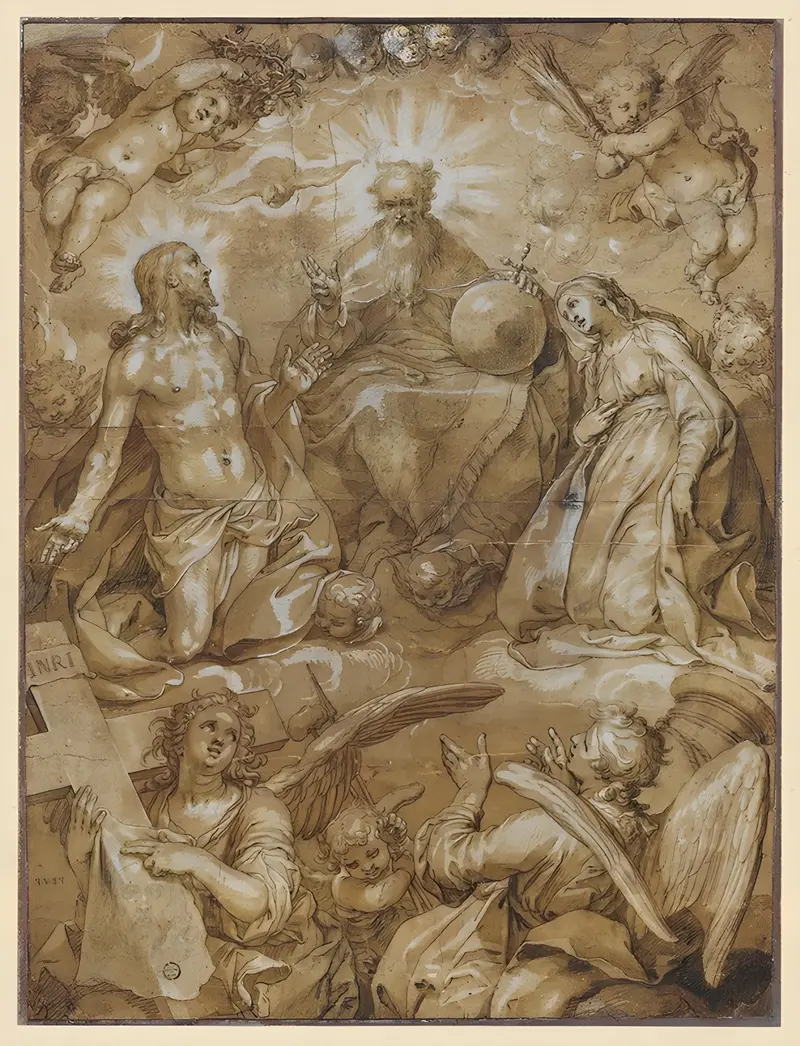
Intercession of Christ and Mary before God the Father
Abraham Bloemaert
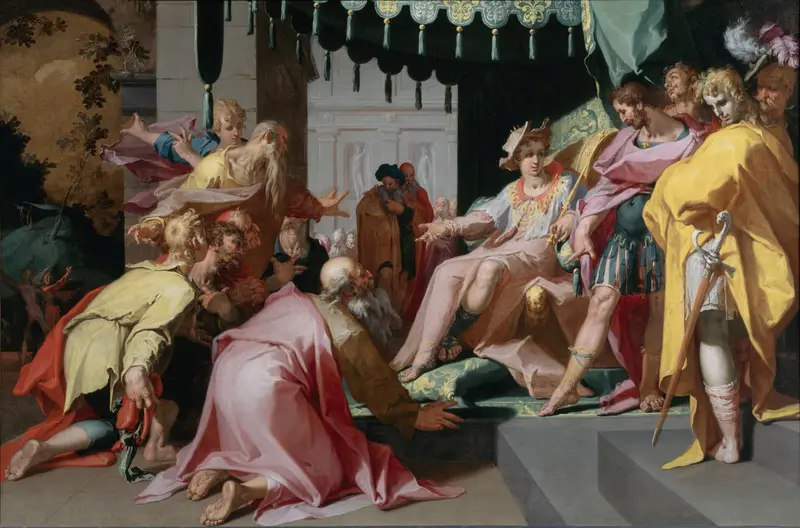
Joseph and his Brothers
Abraham Bloemaert
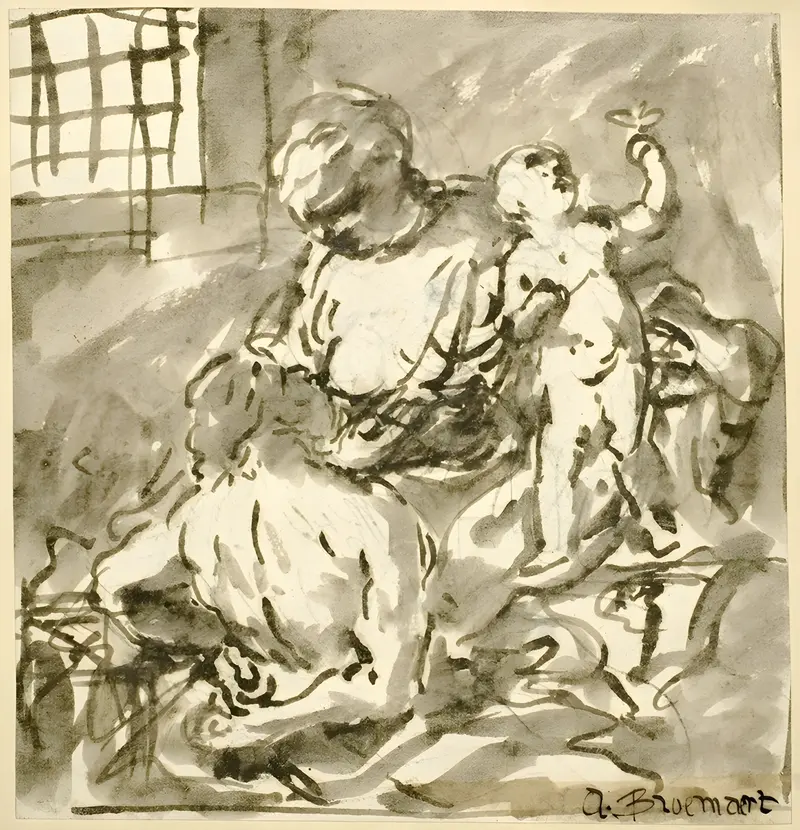
Caritas Romana
Abraham Bloemaert
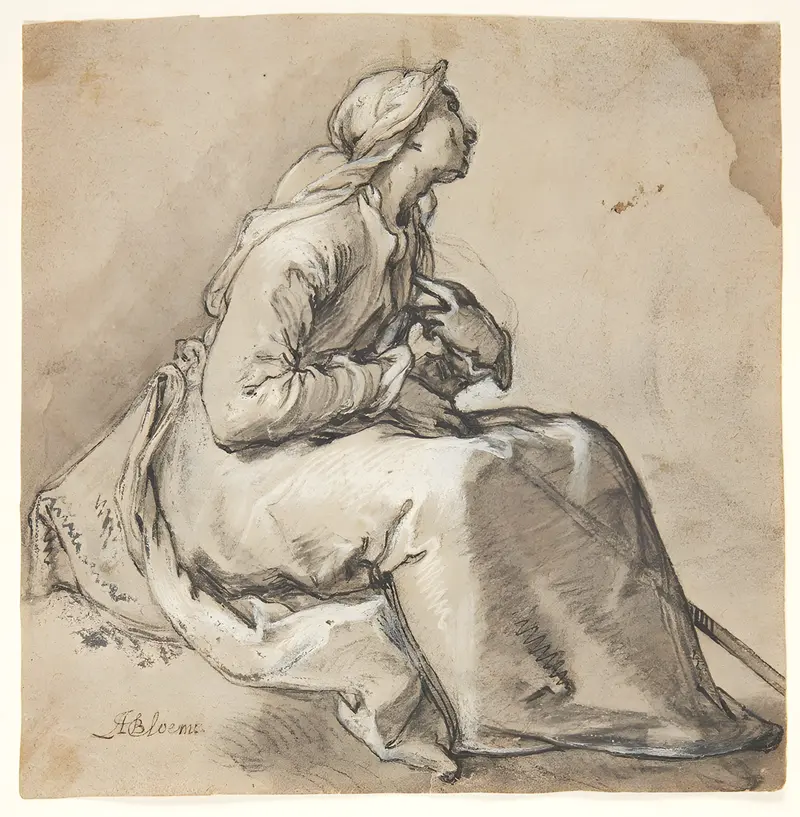
A seated woman facing right
Abraham Bloemaert
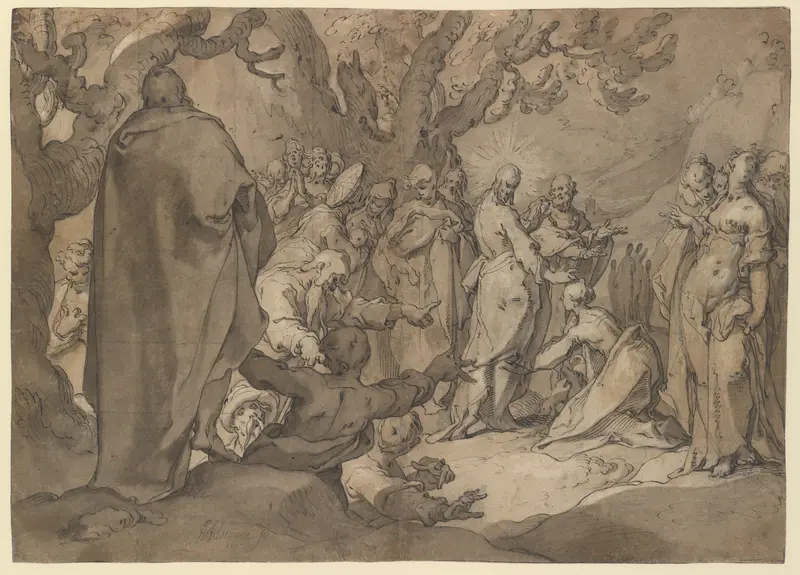
Christ and the Canaanite Women
Abraham Bloemaert
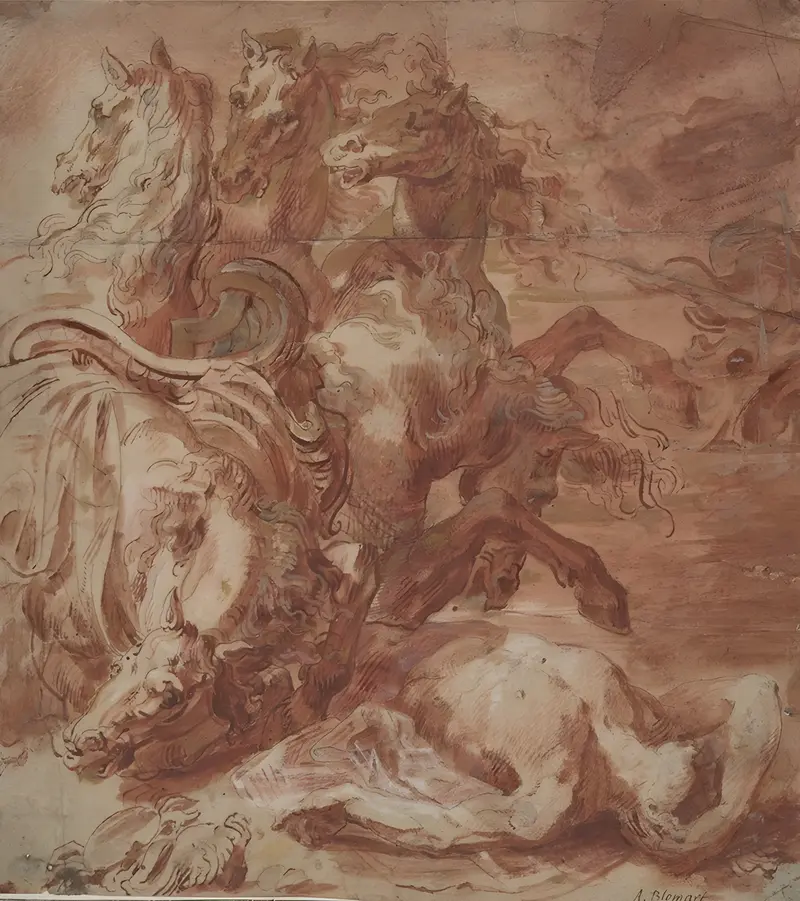
Hippolytus
Abraham Bloemaert
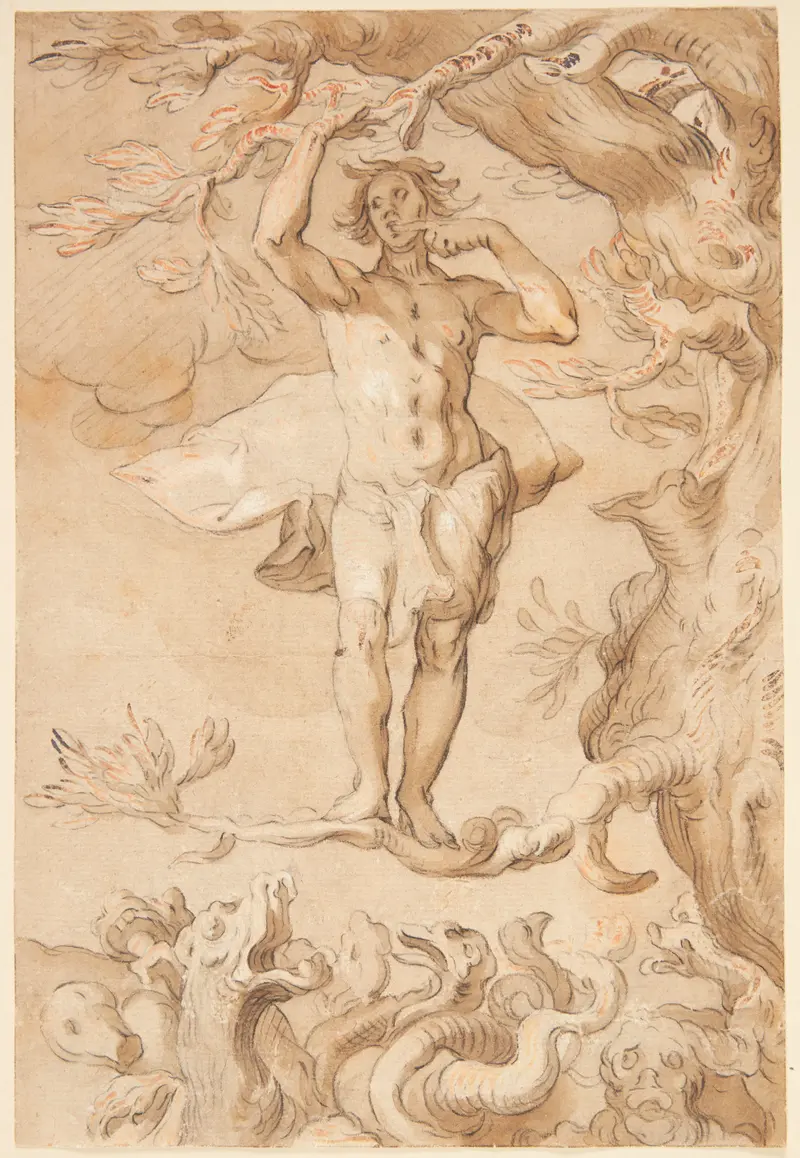
Den menneskelige glædes skrøbelighed En mand, der jages af en drage, klynger sig til en gren, mens han slikker honning af sin finger
Abraham Bloemaert

Moses Striking the Rock
Abraham Bloemaert
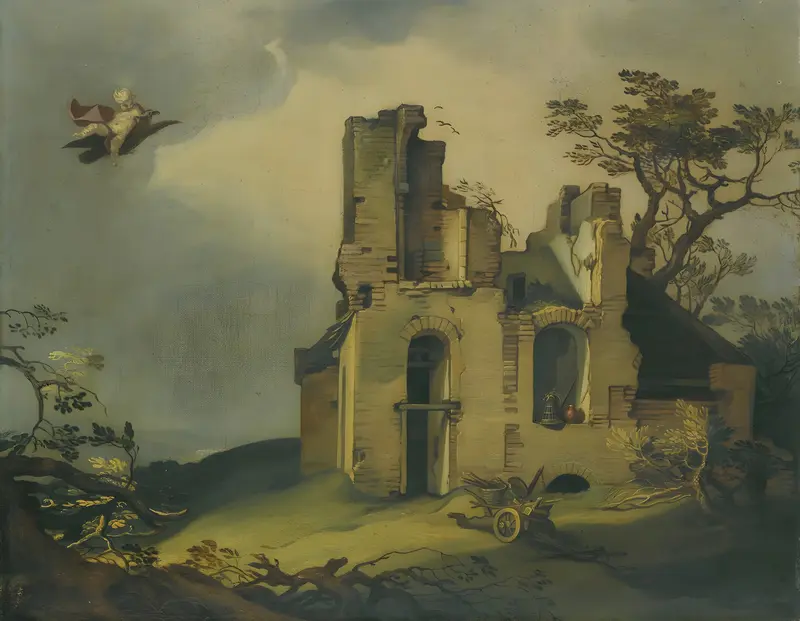
A Landscape With Ruins, With The Rape Of Ganymede
Abraham Bloemaert





