
House Raising — History & Facts
Could beauty survive in a century of chaos? In an era marked by upheaval, House Raising captures the delicate balance between labor and artistry, revealing how hope persists amid disarray. Look to the center of the canvas, where a majestic wooden frame rises, supported by determined hands of builders clad in humble attire. The play of light dances off the freshly cut beams, illuminating the raw texture of the wood, while shadows stretch and shift like whispers of a forgotten past. It's a meticulous composition, with diagonal lines guiding the eye upward, suggesting aspiration and ambition.
The palette of earthy browns and greens echoes a connection to nature and resilience, evoking a sense of groundedness in the construction process. Examining the figures, one can sense a profound narrative woven through their expressions and postures. Each worker embodies a story of struggle and aspiration, their muscles taut with effort yet faces imbued with a quiet pride. The contrast between the bustling activity of raising the house and the serene landscape in the background suggests an illusion of stability—a fleeting moment where toil and beauty converge, hinting at a future built on dreams.
The interplay of labor and artistry speaks to the human spirit’s ability to create amidst chaos. In the 1870s, during a transformative period in American history marked by industrialization and social change, the artist was immersed in a world of evolving artistic expressions. Living and working in a time when realism and representation were gaining ground in the art scene, Chappel's painting reflects not just the physical act of building but also a broader commentary on the aspirational spirit of a nation in reconstruction.
More Artworks by William P. Chappel
Browse all →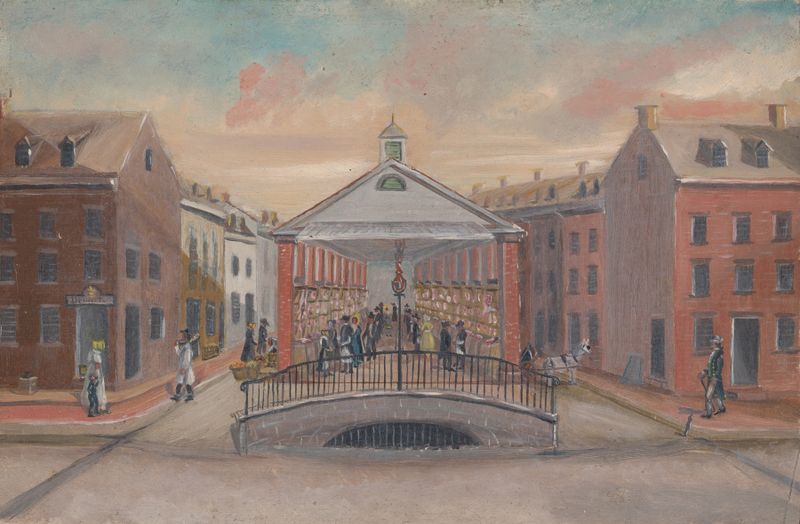
Fly Market
William P. Chappel
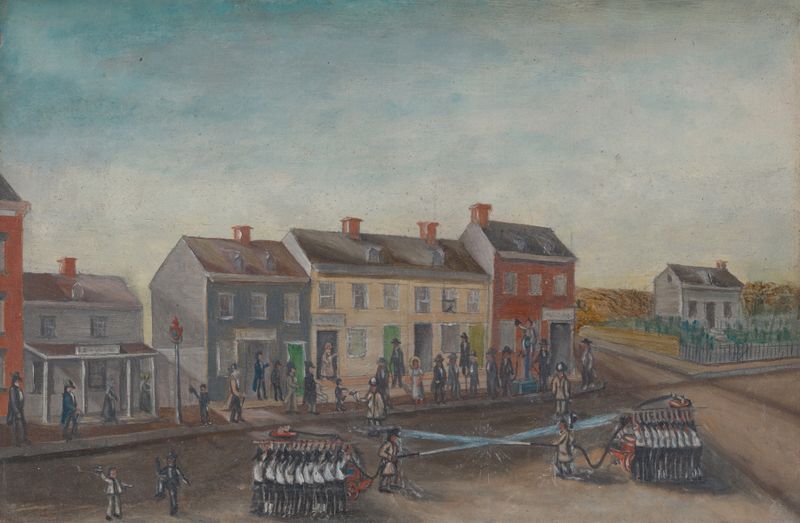
Firemen’s Washing Day
William P. Chappel
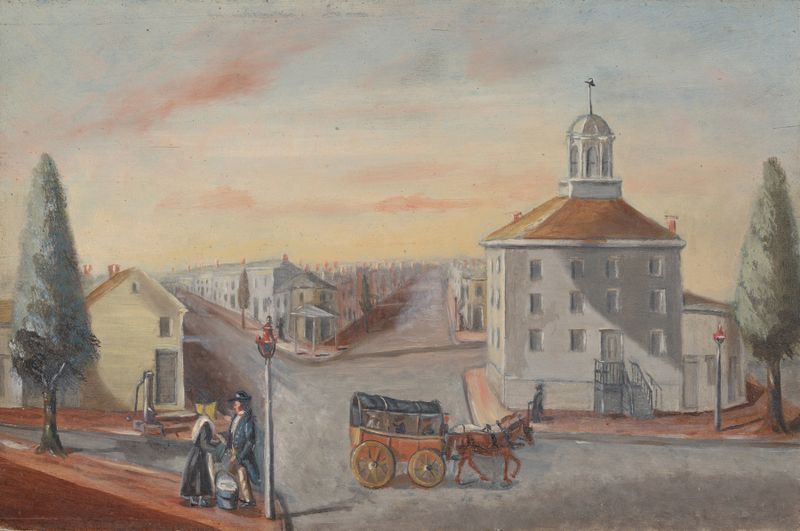
Hot Corn Seller
William P. Chappel
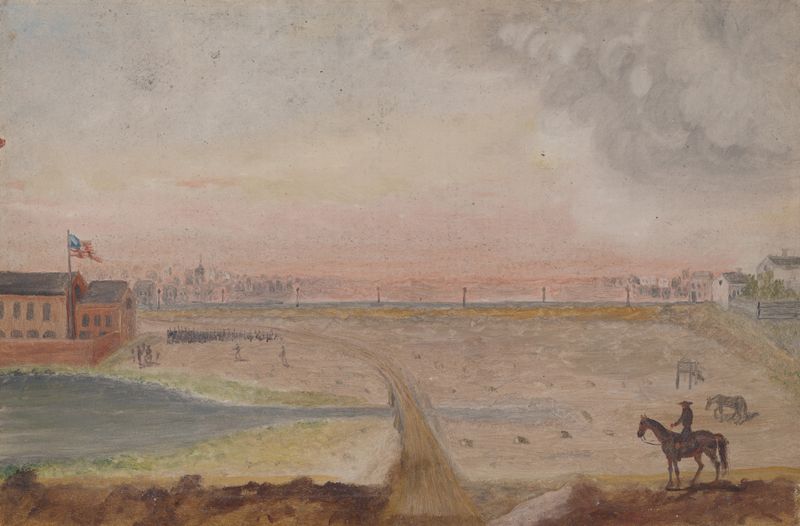
Militia Drilling
William P. Chappel
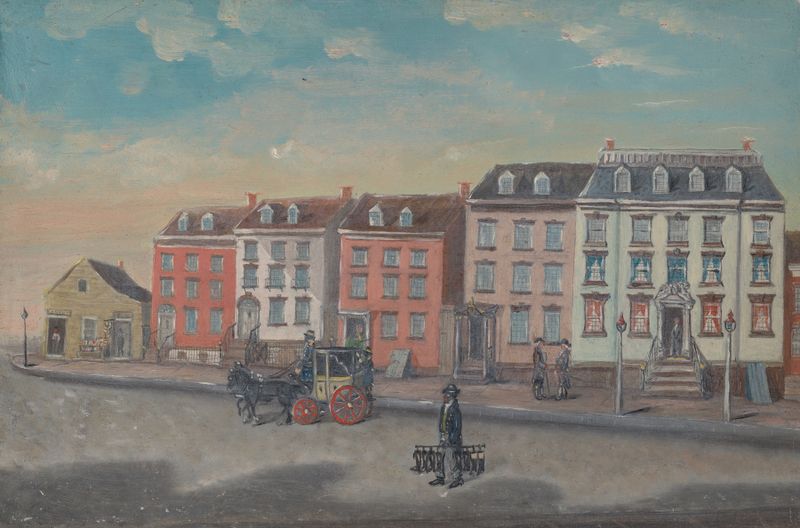
The Boot Black
William P. Chappel
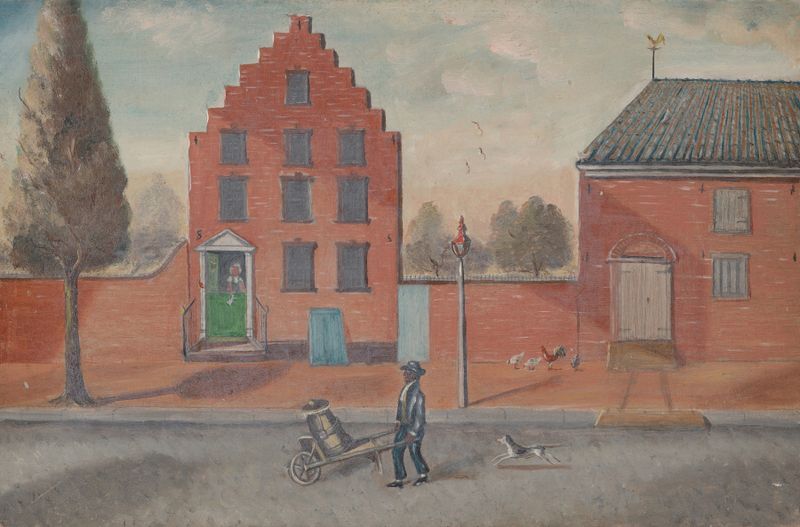
Buttermilk Pedlar
William P. Chappel
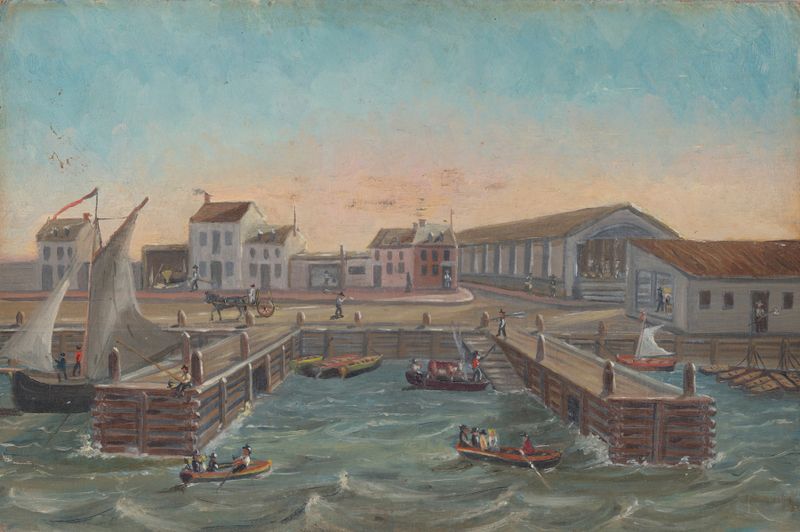
Old Ferry Stairs
William P. Chappel
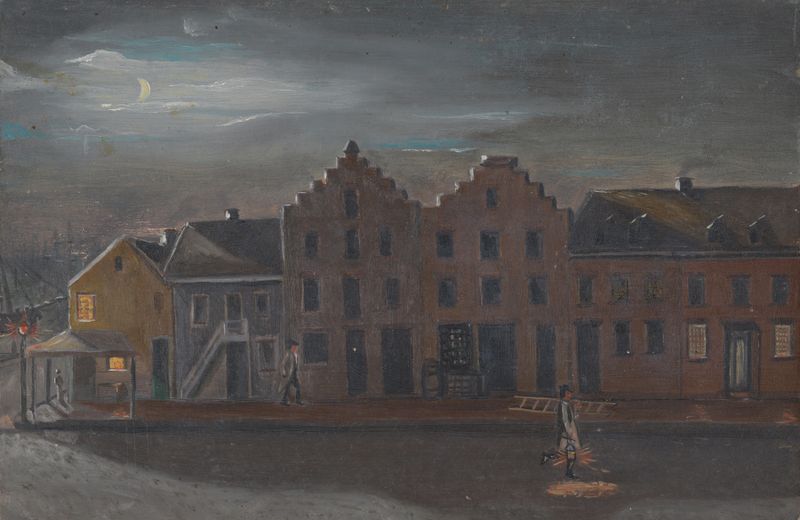
The Lamp Lighter
William P. Chappel
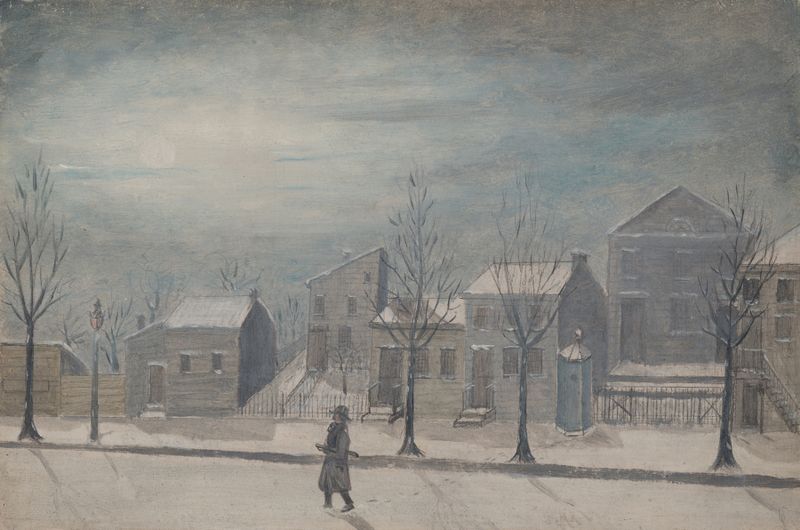
City Watchman
William P. Chappel
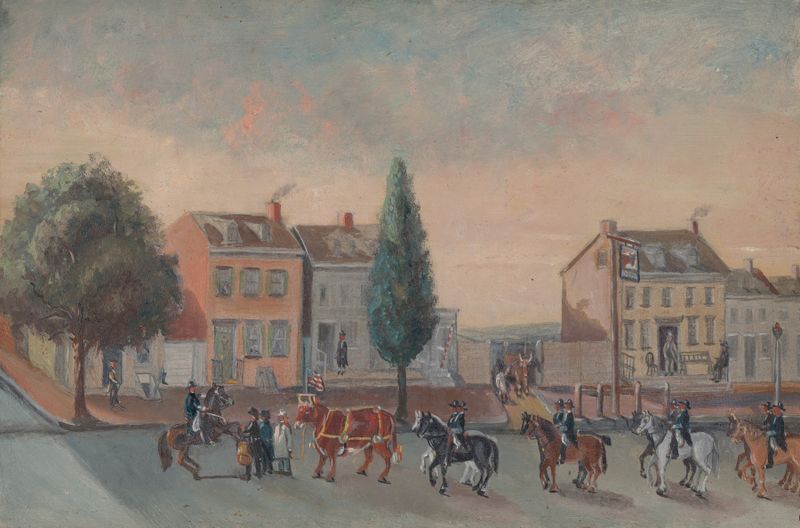
Bull’s Head Tavern
William P. Chappel





