
Il Dolce Far Niente — History & Facts
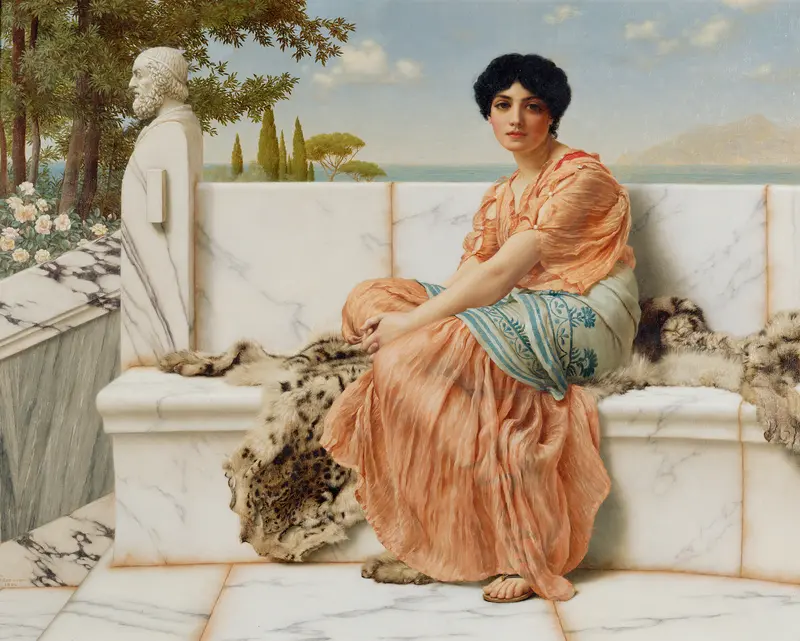
The first thing to arrest the eye in Il Dolce Far Niente is the languid confidence of its sitter—her gaze direct, her posture a study in cultivated ease. Draped in a gown of mauve and gold, she reclines against a tiger skin, the textures of fur and silk rendered with a precision that invites the viewer to imagine their touch. The marble wall behind her, inlaid with green stone and decorated with classical motifs, frames her in a world both ancient and imagined.
The bust inscribed “GENIO L. NOSTRI FELIX I.” presides over the scene, a silent witness to this moment of leisure, while the open colonnade reveals a glimpse of sea and garden, suggesting a life lived at the threshold of luxury and nature. Painted in 1893 by John William Godward, this work belongs to a late flowering of the Neoclassical tradition, where artists conjured visions of antiquity not as sites of drama or myth, but as theaters of private pleasure and contemplation. Such paintings were often created for wealthy patrons who sought, in their homes, a window onto an idealized past—one that promised beauty, order, and a respite from the noise of modernity.
Godward’s meticulous surfaces and careful architectural settings recall the influence of Lawrence Alma-Tadema, yet his figures are less actors in a narrative than emblems of a mood: here, the “sweetness of doing nothing” becomes a kind of aesthetic creed. History has kept few traces of this particular canvas, now recorded in the collection of Sotheby’s, but its invitation remains clear—linger, and let your eye wander as idly as the sitter’s thoughts.
More Artworks by John William Godward

Eighty and eighteen
John William Godward
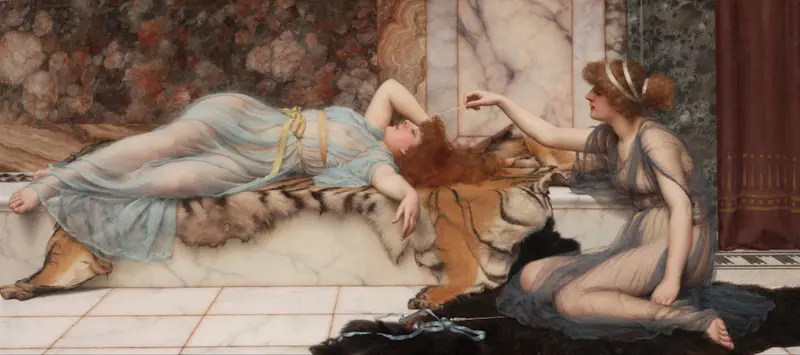
Mischief and Repose
John William Godward
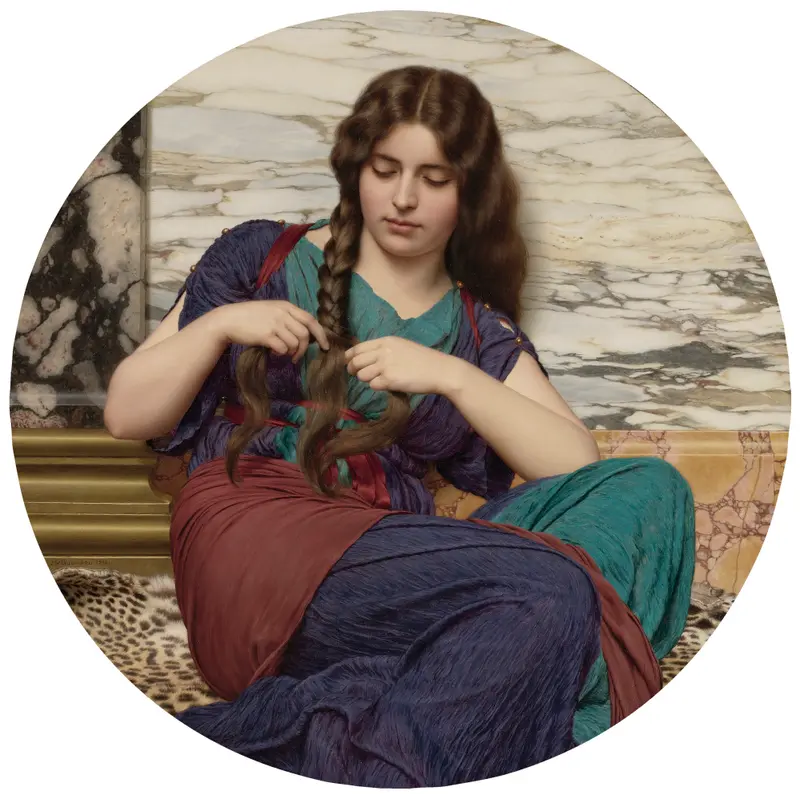
A Congenial Task
John William Godward
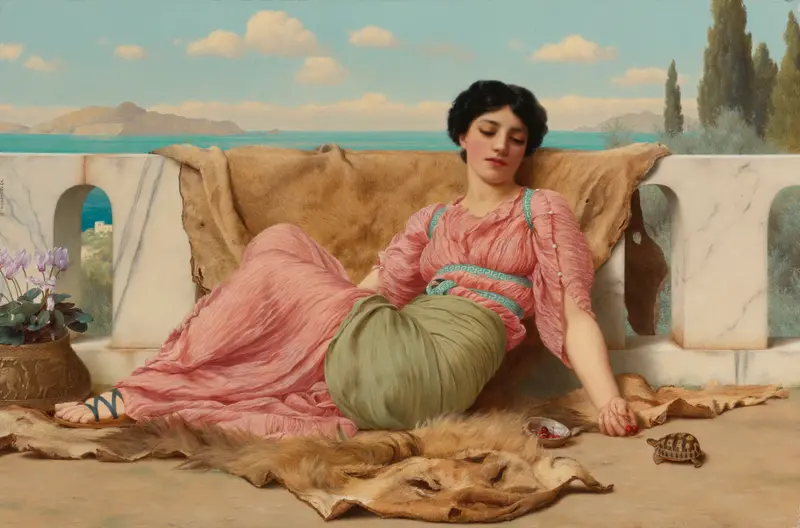
The Quiet Pet
John William Godward
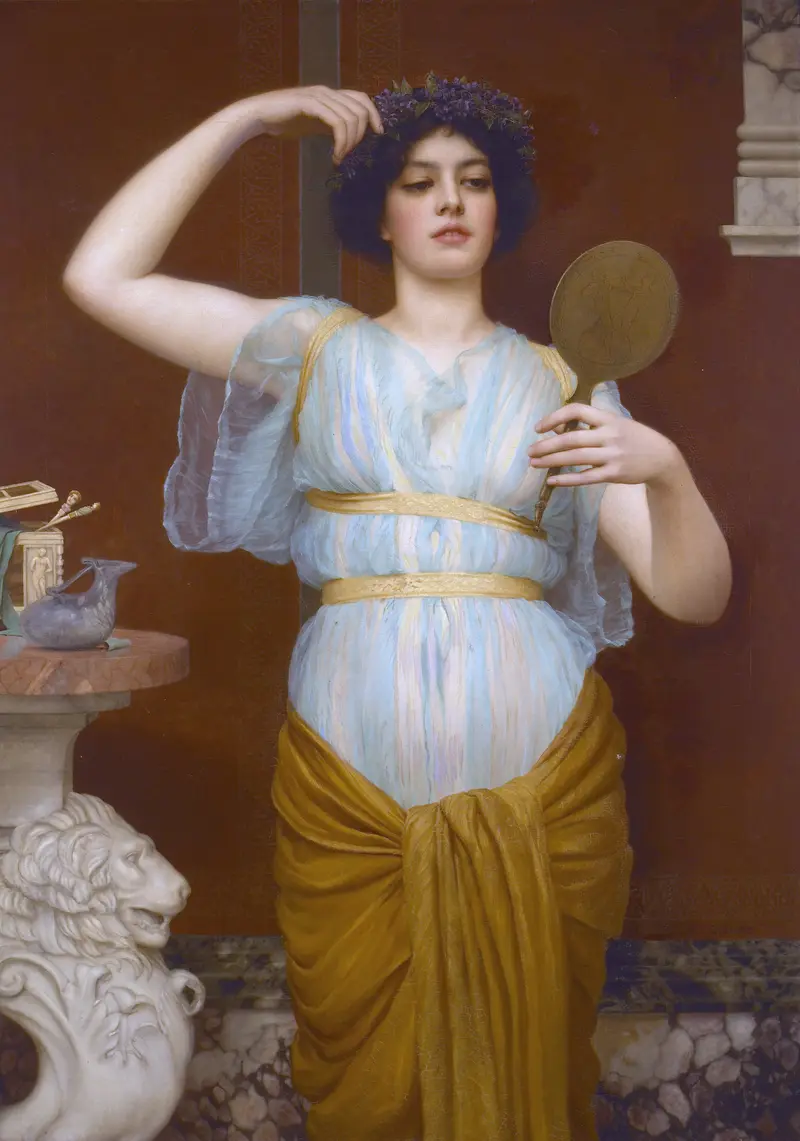
Ione
John William Godward
Sweet Dreams
John William Godward
A Fair Reflection
John William Godward
A Roman Beauty
John William Godward
A Dilettante
John William Godward
Reverie
John William Godward
More Genre Scene Art

Banquet of the Officers of the St George Civic Guard
Frans Hals

Rembrandt and Saskia in the Scene of the Prodigal Son
Rembrandt van Rijn

Bal du moulin de la Galette
Pierre-Auguste Renoir

Quadrille at the Moulin Rouge
Henri de Toulouse-Lautrec

A Burial at Ornans
Gustave Courbet

When Will You Marry?
Paul Gauguin