
In the Tepidarium — History & Facts
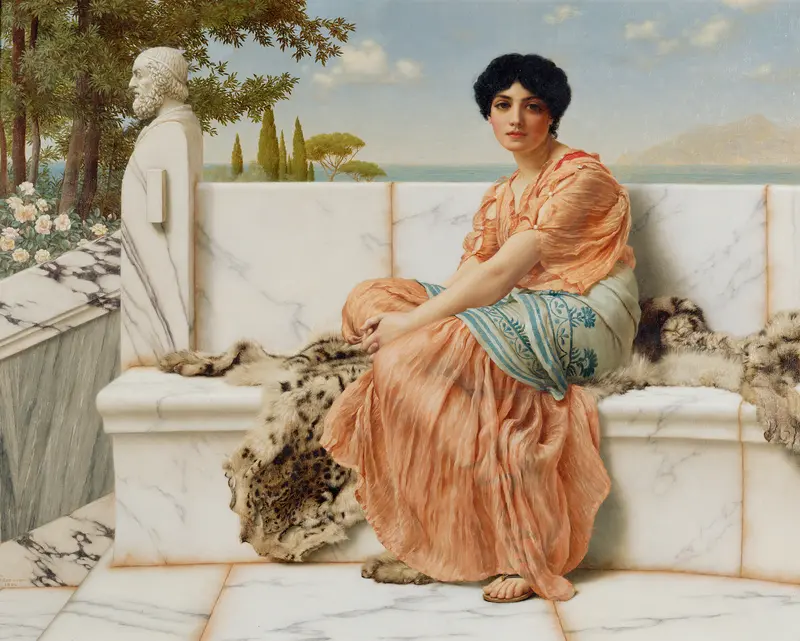
Heat shimmers in stillness as a young woman reclines on a marble bench, her skin glowing against the cool stone, her gaze lost in private thought. The eye is drawn first to the languid curve of her body, draped in a gauzy cloth that clings and falls with studied carelessness, suggesting both modesty and a quiet confidence. Behind her, the patterned wall and lush potted palm evoke a world of ancient luxury, while the golden light that bathes her limbs hints at the warmth of the Roman baths—an imagined past filtered through early twentieth-century eyes.
Every detail, from the crisp folds of the fabric to the delicate blush on her cheek, is a deliberate invitation to linger, to share in her moment of pause. The composition’s careful balance of cool marble and warm flesh, shadow and sun, creates a hush that feels both intimate and theatrical. Painted in 1913, this work belongs to a late flowering of the Neoclassical revival, when artists like John William Godward conjured visions of antiquity for a modern audience hungry for beauty and escape. In an age of rapid industrial change, such paintings offered a retreat into imagined serenity, often destined for the drawing rooms of prosperous collectors who longed for order and grace.
The painting’s documented appearance at Sotheby’s in New York in 2011 is one of the few traces it has left in the public record—a reminder that many works of this genre now circulate quietly, cherished in private hands. Yet the spell of its world endures: the next time you look, notice how the artist’s brush turns marble into flesh, and flesh into a memory of summer’s heat.
More Artworks by John William Godward

Eighty and eighteen
John William Godward
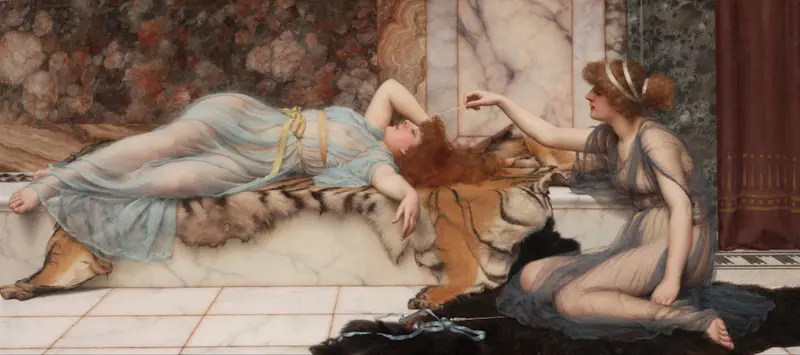
Mischief and Repose
John William Godward
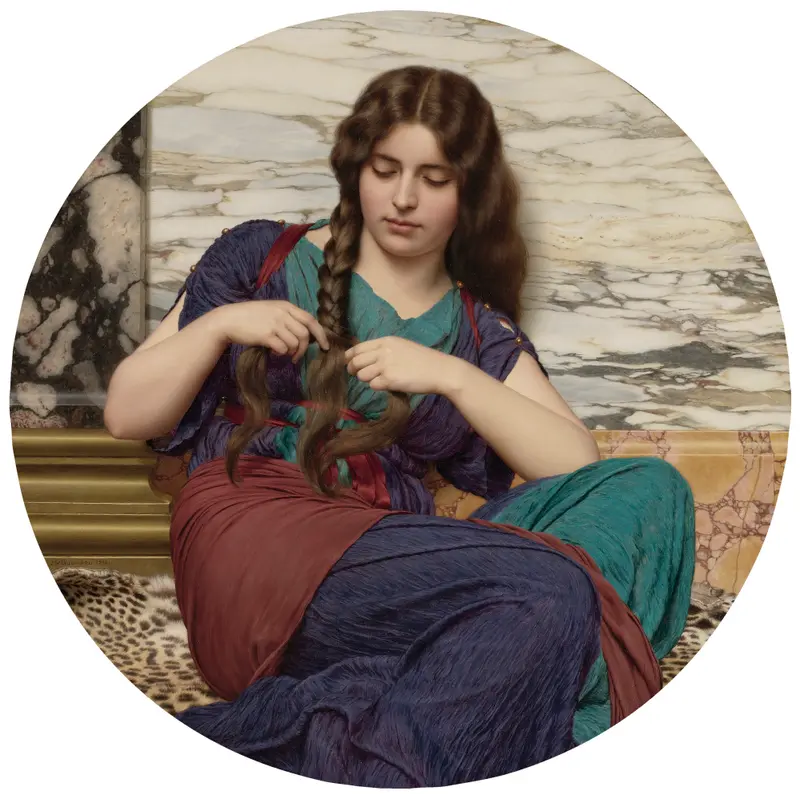
A Congenial Task
John William Godward
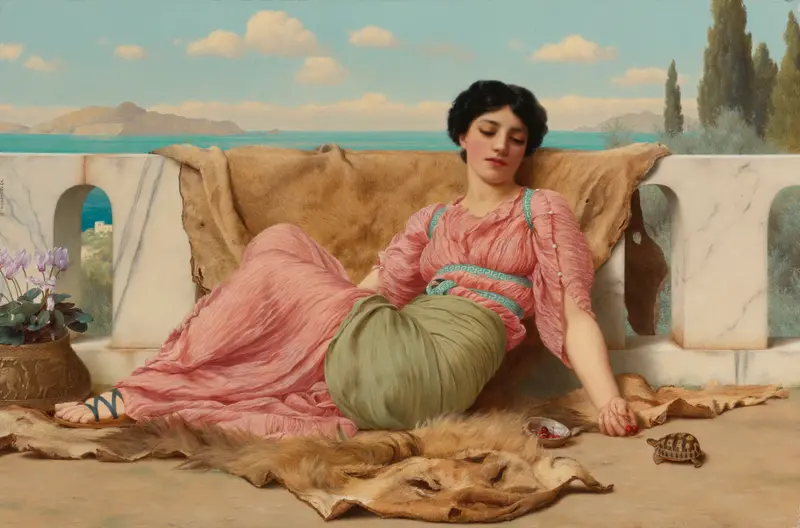
The Quiet Pet
John William Godward
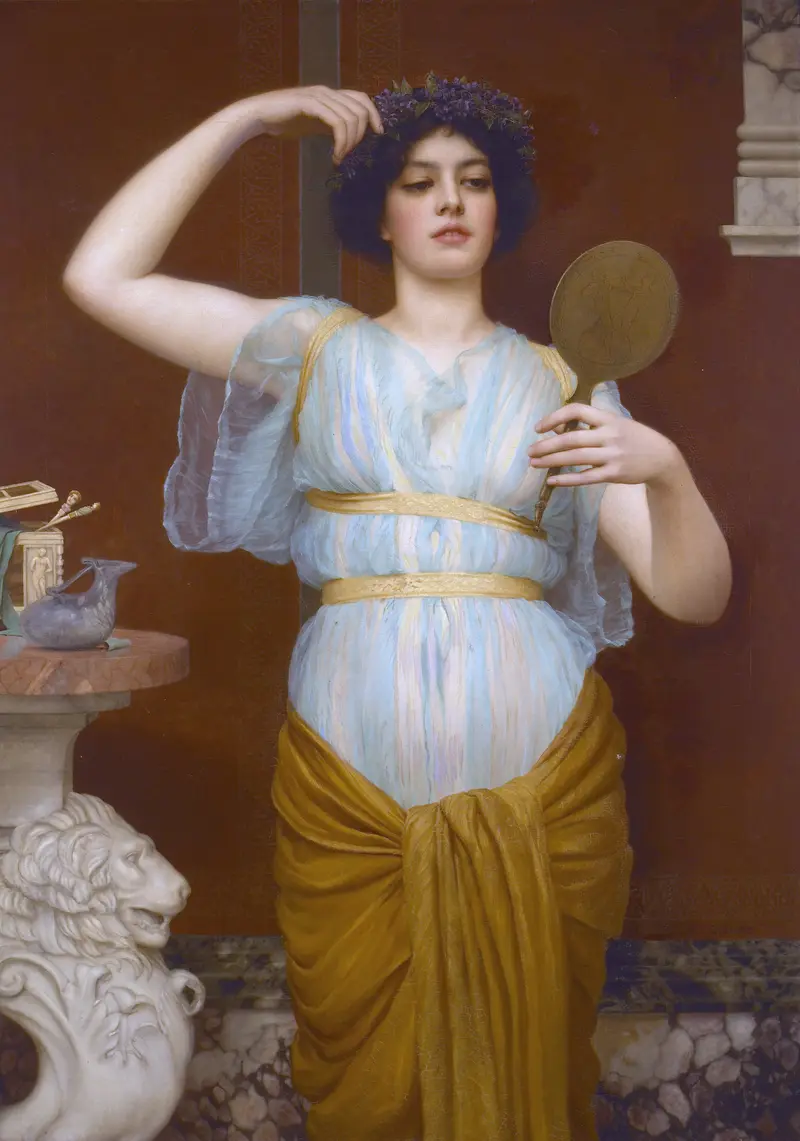
Ione
John William Godward
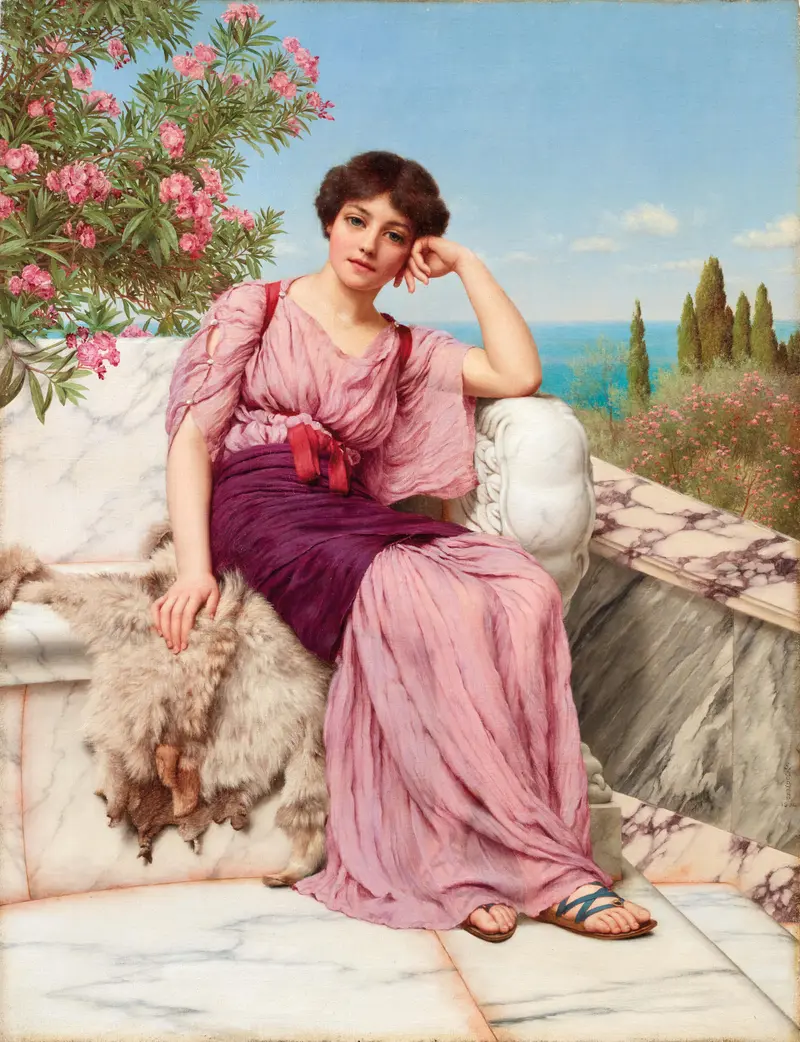
Sweet Dreams
John William Godward
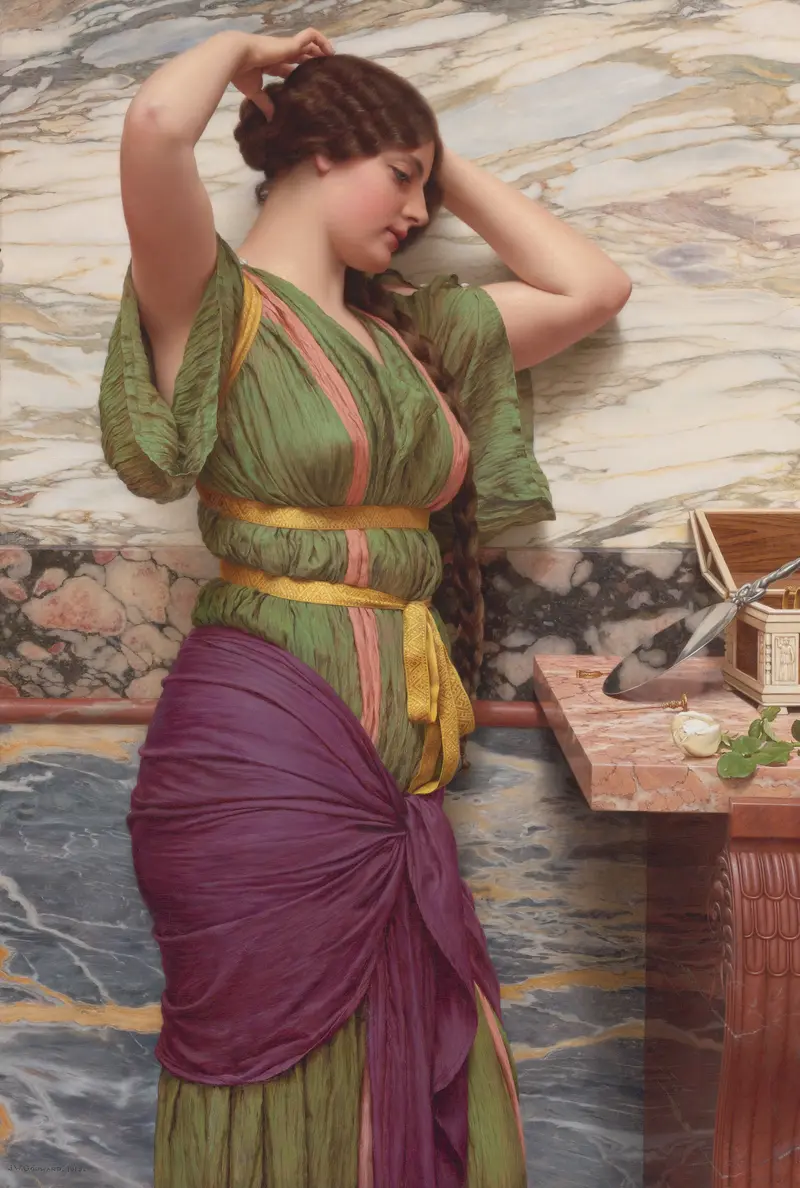
A Fair Reflection
John William Godward
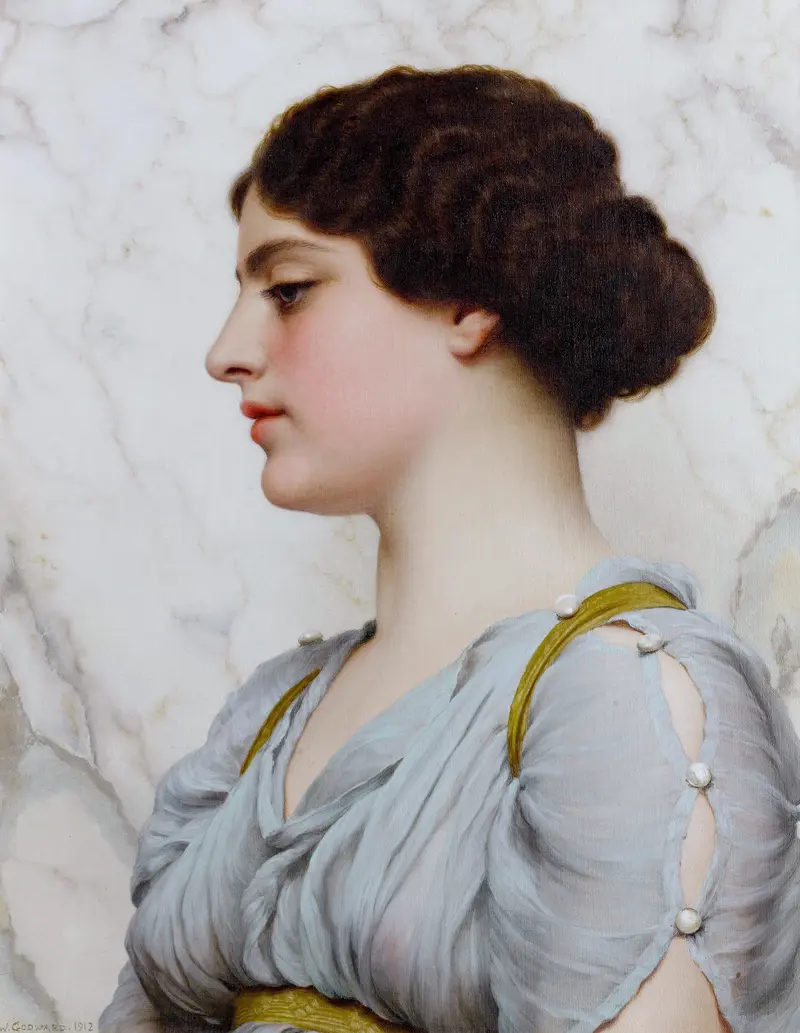
A Roman Beauty
John William Godward
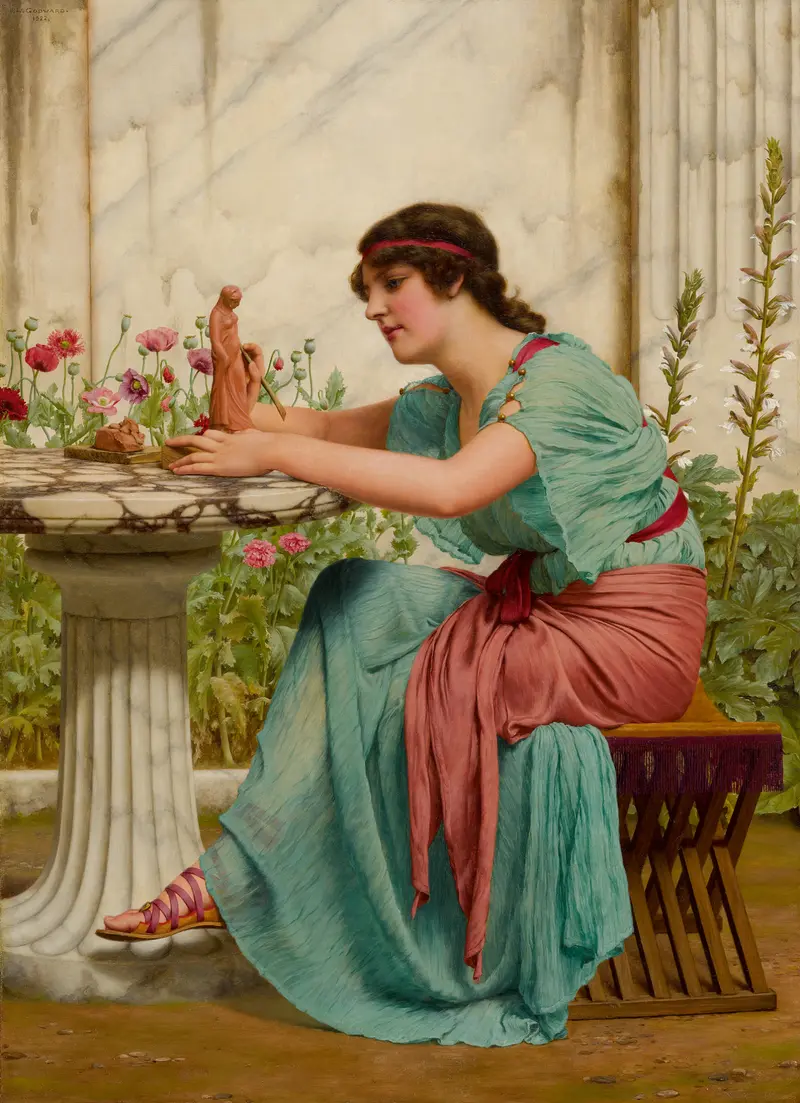
A Dilettante
John William Godward
Reverie
John William Godward





