Indian Ornament No. 9 — History & Facts
A riot of pattern greets the viewer, each band and border a miniature world of geometry and color. The eye is drawn first to the vertical column at center, a riotous tangle of stylized foliage and blossoms, their forms outlined in deep green and filled with coral and ochre. Every motif is precise, yet the overall effect is exuberant, as if the page itself is a garden springing to life.
Around this axis, smaller fragments—checkerboards, scallops, and undulating vines—offer a sampler of invention, each one a study in rhythm and repetition. The chromolithograph technique brings a crispness and clarity to every line, and the palette—earthy reds, greens, golds—signals both opulence and restraint, inviting the viewer to imagine these designs as fragments of architecture, textiles, or jewelry. This page comes from the world of mid-nineteenth-century design reform, when artists and architects across Europe looked to the arts of India for inspiration and instruction. Owen Jones was a leading figure in this movement, and works like this, published in London and later preserved in collections such as the Polona Digital Library, aimed to educate Western audiences about the richness and logic of non-European ornament.
Such plates were not just decoration: they were arguments in color and form, urging a new respect for the world’s decorative traditions at a time when industrialization threatened to flatten them. History has kept few traces of the individual hands behind the original Indian designs, but the page remains a testament to their enduring power—inviting us to linger over every detail, and to imagine the cultures that first gave them meaning.
More Artworks by Owen Jones

Greek Ornament No. 1
Owen Jones
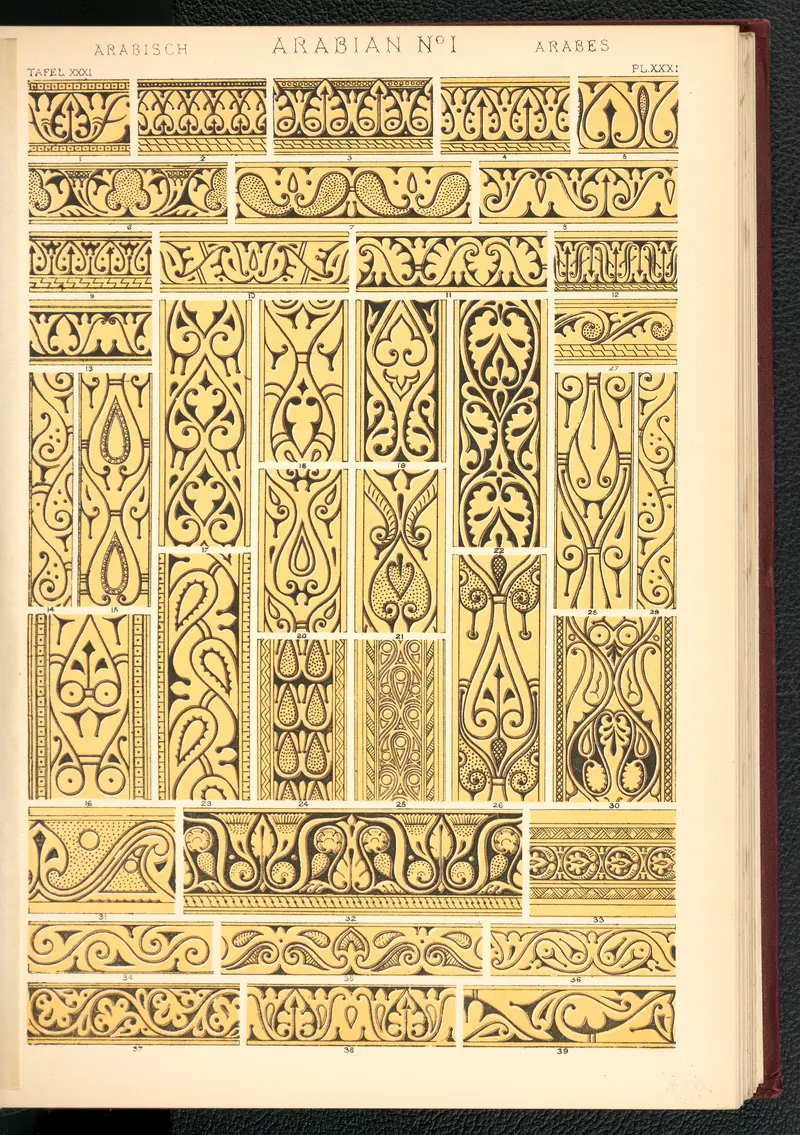
Arabian Ornament No. 1
Owen Jones
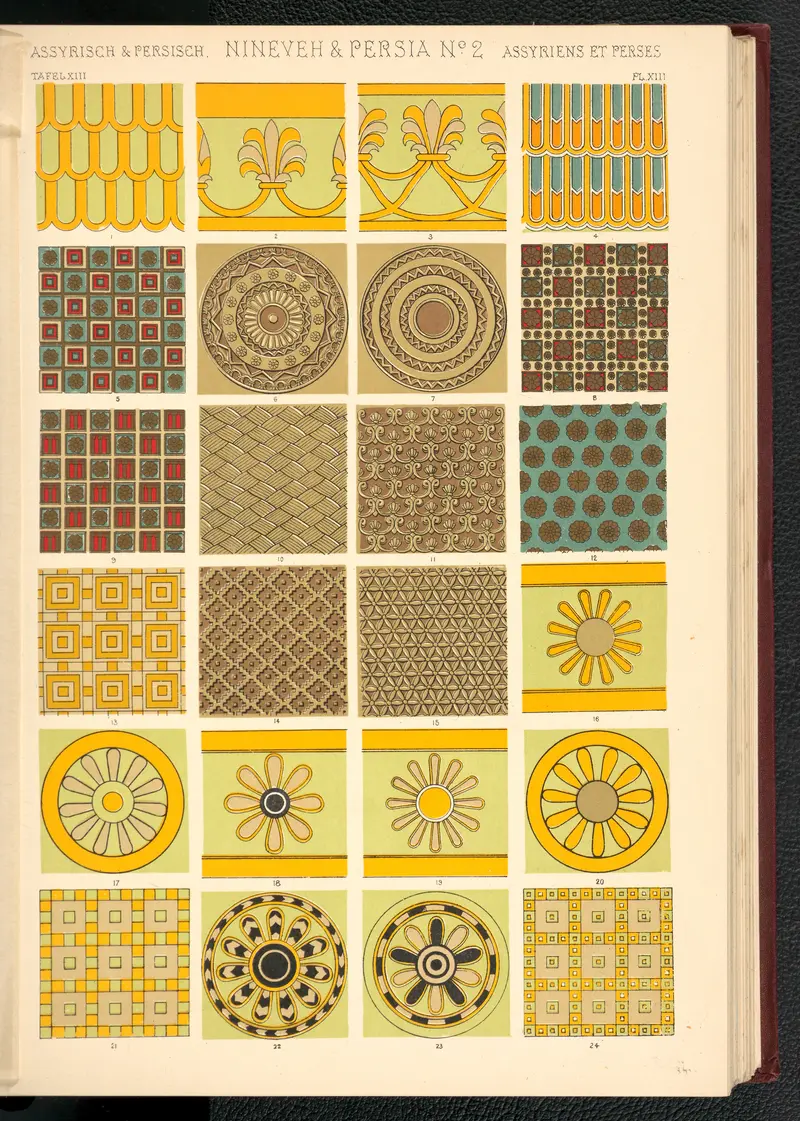
Assyrian Ornament No. 2
Owen Jones

Egyptian Ornament No. 3
Owen Jones
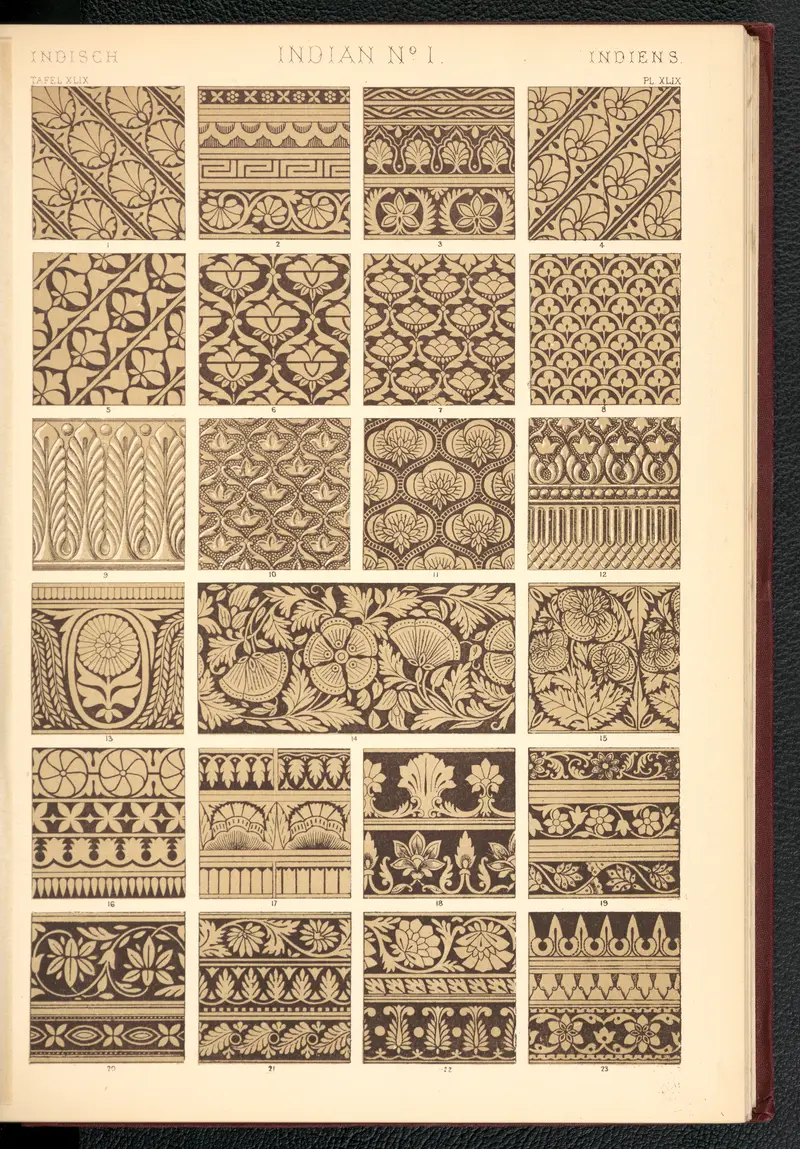
Indian Ornament No. 1
Owen Jones
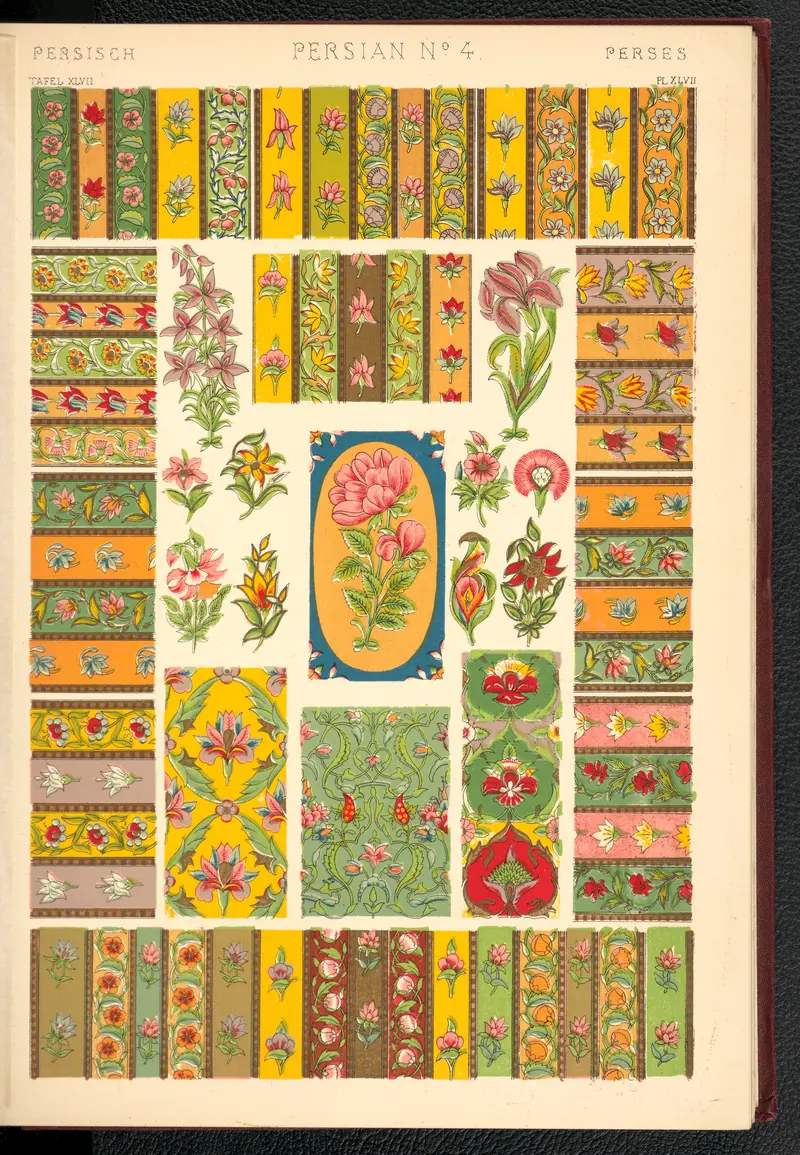
Persian Ornament No. 4
Owen Jones
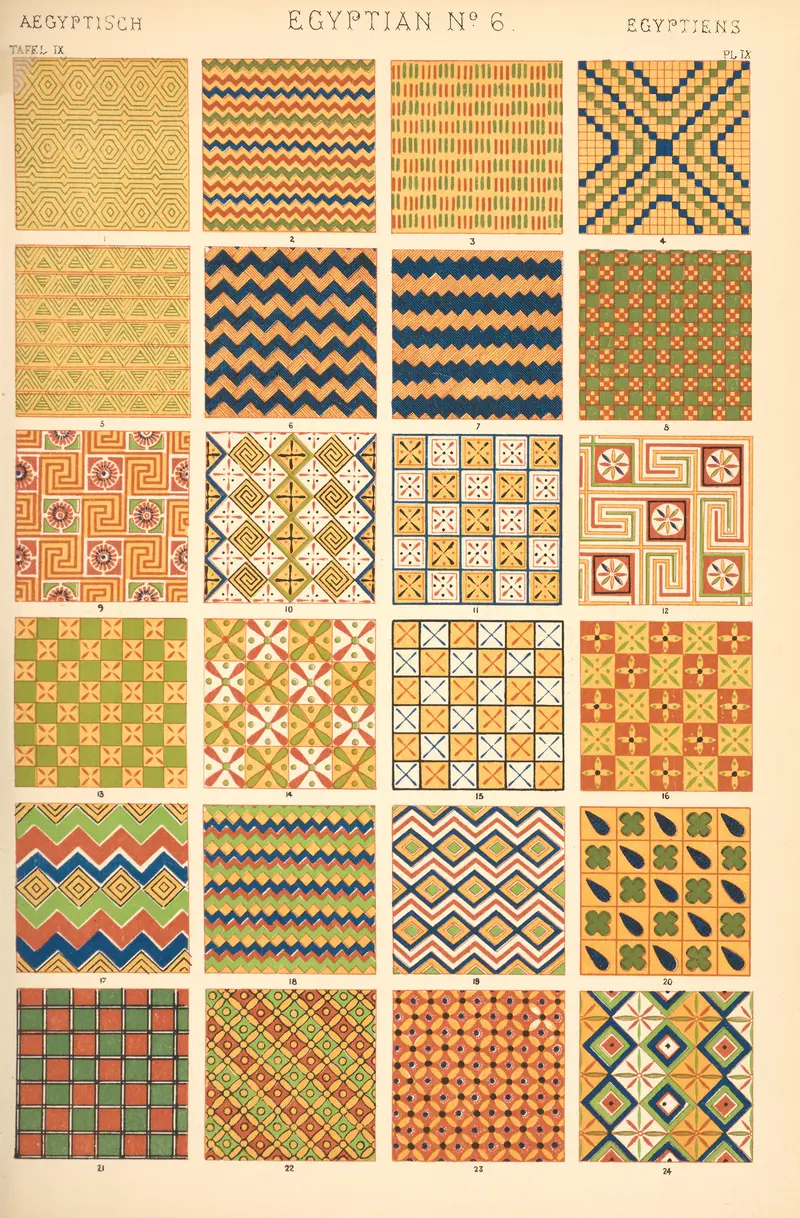
Egyptian Ornament No. 6
Owen Jones
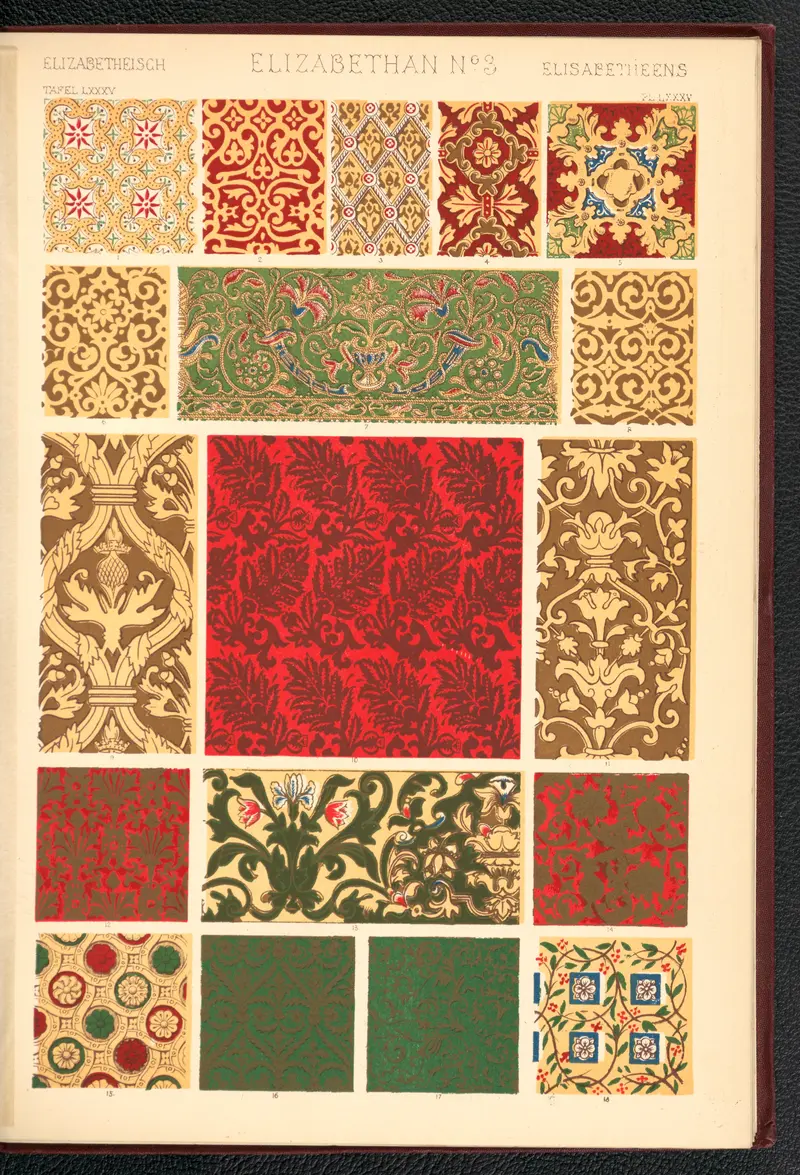
Elizabethan Ornament No. 3
Owen Jones
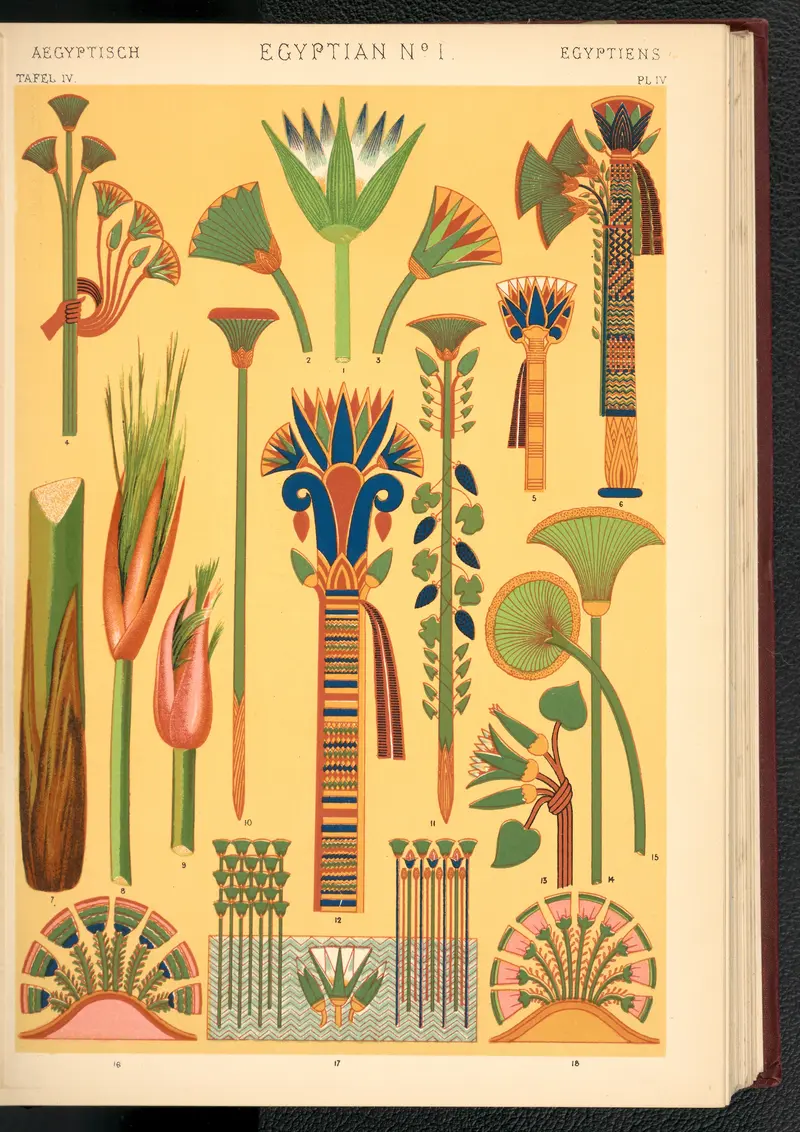
Egyptian Ornament No. 1
Owen Jones
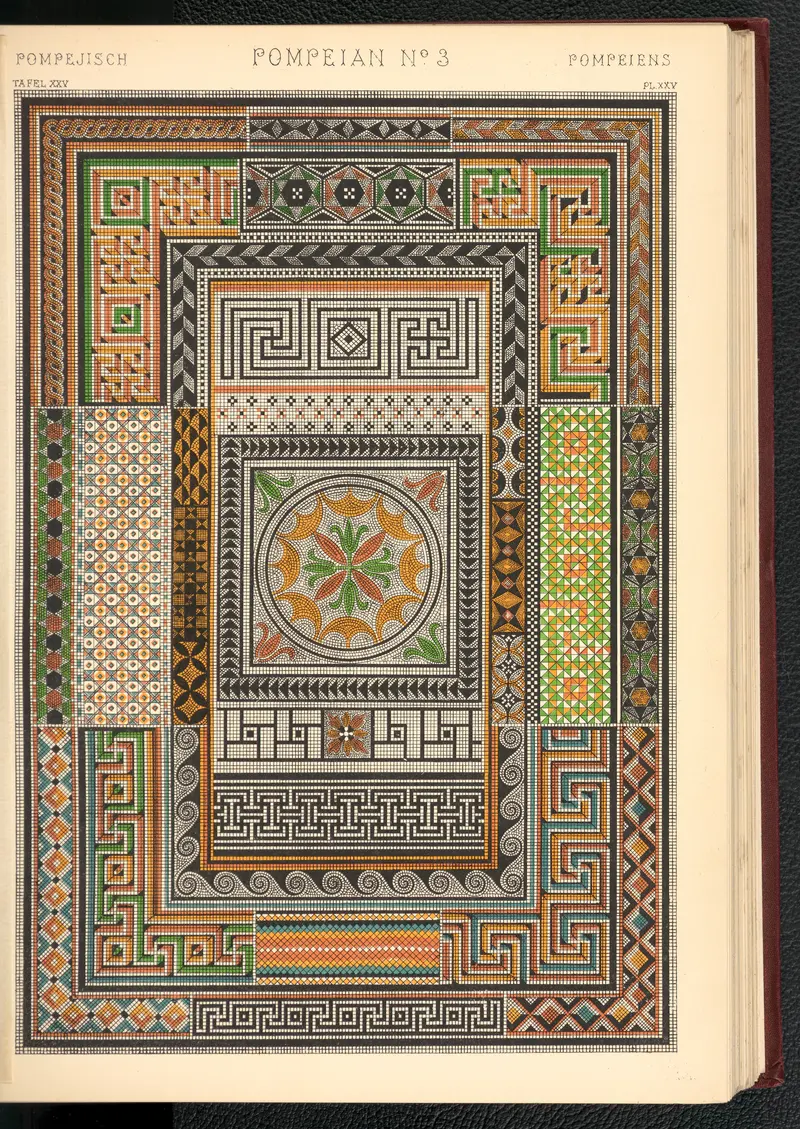
Pompeian Ornament No. 3
Owen Jones