
Interior of a Tavern — History & Facts
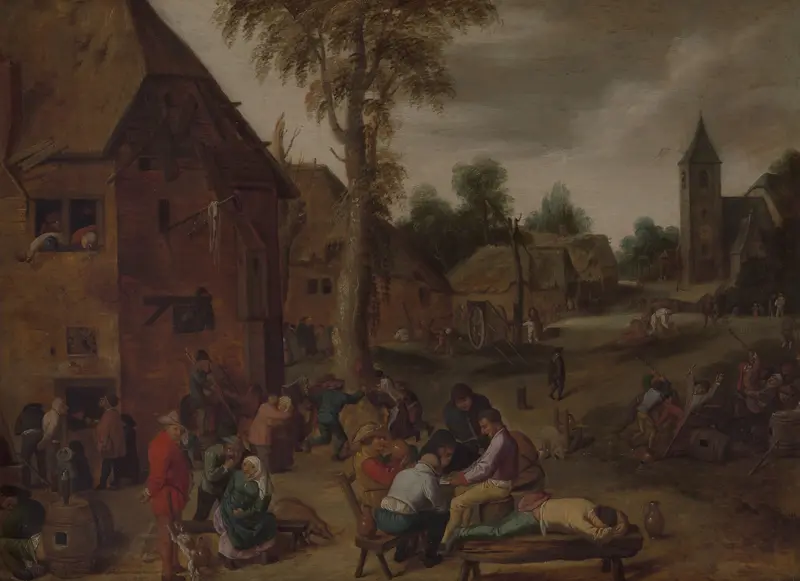
A single figure slumps against a wooden post, his head turned away, while another man in a red cap leans back with eyes half-closed, lost in the haze of drink or smoke. The room is thick with bodies and gestures: a man stoops to light his pipe, a raised fist signals a bawdy joke or an argument, and in the background, others huddle and bend over tables. The rough, smoky light pools around faces and hands, picking out flushed cheeks and the gleam of a jug, then dissolves into murky corners.
Every detail—the battered jug, the chalk marks on the post, the crumpled hats—serves to root the scene in the daily, unvarnished life of a seventeenth-century tavern. Adriaen Brouwer draws the viewer into the press and heat of the room, where pleasure and exhaustion mingle, and the air is thick with the evidence of hard living. Painted around 1630, this Interior of a Tavern belongs to a tradition that flourished in the Low Countries, where scenes of peasant revelry and tavern life became a kind of social mirror. Such works were rarely grand commissions; instead, they found their way into the homes of urban collectors who relished both the humor and the moral edge—these paintings could be warnings as much as entertainments.
Brouwer was celebrated for his ability to capture the raw immediacy of human behavior, using loose brushwork and earthy colors to evoke the texture of flesh, wood, and smoke. While history has kept few traces of this specific painting’s journey, its presence in a modern collection invites us to linger over the gestures and glances that once filled the everyday world of its maker.
More Artworks by Adriaen Brouwer

The Smokers
Adriaen Brouwer
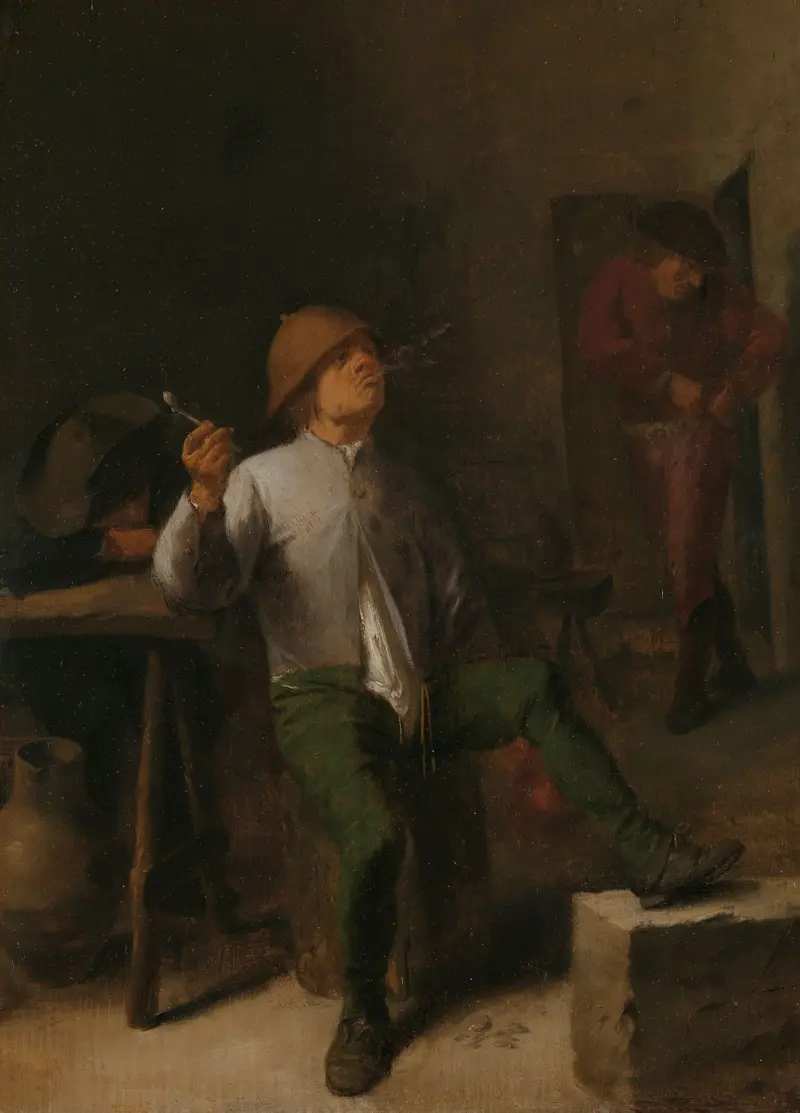
The Smoker
Adriaen Brouwer
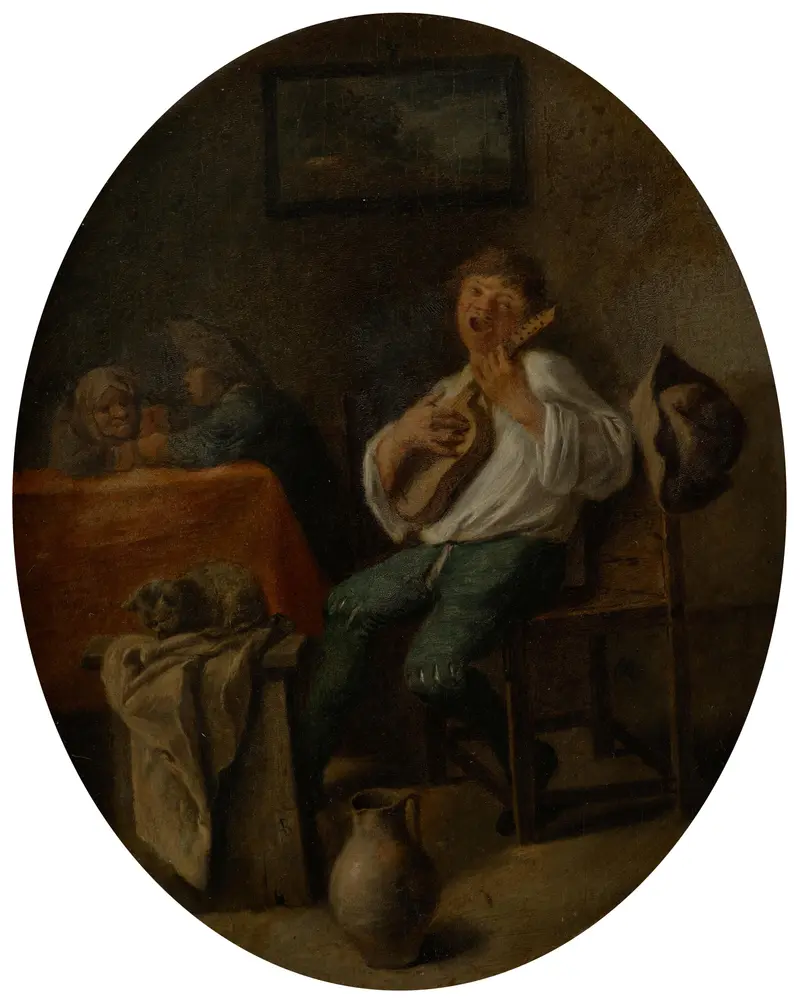
The Guitar Player
Adriaen Brouwer
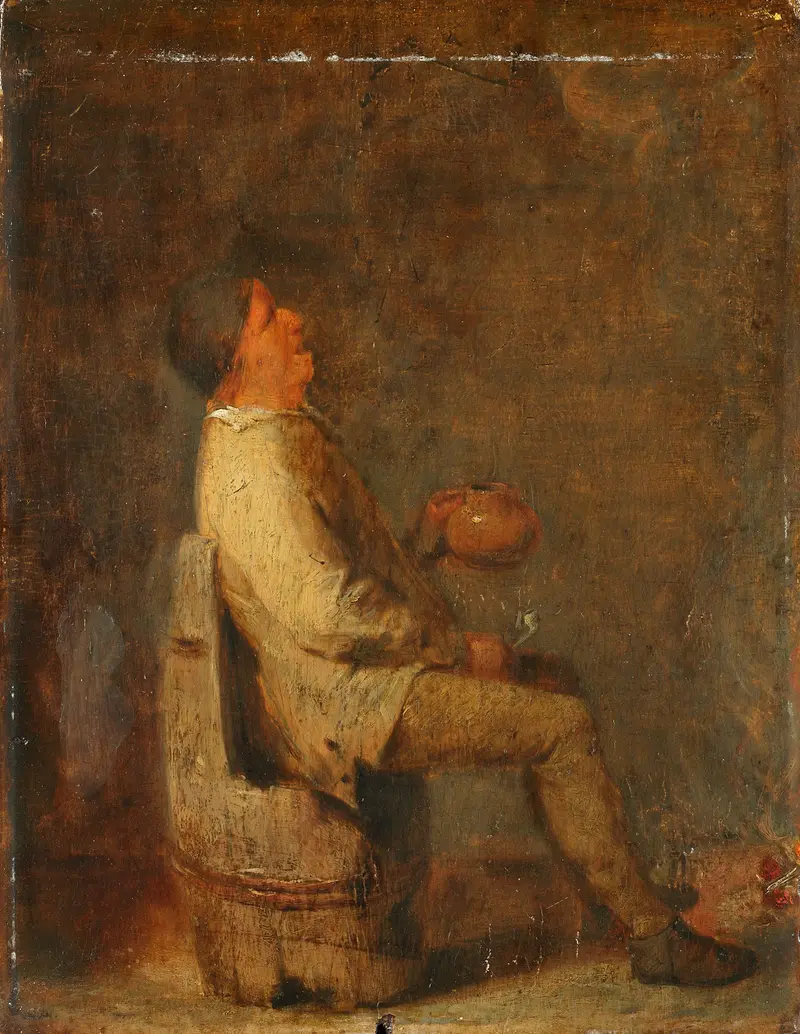
A Peasant Singing
Adriaen Brouwer
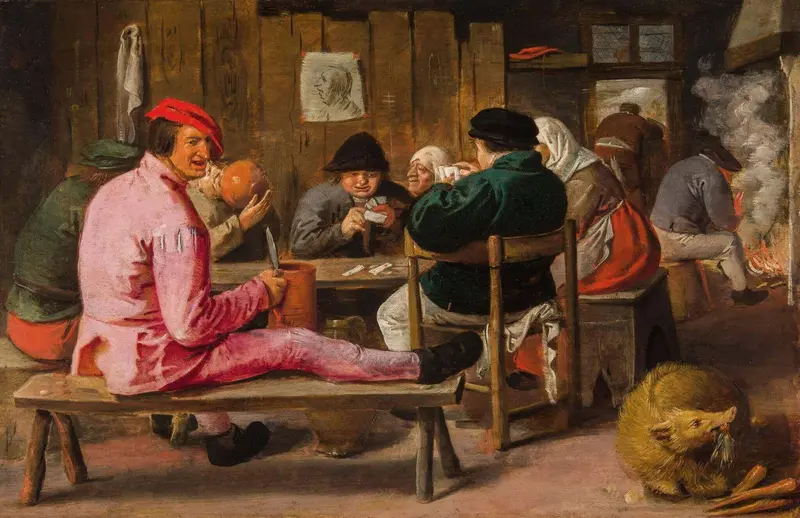
Merry Peasants in an Inn
Adriaen Brouwer
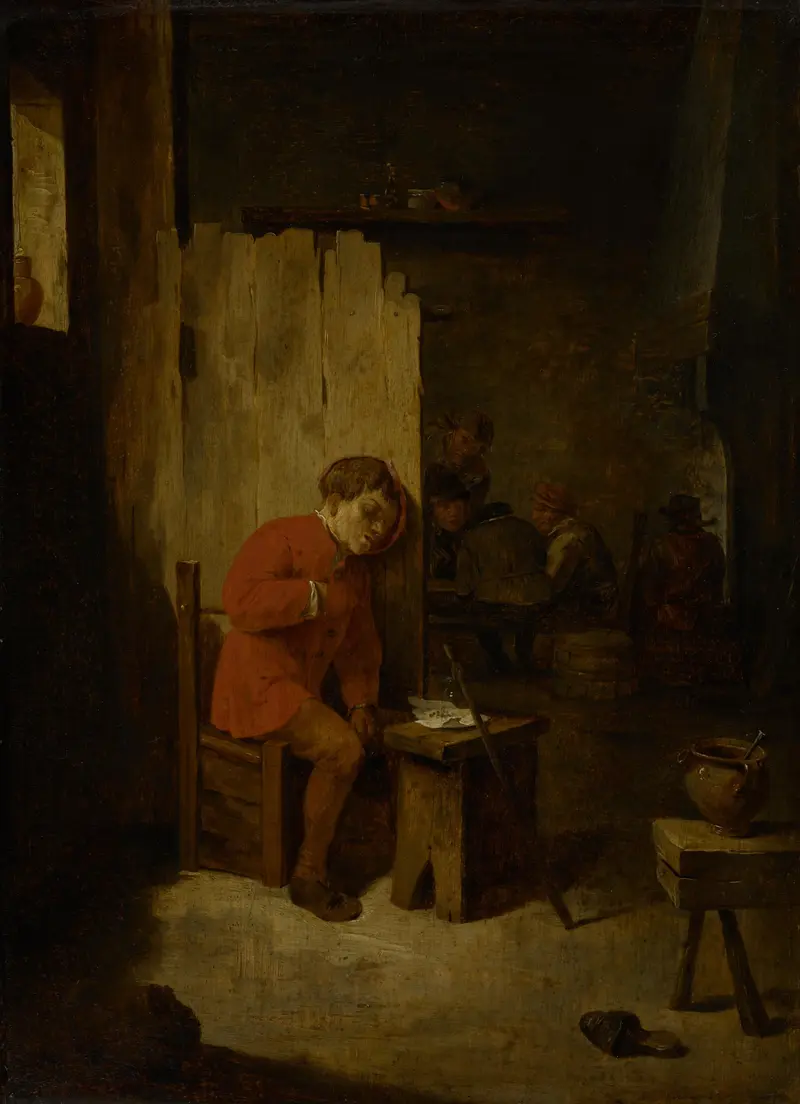
Nachahmer, Schlafender Bauer 853G Gemäldegalerie
Adriaen Brouwer
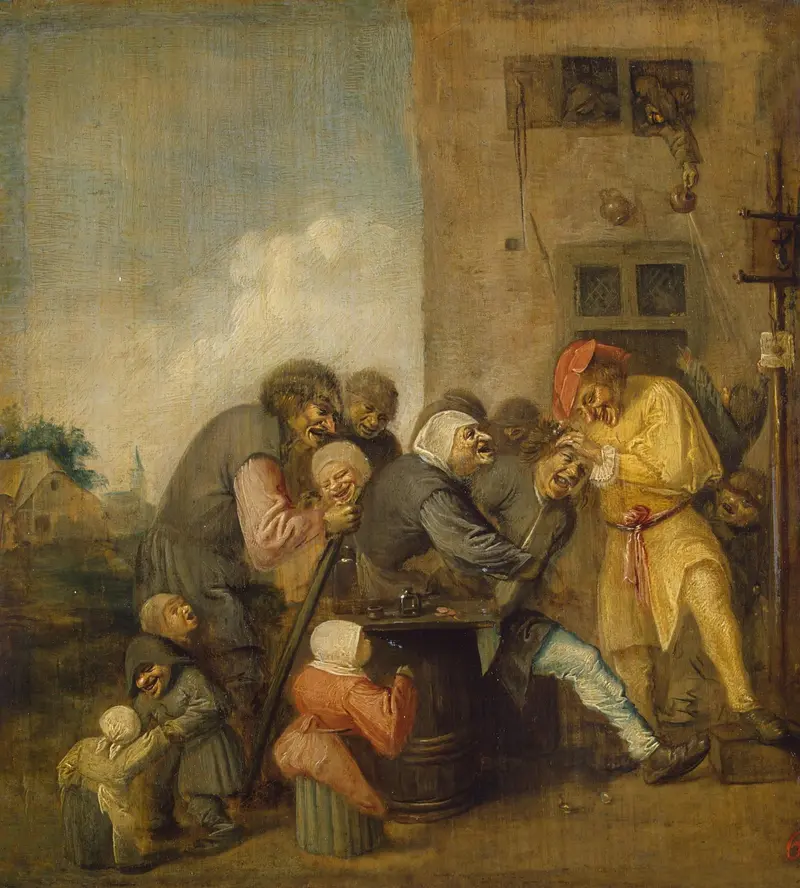
Village Charlatan (The Operation for Stone in the Head)
Adriaen Brouwer
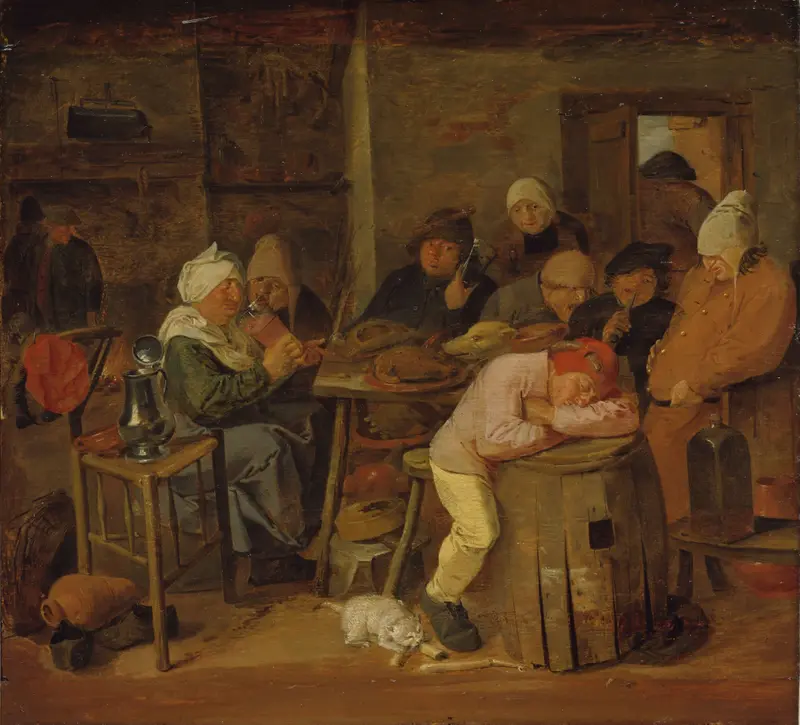
Peasants in an interior (The slaughter feast)
Adriaen Brouwer
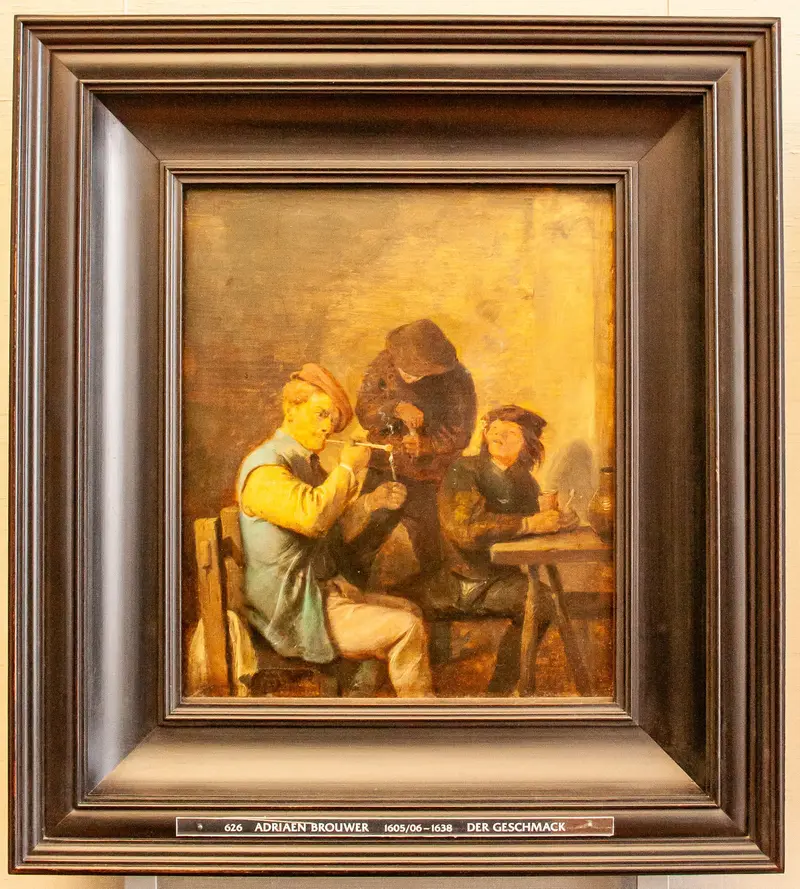
The Taste
Adriaen Brouwer
A Fair
Adriaen Brouwer
More Genre Scene Art

Banquet of the Officers of the St George Civic Guard
Frans Hals

Rembrandt and Saskia in the Scene of the Prodigal Son
Rembrandt van Rijn

Bal du moulin de la Galette
Pierre-Auguste Renoir

Quadrille at the Moulin Rouge
Henri de Toulouse-Lautrec

A Burial at Ornans
Gustave Courbet

When Will You Marry?
Paul Gauguin