
Intersection de deux rues, à Paris, en 1899. — History & Facts
The delicate interplay of hues whispers faith, binding the viewer to a moment suspended in time. Look to the center of the canvas, where the converging streets meet like paths of destiny. Soft pastels blend into one another, creating an atmosphere that is both inviting and introspective. Notice how the light dances off the cobblestones, illuminating the figures caught in a transient moment — a man tipping his hat, a woman with a basket, each caught in their world, yet connected by the city’s pulse.
The artist employs a deliberate balance of color and shadow, crafting a scene that invites contemplation rather than chaos. The layers of emotion in this artwork reveal a deeper narrative about the bustling life of Paris at the turn of the century. The bright splashes of blue and yellow suggest optimism, while the more muted tones of brown and gray hint at the underlying struggles of urban life. Each figure, engaged in their own story, resonates with themes of isolation and hope, creating a poignant contrast that reflects the duality of existence in a growing metropolis.
Faith emerges in the ordinary, captured in the mundane yet extraordinary details of human interaction. In 1899, while painting this piece, the artist was immersed in a city vibrant with change and innovation. As Paris flourished with artistic movements like Impressionism, Houbron sought to capture the essence of everyday life within its streets. Thus, Intersection de deux rues, à Paris represents not only a snapshot of urban life but also a moment of genuine connection amidst the complexities of modernity.
More Artworks by Frédéric Houbron
Browse all →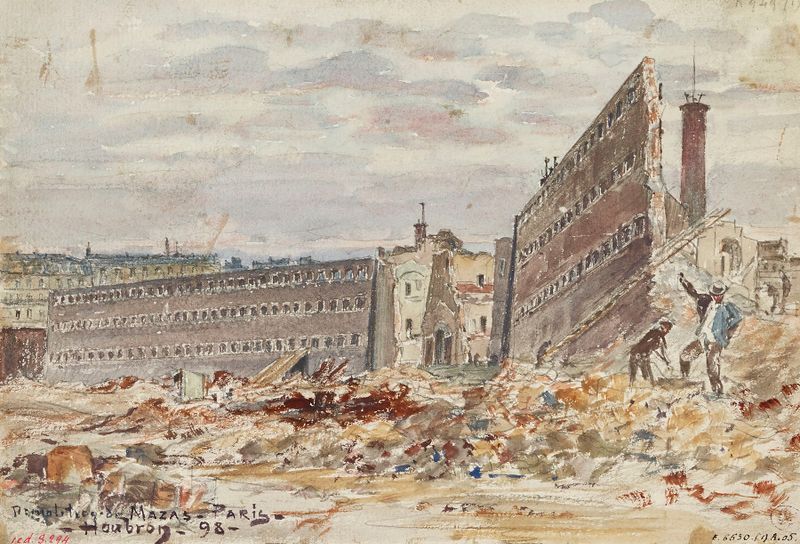
Démolition de la prison Mazas, 23, 25 boulevard Diderot (ancien boulevard Mazas)
Frédéric Houbron
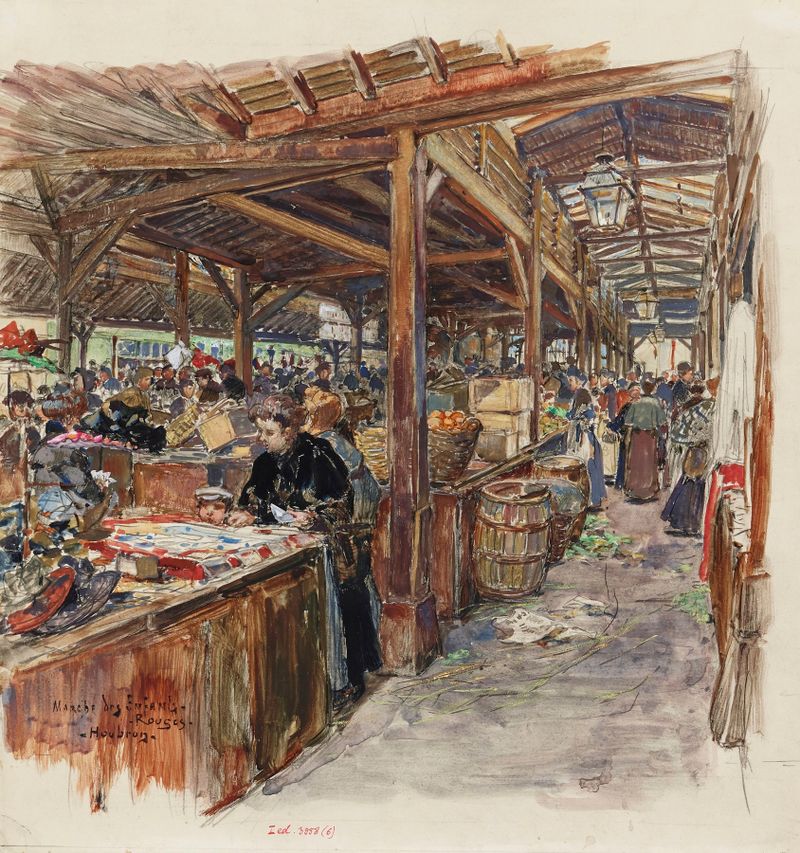
Intérieur du Marché des Enfants Rouges. 3ème arrondissement
Frédéric Houbron
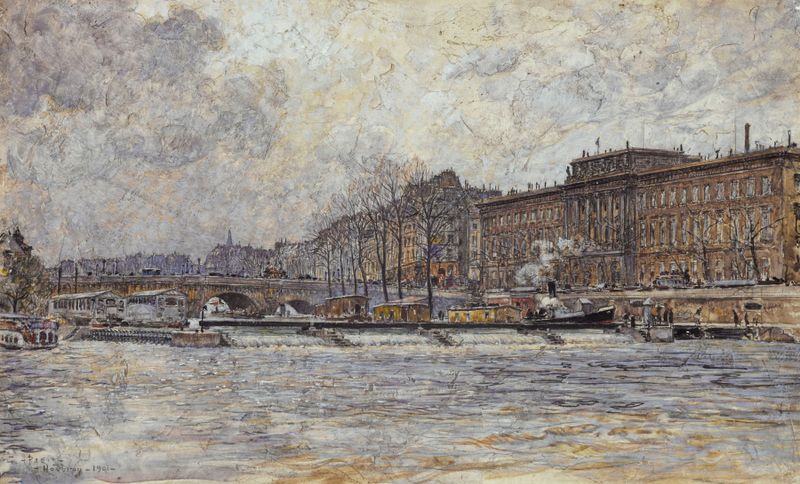
L’Hôtel de la Monnaie et le Pont-Neuf
Frédéric Houbron

Quai des Orfèvres. Paris. 1906
Frédéric Houbron
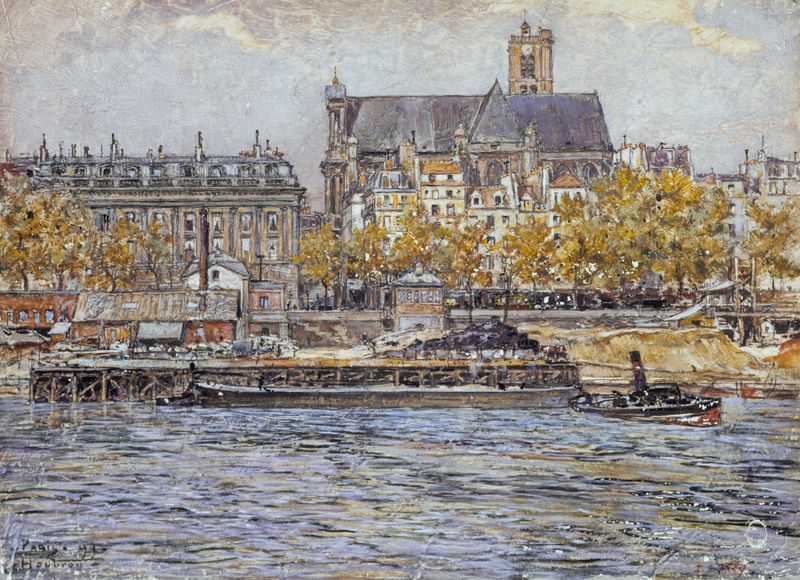
Le quai de l’Hôtel-de-Ville et l’église Saint-Gervais-Saint-Protais
Frédéric Houbron
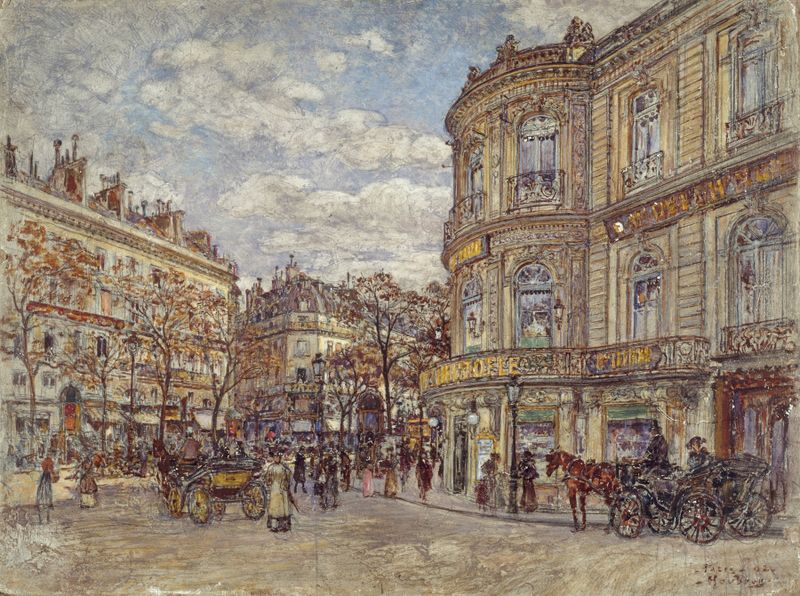
Le Pavillon de Hanovre, rue Louis-le-Grand
Frédéric Houbron

La rue du Chevalier-de-la-Barre, avec le Sacré-Cœur en construction
Frédéric Houbron
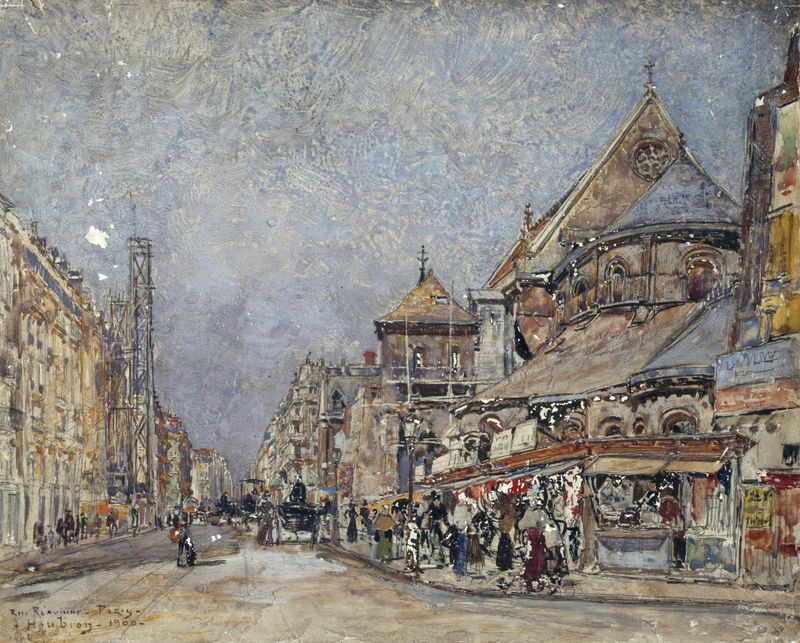
La rue Réaumur et le chevet de l’église Saint-Martin-des-Champs
Frédéric Houbron
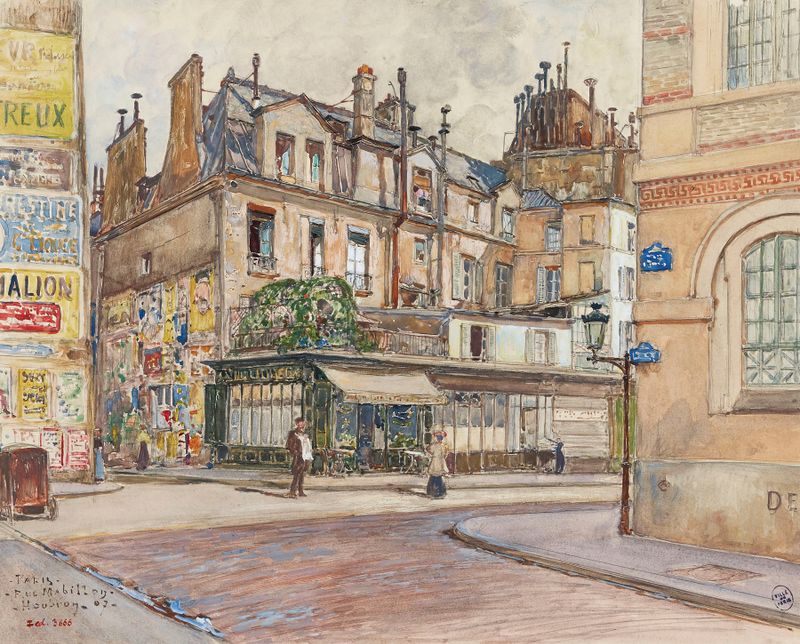
Angle rue Mabillon et rue Clément, en 1907. 5ème et 6ème arrondissements
Frédéric Houbron
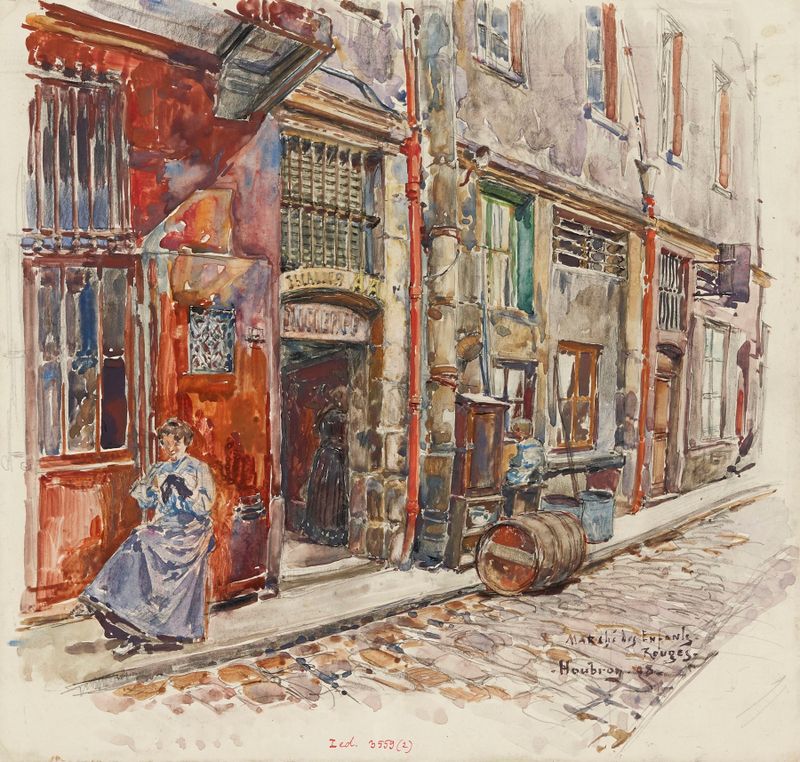
Entrée escalier A du Marché des Enfants-Rouges, en 1908. 3ème arrondissement
Frédéric Houbron





