
Jardin public à Paris, en 1899 — History & Facts
What secret hides in the quiet of the canvas? In the serene embrace of a Parisian park, the whispers of nature collide with the gentle hum of human life, leaving space for unspoken hopes and dreams. Look to the center of the painting, where a pathway winds gracefully between lush greenery, drawing the eye into the heart of the scene. Notice how the dappled sunlight filters through the leaves, casting playful shadows upon the ground, inviting visitors to discover the small wonders of everyday life. The palette, rich with greens and warm earth tones, evokes a sense of tranquility, while splashes of color from blooming flowers create vibrant focal points that breathe life into the composition. As you delve deeper, consider the juxtaposition of figures scattered throughout the park—some seated in quiet contemplation while others engage in lively conversation.
This contrast hints at the delicate balance of solitude and companionship, where hope flourishes amidst the interplay of human connection. The untouched corners of the canvas suggest the boundless possibilities that lie just beyond the frame, as if the viewer is invited to step in and partake in the moment. Frédéric Houbron created this work in 1899 while living in Paris, a city teeming with artistic innovation and social change. The late 19th century was marked by a burgeoning interest in Impressionism, and Houbron’s style reflects this movement, blending a keen observation of light with a celebration of everyday life.
During this period, the city was alive with optimism and transformation, mirroring the subtle yet profound sense of hope encapsulated in this serene scene.
More Artworks by Frédéric Houbron
Browse all →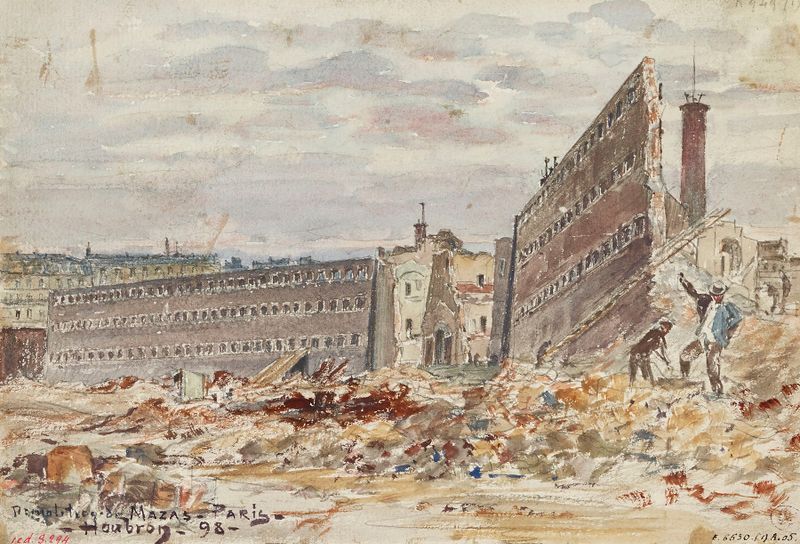
Démolition de la prison Mazas, 23, 25 boulevard Diderot (ancien boulevard Mazas)
Frédéric Houbron
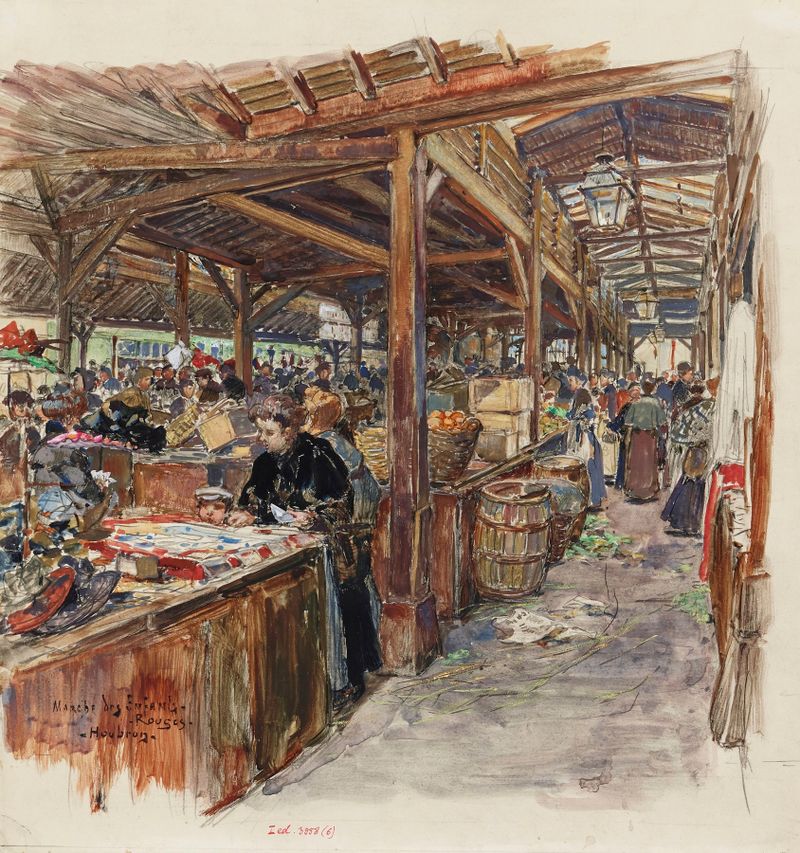
Intérieur du Marché des Enfants Rouges. 3ème arrondissement
Frédéric Houbron
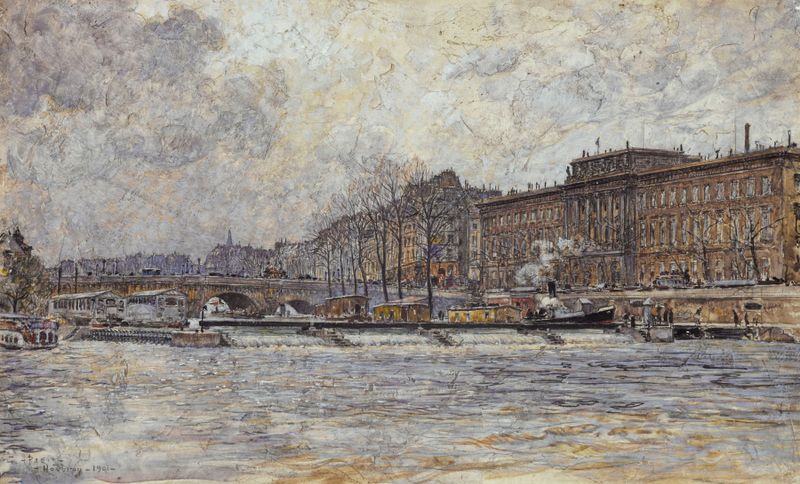
L’Hôtel de la Monnaie et le Pont-Neuf
Frédéric Houbron

Quai des Orfèvres. Paris. 1906
Frédéric Houbron
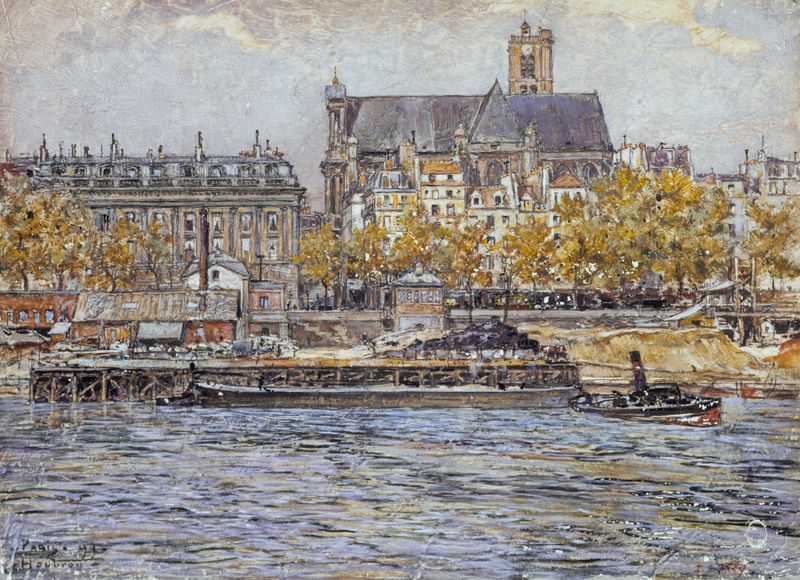
Le quai de l’Hôtel-de-Ville et l’église Saint-Gervais-Saint-Protais
Frédéric Houbron
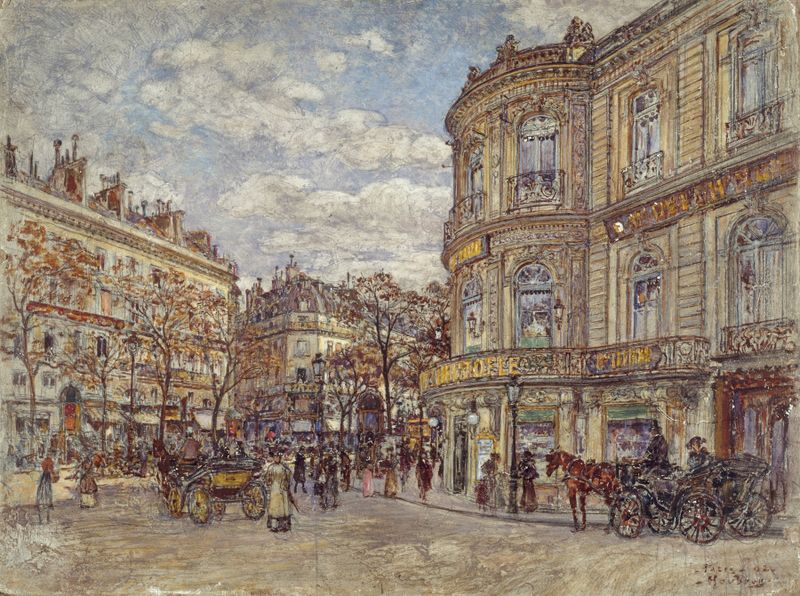
Le Pavillon de Hanovre, rue Louis-le-Grand
Frédéric Houbron

La rue du Chevalier-de-la-Barre, avec le Sacré-Cœur en construction
Frédéric Houbron
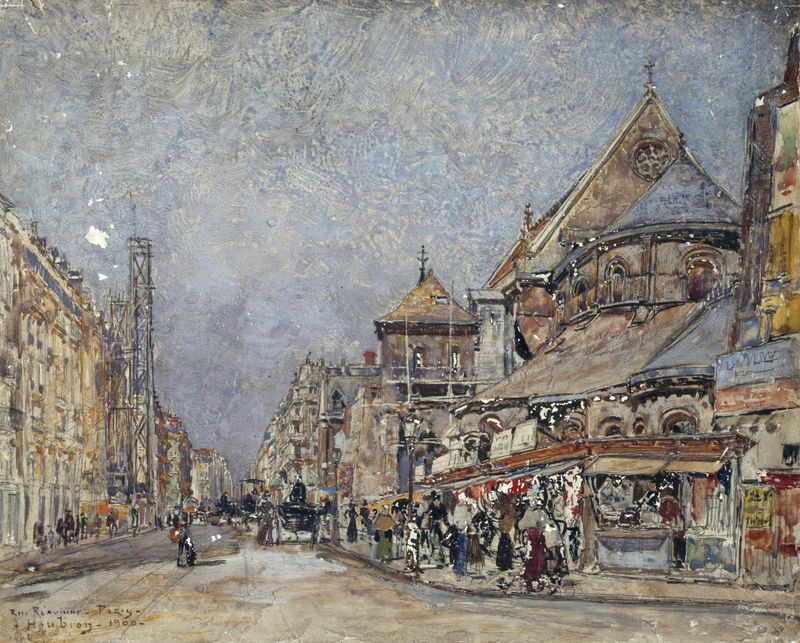
La rue Réaumur et le chevet de l’église Saint-Martin-des-Champs
Frédéric Houbron
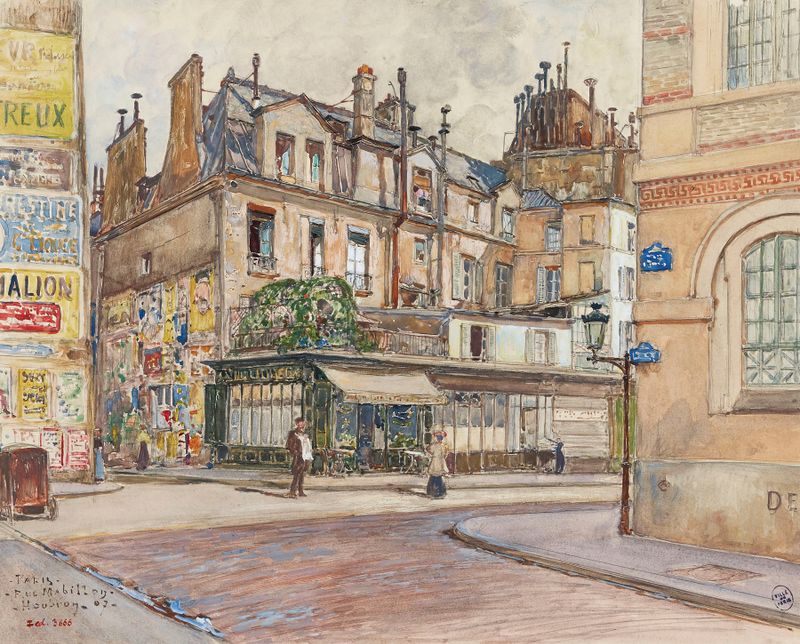
Angle rue Mabillon et rue Clément, en 1907. 5ème et 6ème arrondissements
Frédéric Houbron
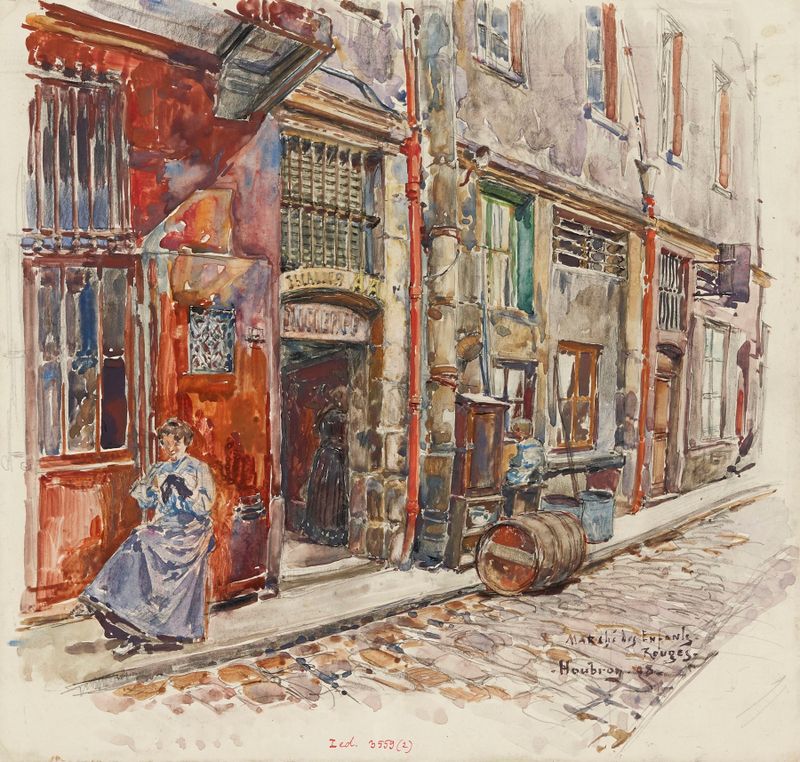
Entrée escalier A du Marché des Enfants-Rouges, en 1908. 3ème arrondissement
Frédéric Houbron





