
Kalela in Autumn — History & Facts
A window flashes blue in the heart of the forest, half-hidden by a tangle of pine and birch, as if the house itself were a secret kept by the trees. The eye is drawn first to the blaze of autumn leaves on the right, their orange and gold so vivid they seem to pulse against the cool, shadowed rocks below. The brushwork is restless, almost sculptural, with thick strokes carving out trunks, boughs, and the rough face of stone.
Light filters through the foliage in shards, catching on the white trunks and glancing off the mossy ground, leading us up toward that glowing window—a promise of warmth within, just glimpsed through the wildness outside. Painted in 1915, Kalela in Autumn stands at the crossroads of Nordic landscape painting and the modernist urge to distill nature to its essentials. In this era, artists across Finland and Scandinavia turned to their native woods and lakes for inspiration, seeking to express both national identity and personal vision. Akseli Gallen-Kallela was among the most influential of these painters, and while little is recorded about this specific work, its energy and palette speak to a world in transition—one foot in folklore, the other in the bold color and abstraction of early twentieth-century art.
The painting's current presence in an online collection is a reminder that even lesser-known works can open a window onto a vanished world, if we pause to look through it.
More Artworks by Akseli Gallen-Kallela
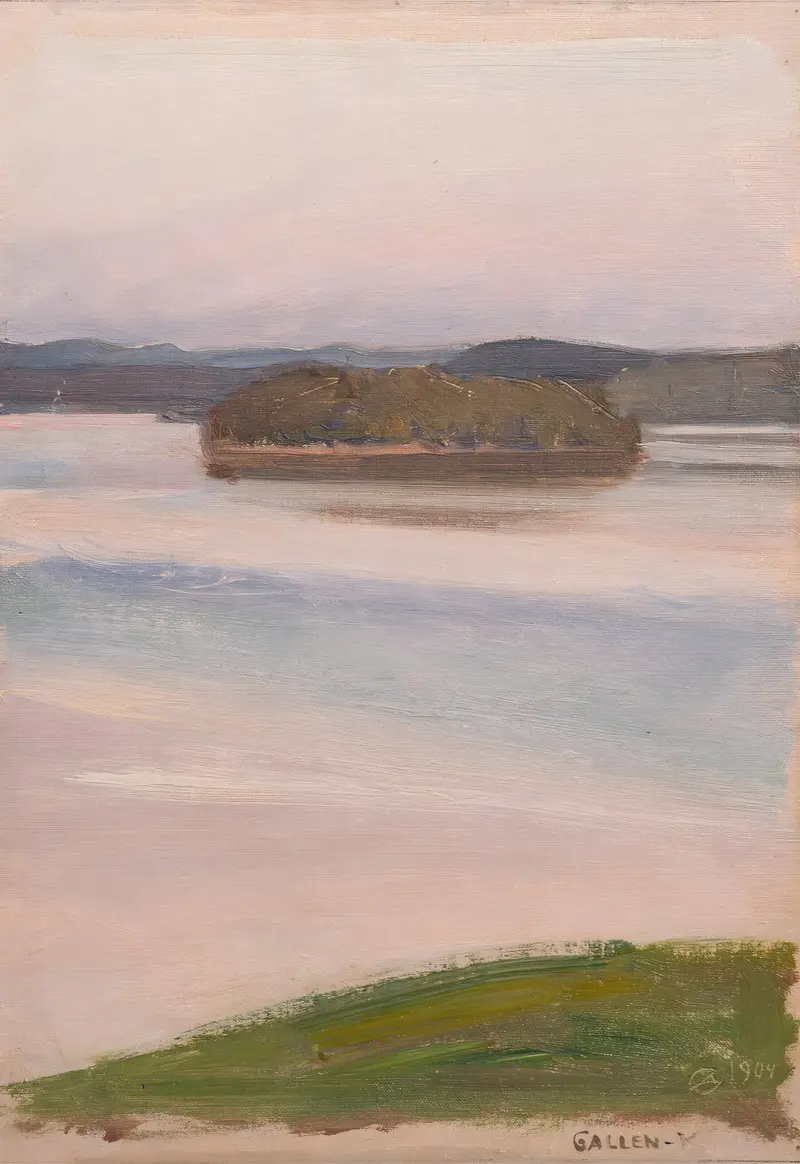
Lake Keitele
Akseli Gallen-Kallela
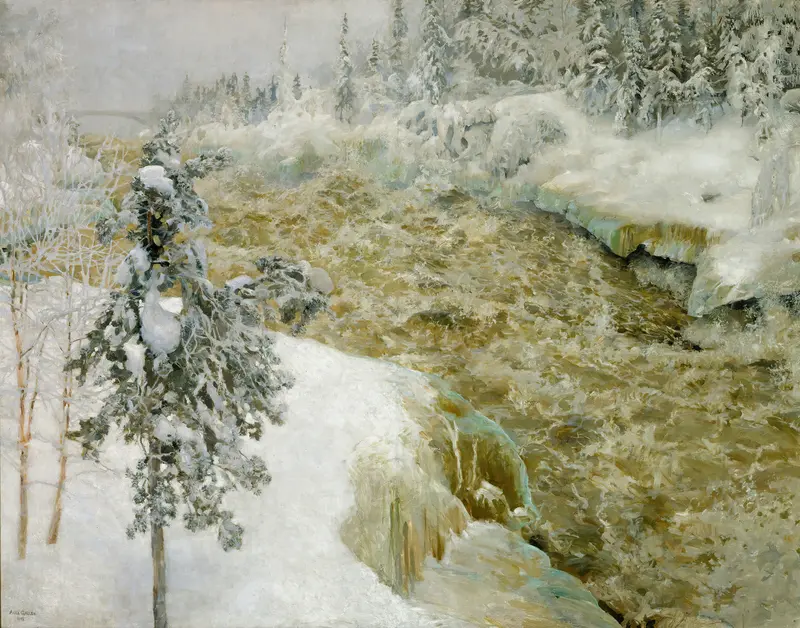
Imatra Falls in Snow ; Imatra in Winter
Akseli Gallen-Kallela
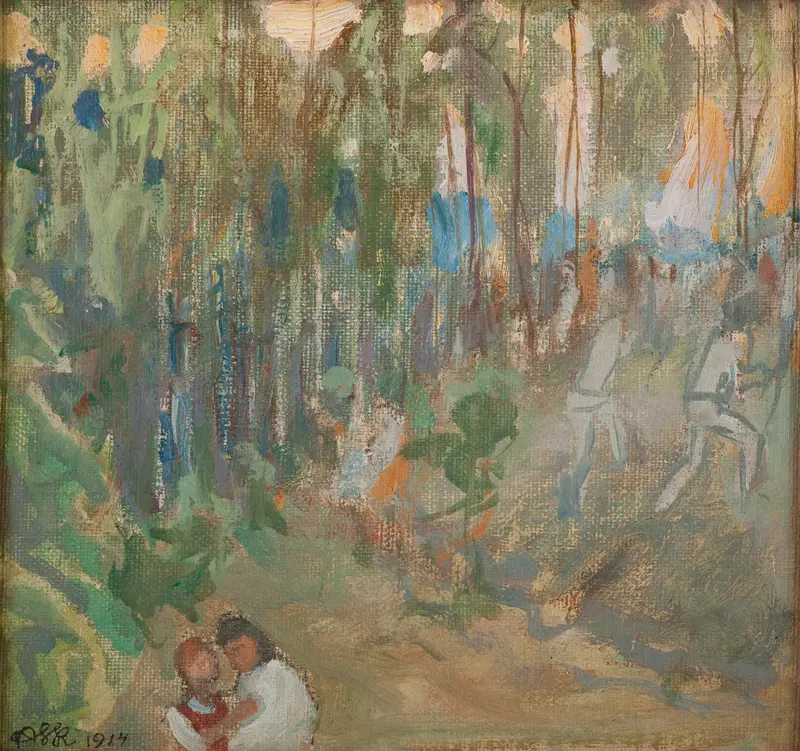
Vainovalkeat
Akseli Gallen-Kallela
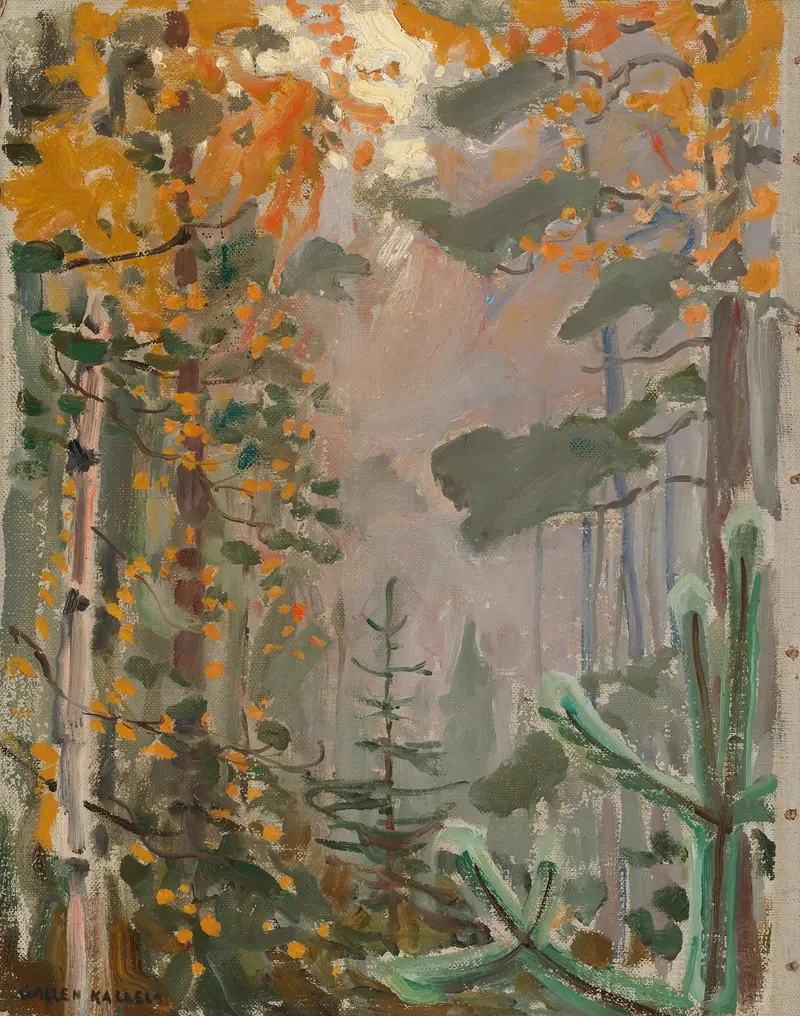
Autumn Landscape
Akseli Gallen-Kallela
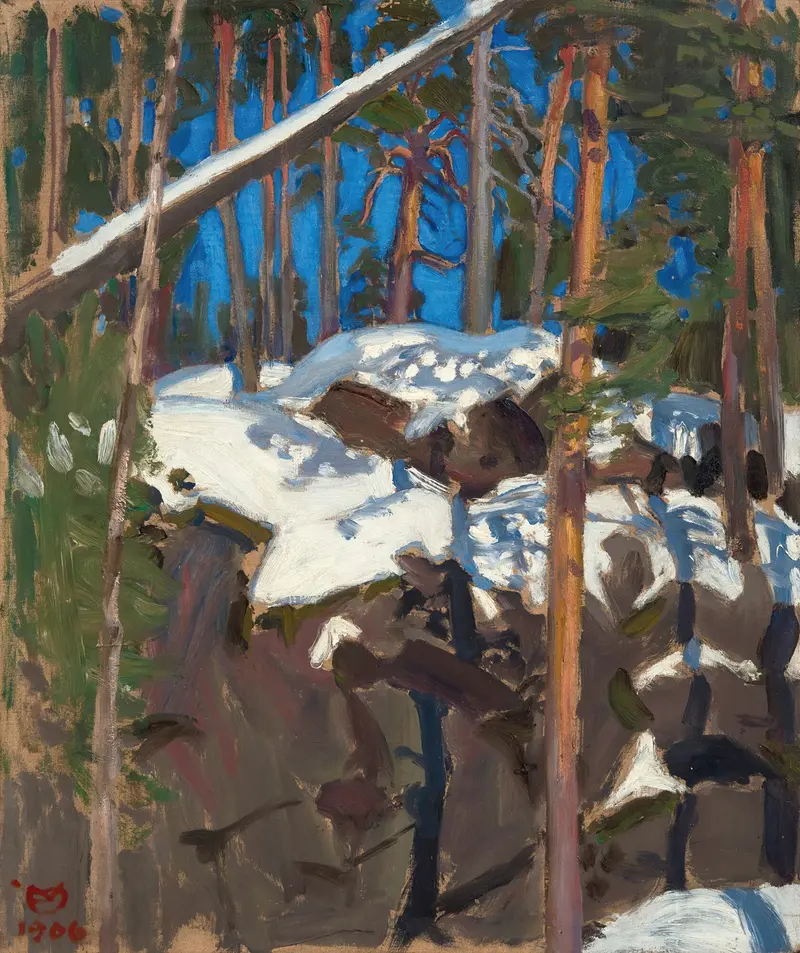
Spring Sun At Konginkangas
Akseli Gallen-Kallela
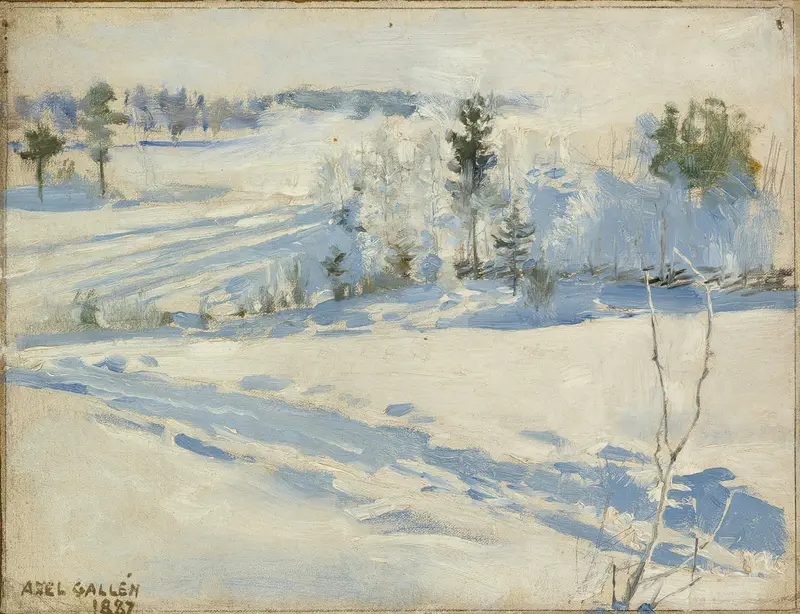
Winter Landscape
Akseli Gallen-Kallela

First Snow
Akseli Gallen-Kallela
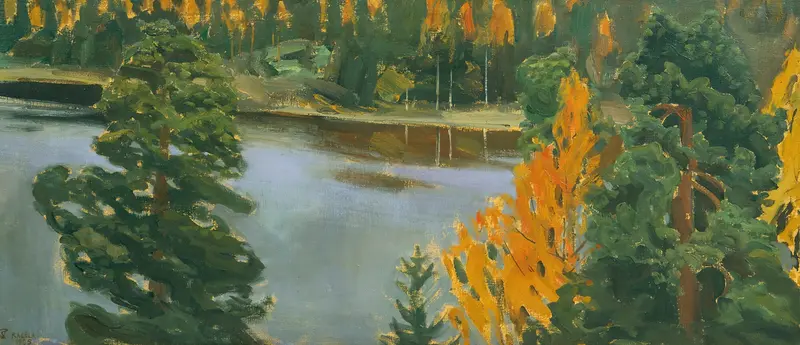
Lake View In Autumn
Akseli Gallen-Kallela
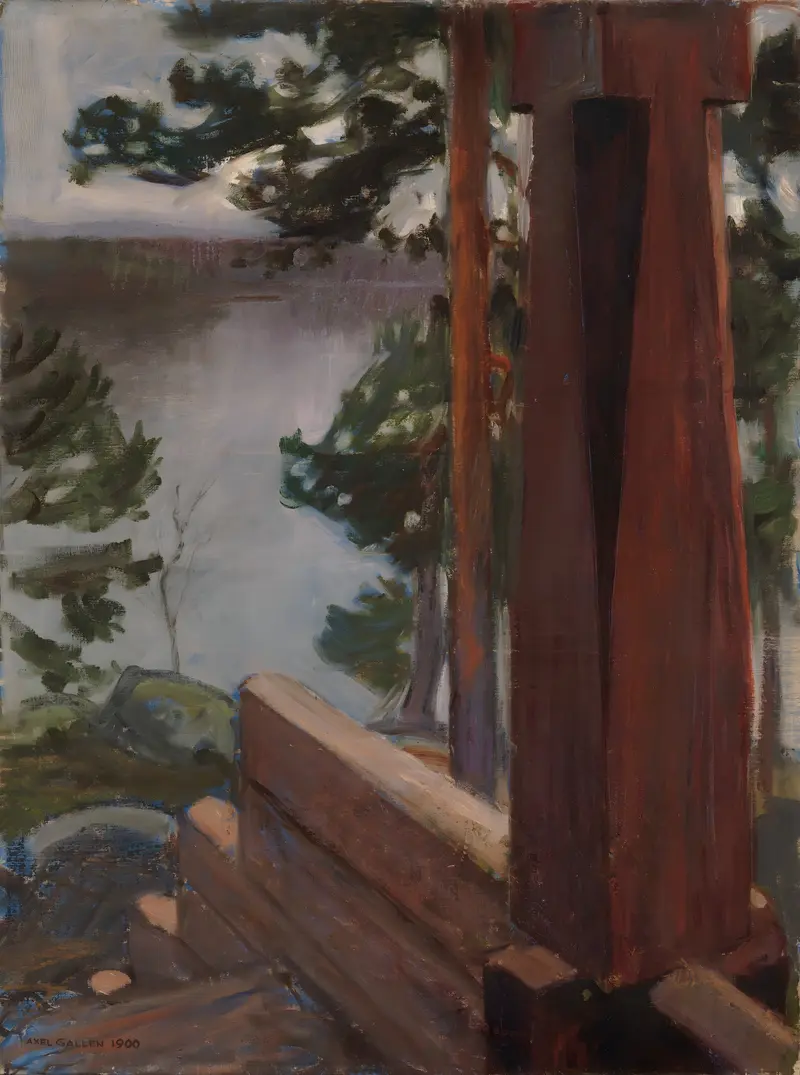
The Kalela Porch
Akseli Gallen-Kallela

Light Behind The Clouds
Akseli Gallen-Kallela
More Landscape Art

The Starry Night
Vincent van Gogh

View of Delft
Johannes Vermeer

Water Lilies
Claude Monet

The Grand Canal, Venice, looking north-west from the Ca' Corner to the Ca' Contarini degli Scrigni, with the campanile of Santa Maria della Carità
Canaletto

Windsor Castle
Canaletto

The Grand Canal looking North-East from the Palazzo Dolfin-Manin to the Rialto Bridge
Canaletto