
La fontaine — History & Facts
Did the painter know this moment would outlive them? As time ebbs and flows, art captures fleeting instances, transforming them into eternal whispers. In La fontaine, the essence of a single moment breathes life into revolution, offering a reflection on change, serenity, and the human experience. Look to the left at the tranquil figures gathered around the fountain, their postures relaxed yet infused with purpose. The soft palette of greens and blues envelops the scene, while dappled sunlight dances upon their forms, creating a harmony that draws the viewer in.
Notice how the flowing water mirrors the life around it, with gentle ripples that disrupt the stillness, suggesting an underlying tension that harmonizes with the serene setting. Beneath the surface, the artwork reveals the duality of peace and unrest. The old stone fountain stands as a metaphor for the passage of time, a witness to historical shifts and personal stories. Each character's gaze reflects a different sentiment—contentment, contemplation, and perhaps an unacknowledged yearning for change.
This interplay of emotions foreshadows the inevitable tides of revolution, making the viewer consider what lies beyond the serene surface. Eugène Fromentin painted La fontaine during a period of significant artistic exploration in mid-19th century France. As impressionism began to take shape, he remained loyal to a more classical style, focusing on capturing light and atmosphere. The artist, immersed in the vibrant culture of his time, sought to document the subtleties of everyday life, reflecting both the tranquility and potential upheaval that marked this transformative era.
More Artworks by Eugène Fromentin
Browse all →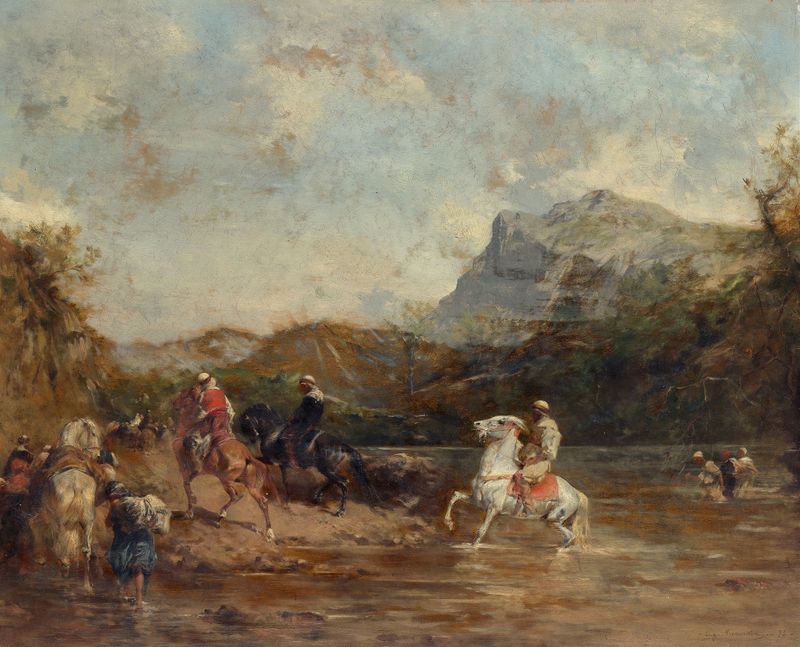
Arabs Crossing a Ford
Eugène Fromentin

Campement arabe dans les montagnes de l’Atlas
Eugène Fromentin

Falcon Hunt (‘Algeria Remembered’)
Eugène Fromentin

Women of the Ouled Nayls
Eugène Fromentin
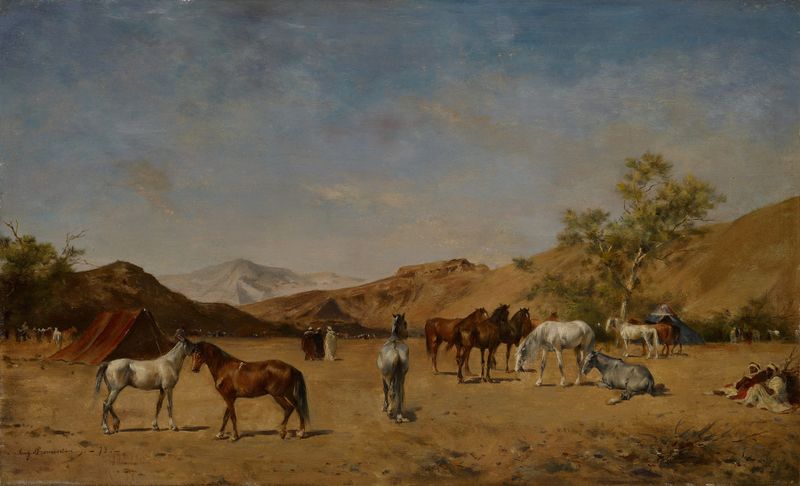
An Arabian Camp
Eugène Fromentin

On the Nile
Eugène Fromentin
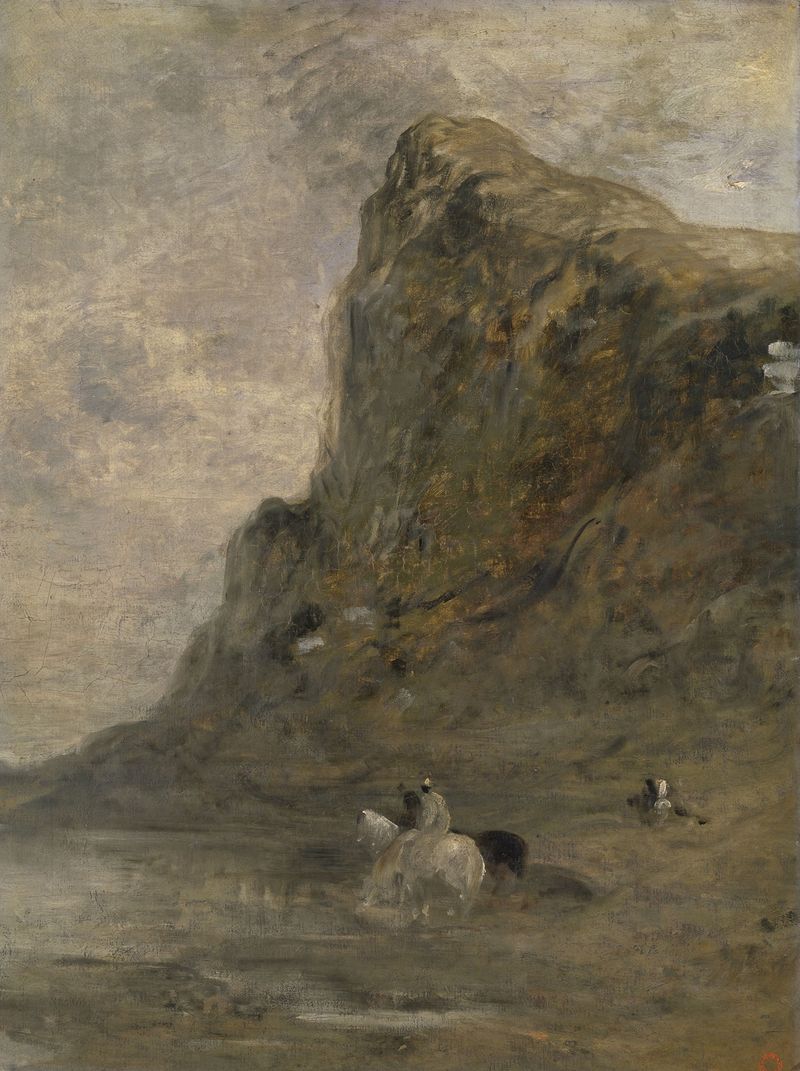
Horsemen at the Foot of the Chiffa Cliffs
Eugène Fromentin
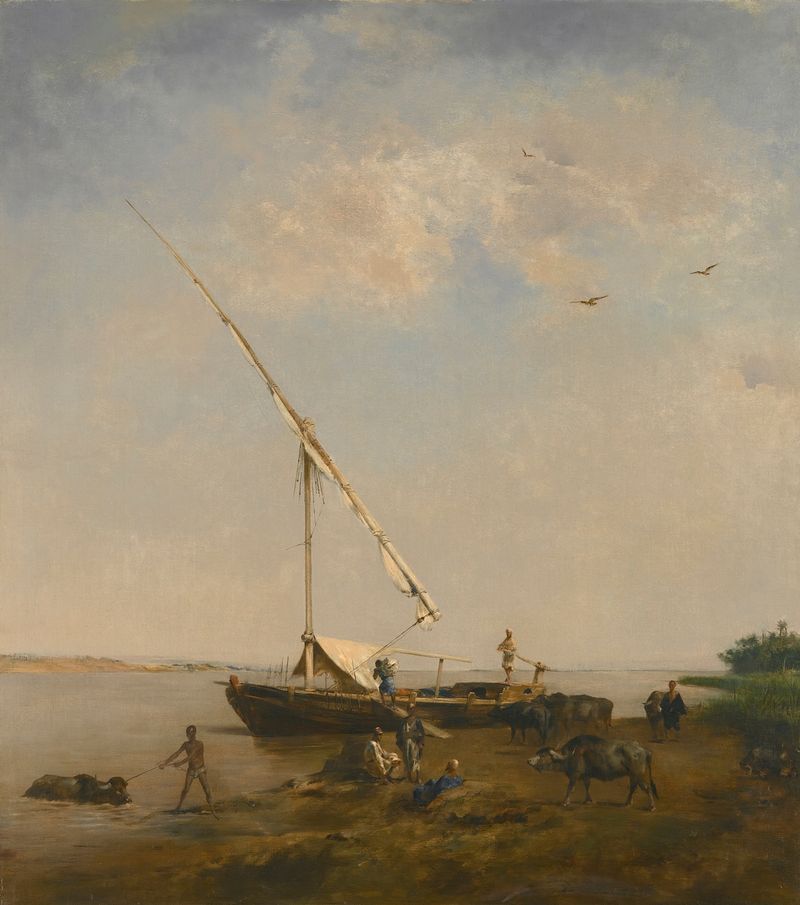
Felucca Au Bord Du Nil
Eugène Fromentin
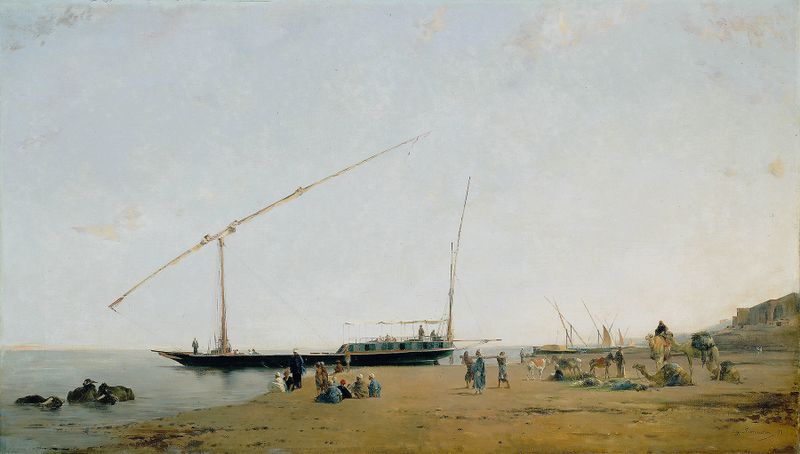
On the Nile, Near Philae
Eugène Fromentin

Arabs watering their horses
Eugène Fromentin





