
La Mer vue du haut de la falaise de Landemer — History & Facts
In the stillness of a painted world, the horizon embraces the sea, where madness and serenity dance like waves against the cliffs. Look to the bottom of the canvas, where the rugged cliffs rise defiantly against the tumultuous sea. Notice how the artist employs a palette of earthy tones, juxtaposed with vibrant blues and greens, drawing your eye toward the dynamic clash of land and water. The brushstrokes are both chaotic and deliberate, suggesting the raw power of nature while simultaneously inviting contemplation.
The sky, with its swirling clouds, hints at impending storms, adding a layer of tension that lingers like an unspoken promise. Deeper insights reveal a duality at play — the wildness of the sea contrasts sharply with the stoic cliffs, invoking feelings of both fear and fascination. The churning waters seem to whisper secrets of madness, while the steadfast rock formations stand as a testament to endurance. This dialogue between chaos and stability reflects humanity’s own struggles, caught between temptation and resolve.
Each detail, from the frothy crests of waves to the rugged texture of the cliff face, speaks to the complex emotions of the viewer, inviting introspection. In 1870, Millet painted this work during a time when he was deeply influenced by his connection to nature and its dramatic landscapes. Living in France, he was transitioning from the idealistic tones of rural life to a more profound exploration of natural forms. This period marked a significant shift in art, as artists began to embrace the raw beauty of the environment, mirroring social changes and the rise of Impressionism.
More Artworks by Jean-François Millet
Browse all →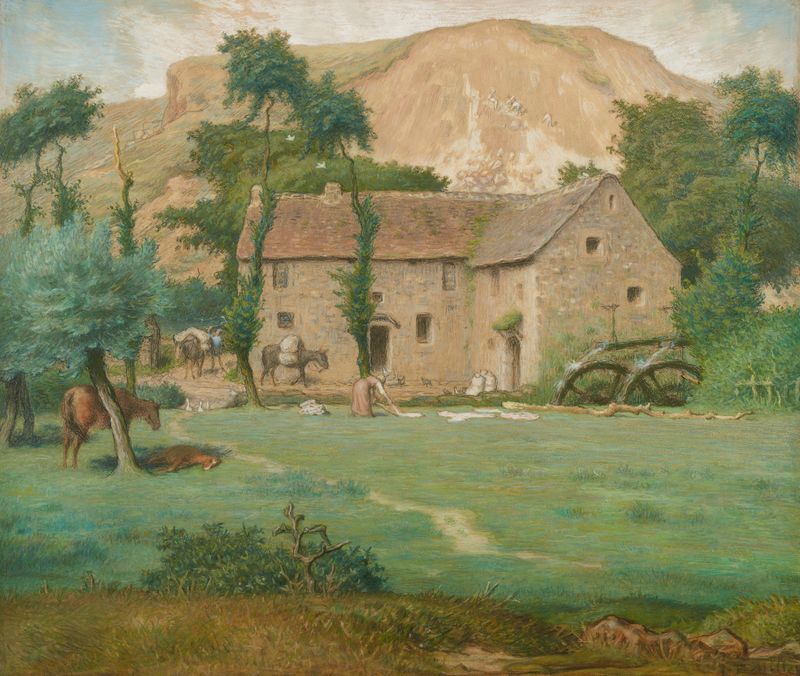
Watermill at the Foot of a Mountain, Allier
Jean-François Millet
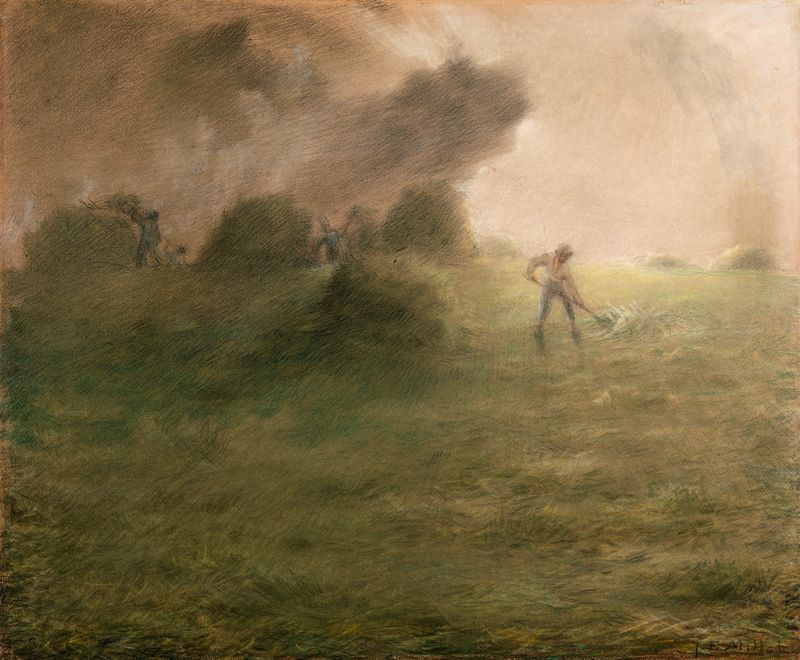
A Storm during Haymaking
Jean-François Millet
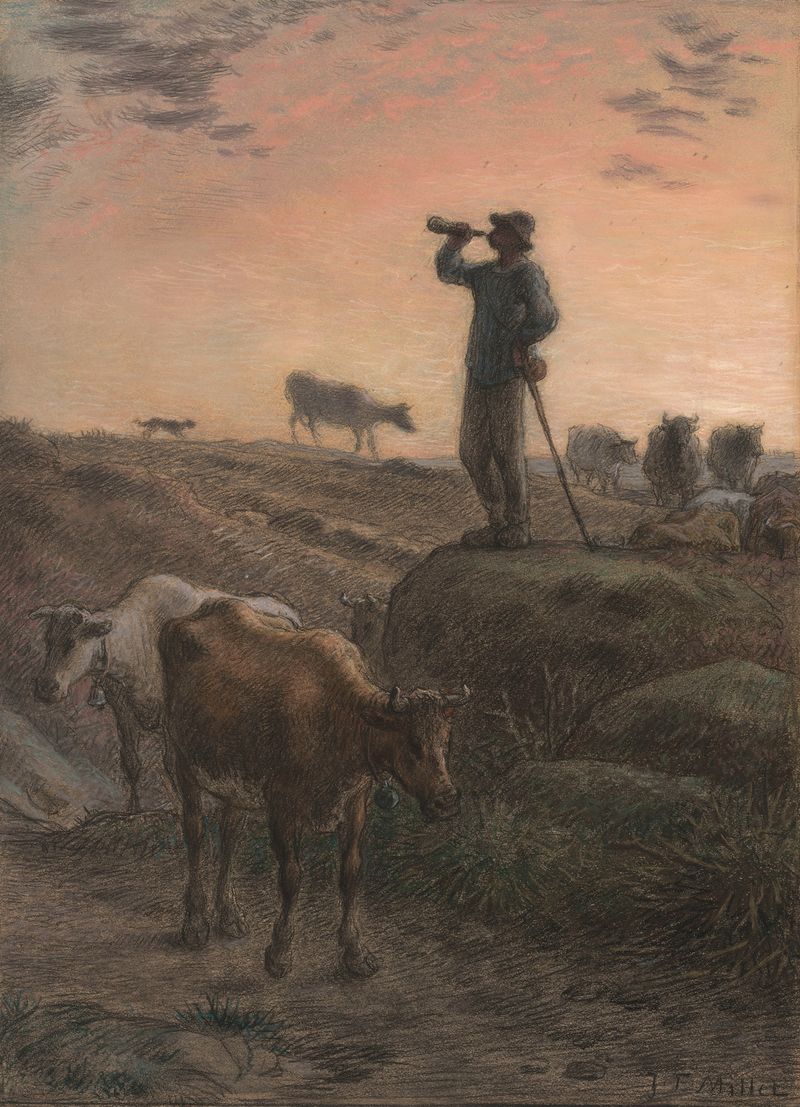
Calling Home the Cows
Jean-François Millet
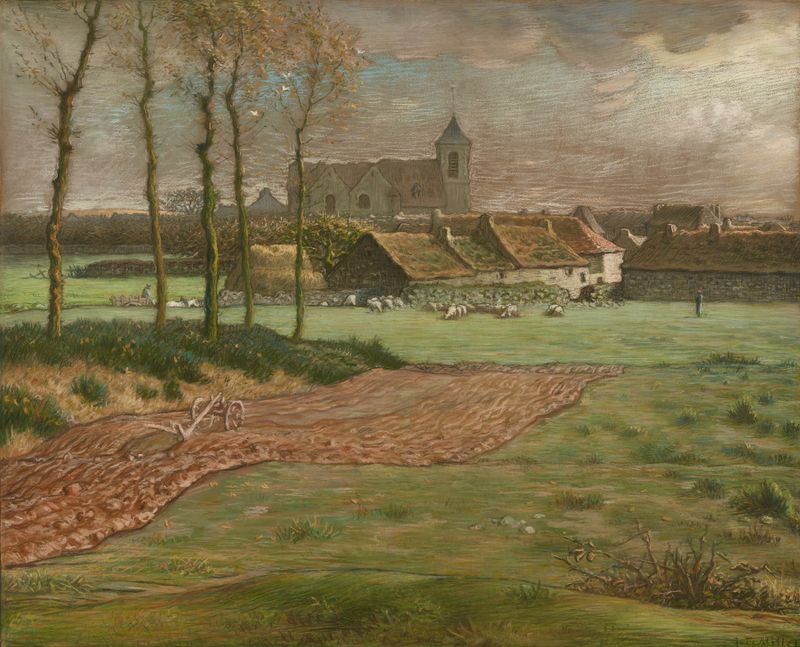
The Church at Chailly
Jean-François Millet
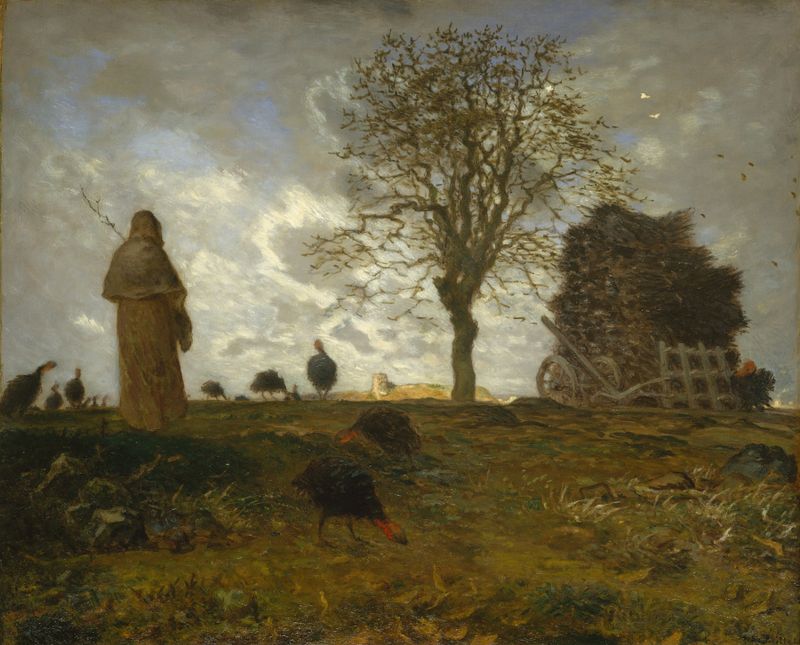
Autumn Landscape with a Flock of Turkeys
Jean-François Millet
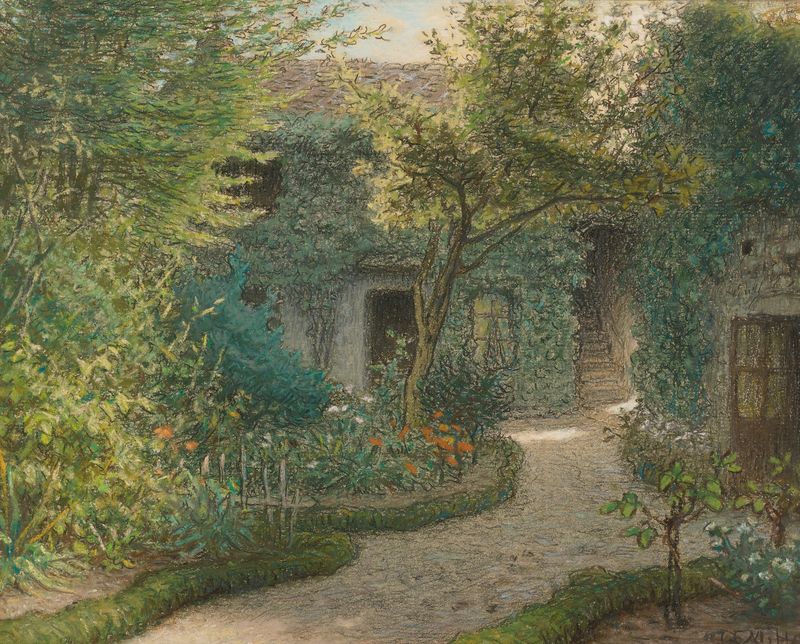
Théodore Rousseau’s House In Barbizon
Jean-François Millet
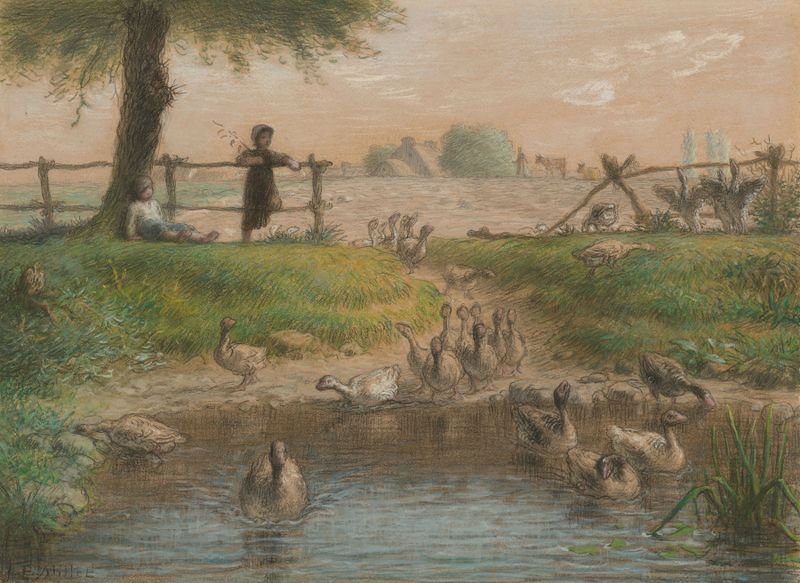
Peasant Children at Goose Pond
Jean-François Millet
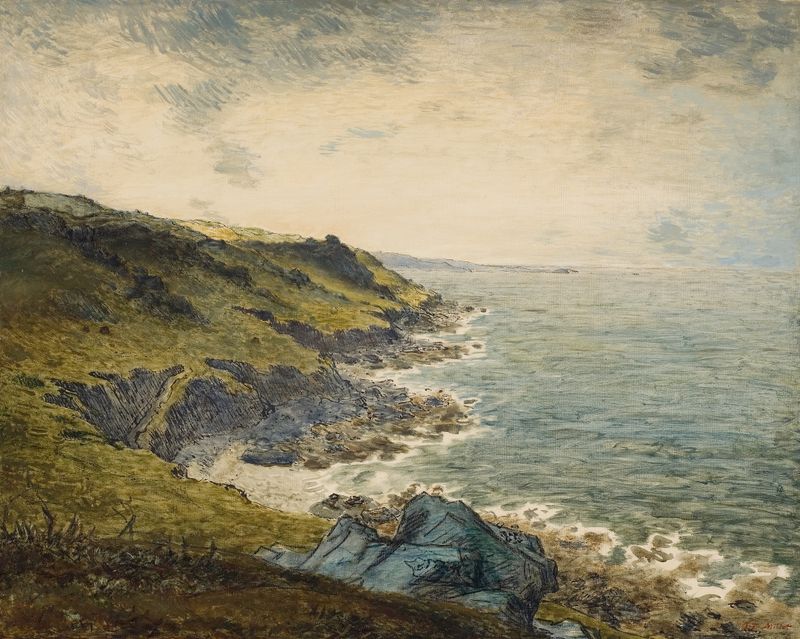
The Coast at Gréville
Jean-François Millet
Shepherds Resting
Jean-François Millet
The Old Mill
Jean-François Millet





