
La rue Sauval, vue de la rue Saint-Honoré, en 1901. 1er arrondissement — History & Facts
What if beauty was never meant to be finished? In the chaotic pulse of urban life, where streets breathe with the throbbing energy of the city, the potential for violence lurks beneath the surface of every brushstroke. Focus on the left side of the canvas, where an intricate play of light casts shadows across cobblestones, creating a shimmering contrast against the dusty hues of late afternoon. The buildings rise with a dignified stillness, their facades punctuated by the lively activity of pedestrians enmeshed in the city’s fabric. Notice how the artist’s loose strokes breathe life into the scene, evoking both movement and a sense of underlying tension — the seemingly mundane transforms into something that teeters on the brink of chaos. Delve deeper into the layers of meaning: the bustling figures, perhaps lost in their own pursuits, hint at isolation amidst the crowd, while the looming architecture invokes the weight of history and time.
The juxtaposition of vibrant life and the rigid structures can be interpreted as a commentary on societal struggles; within the beauty of the scene lies a fragile coexistence of joy and conflict, a reminder of the violence that simmers just beneath the veneer of urban elegance. In 1901, Frédéric Houbron painted this piece during a tumultuous period in France, where societal change and modernity were reshaping the landscape. Living in Paris, he witnessed the intricate dance between tradition and innovation, encapsulating the essence of an era marked by both artistic exploration and political unrest. This work reflects the evolving urban environment, echoing the complexities of life at the dawn of a new century.
More Artworks by Frédéric Houbron
Browse all →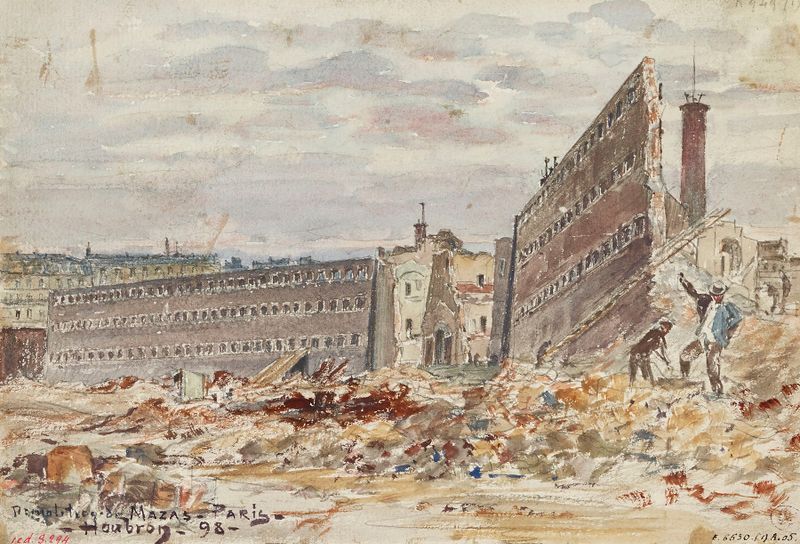
Démolition de la prison Mazas, 23, 25 boulevard Diderot (ancien boulevard Mazas)
Frédéric Houbron
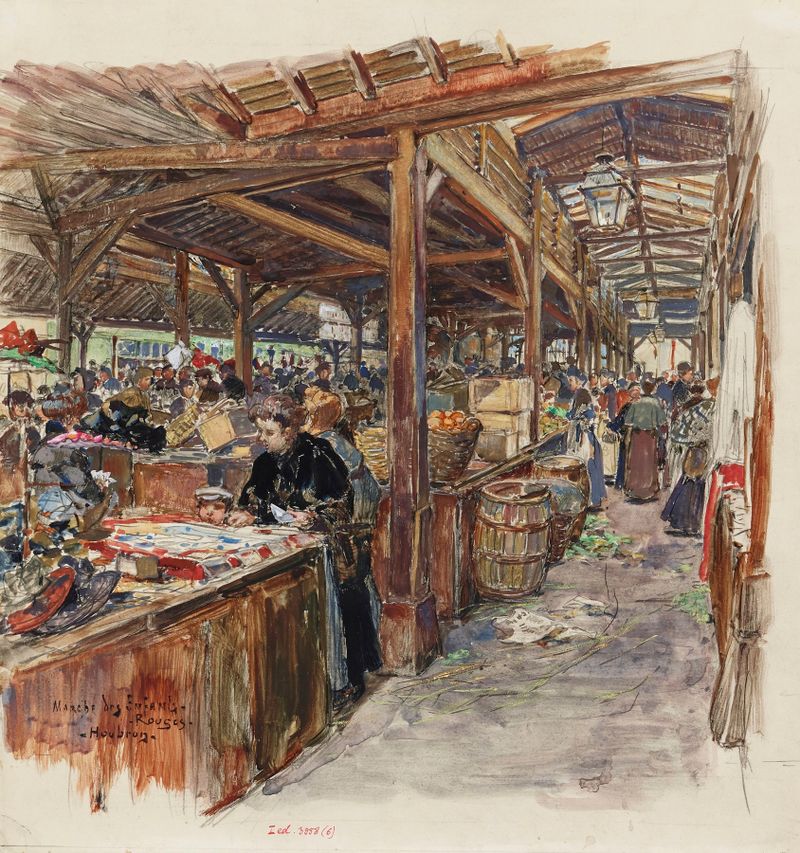
Intérieur du Marché des Enfants Rouges. 3ème arrondissement
Frédéric Houbron
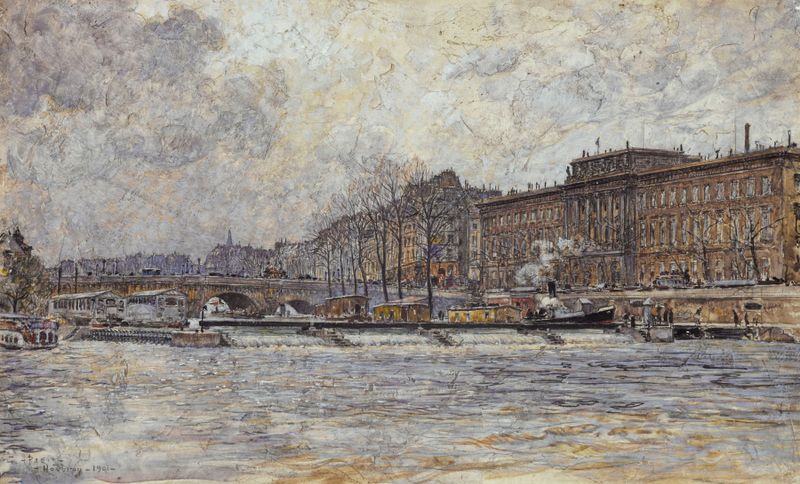
L’Hôtel de la Monnaie et le Pont-Neuf
Frédéric Houbron

Quai des Orfèvres. Paris. 1906
Frédéric Houbron
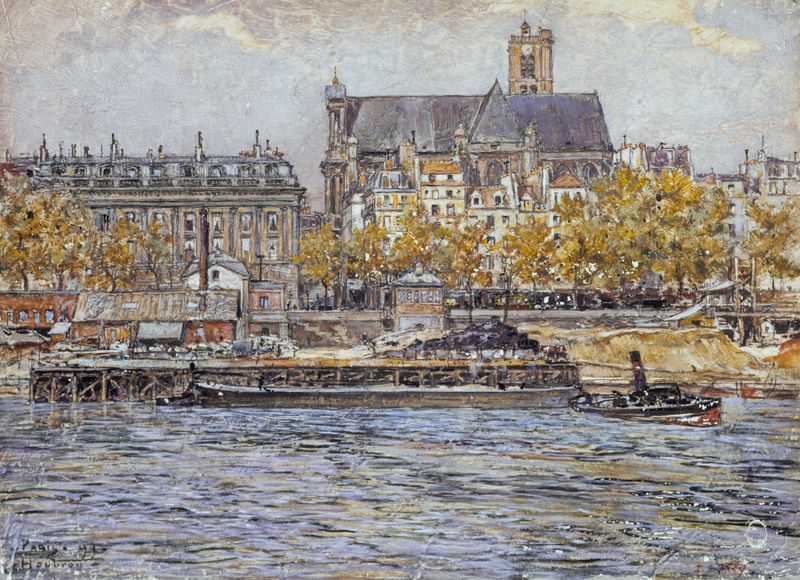
Le quai de l’Hôtel-de-Ville et l’église Saint-Gervais-Saint-Protais
Frédéric Houbron
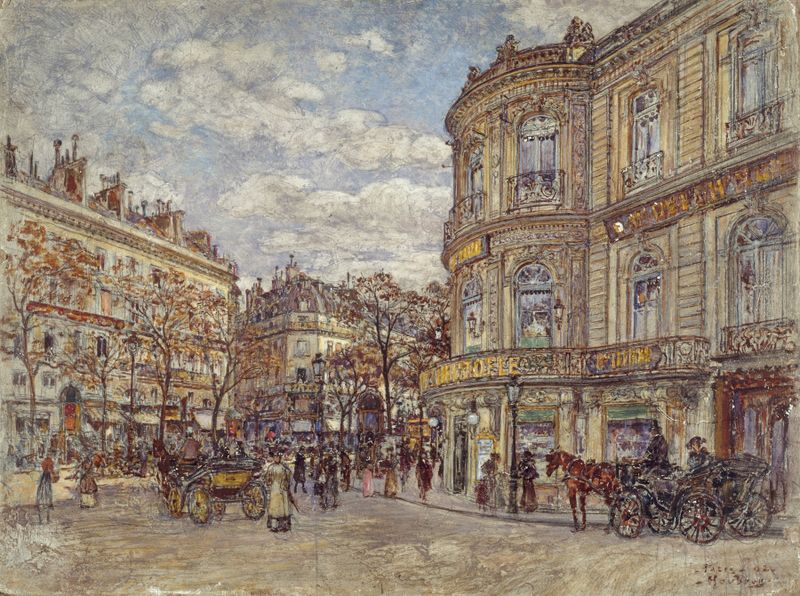
Le Pavillon de Hanovre, rue Louis-le-Grand
Frédéric Houbron

La rue du Chevalier-de-la-Barre, avec le Sacré-Cœur en construction
Frédéric Houbron
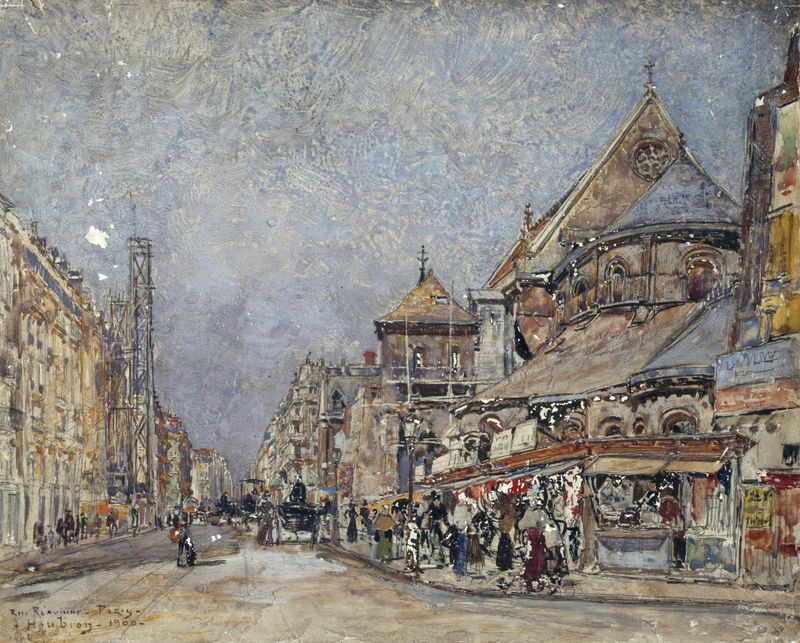
La rue Réaumur et le chevet de l’église Saint-Martin-des-Champs
Frédéric Houbron
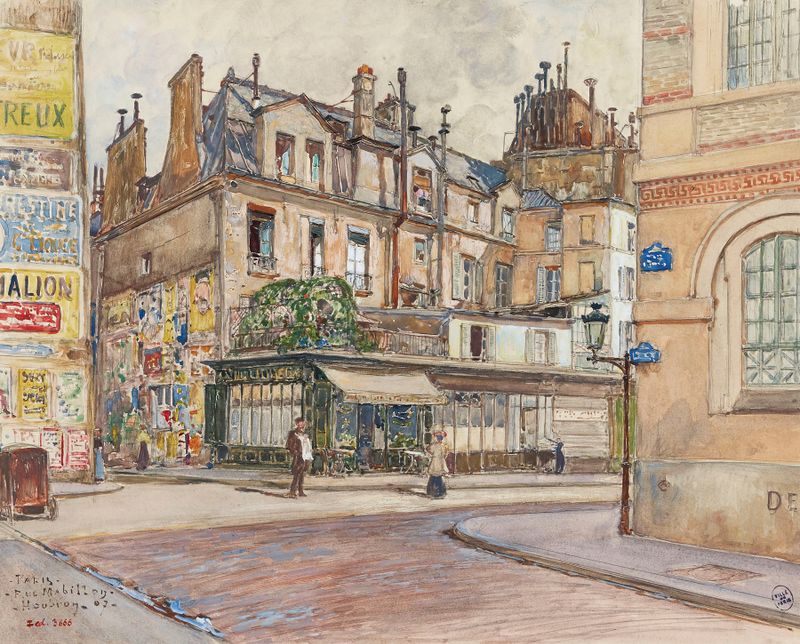
Angle rue Mabillon et rue Clément, en 1907. 5ème et 6ème arrondissements
Frédéric Houbron
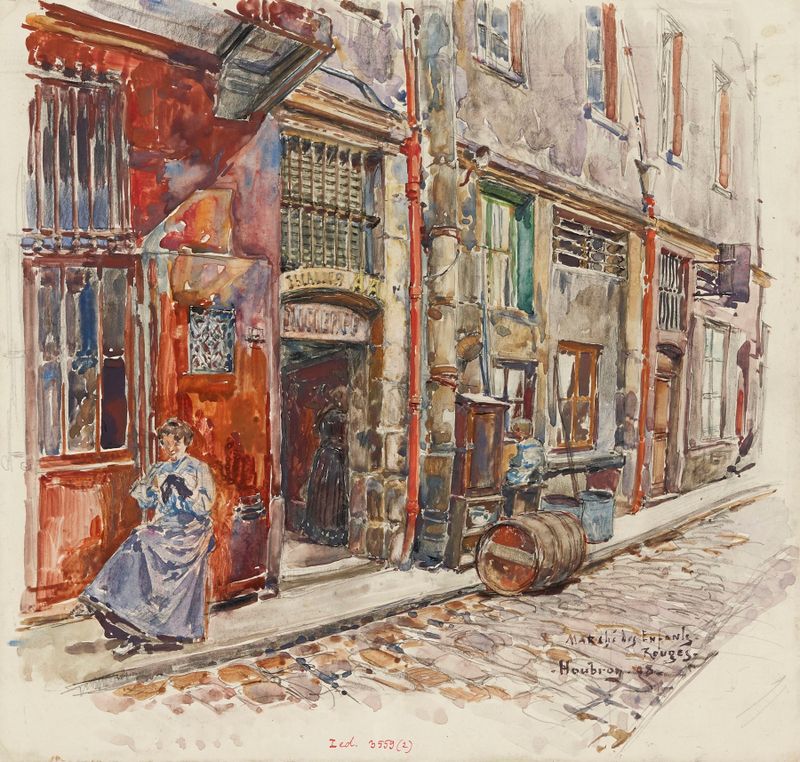
Entrée escalier A du Marché des Enfants-Rouges, en 1908. 3ème arrondissement
Frédéric Houbron





