
La Vierge parmi les vierges — History & Facts
At the heart of La Vierge parmi les vierges by Abraham Janssens, the viewer is immediately drawn to the serene authority of the crowned Virgin, enthroned and surrounded by a luminous gathering of women and angels. The composition orchestrates a gentle pageant of gestures and gazes: the Christ Child reaches out to a kneeling maiden crowned with flowers, while a cherub at the Virgin’s feet offers a basket of fruit, a symbol of abundance and purity. Light pools around the central figures, guiding the eye from the Virgin’s blue mantle to the delicate hands of the saints and virgins, each absorbed in acts of devotion or music.
The organ at the right, played by a richly dressed woman, signals the harmony of heaven and earth, while the dove above, descending in a burst of light, seals the scene with divine presence. Every fold, every glance, is orchestrated to draw the viewer into a world of sacred celebration. Painted in 1630, this work belongs to the flourishing Baroque tradition of Antwerp, where artists like Janssens responded to the Catholic revival with scenes of spiritual grandeur and theatricality. Such paintings were often commissioned for churches or religious communities, intended to inspire both awe and emulation among the faithful.
The inclusion of both crowned saints and humble nuns reflects the ideal of a heavenly court, echoing the aspirations of the era’s religious orders. Originally displayed in the church of the Grands Carmes in Antwerp and later in the primatiale Saint-Jean of Lyon, this canvas has lived in spaces shaped by centuries of devotion. To stand before it is to witness the Baroque imagination at full stretch, where earthly beauty and spiritual longing meet in a single, radiant assembly.
More Artworks by Abraham Janssens

Jupiter Rebuked by Venus
Abraham Janssens
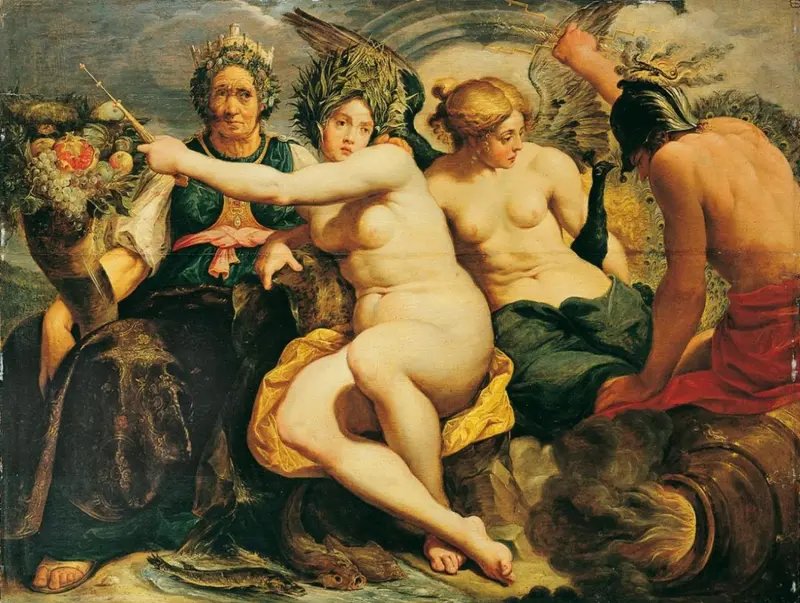
Allegorie der vier Elemente
Abraham Janssens
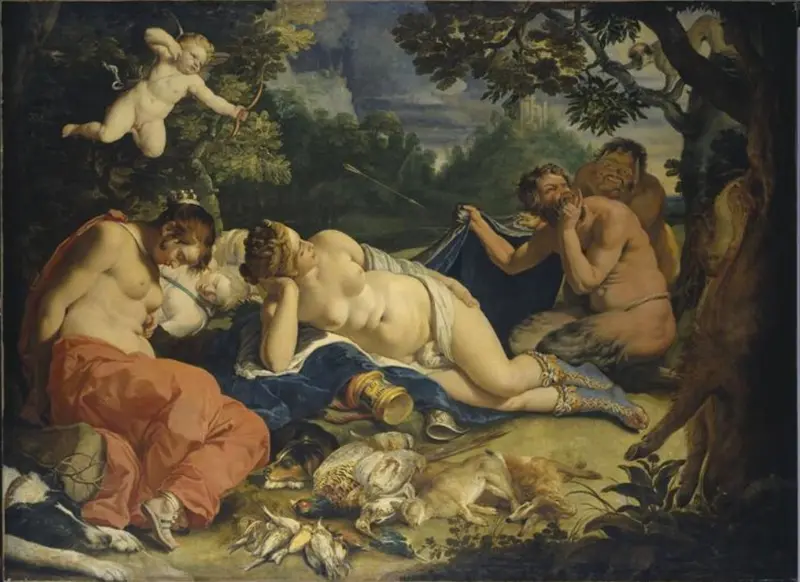
Diana and her nymphs spied on by satyrs
Abraham Janssens

Die Erweckung des Lazarus 153 Bavarian State Painting Collections
Abraham Janssens
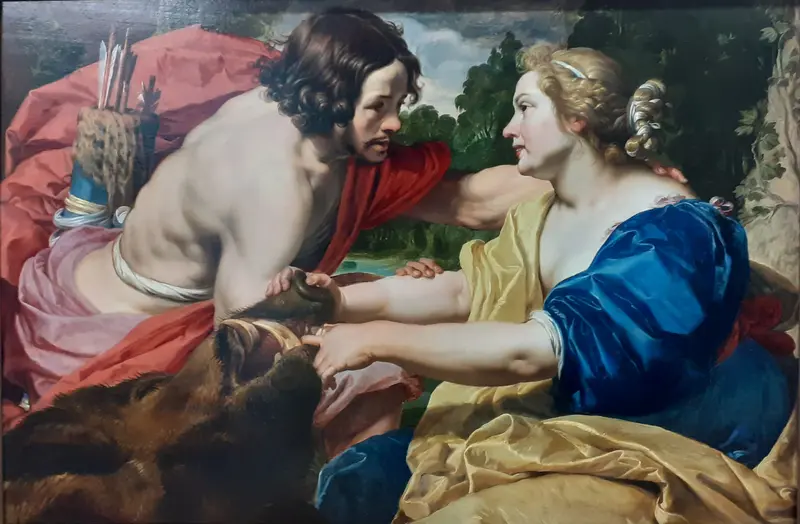
Meleager presents the head of the Calydonian Boar to Atalanta
Abraham Janssens
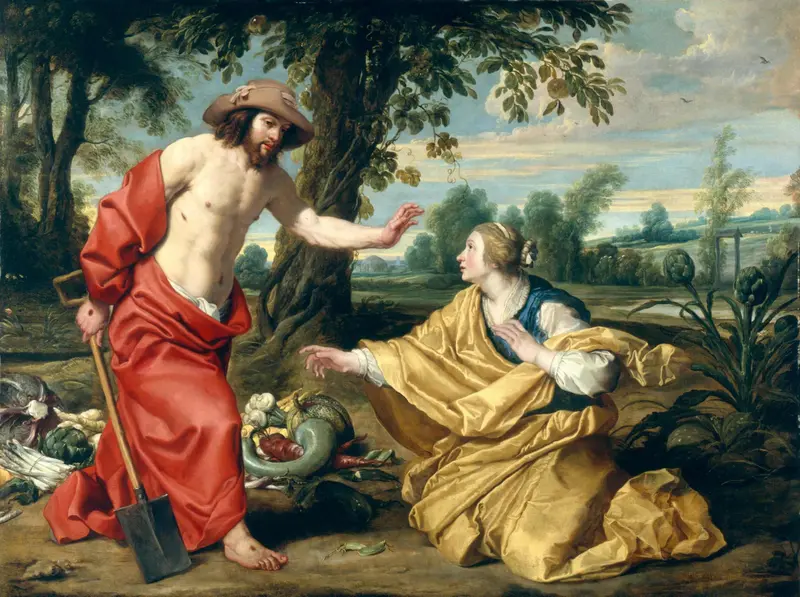
Noli me Tangere
Abraham Janssens
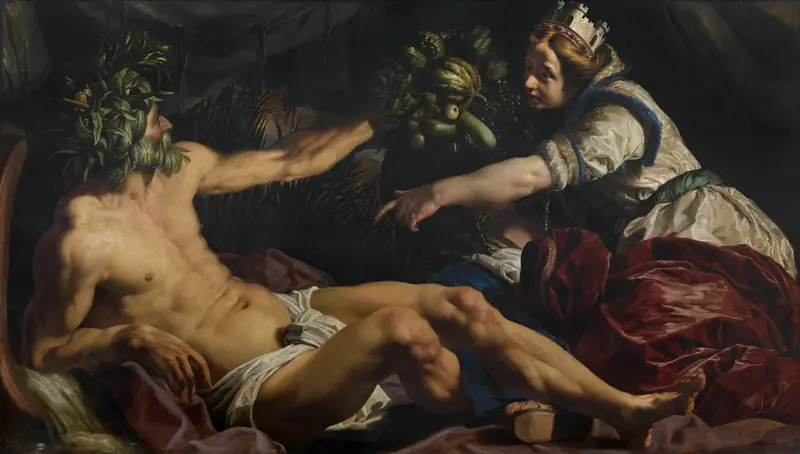
Scaldis and Antverpia
Abraham Janssens
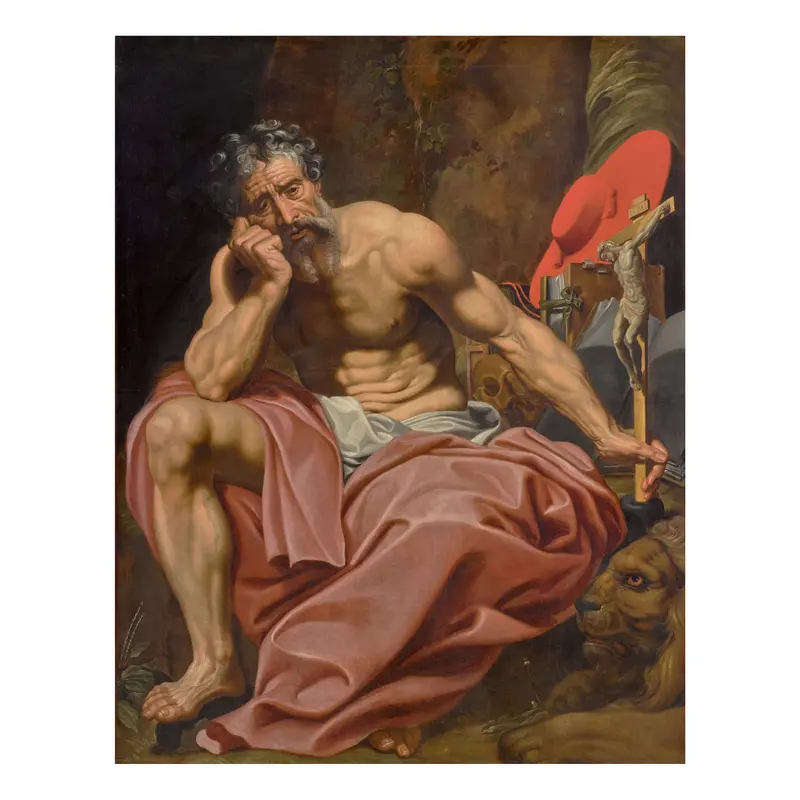
Saint Jerome
Abraham Janssens
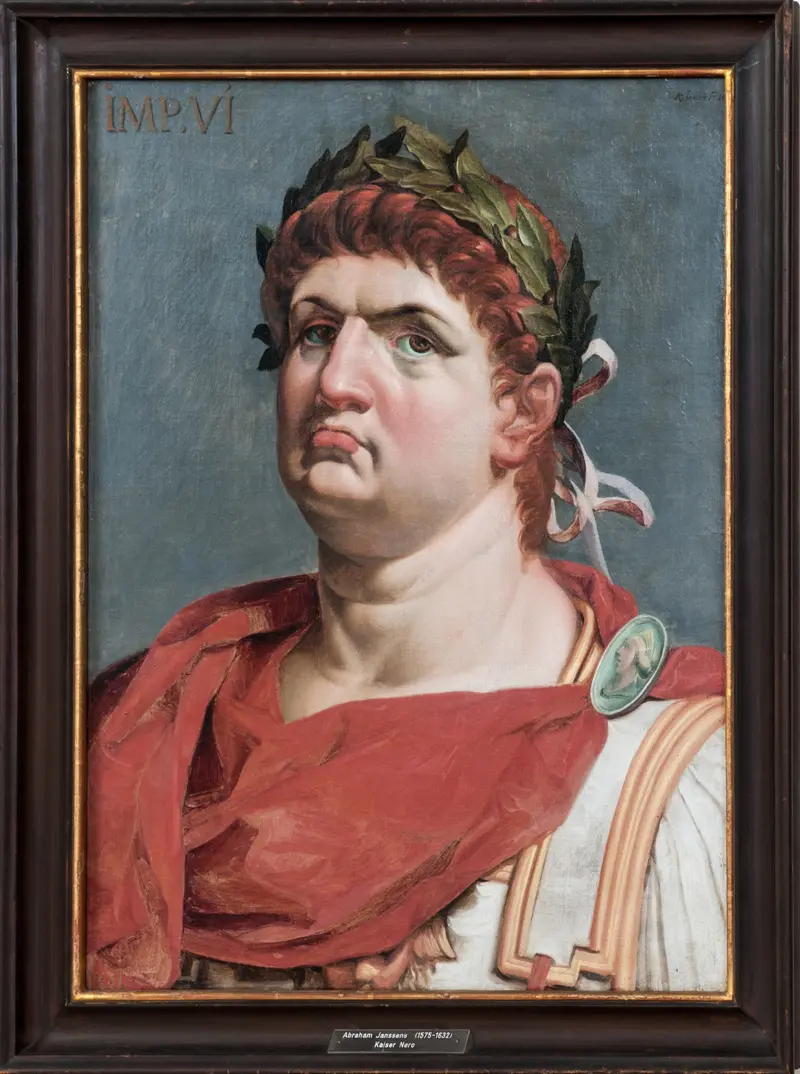
Nero
Abraham Janssens
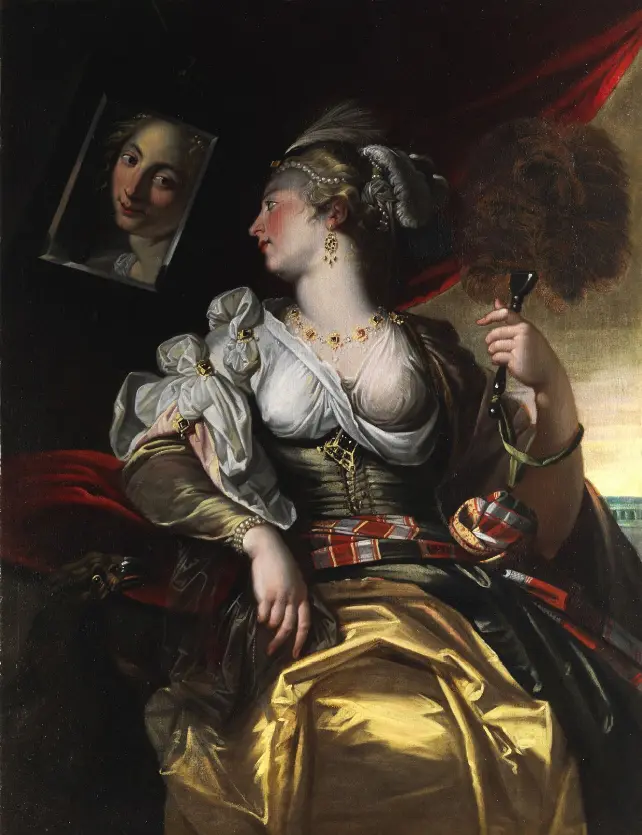
The Face
Abraham Janssens





