
Landscape with Meleager and Atalanta — History & Facts
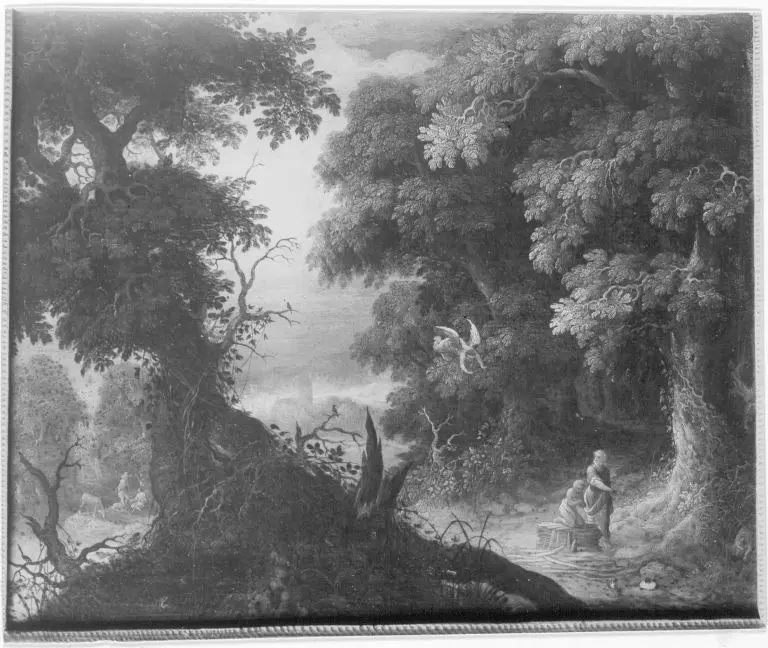
What first draws the eye in Landscape with Meleager and Atalanta is not the mythic pair themselves, but the towering, shadowed trees that dominate the scene, their canopies forming a cathedral of foliage overhead. The figures—small, almost swallowed by the vastness of nature—are caught in a moment of urgent exchange, their gestures sharp against the softness of moss and undergrowth. The light slips in from the left, catching the edge of Atalanta’s tunic and the sleek back of the hound, guiding us from the drama at the forest floor to the tranquil blue of the distant water.
The composition is a careful balancing act: the wild, tangled growth of the woods frames the human story, suggesting both the danger and the allure of the mythic hunt. Painted between 1607 and 1626 by Abraham Govaerts, this work belongs to a world where landscape painting was finding its own voice in the Low Countries. Artists like Govaerts specialized in lush, detailed forest scenes, often weaving in stories from ancient myth or scripture to satisfy the tastes of learned collectors. Such paintings were prized not only for their narrative content but for their celebration of nature’s variety and abundance—an ideal fit for the prosperous, urban patrons of the era.
Today, this painting lives in the National Gallery Prague, a quiet survivor of a period when the forest was both a setting for legend and a marvel in its own right. Let your gaze wander through its depths; the longer you look, the more the forest seems to whisper its own secrets.
More Artworks by Abraham Govaerts

Forest landscape
Abraham Govaerts
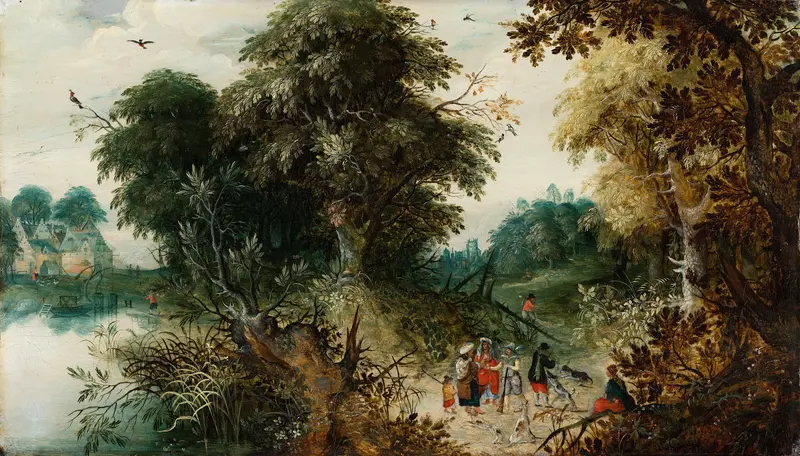
Forest View with Travellers
Abraham Govaerts
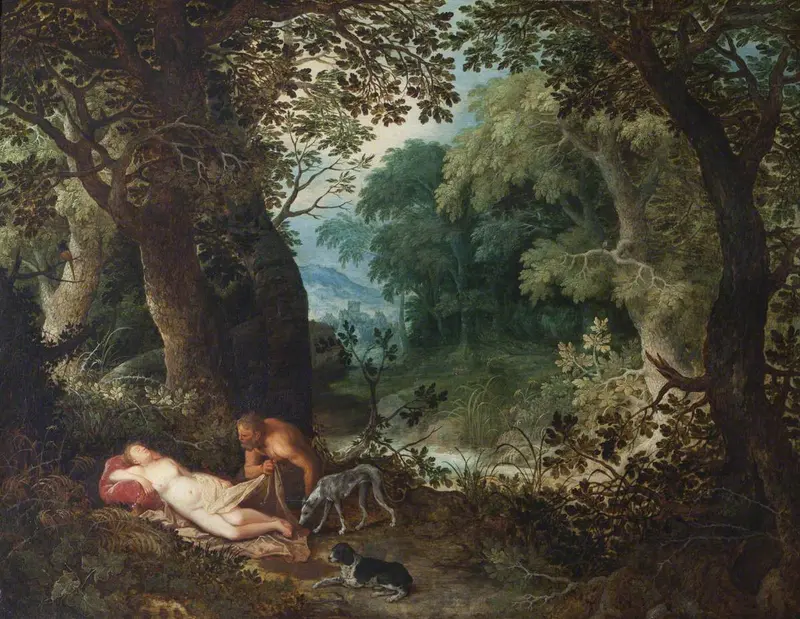
A Nymph and a Satyr
Abraham Govaerts
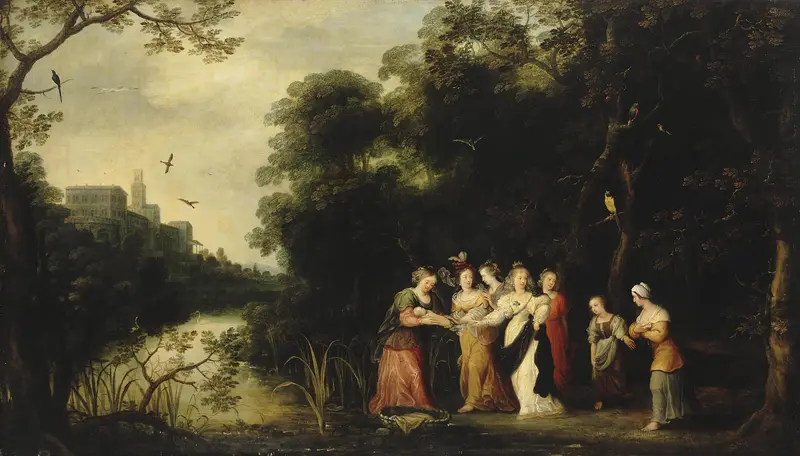
Finding of Moses
Abraham Govaerts
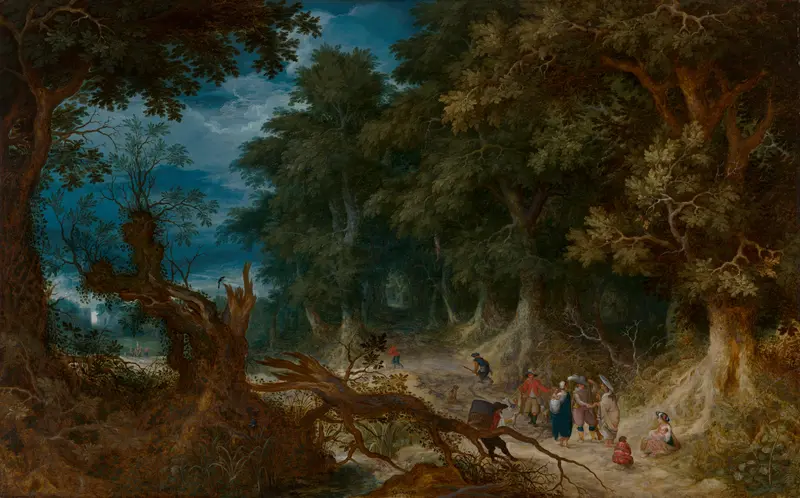
Wooded Landscape with Gipsy Women
Abraham Govaerts
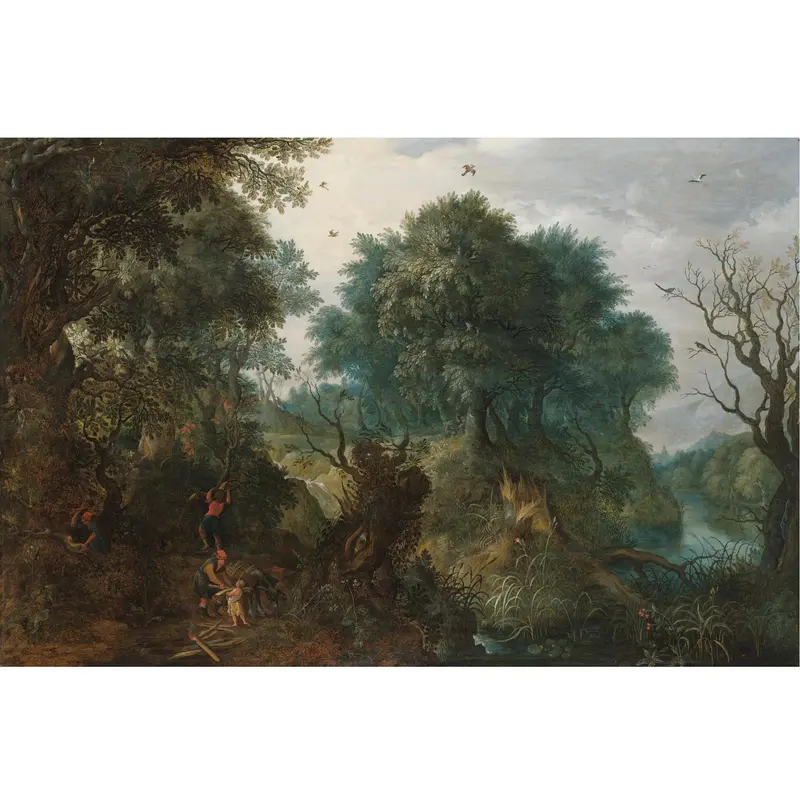
A Wooded Landscape with Woodcutters near a River
Abraham Govaerts
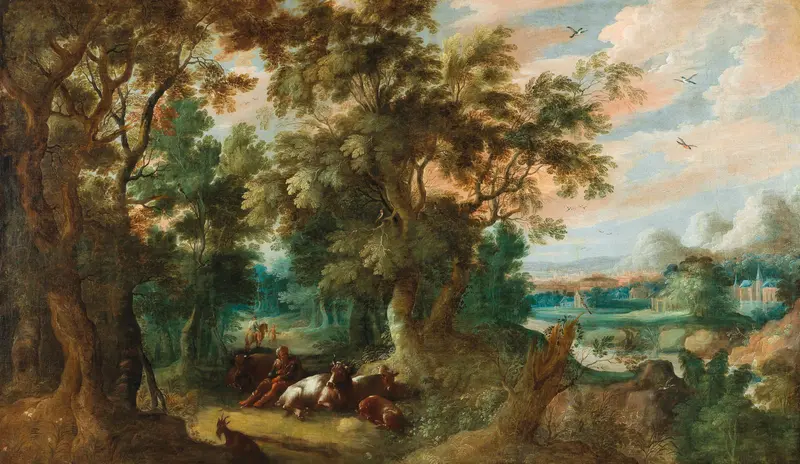
Wooded landscape with shepherds and their flock
Abraham Govaerts
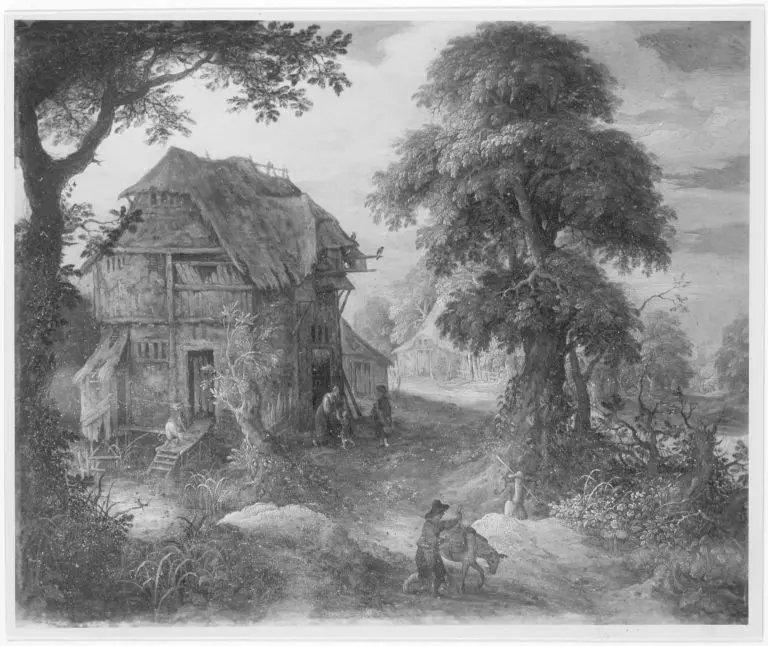
Dorf unter Bäumen
Abraham Govaerts
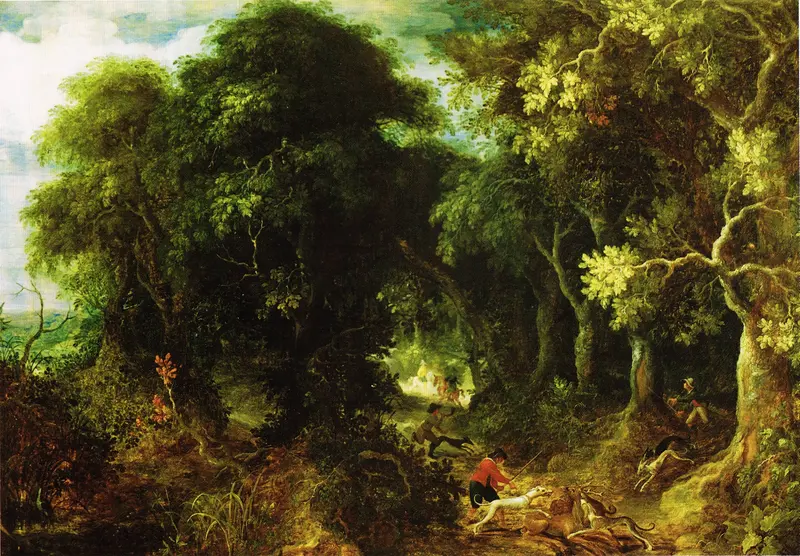
The Eternal Forest / Deer hunting
Abraham Govaerts
Wooded landscape with the sacrifice of Isaac (Genesis 22)
Abraham Govaerts





