
Le bois de châtaigners — History & Facts
A sweep of chestnut trees anchors the left edge, their dark forms massed together as if caught in a collective breath. From this wooded rise, the land tumbles away into a patchwork of fields and hedgerows, each stroke of the artist’s hand suggesting both the order of cultivation and the wildness that remains. The eye is drawn from the dense, almost tangled lines of the forest toward the open horizon, where the sky stretches wide and the countryside recedes into delicate suggestion.
This is a landscape built from contrasts: the intimacy of the shaded grove set against the vast, sunlit plain, the immediacy of the foreground giving way to the distance’s gentle haze. The light, though rendered in monochrome, seems to shift across the scene, guiding the viewer through a quiet journey from shelter to openness. Le bois de châtaigners by Armand Apol belongs to a tradition of landscape art that flourished in the late nineteenth and early twentieth centuries, when artists sought not just to record nature, but to capture the feeling of being within it. Such works were often made for collectors who valued scenes of rural tranquility as a counterpoint to the rapid pace of urban life.
Though little is documented about this specific piece, now held by the Royal Library of Belgium, its careful balance of observation and suggestion places it firmly within the lineage of artists who found poetry in the everyday countryside. The print invites us to linger, to imagine the breeze in the branches and the quiet expanse beyond, and to see how much can be said with the simplest of lines.
More Artworks by Armand Apol
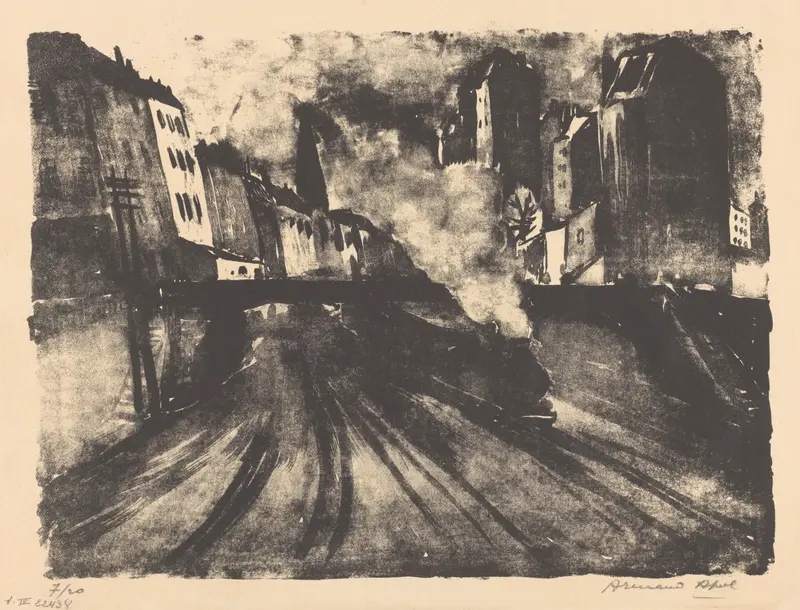
Chemin de fer de ceinture à Paris
Armand Apol
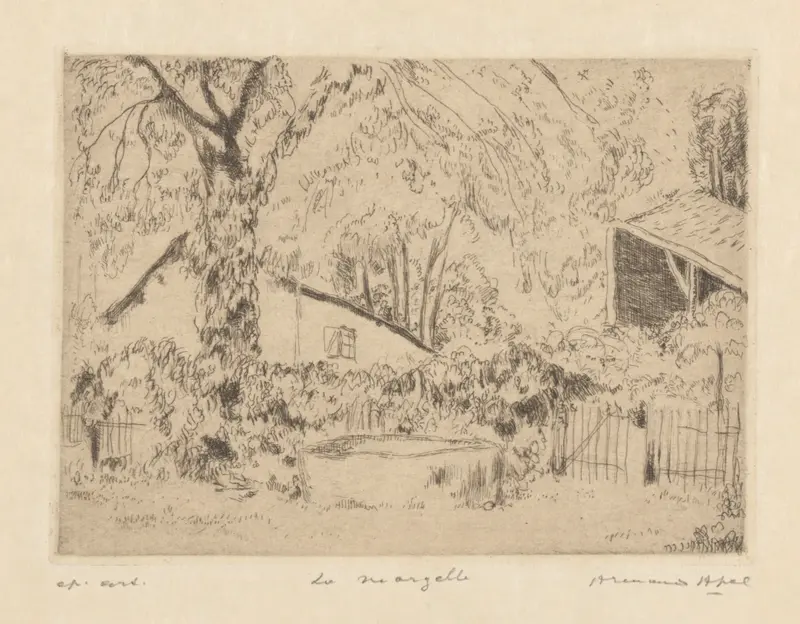
La margelle
Armand Apol
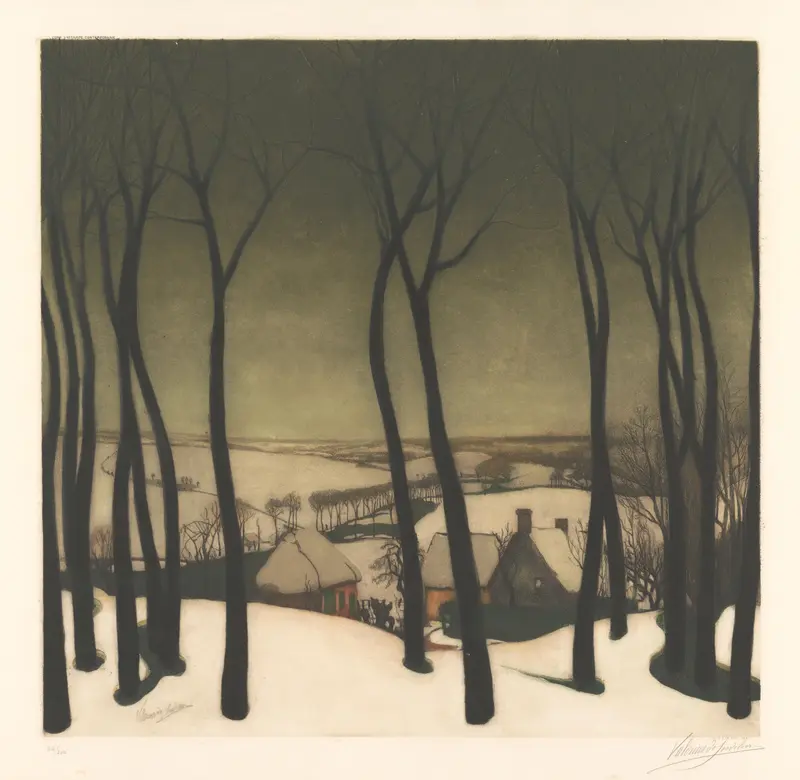
Album 8 estampes (en couleurs) (05) : Paysage
Armand Apol
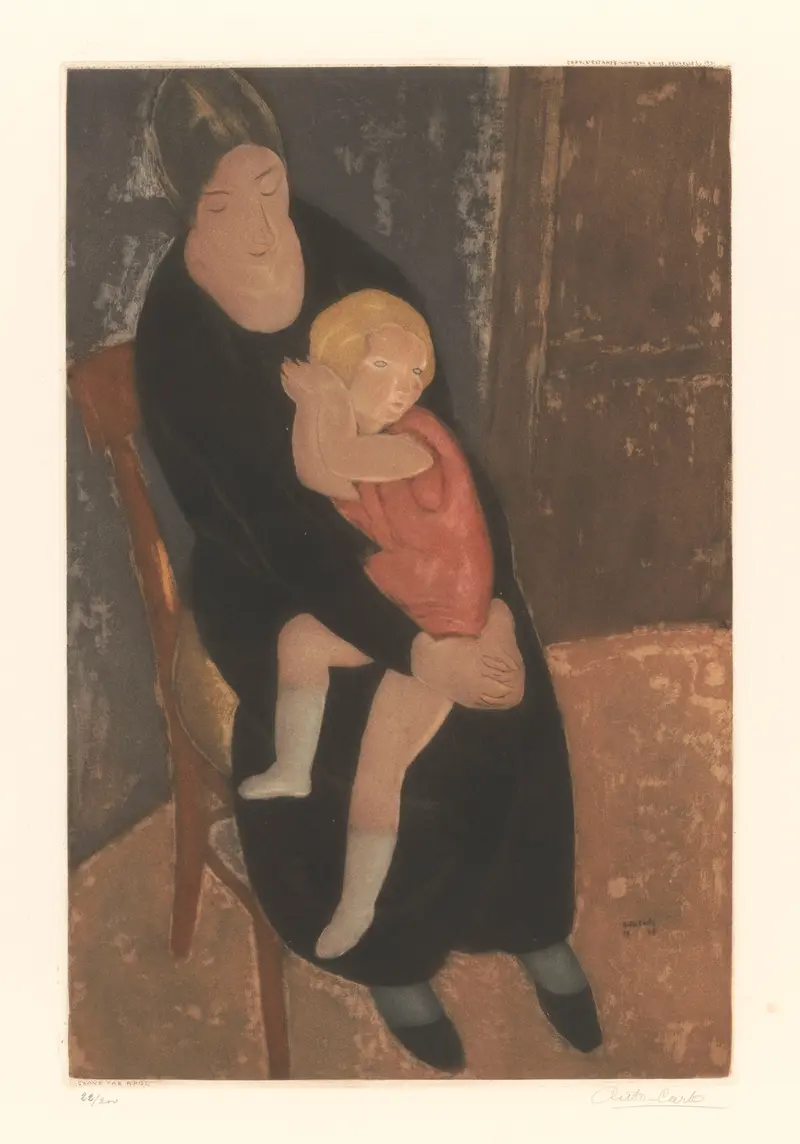
Album 8 estampes (en couleurs) (08) : Mère et enfant
Armand Apol
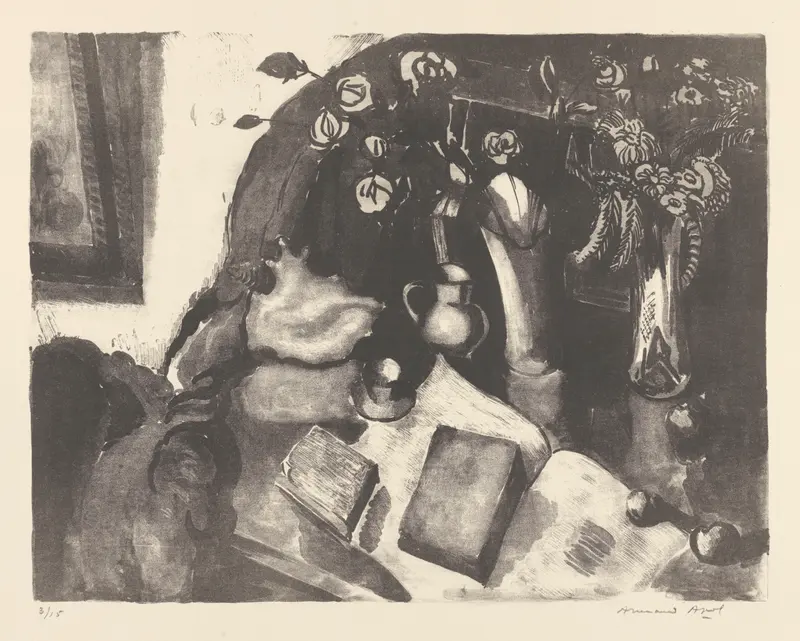
Dix lithographies au lavis (02) : Nature morte
Armand Apol

Dix planches (06) : La loge
Armand Apol
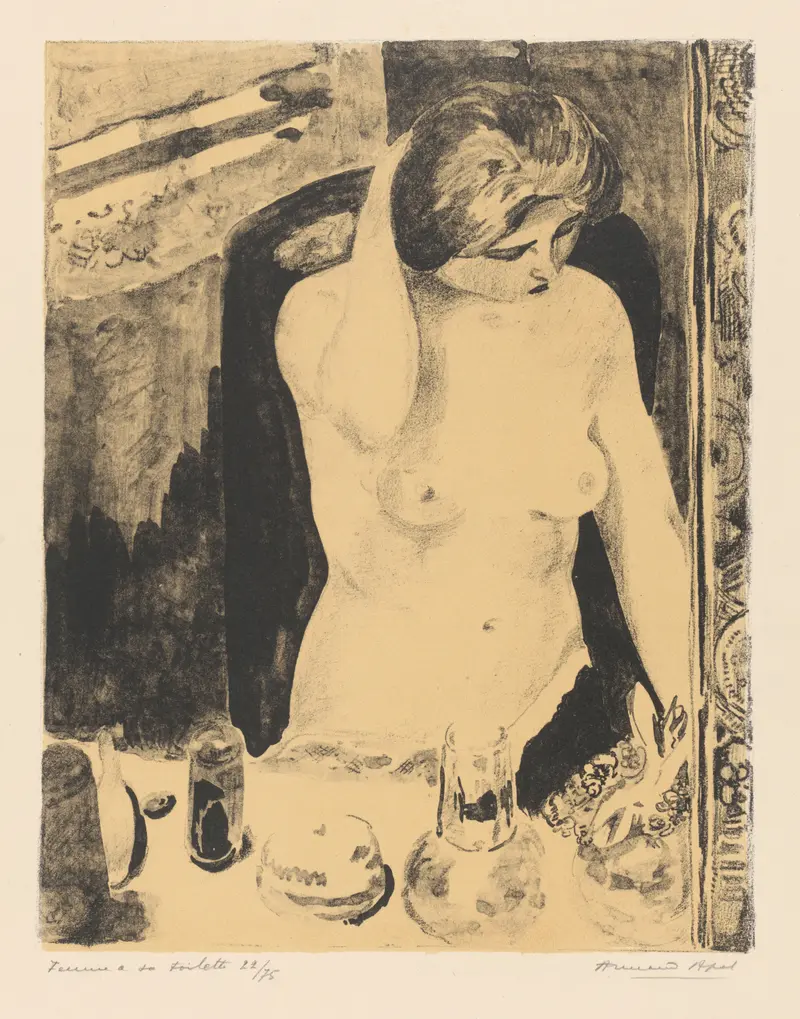
Dix planches (10) : Femme à sa toilette
Armand Apol
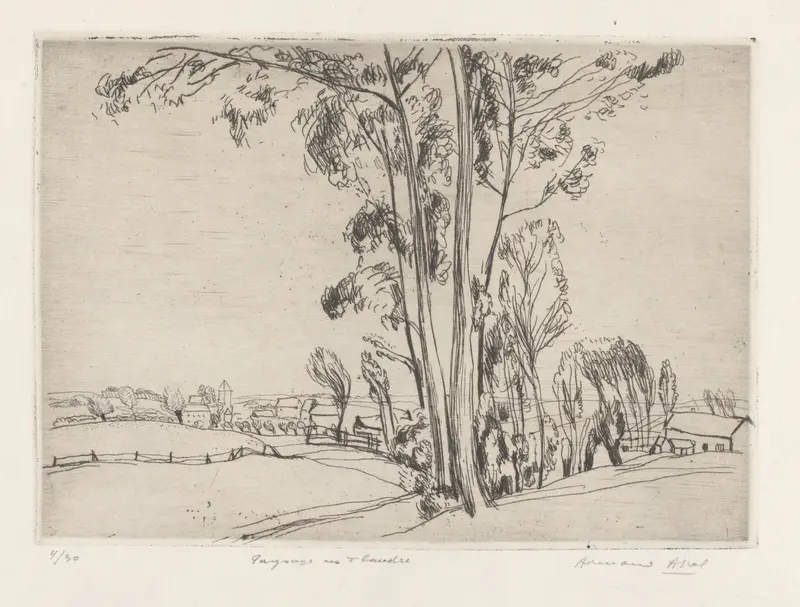
Paysage en Flandre (Etichove)
Armand Apol
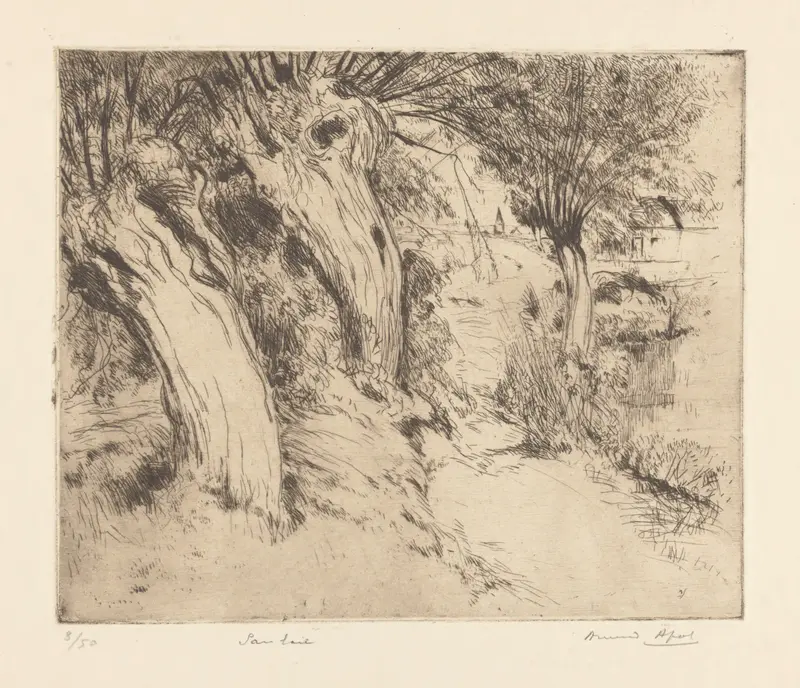
Saulaie
Armand Apol
Zeebrugge
Armand Apol
More Landscape Art

The Starry Night
Vincent van Gogh

View of Delft
Johannes Vermeer

Water Lilies
Claude Monet

The Grand Canal, Venice, looking north-west from the Ca' Corner to the Ca' Contarini degli Scrigni, with the campanile of Santa Maria della Carità
Canaletto

Windsor Castle
Canaletto

The Grand Canal looking North-East from the Palazzo Dolfin-Manin to the Rialto Bridge
Canaletto