
Le Marché des Enfants Rouges, côté Ouest, sous la pluie, en 1907. 3ème arrondissement — History & Facts
In an era defined by transformation, the act of capturing ephemeral moments becomes a rebellion against the relentless march of time. Look closely at the left side of the canvas, where the bustling market emerges under a veil of rain. The figures, draped in muted tones, seem to blend with the damp environment, their postures and movements depicting a delicate dance between joy and melancholy. The soft, diffused light illuminates their faces, revealing a spectrum of emotions that capture the essence of life in Paris during a downpour.
The vibrant colors of the market stalls stand in stark contrast to the somber grey of the sky, drawing our eyes toward the heart of the scene. Amidst this visual interplay, consider the juxtaposition of the market's vibrancy against the drizzled atmosphere; it symbolizes resilience in the face of adversity. The raindrops, both a barrier and a bridge, create a moment of shared experience, as vendors and shoppers navigate the wet streets. Beyond the literal, the painting speaks to the transformation of urban life, as the old market coexists with the burgeoning modernity of Paris, hinting at the profound shifts occurring in society at the turn of the century. Frédéric Houbron painted this scene in 1907, during a time when Paris was undergoing rapid modernization and artistic evolution.
The city was a melting pot of ideas and styles, reflecting the changing dynamics of society. Emerging from a period of personal and professional challenges, Houbron harnessed the energy of his surroundings to encapsulate the essence of communal life amidst transformation, contributing to the rich tapestry of early 20th-century art.
More Artworks by Frédéric Houbron
Browse all →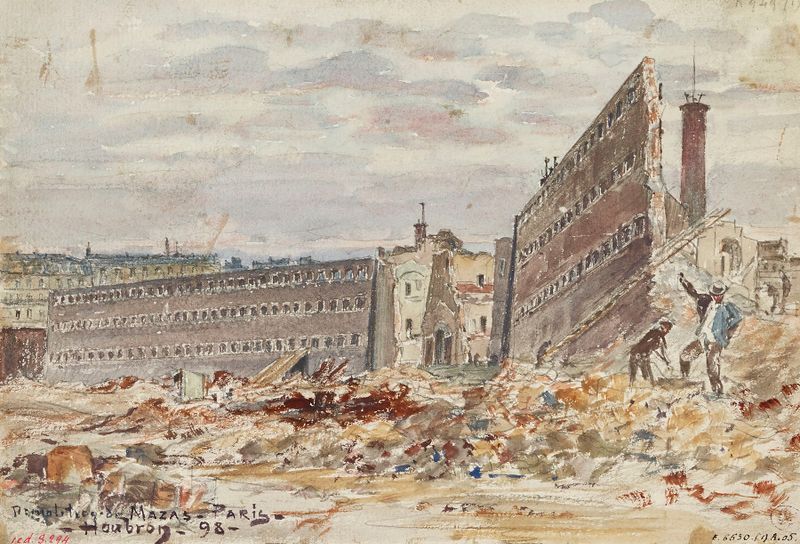
Démolition de la prison Mazas, 23, 25 boulevard Diderot (ancien boulevard Mazas)
Frédéric Houbron
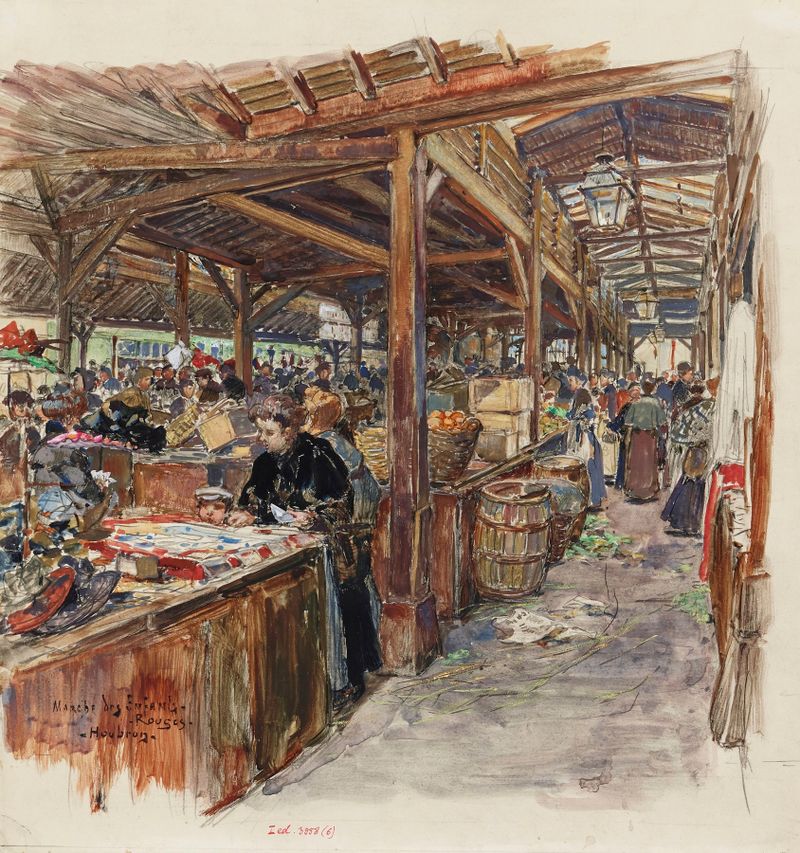
Intérieur du Marché des Enfants Rouges. 3ème arrondissement
Frédéric Houbron
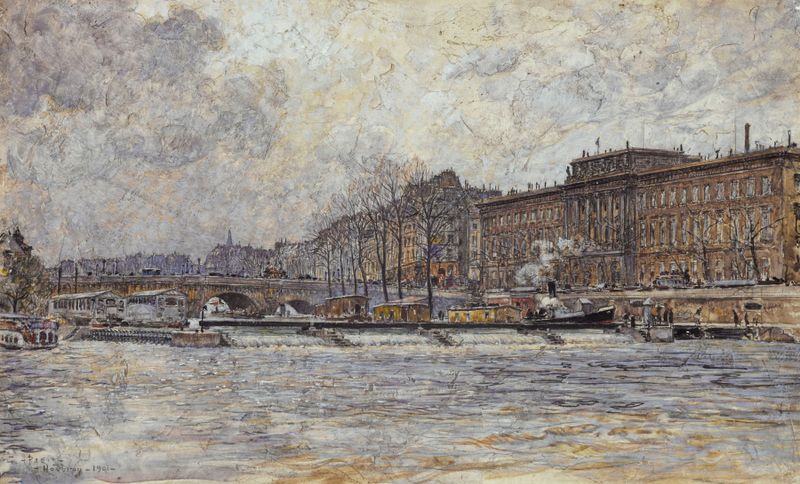
L’Hôtel de la Monnaie et le Pont-Neuf
Frédéric Houbron

Quai des Orfèvres. Paris. 1906
Frédéric Houbron
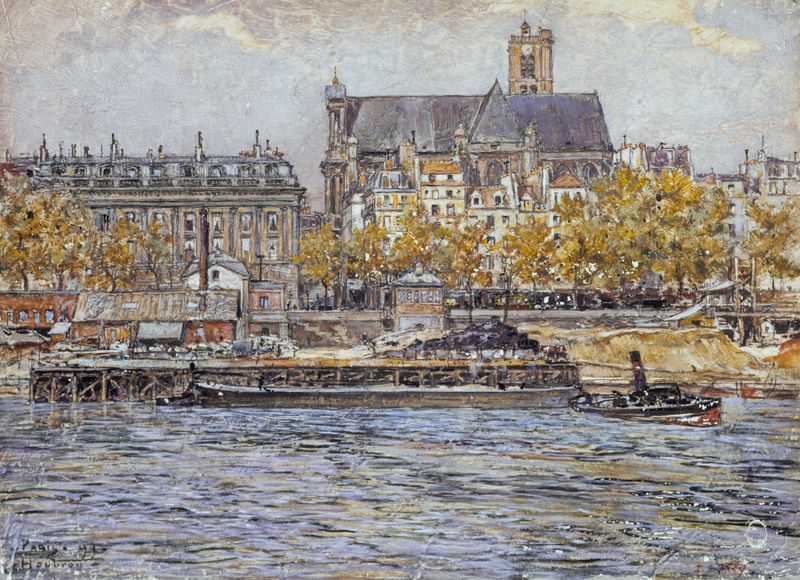
Le quai de l’Hôtel-de-Ville et l’église Saint-Gervais-Saint-Protais
Frédéric Houbron
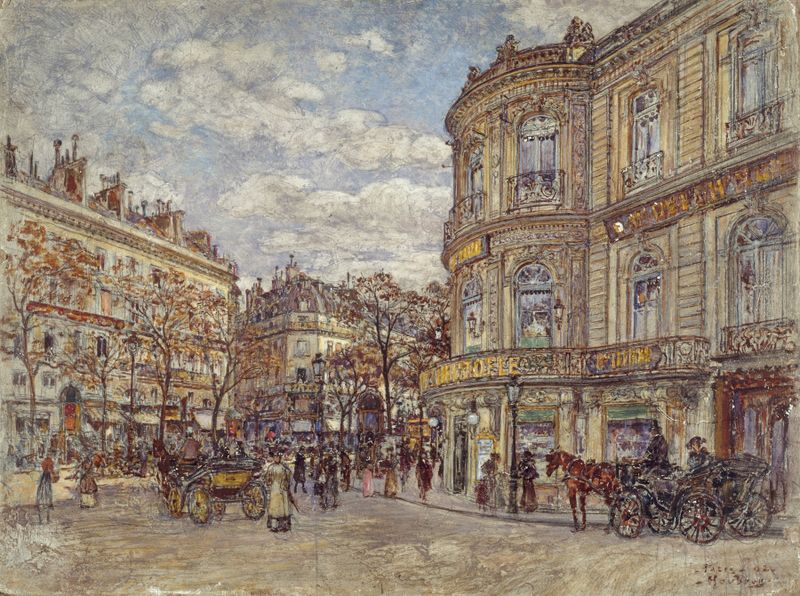
Le Pavillon de Hanovre, rue Louis-le-Grand
Frédéric Houbron

La rue du Chevalier-de-la-Barre, avec le Sacré-Cœur en construction
Frédéric Houbron
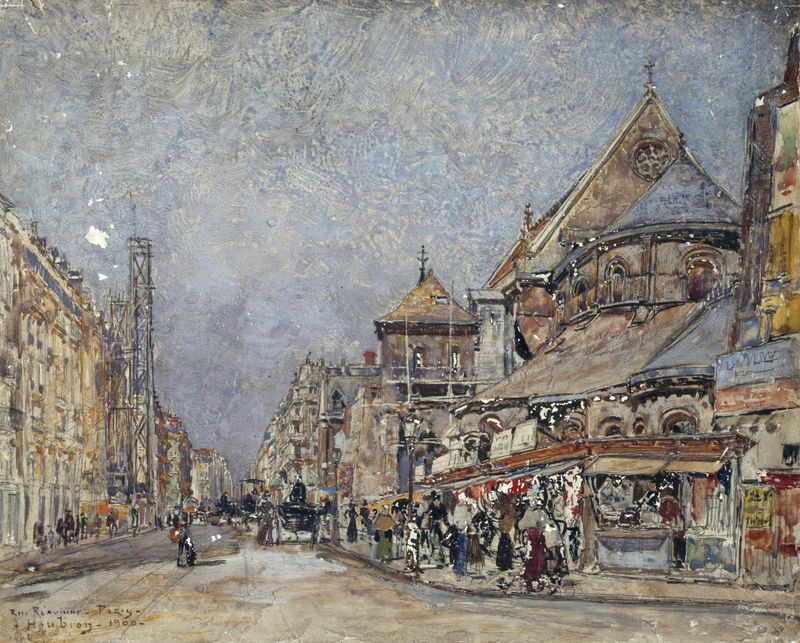
La rue Réaumur et le chevet de l’église Saint-Martin-des-Champs
Frédéric Houbron
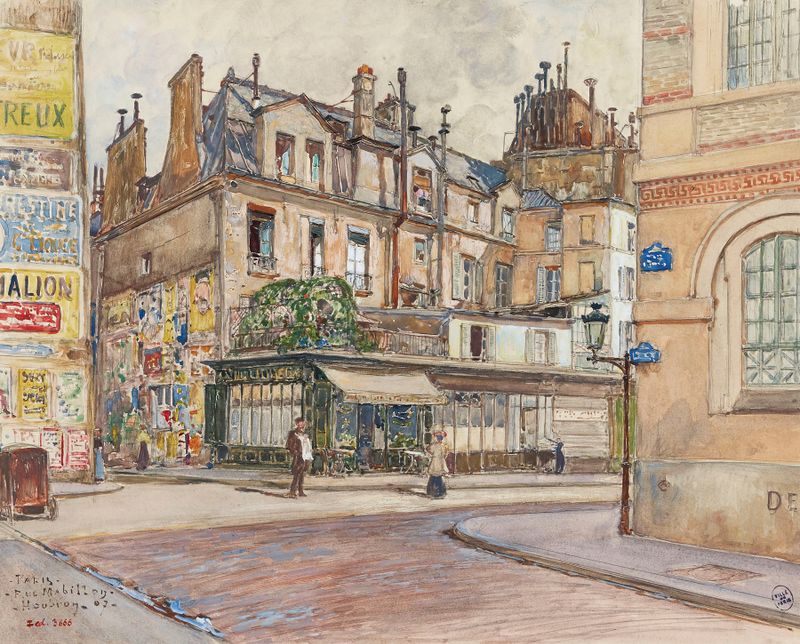
Angle rue Mabillon et rue Clément, en 1907. 5ème et 6ème arrondissements
Frédéric Houbron
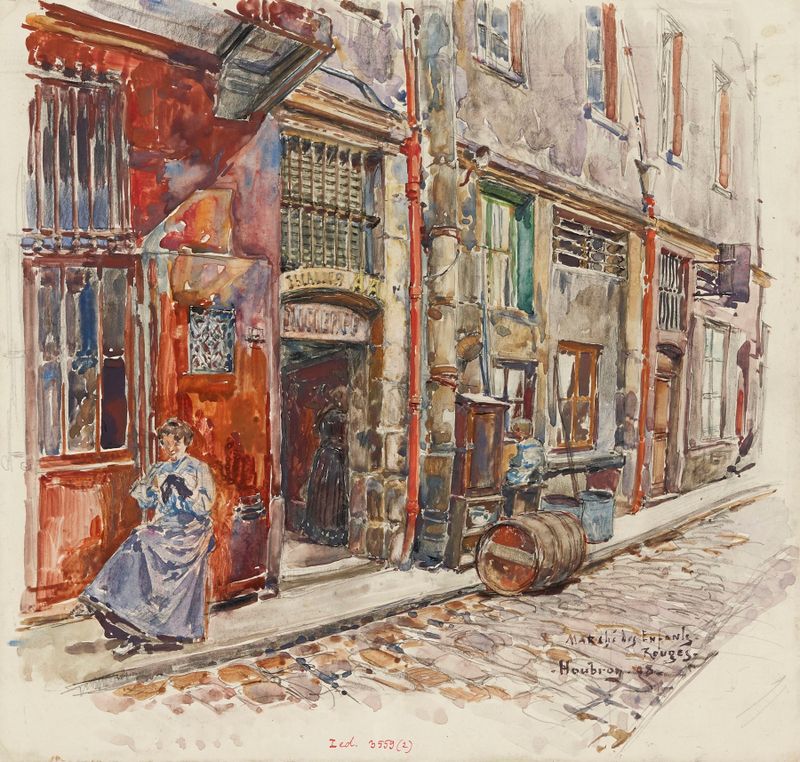
Entrée escalier A du Marché des Enfants-Rouges, en 1908. 3ème arrondissement
Frédéric Houbron





