
Le Marché des Enfants-Rouges, rue de Bretagne — History & Facts
Can paint confess what words never could? In Le Marché des Enfants-Rouges, rue de Bretagne, vibrant hues and meticulous brushwork whisper stories of life, community, and resilience within the crowded market stalls of early 20th-century Paris. Look to the left, where the warm reds and oranges of fruits cascade from stalls, their vividness almost palpable against the cooler backdrop of the market's faded blue awning. Notice how the light filters through, casting playful shadows that dance across the cobblestone street, creating a rhythmic interplay between light and dark. The figures, immersed in their daily transactions, are rendered with a delicate touch, their expressions hinting at the myriad emotions of commerce and camaraderie. Beneath the surface of this bustling scene lies an intricate tapestry of contrasts.
The juxtaposition of the lively market against the somber, muted colors of the buildings suggests resilience in the face of urban struggles. The reflections in the puddles scattered across the street serve as mirrors to society—echoes of joy and hardship coexisting. Each detail, from a child's innocent gaze to the weariness of the vendors, speaks to the stories woven into life’s fabric, revealing how deeply connected individuals are to their surroundings. Frédéric Houbron painted this piece in 1907, during a period of rapid change and modernization in Paris.
The artist, influenced by the vibrant Impressionist movement, sought to capture the essence of everyday life against the backdrop of a city transforming before his eyes. At this time, France was poised on the brink of a new artistic era, making Houbron’s work both a reflection of his surroundings and a testament to enduring human connection amidst the flow of progress.
More Artworks by Frédéric Houbron
Browse all →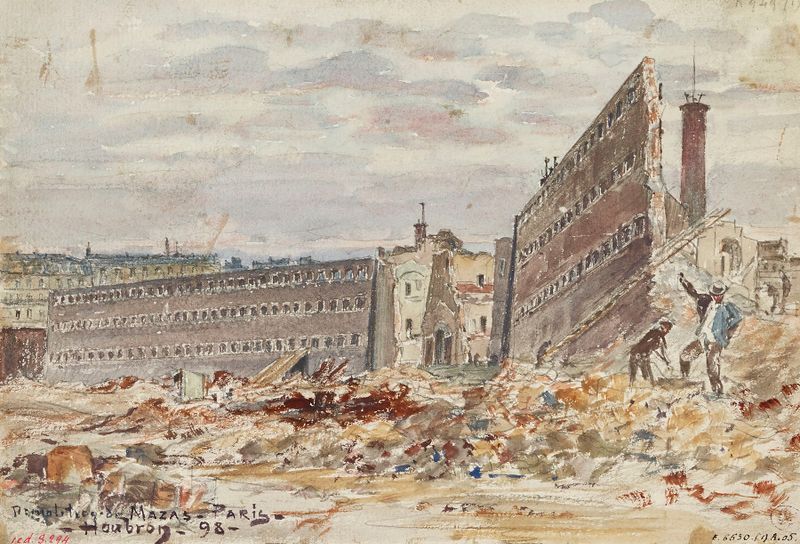
Démolition de la prison Mazas, 23, 25 boulevard Diderot (ancien boulevard Mazas)
Frédéric Houbron
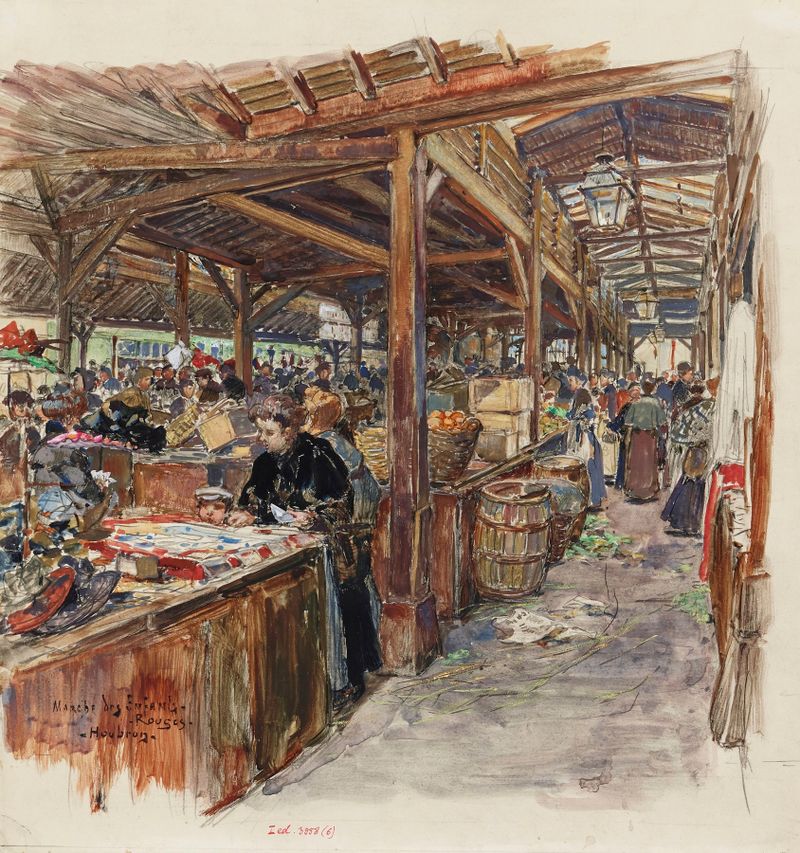
Intérieur du Marché des Enfants Rouges. 3ème arrondissement
Frédéric Houbron
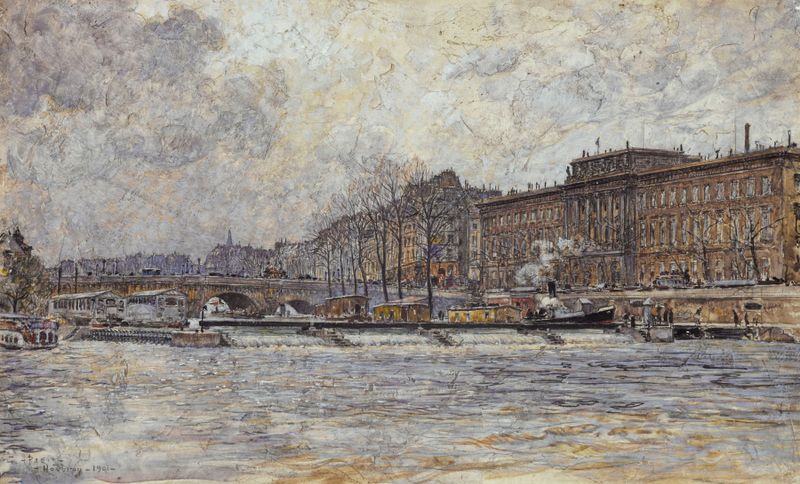
L’Hôtel de la Monnaie et le Pont-Neuf
Frédéric Houbron

Quai des Orfèvres. Paris. 1906
Frédéric Houbron
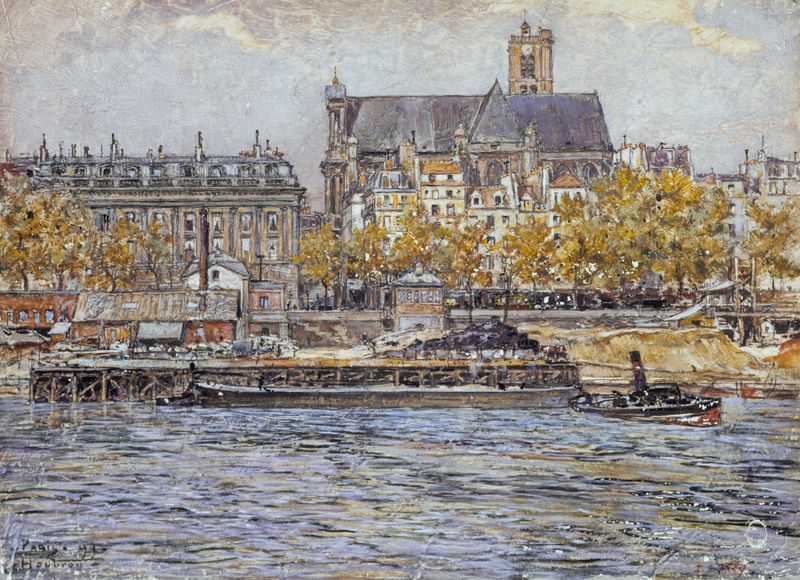
Le quai de l’Hôtel-de-Ville et l’église Saint-Gervais-Saint-Protais
Frédéric Houbron
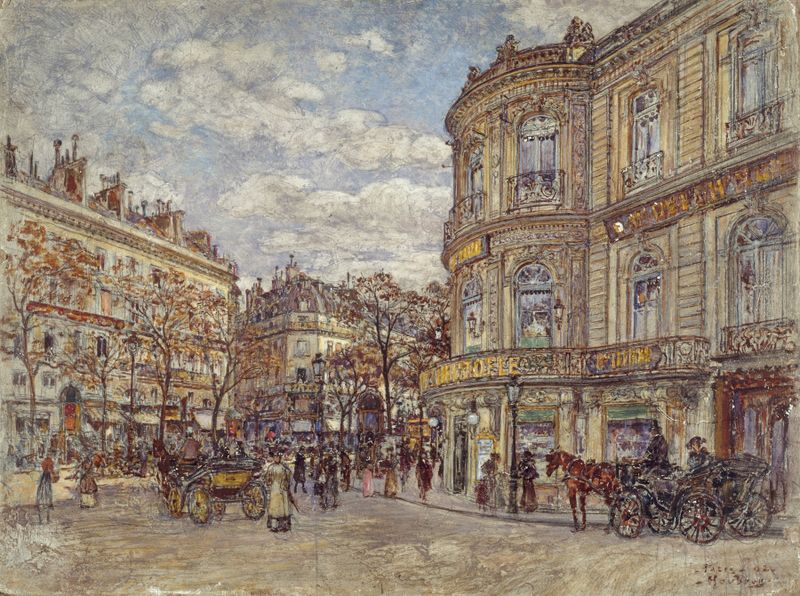
Le Pavillon de Hanovre, rue Louis-le-Grand
Frédéric Houbron

La rue du Chevalier-de-la-Barre, avec le Sacré-Cœur en construction
Frédéric Houbron
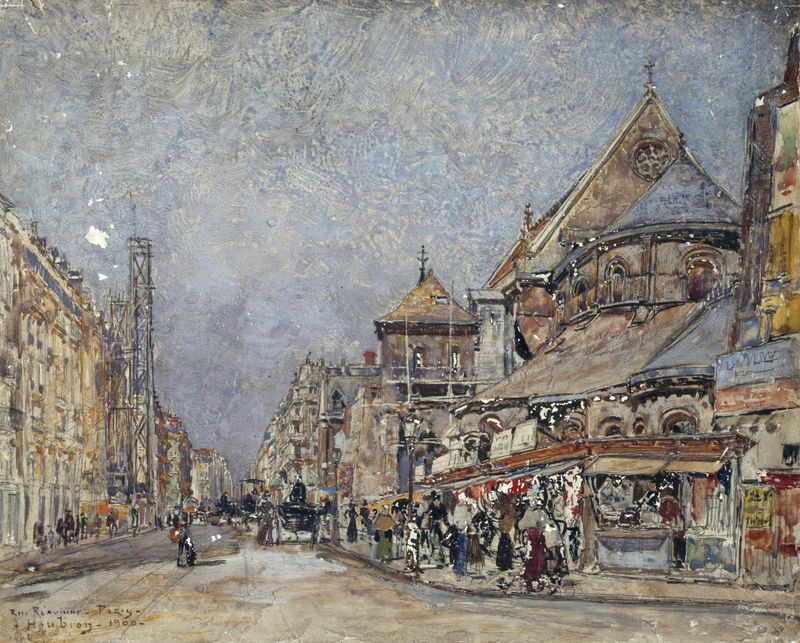
La rue Réaumur et le chevet de l’église Saint-Martin-des-Champs
Frédéric Houbron
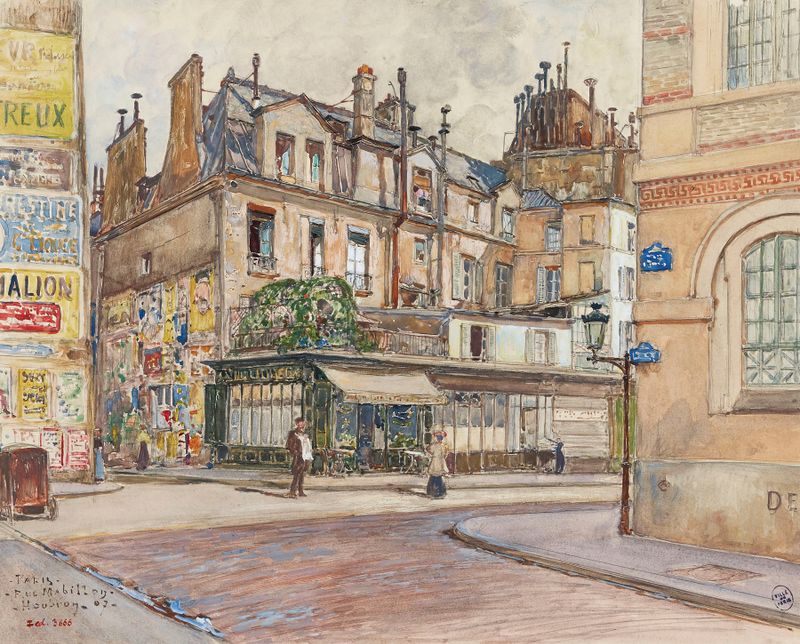
Angle rue Mabillon et rue Clément, en 1907. 5ème et 6ème arrondissements
Frédéric Houbron
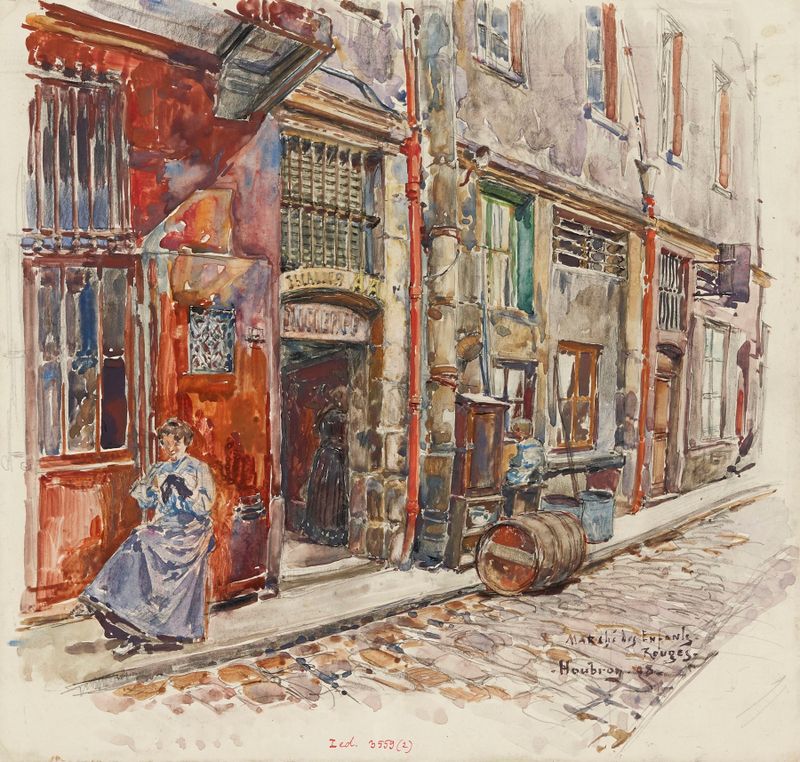
Entrée escalier A du Marché des Enfants-Rouges, en 1908. 3ème arrondissement
Frédéric Houbron





