
Le Paysage au Bâteau — History & Facts
Could beauty survive in a century of chaos? This question resonates deeply within the tranquil depths of a landscape transformed into a dreamscape by the brush of Alphonse Legros. Look to the foreground at the gentle curve of the river, where the water shimmers like liquid silver under a dappled sky. The boat, nestled along the banks, seems almost suspended in time, beckoning you to explore its contours. Notice how the lush greens and earthy browns of the surrounding trees create a harmonious palette, reflecting a world untouched by turmoil.
Soft brushstrokes convey movement in the foliage, while the horizon glows with a delicate blend of blues and pinks, hinting at the dawn of an awakening or the dusk of an ending. The composition captures an emotional tension between serenity and the undercurrents of change. The solitary boat, both a vessel and an anchor, embodies the dream of escape amid the chaos lurking just outside the frame. The interplay of light and shadow suggests that while the scene is beautiful, it is also ephemeral; what is seen may soon be lost, yet the dream remains eternal.
This contrast invites reflection on the fragility of peace in an age marked by uncertainty. During the years between 1857 and 1911, Legros painted Le Paysage au Bâteau in a time of personal and artistic evolution. Living in France amid shifting cultural tides, he sought to capture mood and atmosphere in the natural world, blending Realism with his evolving impressionistic style. The work reflects not only his mastery of landscape painting but also a desire for transcendence amid the complexities of life in the 19th century.
More Artworks by Alphonse Legros
Browse all →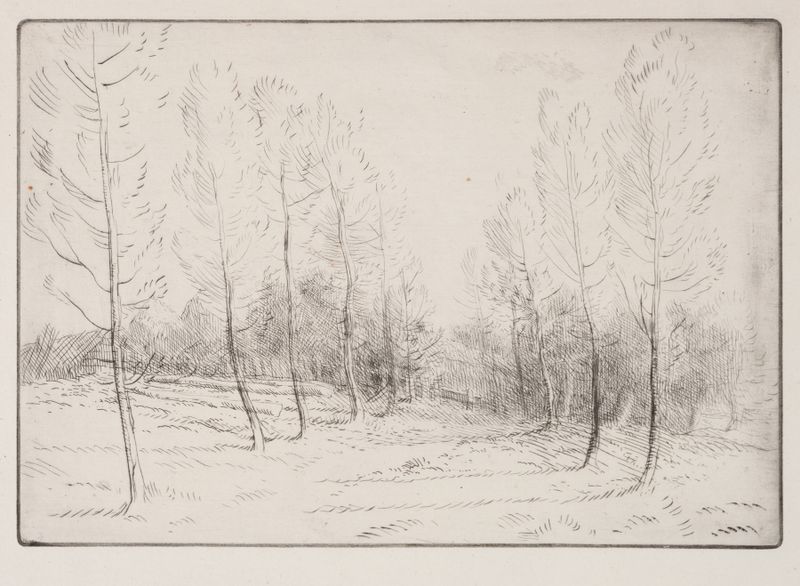
Avenue of Poplars
Alphonse Legros
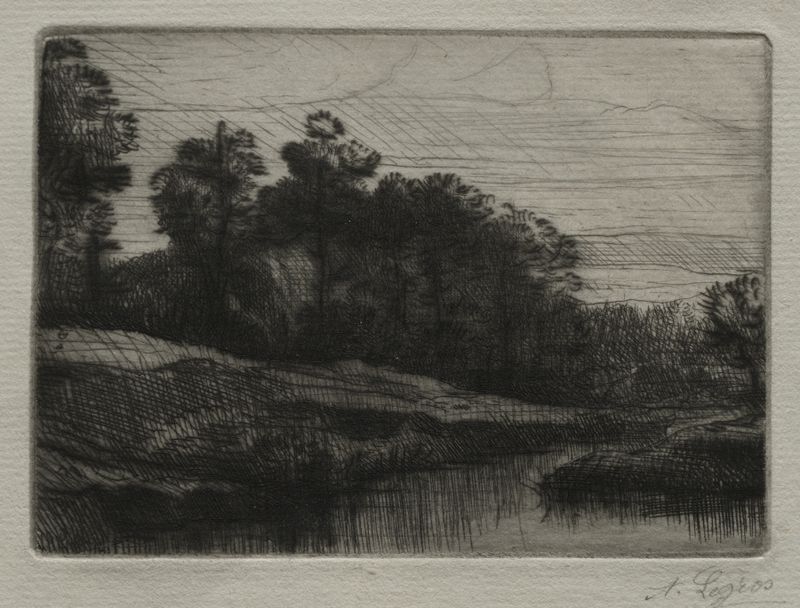
Evening
Alphonse Legros

The Fish in the Hoop Net
Alphonse Legros

The Little Beggar
Alphonse Legros
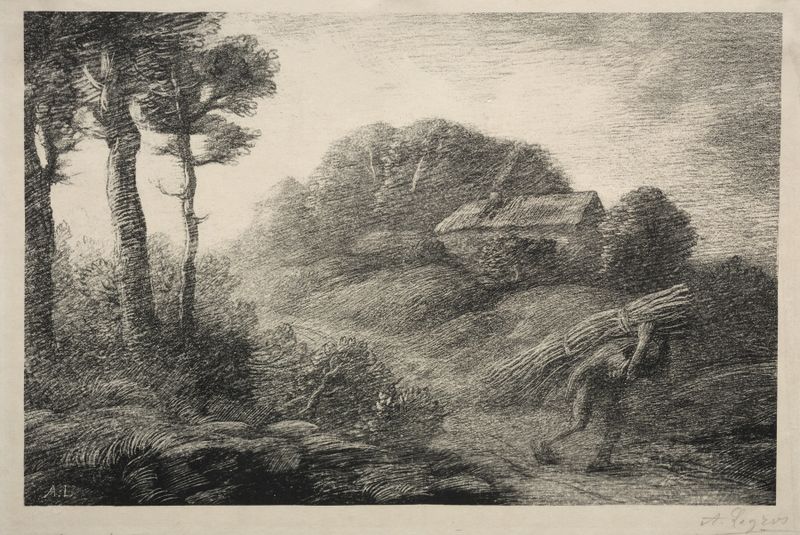
The Return of the Fagot Gatherer
Alphonse Legros

Storm
Alphonse Legros
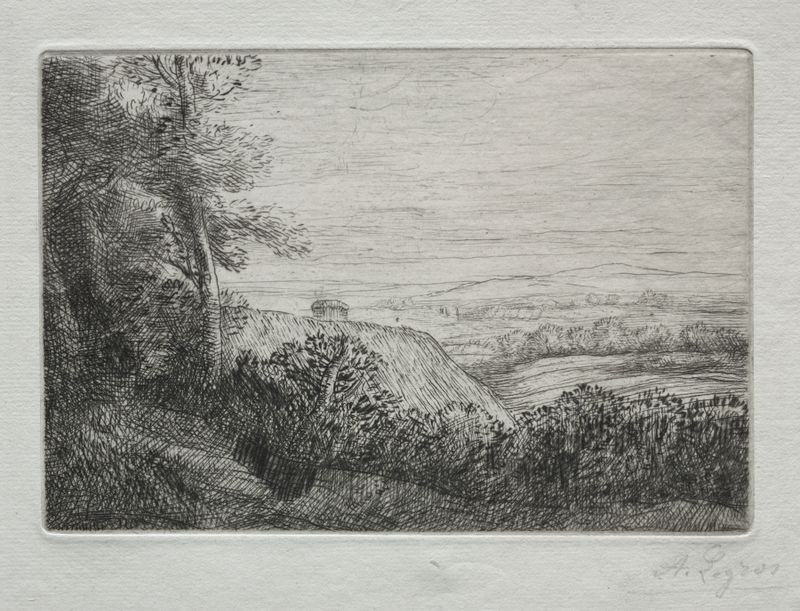
Les dernière Rayons de Soleil
Alphonse Legros
The Traveler Stretched out on the Grass
Alphonse Legros
Guard House
Alphonse Legros

Death of a Vagabond
Alphonse Legros





