
Little Thumb (Perrault) — History & Facts
Mist drifts through a forest of impossibly tall trees, their canopies dripping with moss and mystery, while a cluster of children—each in pointed hats and tunics—pick their way along a winding path. The eye is drawn first to the solitary figure in blue at the right, his stance alert and purposeful, a stick in hand as if he leads or scouts ahead. Behind him, the other children huddle close, their faces wary, their bodies nearly blending into the pale, dreamlike foliage.
The palette is a hush of greens and soft earth tones, lending the scene a sense of enchantment and unease, as if the forest itself is watching. Every detail—the delicate flowers, the oversized rocks, the way light seems to dissolve the edges of things—invites the viewer to wonder: is this a place of safety, or a labyrinth with no way out? Created in 1922 by Harry Clarke for a London edition of Charles Perrault’s fairy tales, this illustration belongs to a world where books were gateways to other realms, and artists like Clarke conjured those realms with ink and imagination. The early twentieth century saw a flowering of illustrated children’s books, often commissioned by publishers eager to enchant young readers and their parents alike.
Clarke, known for his stained glass and his haunting, intricate drawings, brought a distinctly modern sensibility to these old stories—his lines are crisp, his colors both subtle and strange. This particular work, now preserved in the New York Public Library, is a testament to an era when fairy tales were not sanitized, and the woods remained shadowy and full of possibility. Let your gaze linger on the spaces between the trees—there, perhaps, is where the story waits.
More Artworks by Harry Clarke
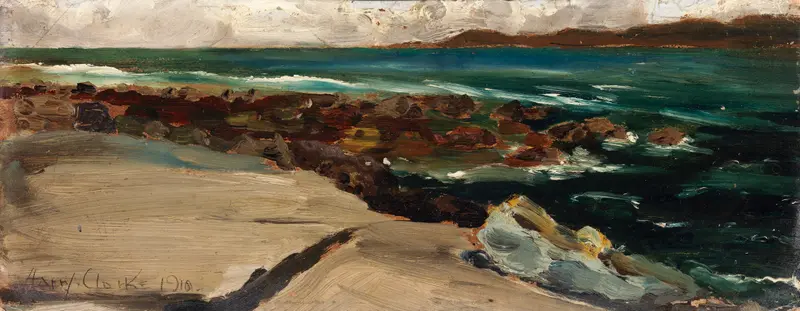
Landscape by the Coast
Harry Clarke
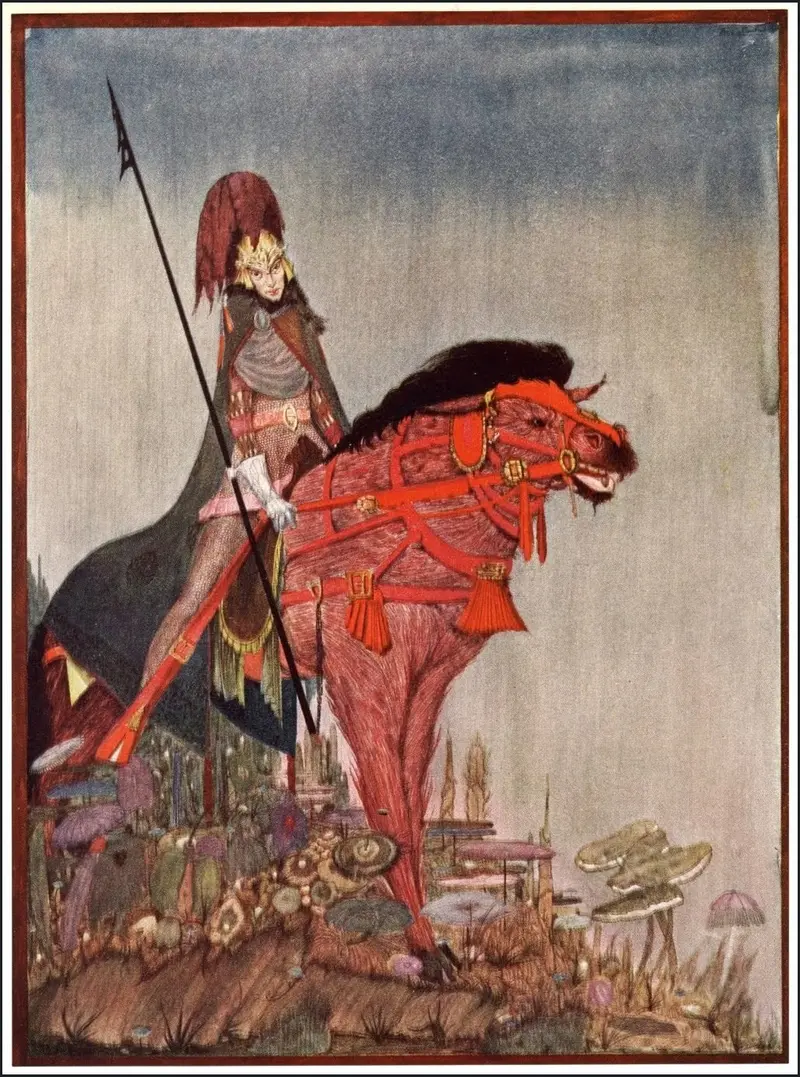
Metzengerstein (Poe)
Harry Clarke
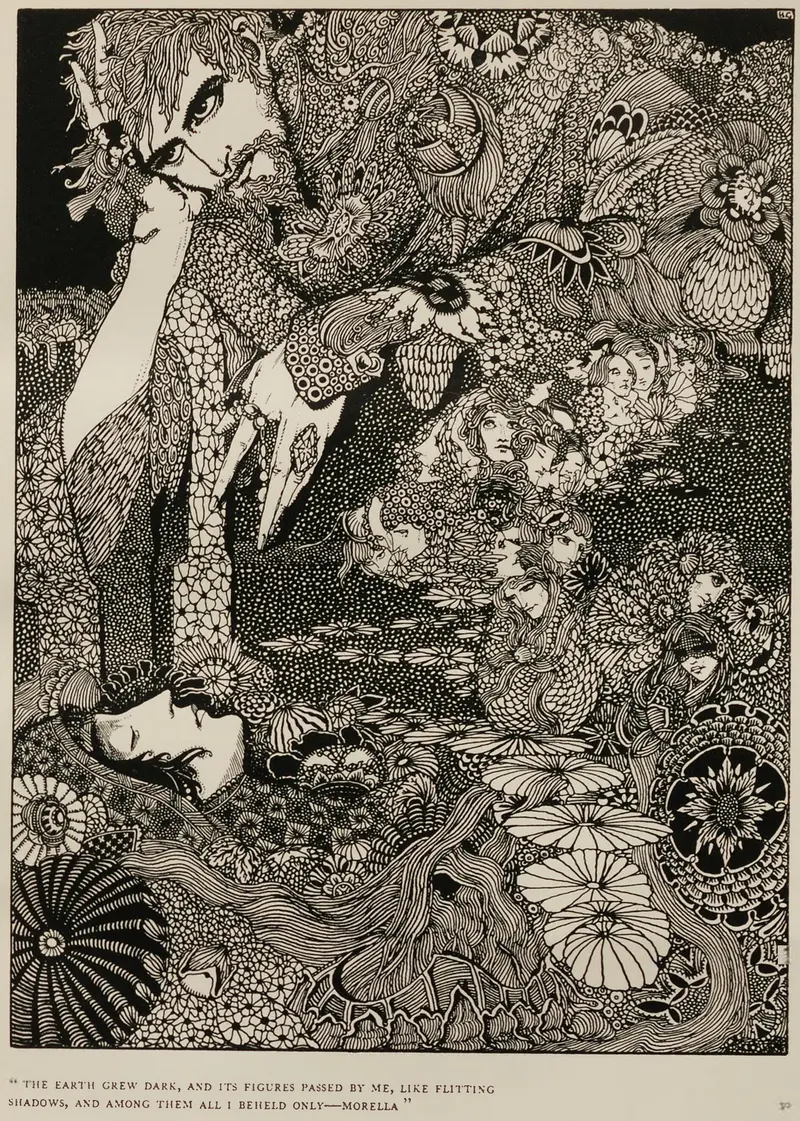
Morella (Poe)
Harry Clarke
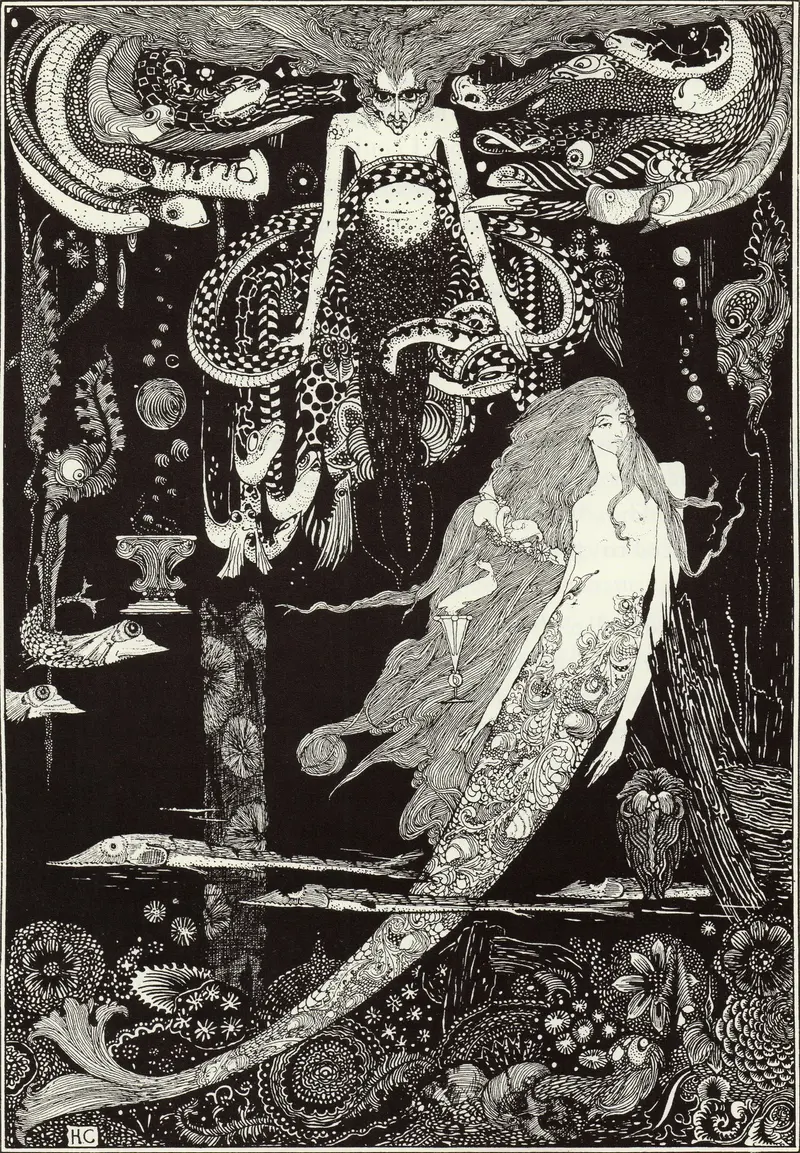
The Little Mermaid (Andersen)
Harry Clarke
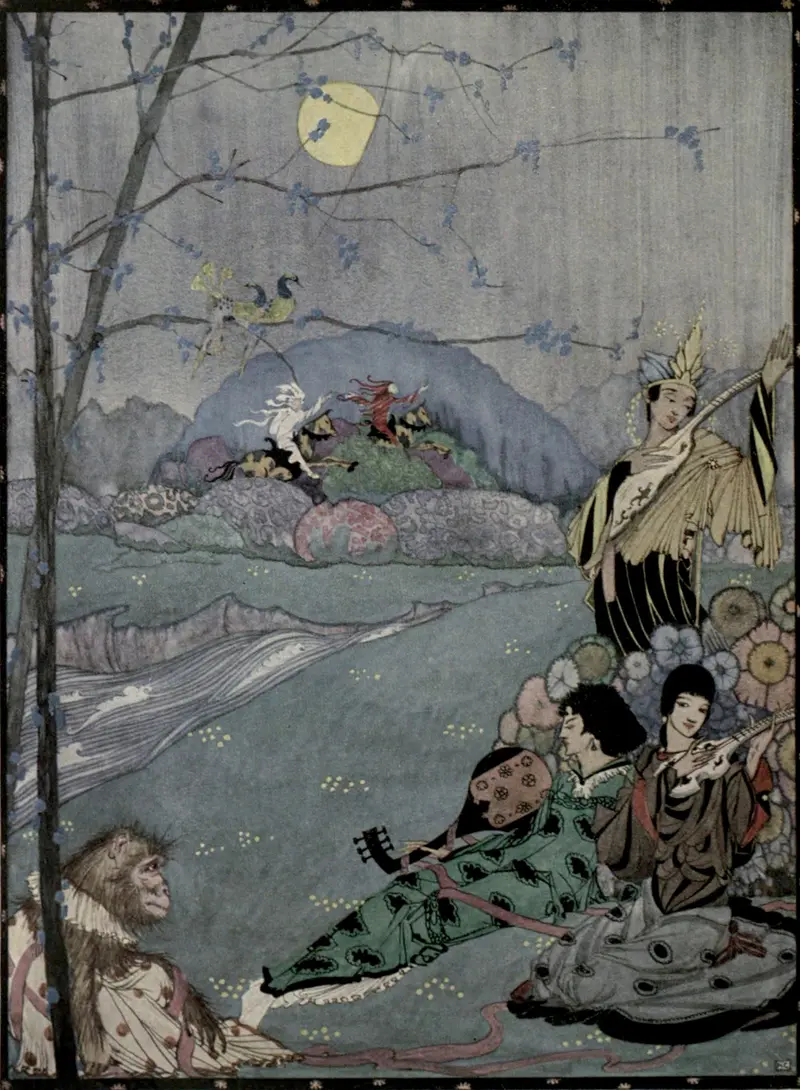
Arabia (The Year's at the Spring)
Harry Clarke
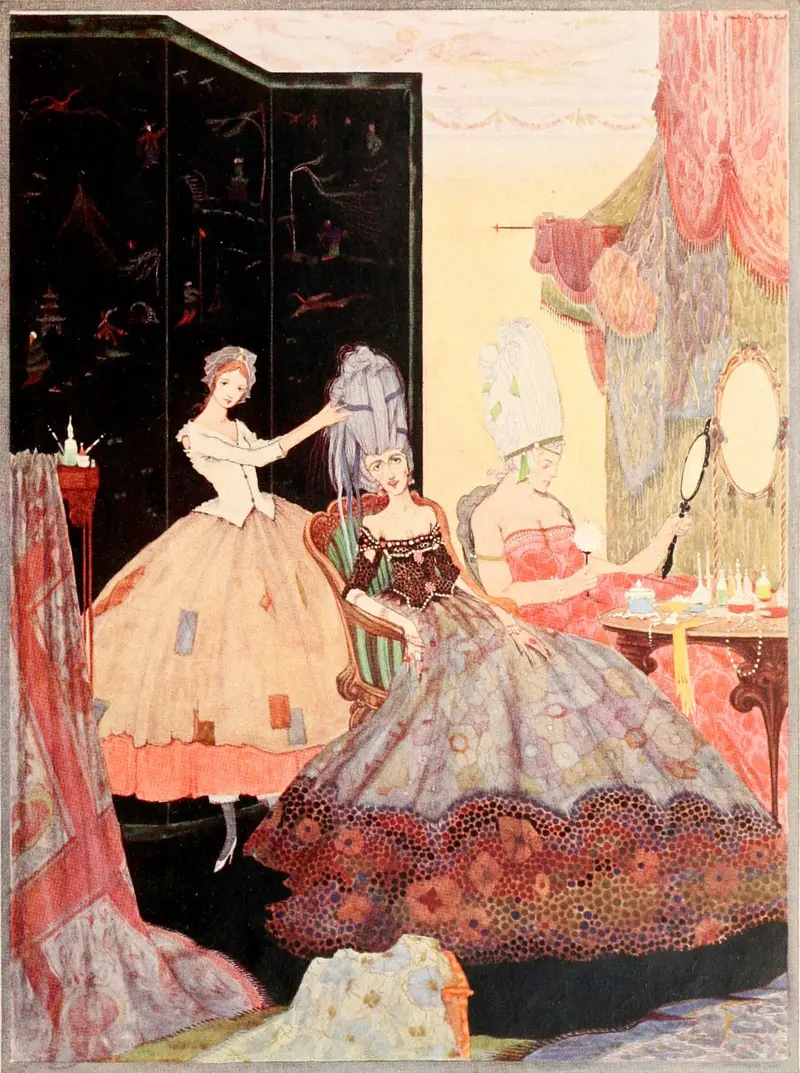
Cinderella (Perrault)
Harry Clarke
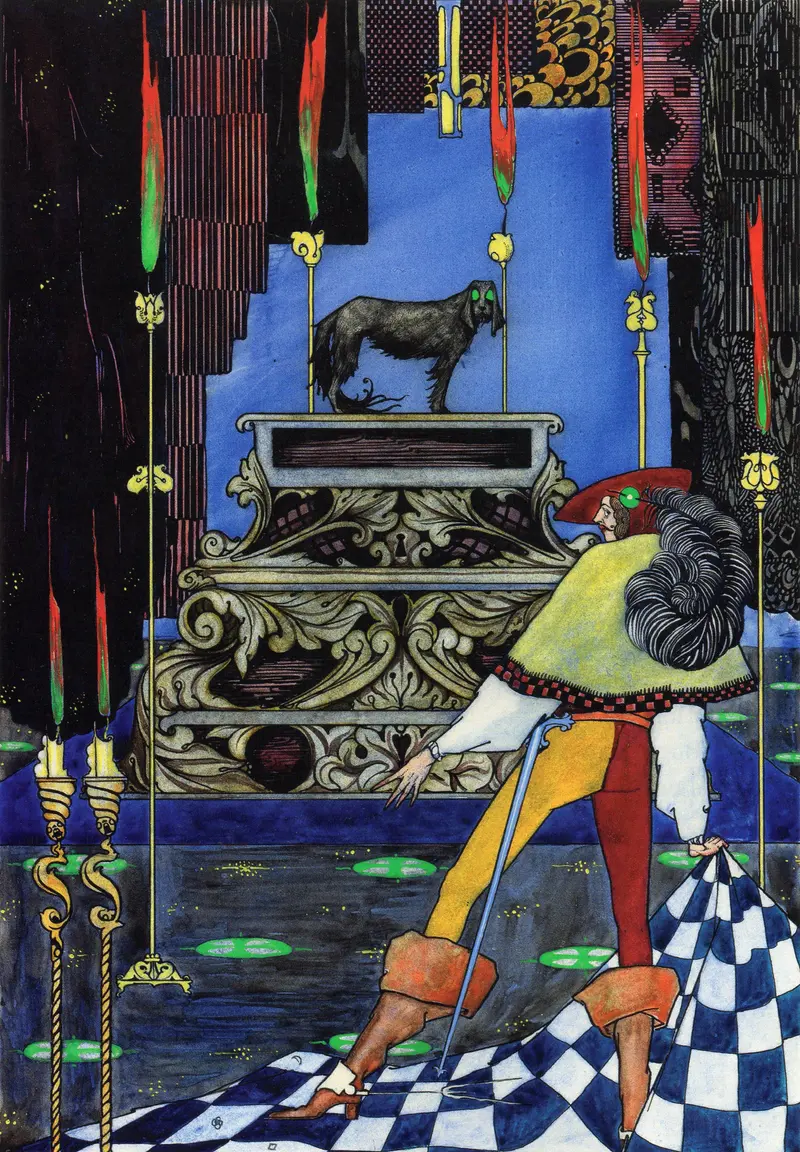
The Tinder Box (Andersen)
Harry Clarke
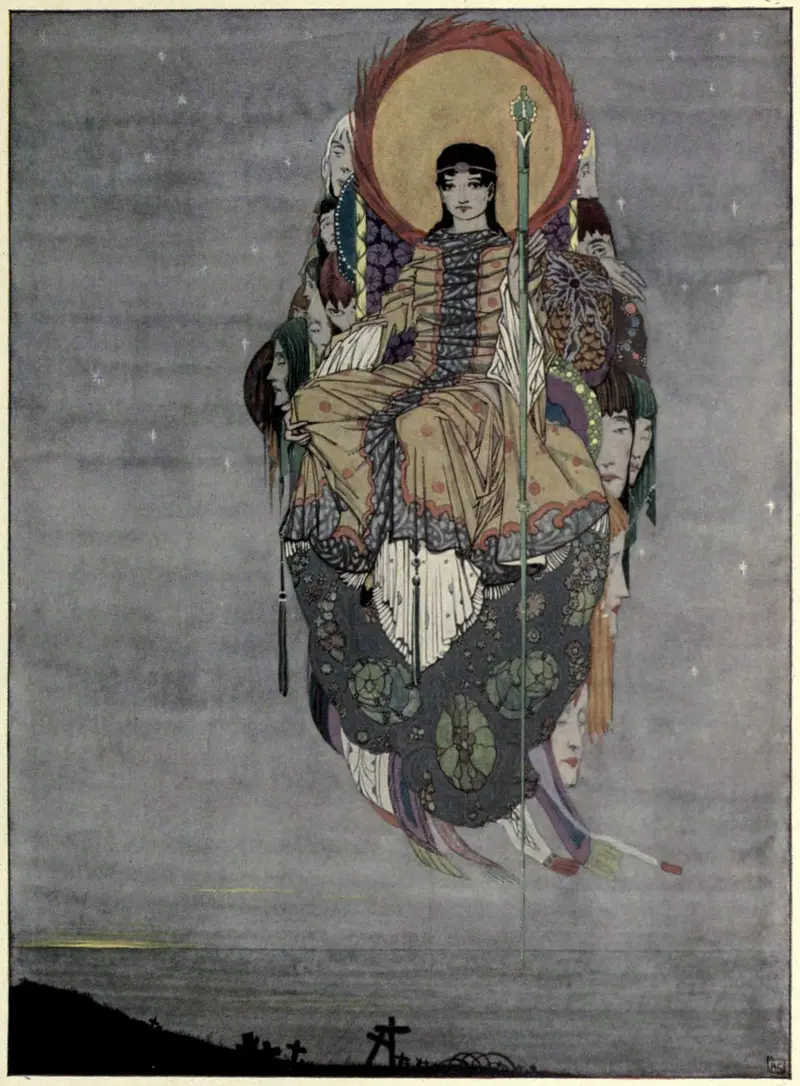
The Dead (The Year's at the Spring)
Harry Clarke
The Mystery of Marie Roget (Poe)
Harry Clarke

The Travelling Companion (Andersen)
Harry Clarke





