
Madonna and Child Enthroned — History & Facts
What first draws the eye in Madonna and Child Enthroned is the quiet choreography of hands: the Christ Child, lively and unguarded, reaches for his mother’s fingers, while Mary, serene and inward, gently steadies him with one hand and draws the other to her heart. The throne is no mere seat but a stage, draped with brocade that glows like gold leaf, its pattern echoing the sacred aura of the moment. The marble floor’s cold geometry frames the warmth between mother and child, and the open book at Mary’s side hints at wisdom and prophecy, left momentarily aside for this tender exchange.
Behind them, the world opens up in miniature—rivers winding, figures wandering, a landscape that seems to breathe with distant stories. Painted around 1510, this work stands at a crossroads of Flemish tradition and Renaissance innovation. Such images were often commissioned for private devotion, intended to make the holy both intimate and immediate for their viewers. The artist, Aelbert Bouts, draws on a vocabulary familiar from his father’s generation—rich textiles, lilies for purity, the architectural throne—yet the mood is distinctly his own: less hieratic, more human.
History has kept few traces of this particular painting’s journey, but its survival in the collection VwGY8r0S5KWSqw allows us to linger over its details, to follow the play of light across a cheek, and to imagine the prayers once whispered before it.
More Artworks by Aelbert Bouts
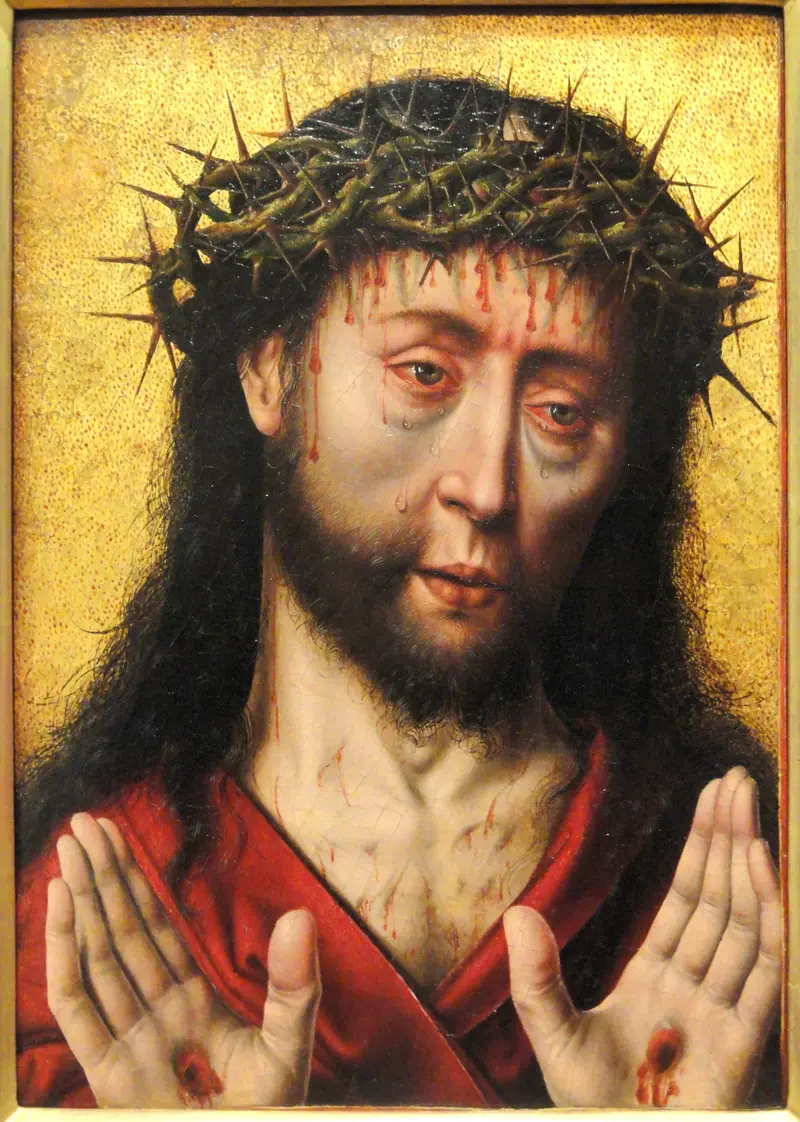
The Man of Sorrows
Aelbert Bouts
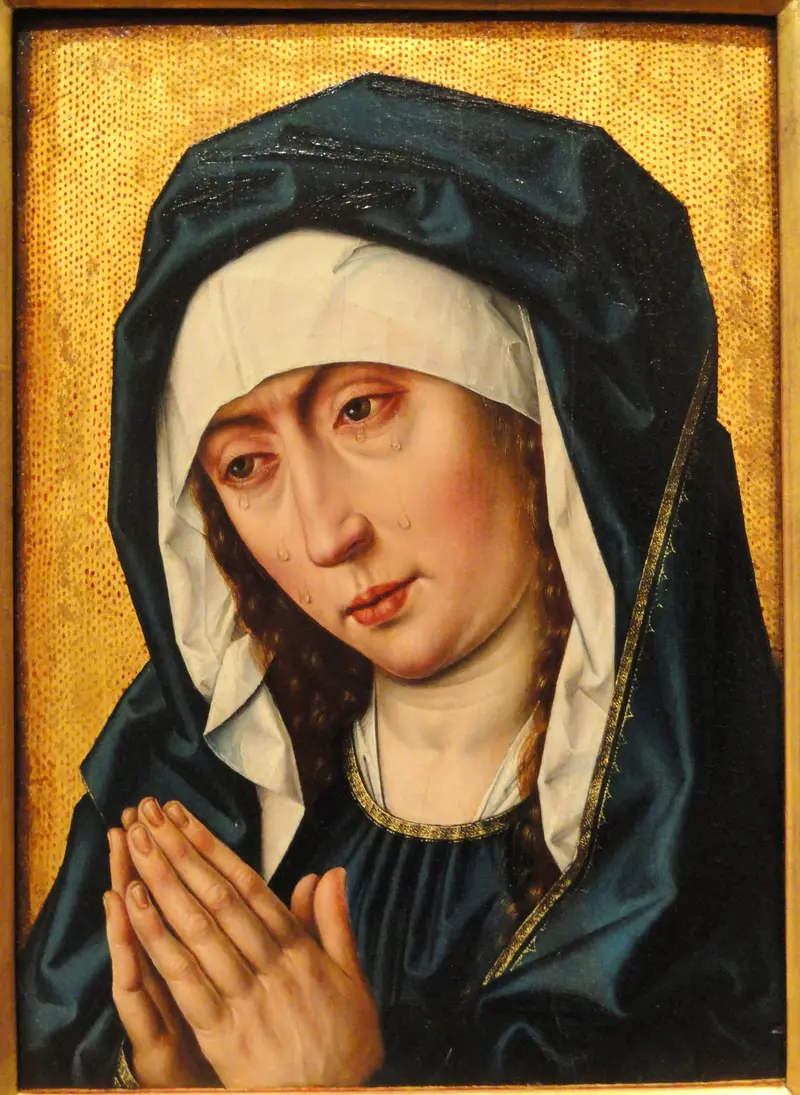
The Mater Dolorosa
Aelbert Bouts
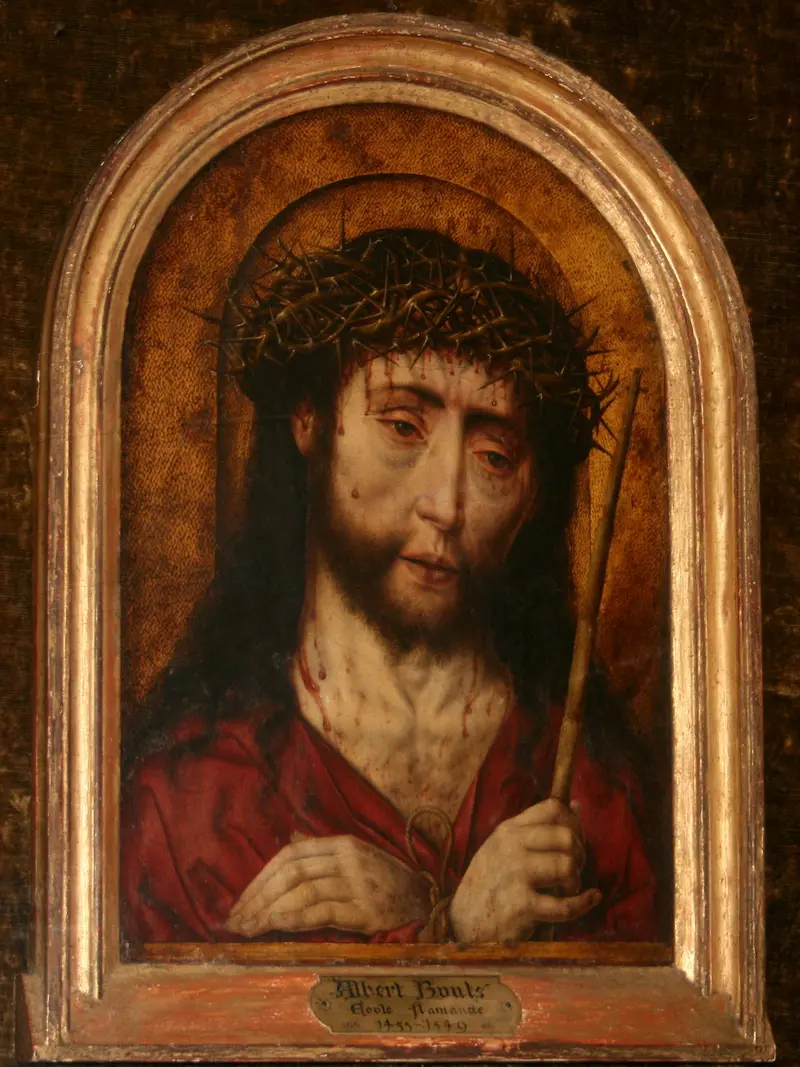
The Mocking of Christ
Aelbert Bouts
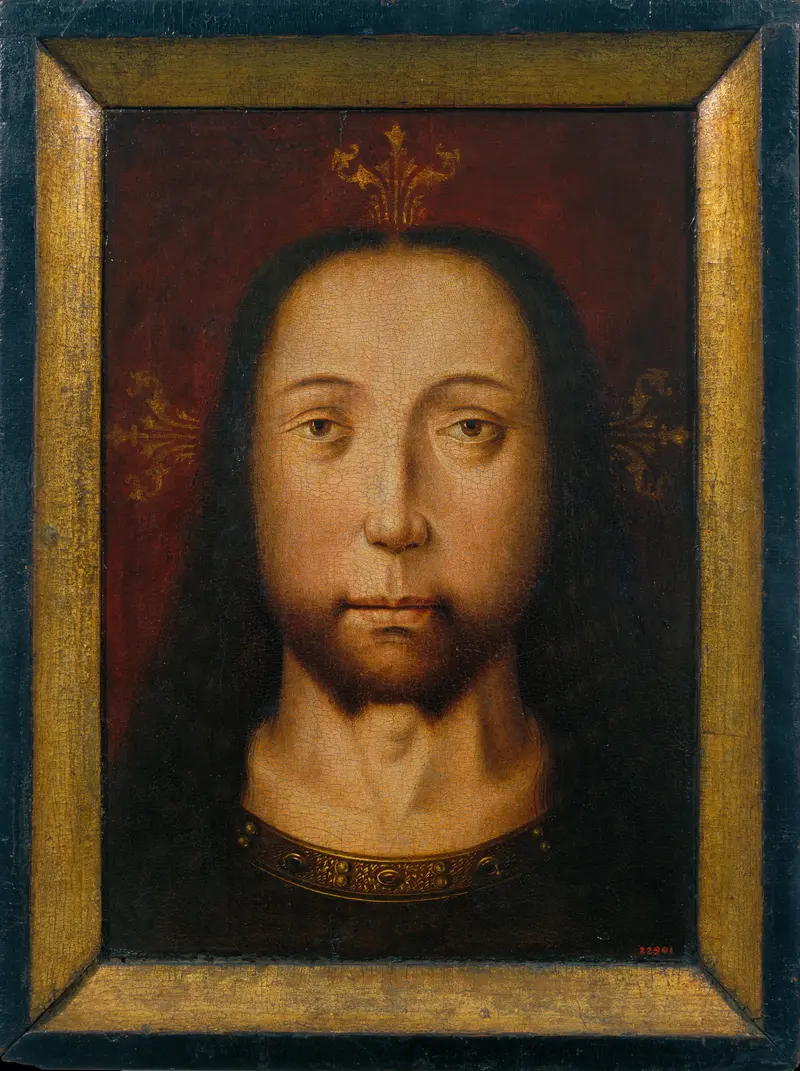
Holy Countenance
Aelbert Bouts
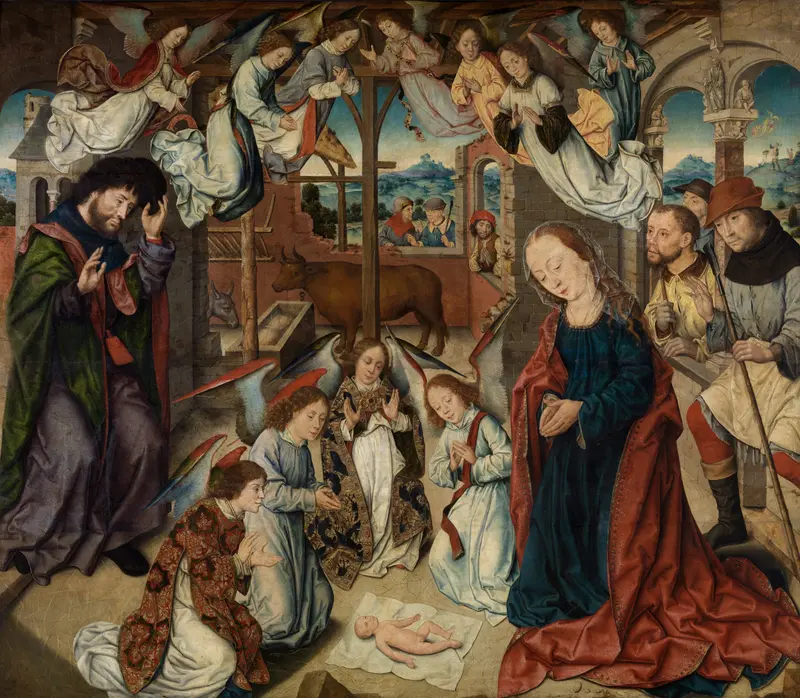
The Adoration of the Shepherds
Aelbert Bouts
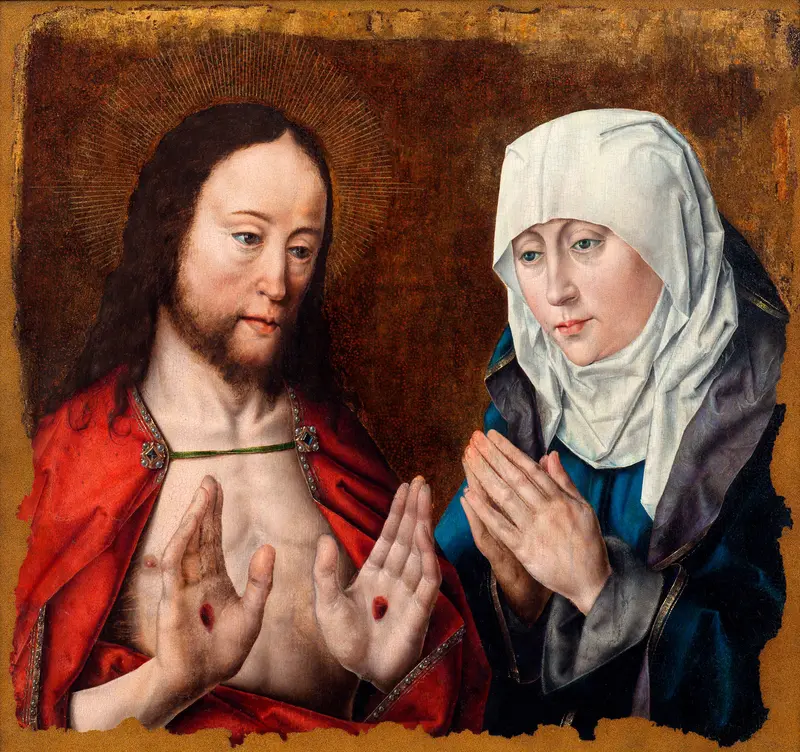
Christ appears to Mary
Aelbert Bouts
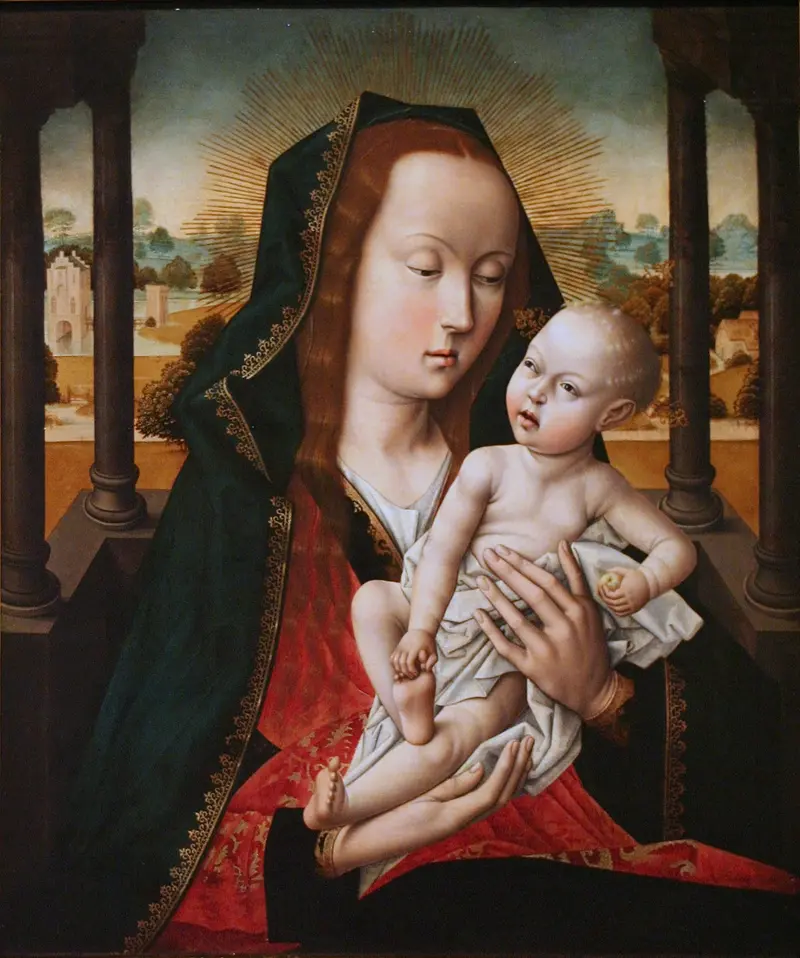
Madonna and Child
Aelbert Bouts
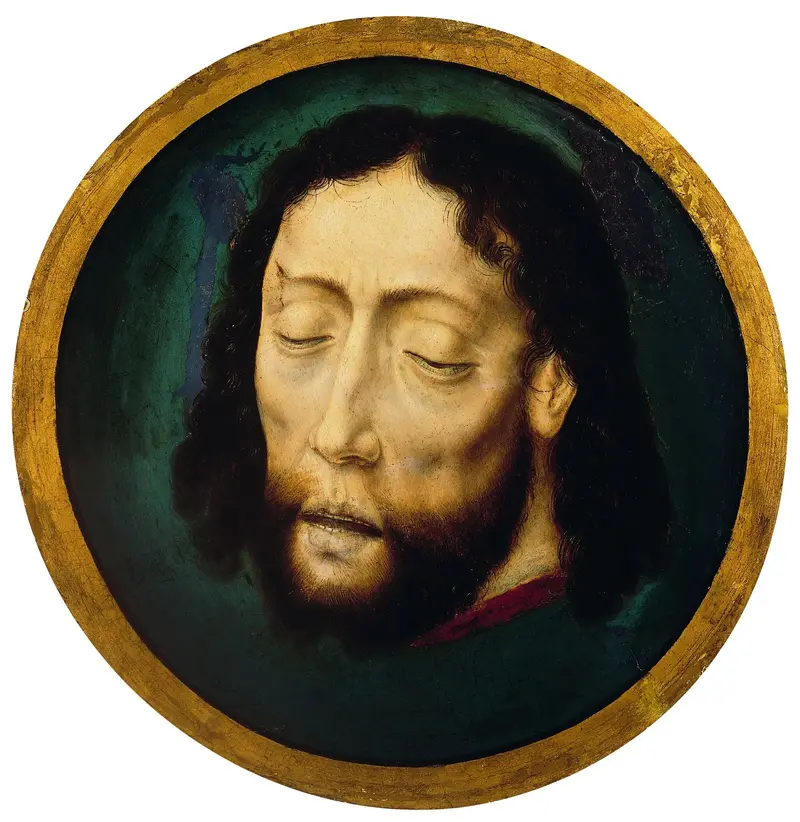
Head of St. John the Baptist
Aelbert Bouts
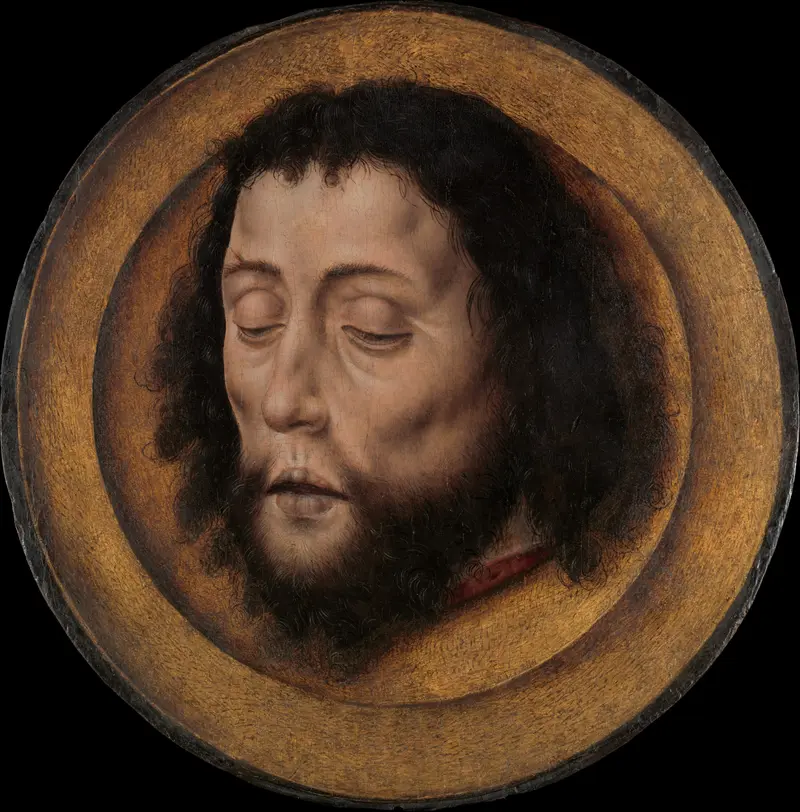
Head of Saint John the Baptist on a Charger
Aelbert Bouts
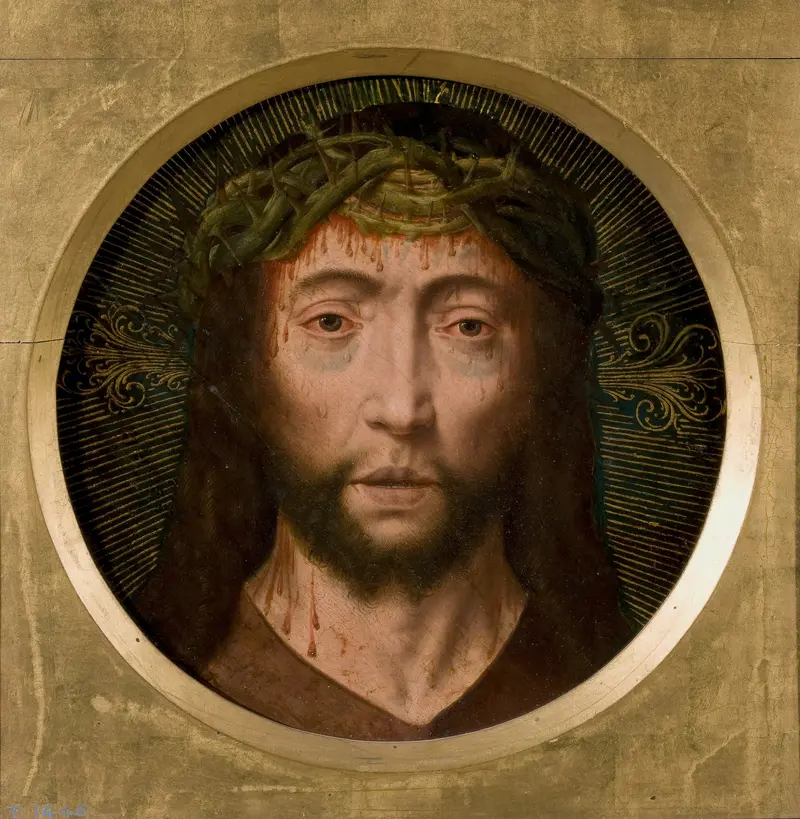
Head of Christ
Aelbert Bouts





