Mediaeval Ornament No. 7 — History & Facts
What first seizes the eye in Mediaeval Ornament No. 7 is its riotous celebration of color and line—an intricate choreography where every flourish and tendril seems to pulse with its own life. The page is a labyrinth of borders and corners, each segment a miniature world of curling leaves, jewel-toned blossoms, and interlaced bands.
There is no single focal point; instead, the viewer is invited to wander, following the red and blue ribbons as they twist through gold-edged foliage, pausing at the shield-like medallions or the delicate sprays of acanthus. The ornament is not mere decoration—it is a language, each motif a signal of the medieval manuscript’s promise: that beauty and meaning can be woven together, line by line. This chromolithograph, produced in 1856 by Owen Jones, belongs to a world fascinated by the rediscovery and cataloguing of historic styles. The 19th century saw a surge of interest in medieval illumination, as artists, designers, and publishers sought to revive the lost arts of the manuscript age.
Works like this, now preserved in collections such as Polona Digital Library, were not only references for scholars and craftsmen but also manifestos for a new design philosophy—one that looked to the past for inspiration while embracing the possibilities of modern printing. In the dense, joyful patterns of Mediaeval Ornament No. 7, we glimpse both the reverence for medieval craft and the Victorian hunger for order, color, and the pleasures of the ornamental.
Return to the image, and let your eye trace the paths medieval scribes once walked, now reimagined for a new age.
More Artworks by Owen Jones

Greek Ornament No. 1
Owen Jones
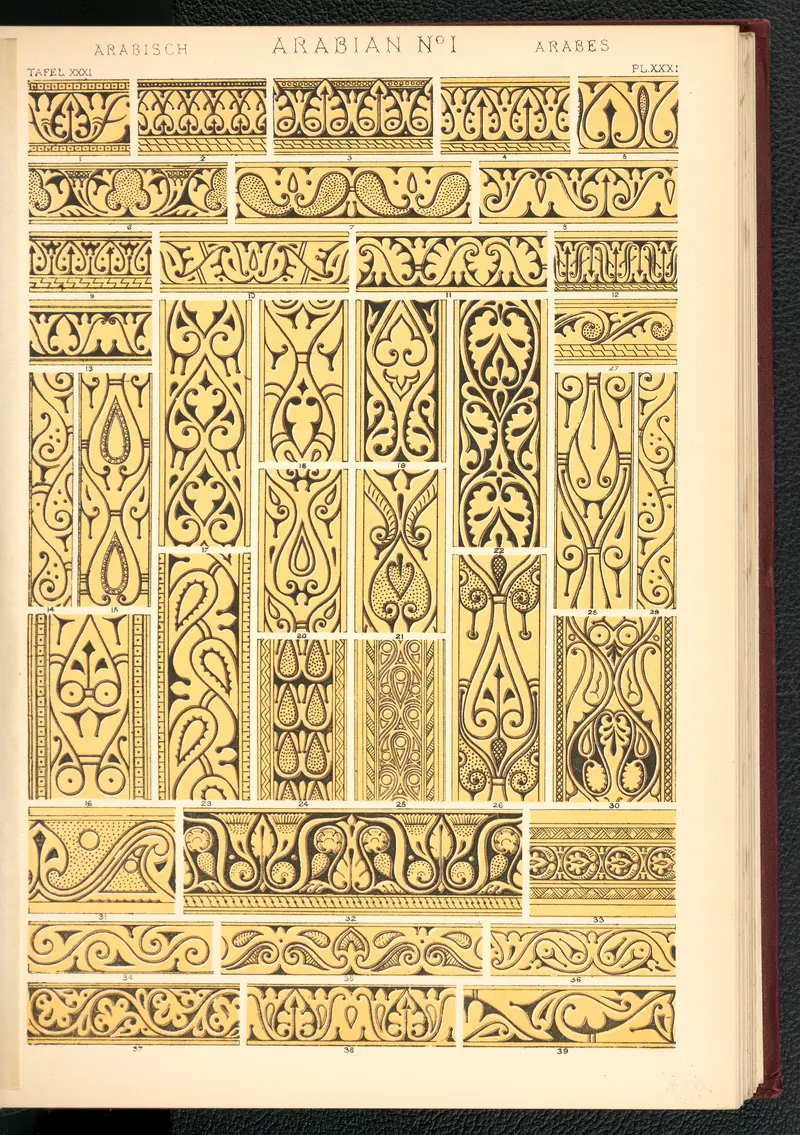
Arabian Ornament No. 1
Owen Jones
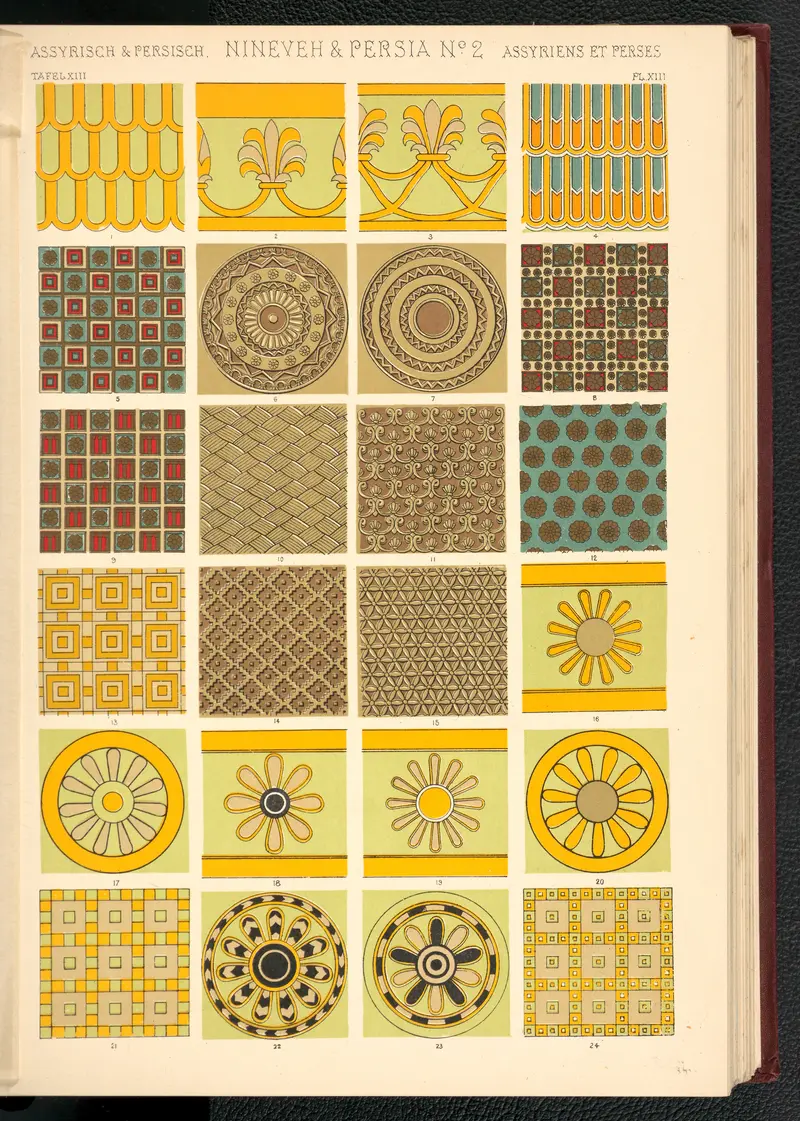
Assyrian Ornament No. 2
Owen Jones

Egyptian Ornament No. 3
Owen Jones
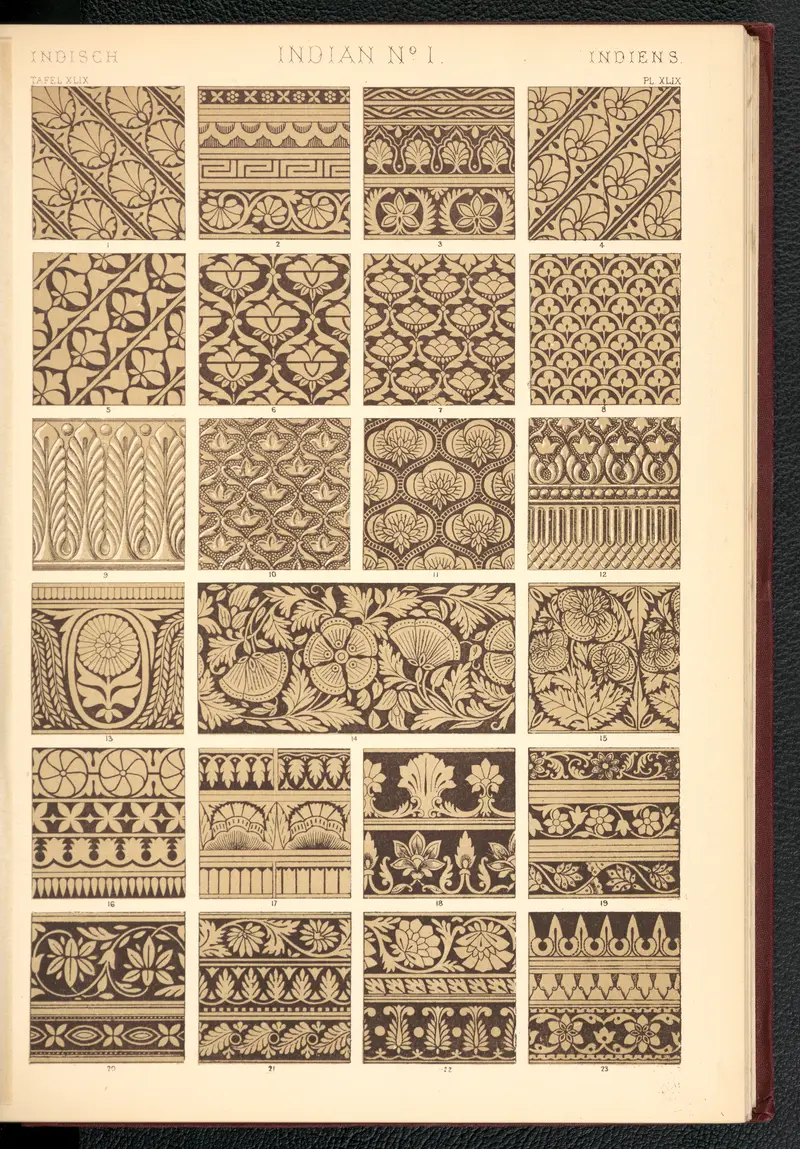
Indian Ornament No. 1
Owen Jones
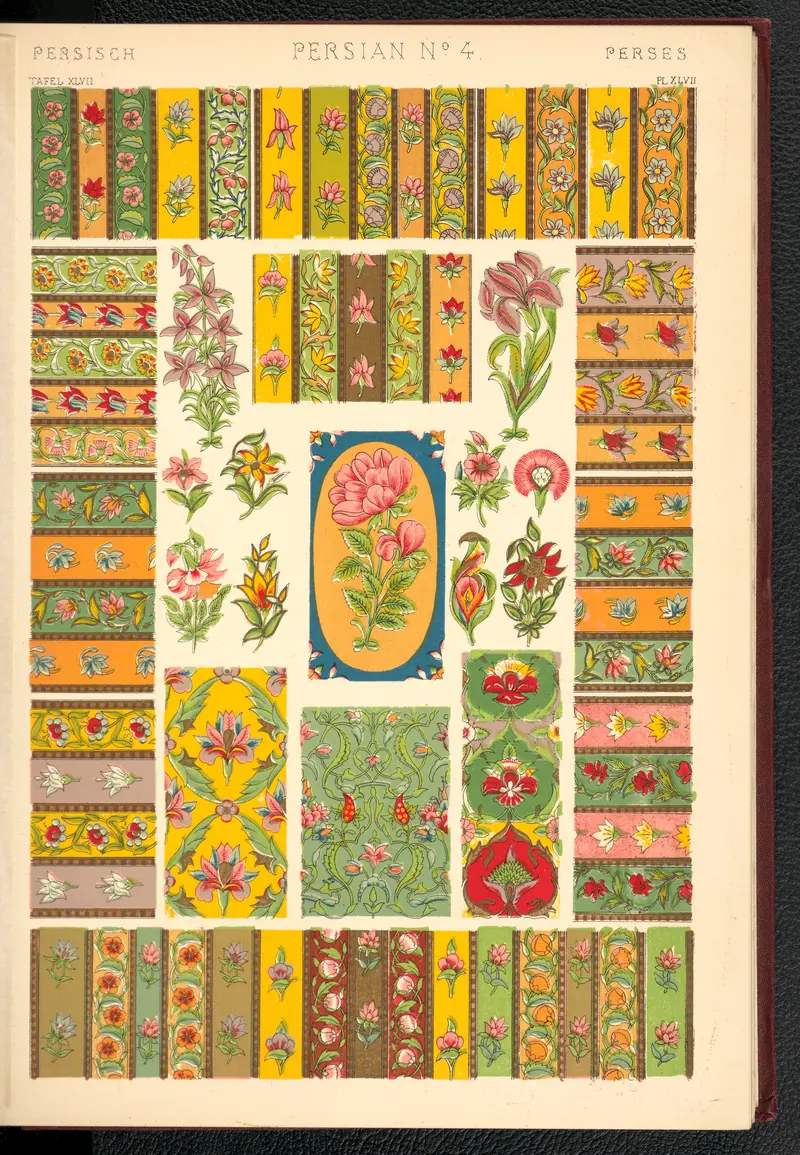
Persian Ornament No. 4
Owen Jones
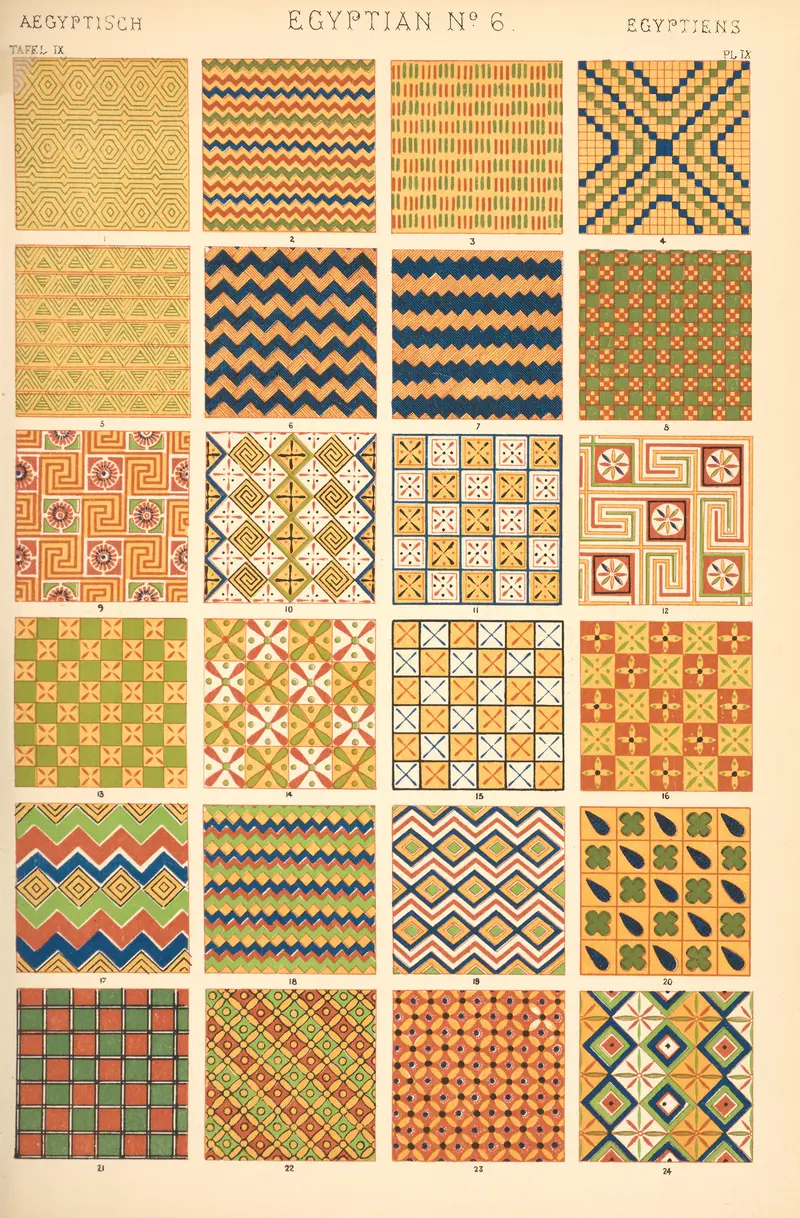
Egyptian Ornament No. 6
Owen Jones
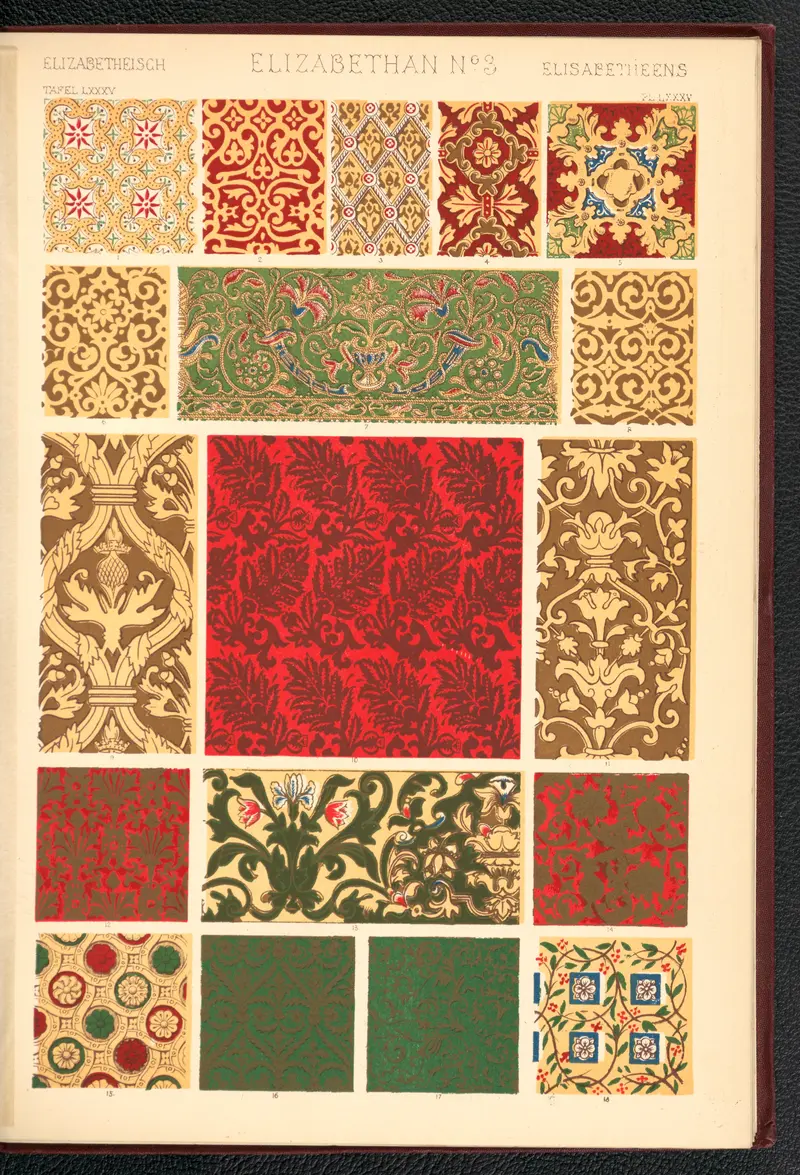
Elizabethan Ornament No. 3
Owen Jones
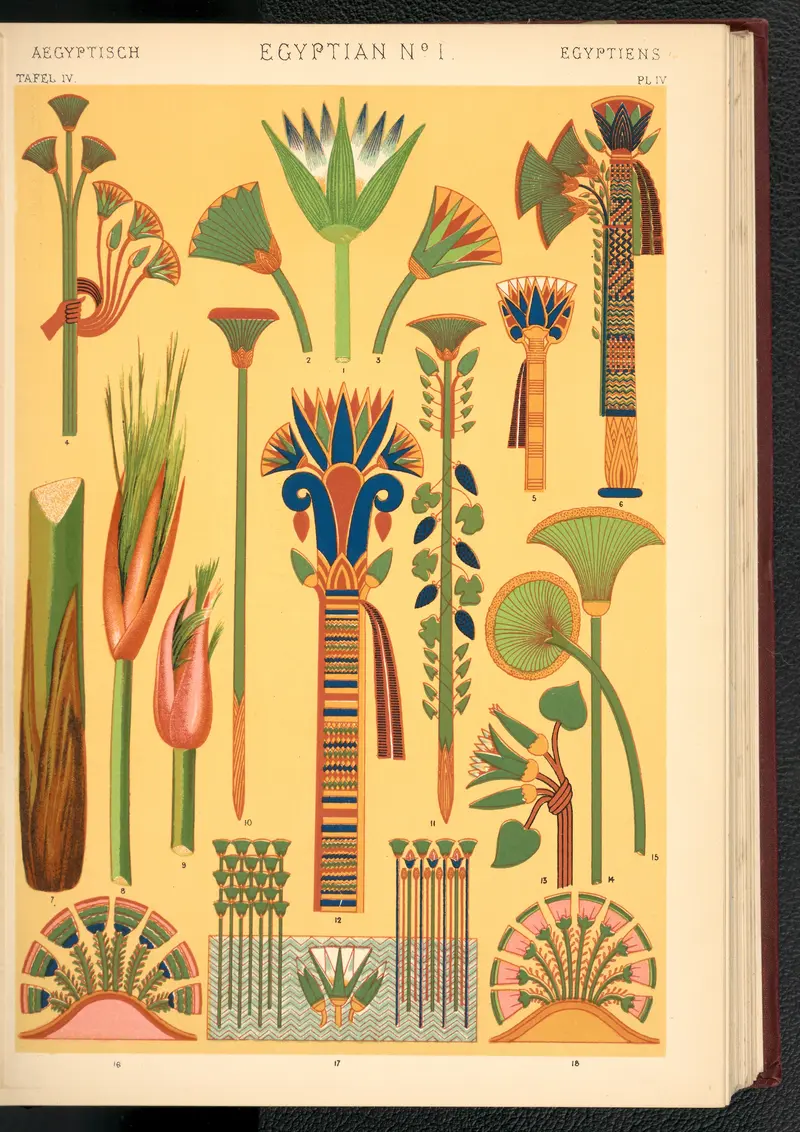
Egyptian Ornament No. 1
Owen Jones
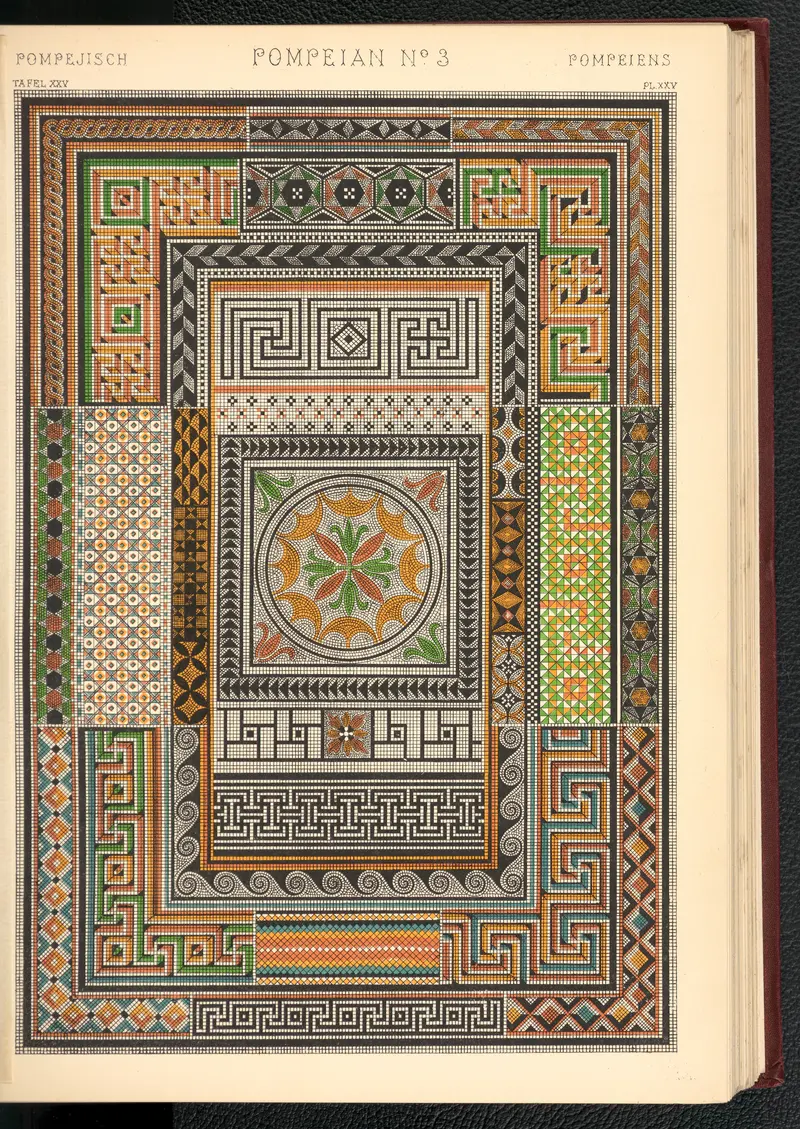
Pompeian Ornament No. 3
Owen Jones