
Mending the Harness — History & Facts
When Mending the Harness appeared in New York in 1870, it marked one of the earliest public glimpses into the quietly radical vision of Albert Pinkham Ryder. Unlike his later, dreamlike seascapes, this work stands out for its grounded subject and rare, direct engagement with everyday rural life—a theme seldom revisited by Ryder. The painting’s early exhibition was noted by critics for its "honest simplicity," a phrase that would later seem almost ironic when set against the artist’s increasingly mystical reputation. At the heart of Mending the Harness is a humble, sunlit moment: a farmer, sleeves rolled, leans over a battered leather strap, his tools scattered on a rough-hewn bench.
The harness, essential for the day’s labor, is frayed—a small crisis in the rhythm of rural existence. Ryder’s eye lingers on the textures: the gleam of worn brass buckles, the coarse weave of the man’s shirt, the dust motes caught in the afternoon light. Unlike Jean-François Millet’s solemn peasants, Ryder’s figure is neither idealized nor weighed down by symbolism; instead, the painting invites us into the quiet persistence of repair, the dignity of hands at work.
The composition’s gentle light and close focus suggest a world held together by care and necessity. The physical history of Mending the Harness is less well documented than Ryder’s later, more famous canvases. Its medium is uncertain—likely oil, but not confirmed—and it has passed through private hands, rarely appearing in public auctions or major retrospectives. This early piece predates Ryder’s association with the American Symbolist movement and gives us a glimpse of his formative years, when he was still searching for his mature voice.
Today, the painting is recognized as a rare survivor from a period of Ryder’s career that is often overshadowed by his later, more enigmatic works. Its presence in the online gallery offers a rare opportunity to witness the artist’s roots in observation and craft.
More Artworks by Albert Pinkham Ryder

The Toilers of the Sea
Albert Pinkham Ryder
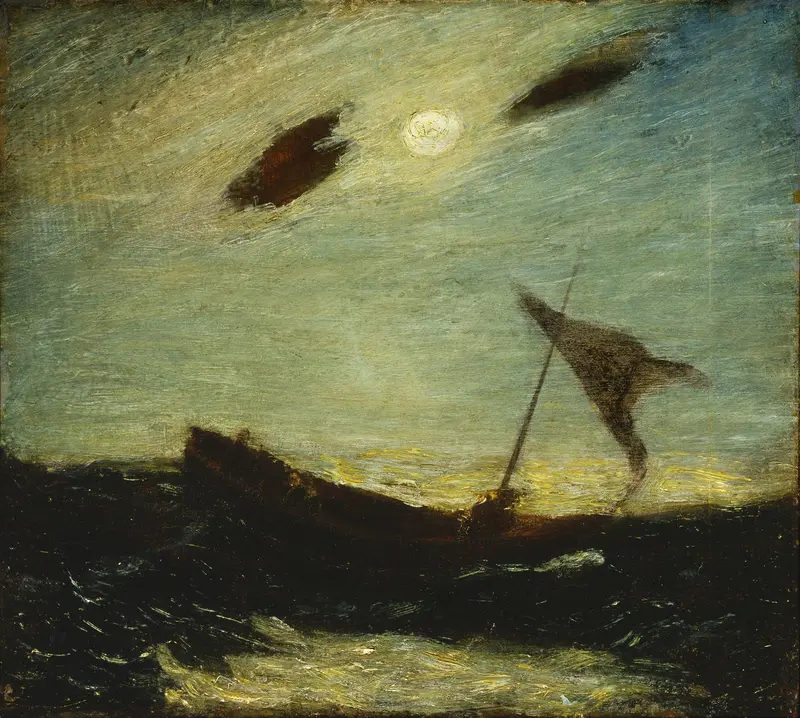
Moonlight
Albert Pinkham Ryder
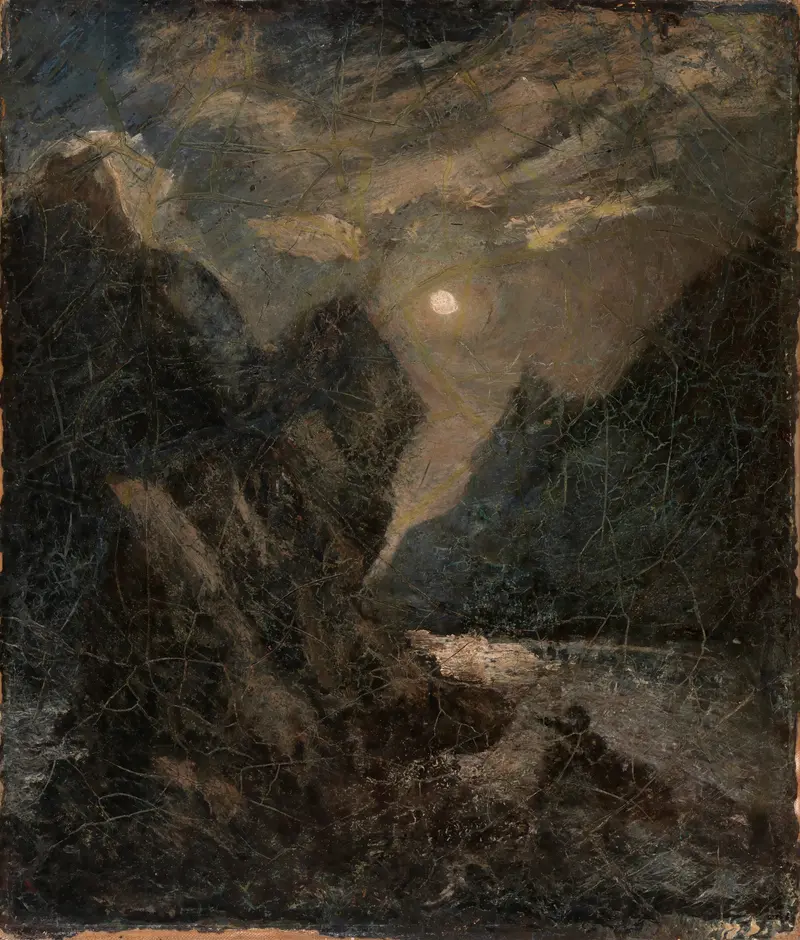
The Lorelei
Albert Pinkham Ryder
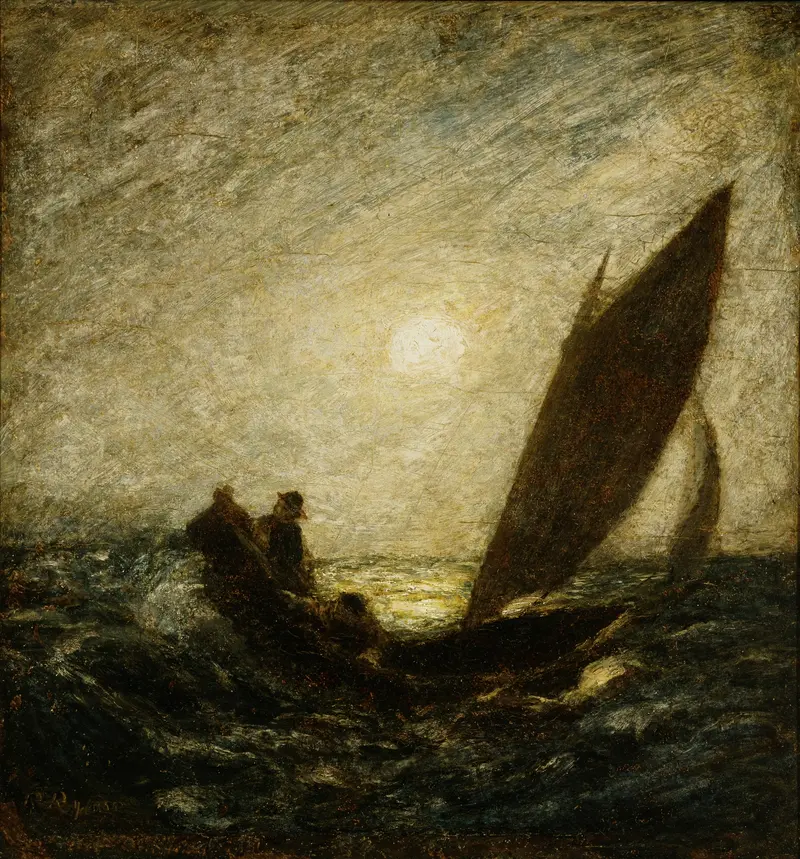
With Sloping Mast And Dipping Prow
Albert Pinkham Ryder
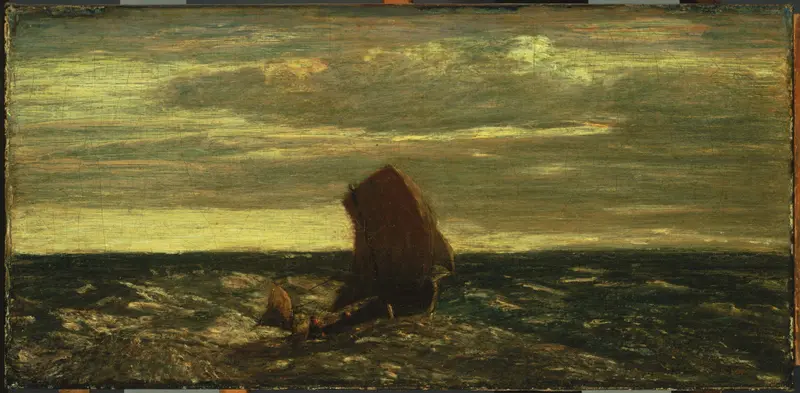
Homeward Bound
Albert Pinkham Ryder
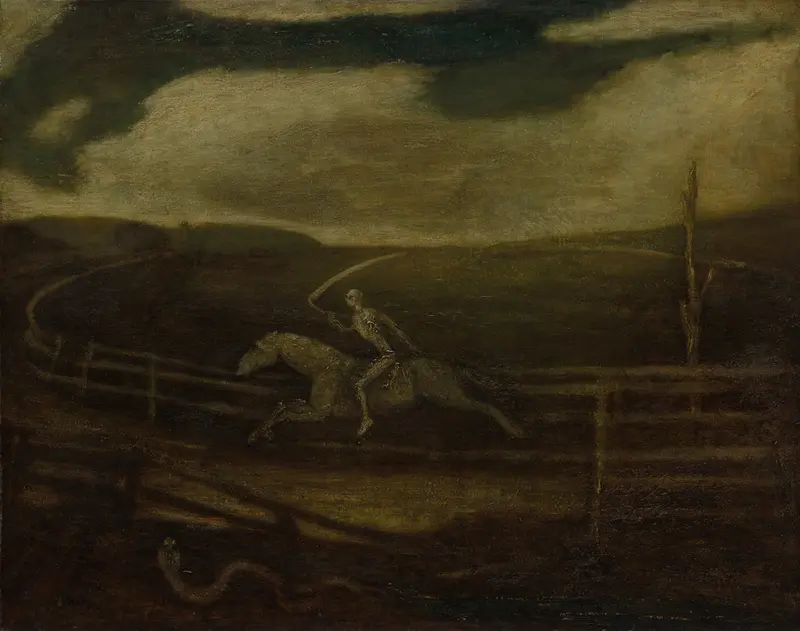
The Race Track (Death on a Pale Horse)
Albert Pinkham Ryder
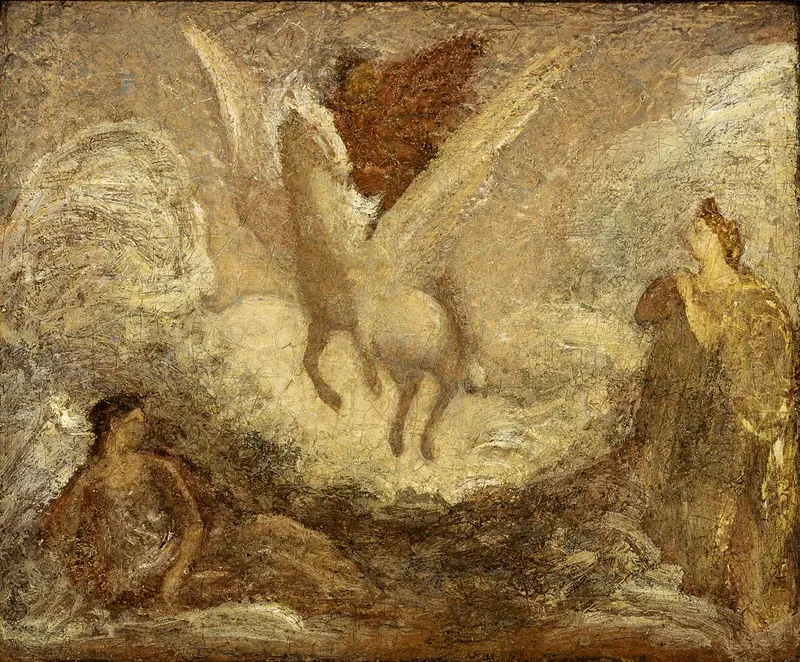
Pegasus Departing
Albert Pinkham Ryder
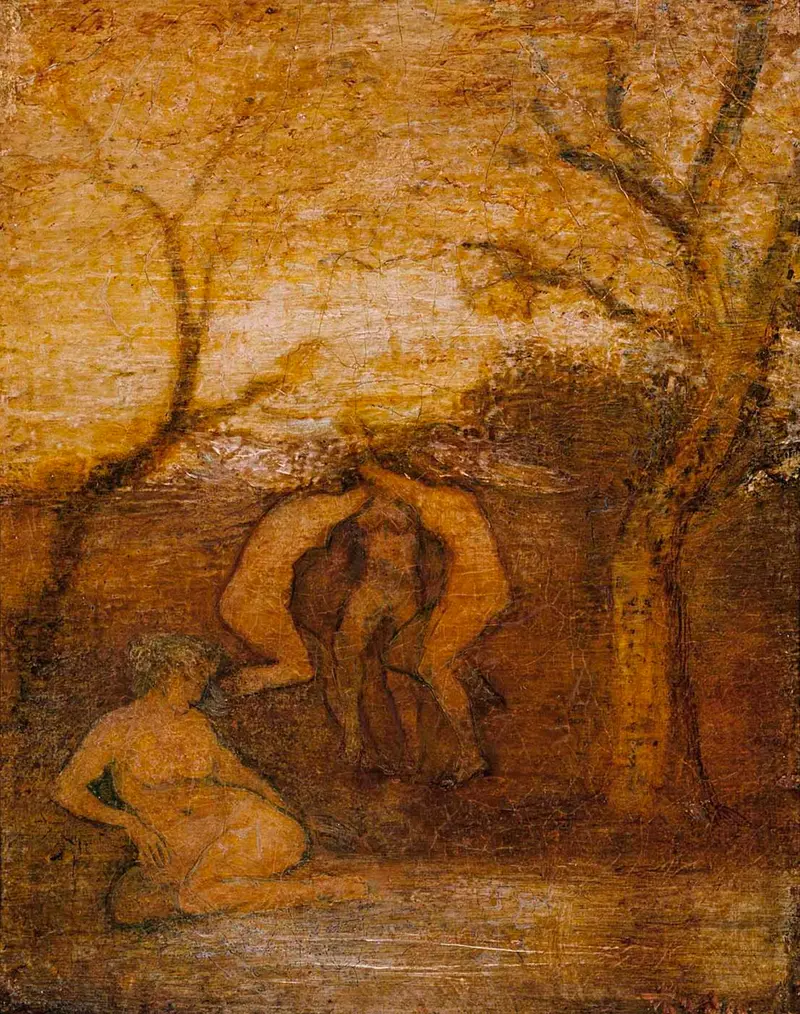
Dancing Dryads
Albert Pinkham Ryder
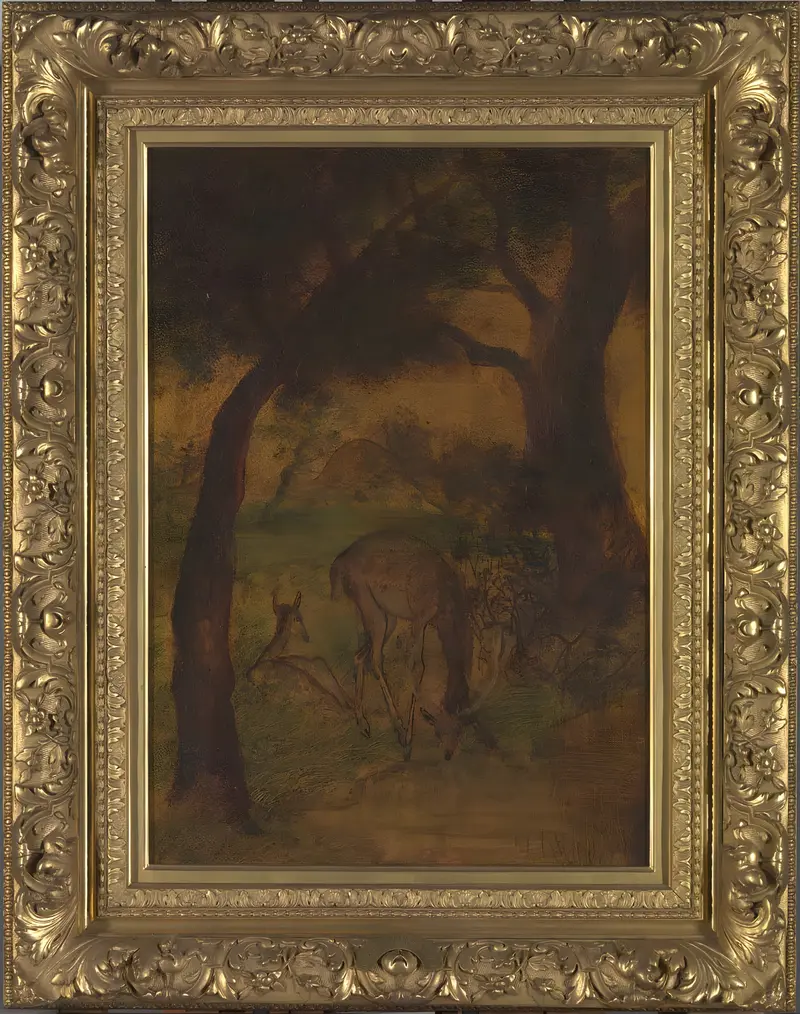
A Stag Drinking
Albert Pinkham Ryder
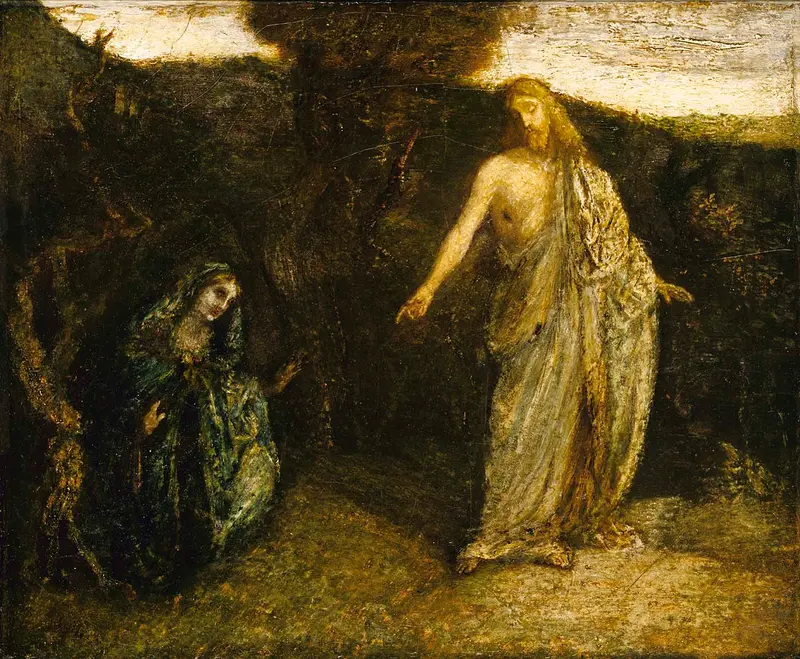
Christ Appearing to Mary
Albert Pinkham Ryder
More Genre Scene Art

Banquet of the Officers of the St George Civic Guard
Frans Hals

Rembrandt and Saskia in the Scene of the Prodigal Son
Rembrandt van Rijn

Bal du moulin de la Galette
Pierre-Auguste Renoir

Quadrille at the Moulin Rouge
Henri de Toulouse-Lautrec

A Burial at Ornans
Gustave Courbet

When Will You Marry?
Paul Gauguin