
Mercury, Herse and Aglaura — History & Facts
What draws the eye first in Mercury, Herse and Aglaura is not the myth, but the charged triangle of glances and gestures. The god Mercury, unmistakable with his winged helmet, leans forward, his body twisting in a dynamic arc that draws the viewer into the intimate space between him and Herse. Herse’s gaze is soft, her hand resting with a calm that belies the tension of the moment, while the rich folds of violet and white fabric both conceal and reveal, heightening the sense of anticipation.
Behind them, Aglaura parts a heavy green curtain, her expression wary, her raised hand a silent warning or perhaps a signal of alarm. The interplay of light sculpts each figure, spotlighting Mercury’s persuasive intent and Herse’s receptive stillness, while Aglaura lingers in the shadow, half in and half out of the unfolding drama. Painted in 1767, this work by Louis-Jean-François Lagrenée belongs to a world where mythological scenes were a favored language of desire, morality, and power. In late eighteenth-century France, such paintings graced salons and private chambers, commissioned by patrons eager to signal taste and erudition while indulging in the sensuality allowed by classical disguise.
The Nationalmuseum’s collection preserves this example, a testament to the era’s fascination with the ancient world and its stories of gods and mortals. History has kept few traces of this painting’s early journey, but its survival invites us to linger on the charged moment Lagrenée chose—the instant before myth becomes consequence.
More Artworks by Louis-Jean-François Lagrenée
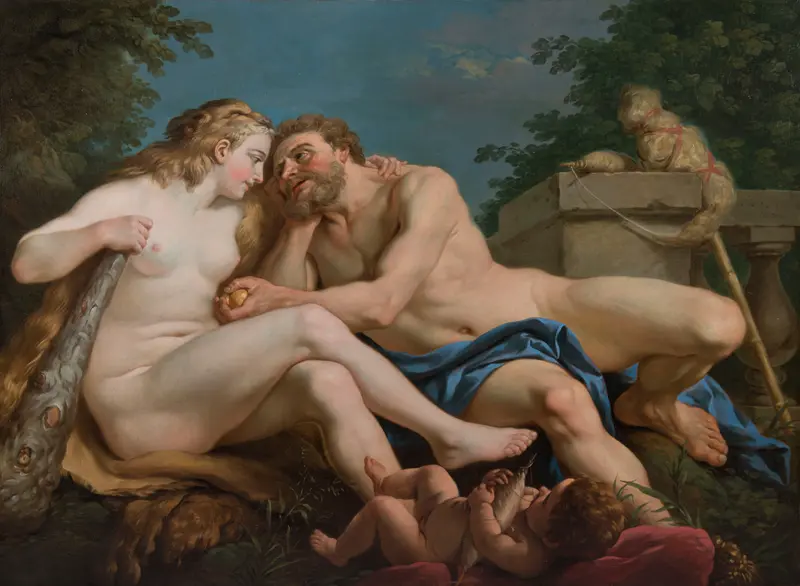
Herkules and Omphale
Louis-Jean-François Lagrenée
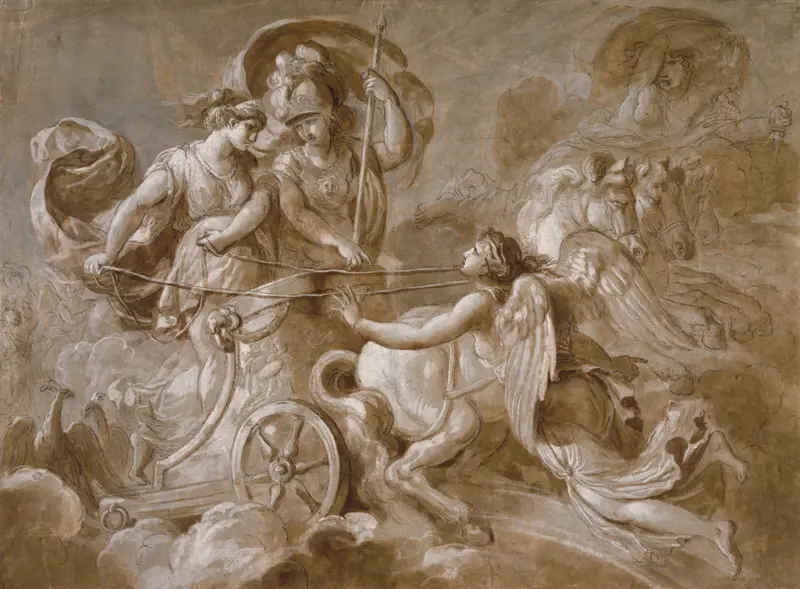
Iris Approaching Athena and Hera
Louis-Jean-François Lagrenée
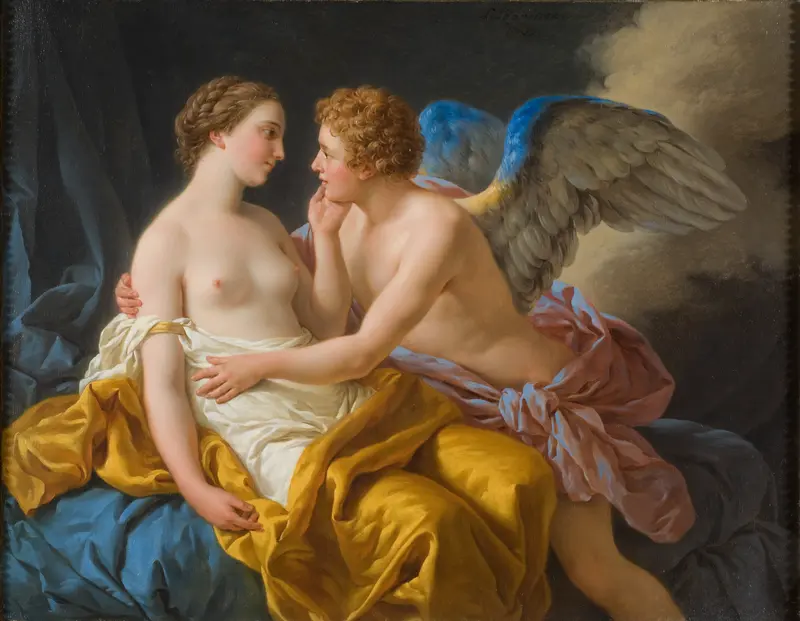
Cupid and Psyche
Louis-Jean-François Lagrenée
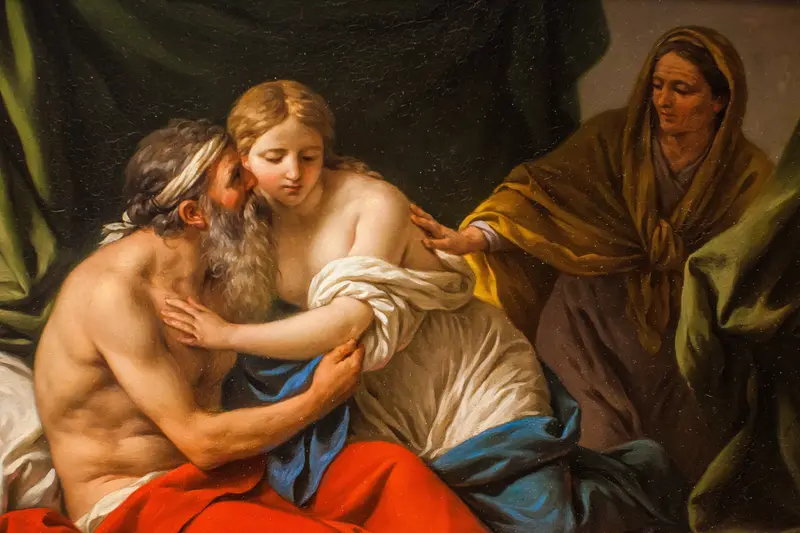
Sarah Presenting Hagar to Abraham
Louis-Jean-François Lagrenée
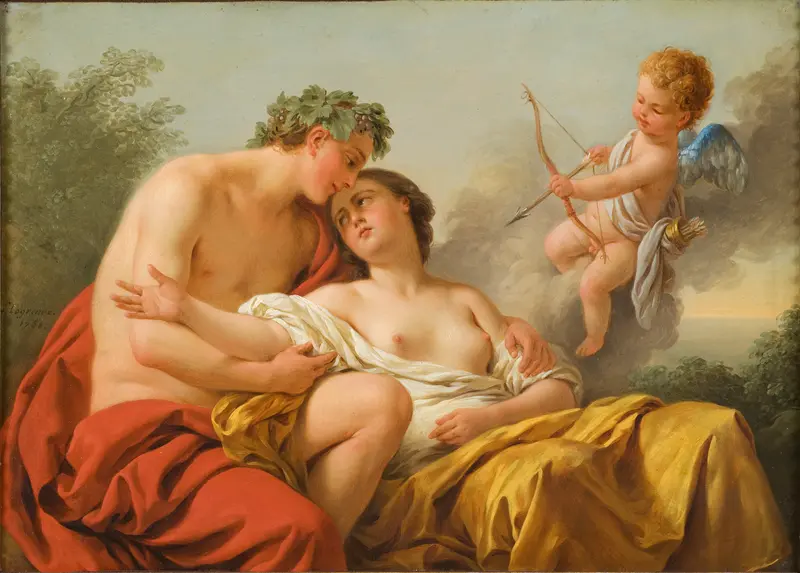
Bacchus and Ariadne
Louis-Jean-François Lagrenée
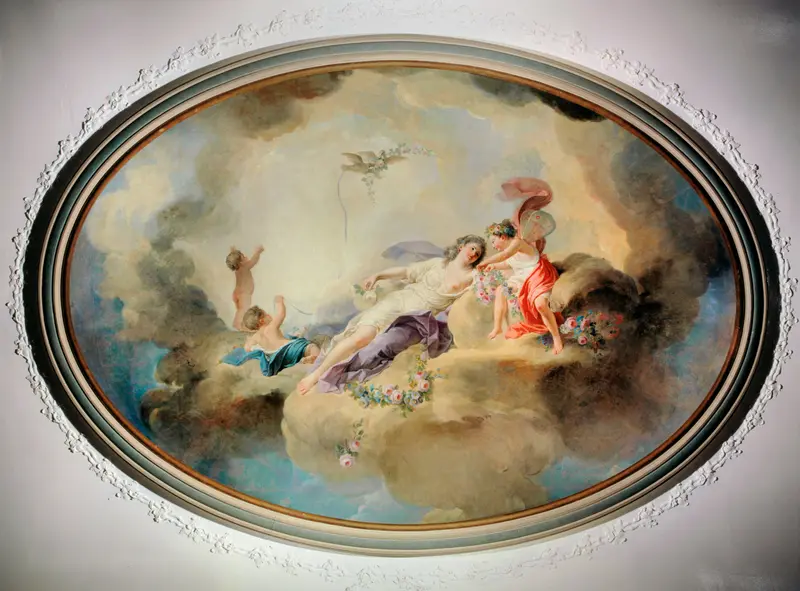
Louis Jean François Lagrenée Le triomphe de Flore P787 Musée Carnavalet
Louis-Jean-François Lagrenée
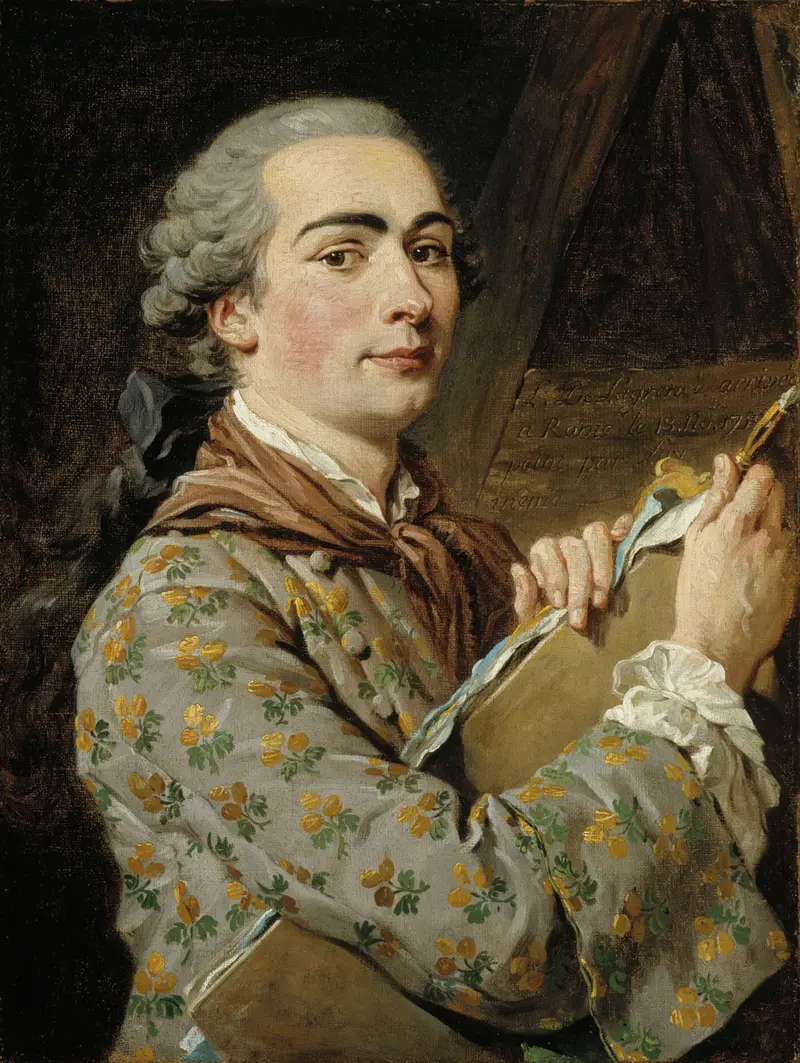
Self-Portrait
Louis-Jean-François Lagrenée
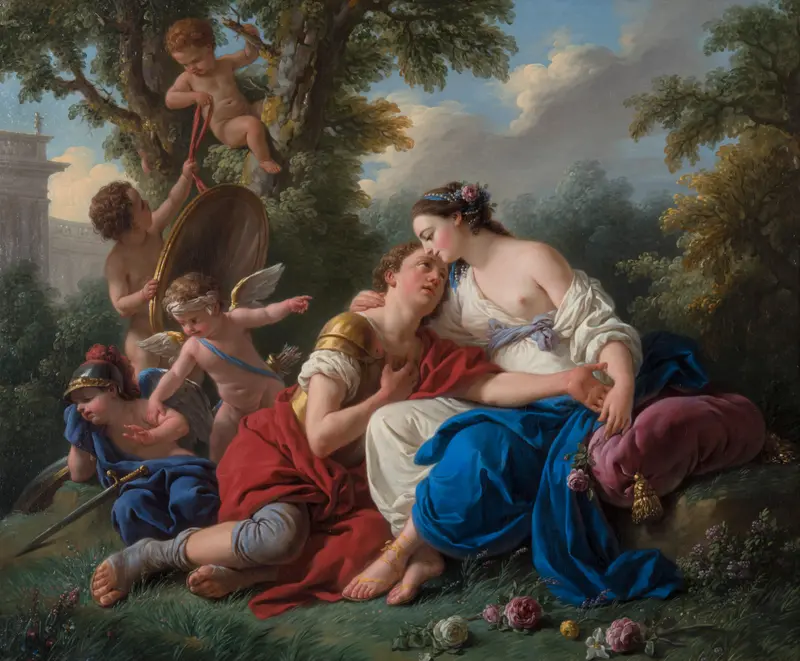
Rinaldo and Armida
Louis-Jean-François Lagrenée
Diana and Endymion
Louis-Jean-François Lagrenée
Mars and Venus, Allegory of Peace
Louis-Jean-François Lagrenée





