
Mother and Child with a Rose Scarf — History & Facts
When Mother and Child with a Rose Scarf was first exhibited in 1908, critics immediately recognized it as one of Mary Cassatt’s late triumphs—a period when her eyesight was beginning to fail, yet her vision of maternal intimacy remained undimmed. This work belongs to a celebrated group of mother-and-child paintings Cassatt produced after her return from the 1904 Louisiana Purchase Exposition, where she had been honored with a retrospective. The painting’s title scarf, a vivid rose, became a motif in several of her compositions from this era, leading some scholars to debate whether it belonged to Cassatt herself or her favored model.
The question of the scarf’s origin remains unresolved, adding a note of intrigue to the work’s history. The scene Cassatt chose is a private, everyday moment: a mother gently cradles her child, whose small hands reach up to touch the rose-colored scarf draped around the woman’s shoulders. The mother’s gaze is lowered, her expression absorbed in the child, while the child’s face is turned outward, engaging the viewer with wide, curious eyes. The soft, quick brushwork and delicate palette—hallmarks of Cassatt’s mature style—lend the figures a sense of immediacy and warmth.
The rose scarf, rendered in a single bold sweep, draws the eye and serves as a visual bridge between mother and child, symbolizing the tender bond they share. Unlike Renoir’s more decorative mother-and-child scenes, Cassatt’s focus is on psychological connection rather than surface beauty. The provenance of Mother and Child with a Rose Scarf is typical of Cassatt’s late portraits: likely painted in her country house at Mesnil-Théribus, it was probably acquired directly from the artist by a private American collector, as was common for her works after 1900. Its medium is not definitively recorded, though Cassatt often worked in oil and pastel during this period.
Today, the painting is held in a private collection, rarely loaned, and is known mainly through exhibition catalogues and reproductions. As one of her last major mother-and-child compositions, it stands as a testament to Cassatt’s enduring commitment to exploring the quiet drama of familial love, even as her own health declined.
More Artworks by Mary Cassatt

The Child's Bath
Mary Cassatt
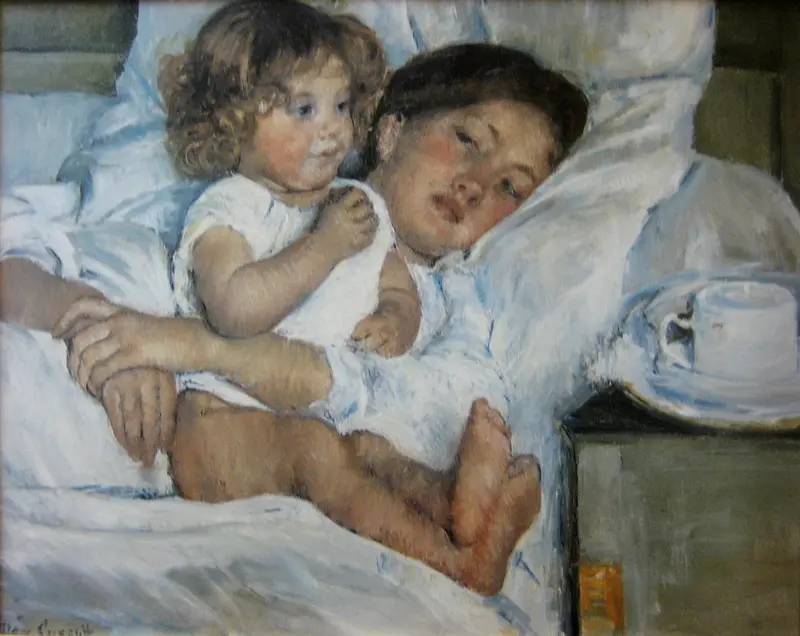
Breakfast in Bed
Mary Cassatt

Mother and Child (Baby Getting Up from His Nap)
Mary Cassatt
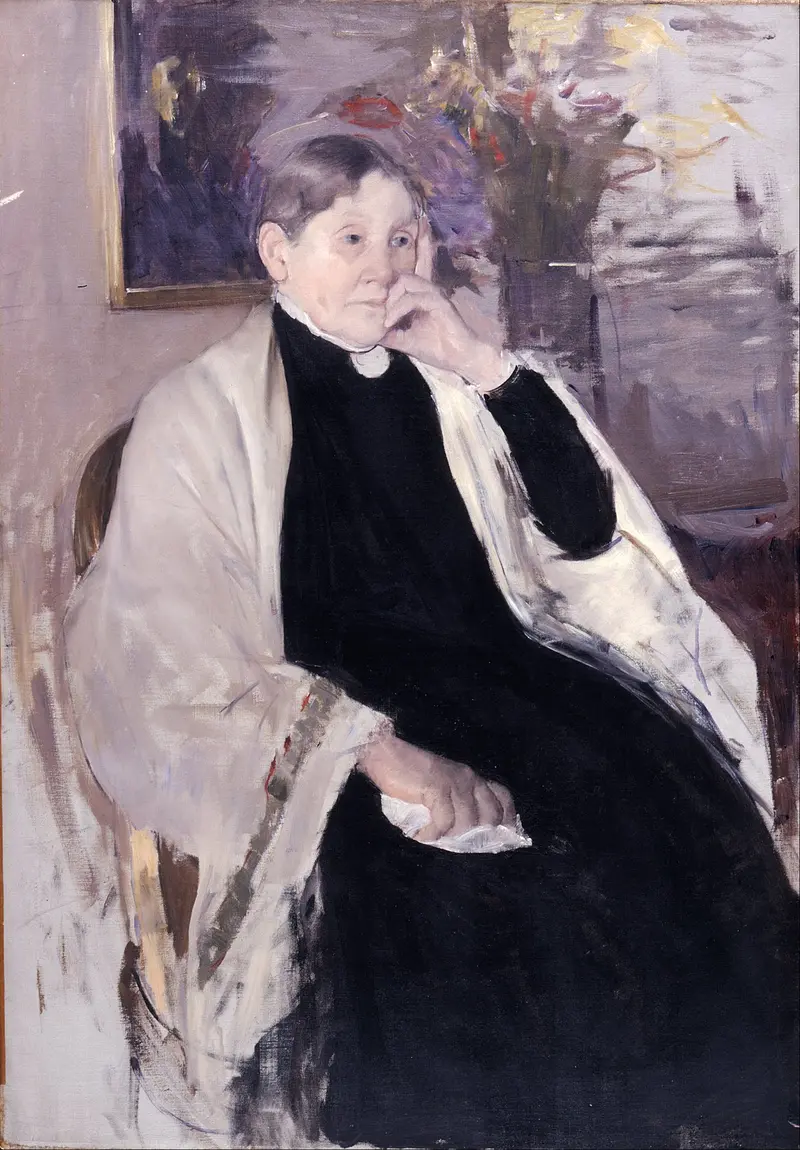
Mrs. Robert S. Cassatt, the Artist's Mother
Mary Cassatt
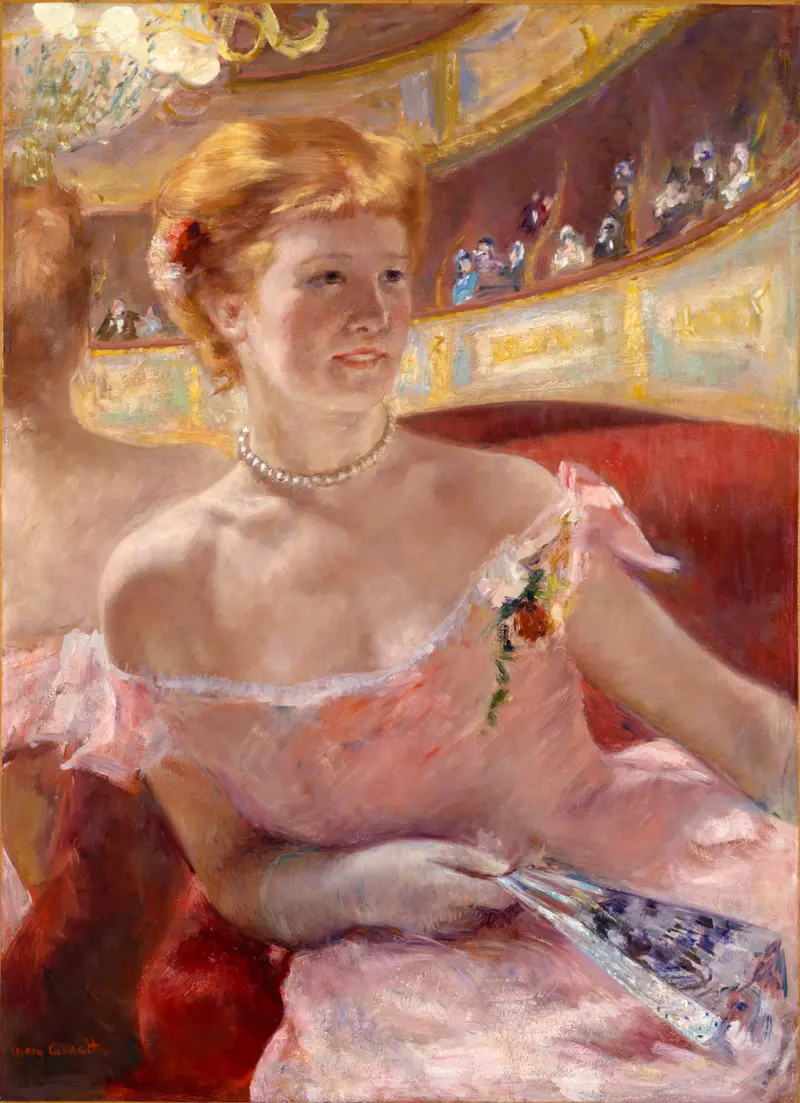
Woman with a Pearl Necklace in a Loge
Mary Cassatt
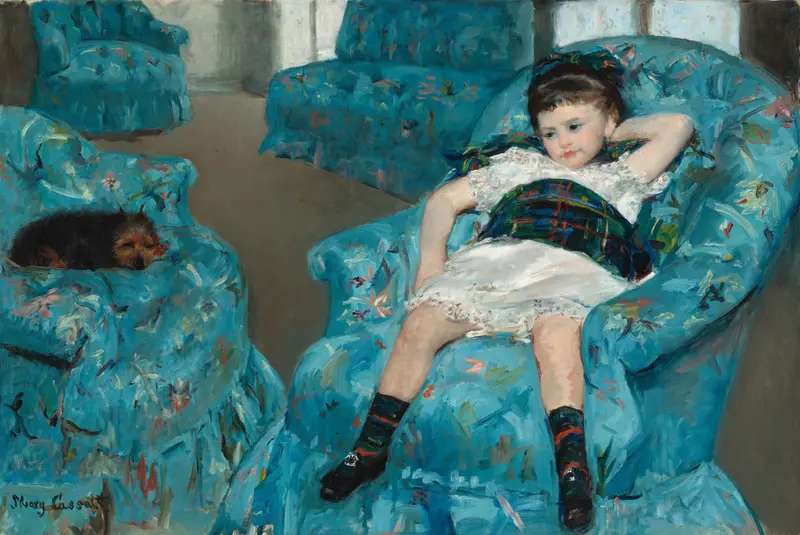
Little Girl in a Blue Armchair
Mary Cassatt
Mother and Child (The Oval Mirror)
Mary Cassatt
Mother and Child
Mary Cassatt
In The Loge
Mary Cassatt
On a Balcony
Mary Cassatt





