
Mother died — History & Facts
What first catches the eye in Mother died is not the figures themselves, but the hush that fills the room. The golden light from the window falls unevenly, illuminating the rough textures of straw and bare earth, and guiding us to the two children at the heart of the scene. One stands, small and uncertain, gripping the edge of a bench; the other sits on a stool, her arms wrapped protectively around a bundled infant on the bed.
The palette is warm but subdued, the brushwork loose, as if the world itself has grown blurred and tentative in the wake of loss. Every detail, from the scattered straw to the dimly glowing bottle on the sill, seems to serve the story of a home stilled by absence. Painted around 1867 by Aleksander Kotsis, this scene belongs to a moment in Polish art when artists turned their gaze to the everyday lives of rural people, capturing both hardship and resilience. In the wake of political upheaval and social change, such images spoke to a growing sense of national identity and empathy for the vulnerable.
Works like this, reproduced in albums such as Stefania Krzysztofowicz-Kozakowska’s Malarstwo Polskie w zbiorach za granicą, remind us how rarely the quiet aftermath of tragedy is given center stage. The painting asks us not just to witness sorrow, but to linger with it, to notice the small gestures of care and the way light persists even in the darkest corners.
More Artworks by Aleksander Kotsis

Trip in the Tatra Mountains
Aleksander Kotsis

Fair in Nowy Targ
Aleksander Kotsis
Pastoral Scene
Aleksander Kotsis
In the farmyard
Aleksander Kotsis
Haggling over a Calf
Aleksander Kotsis
Heads of Two Young Girls
Aleksander Kotsis
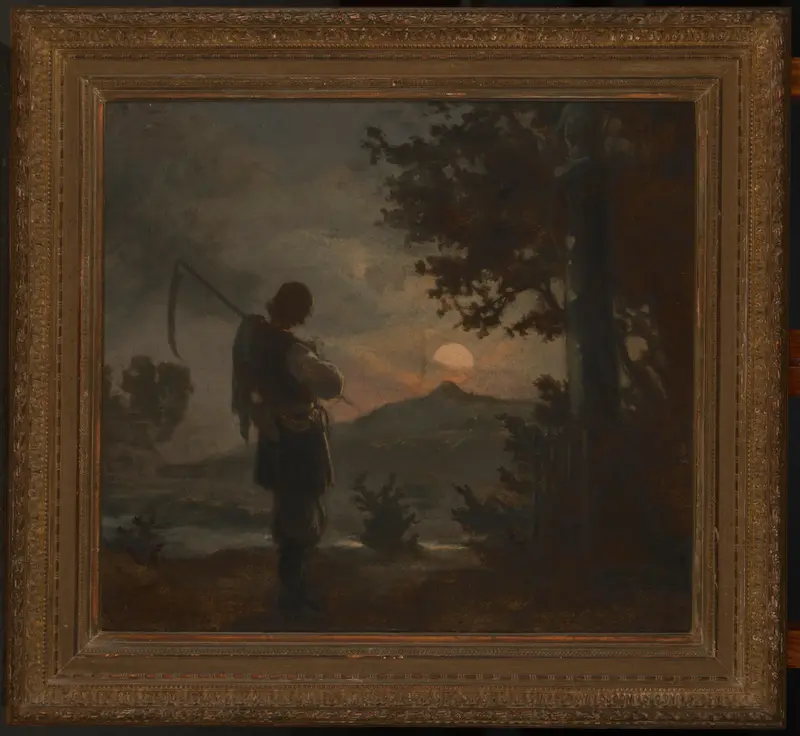
Haymaker
Aleksander Kotsis
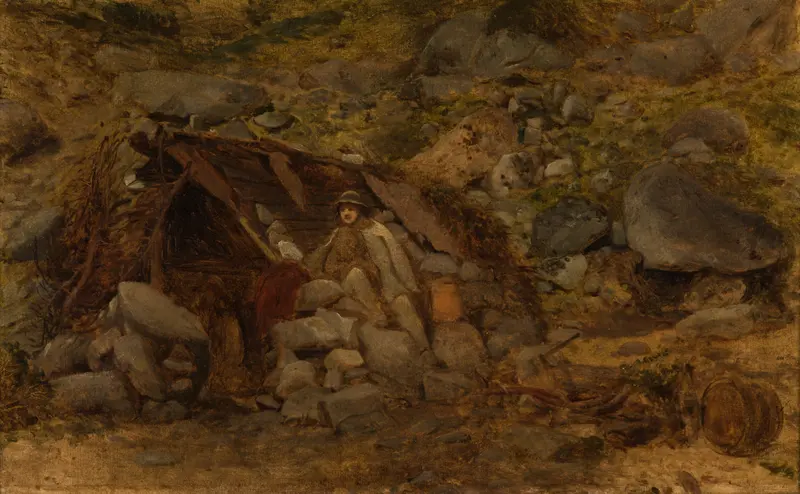
Highlander in Front of a Hut
Aleksander Kotsis
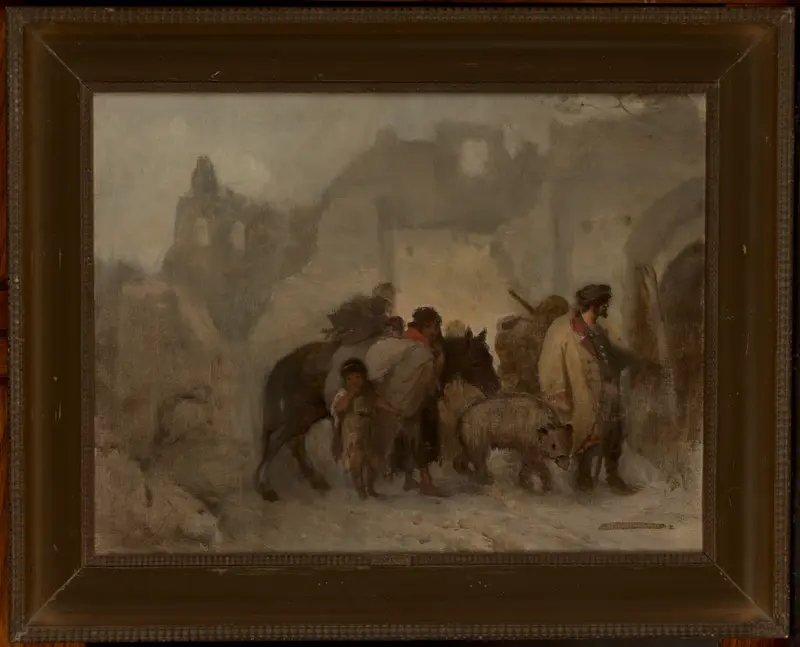
Gypsies
Aleksander Kotsis
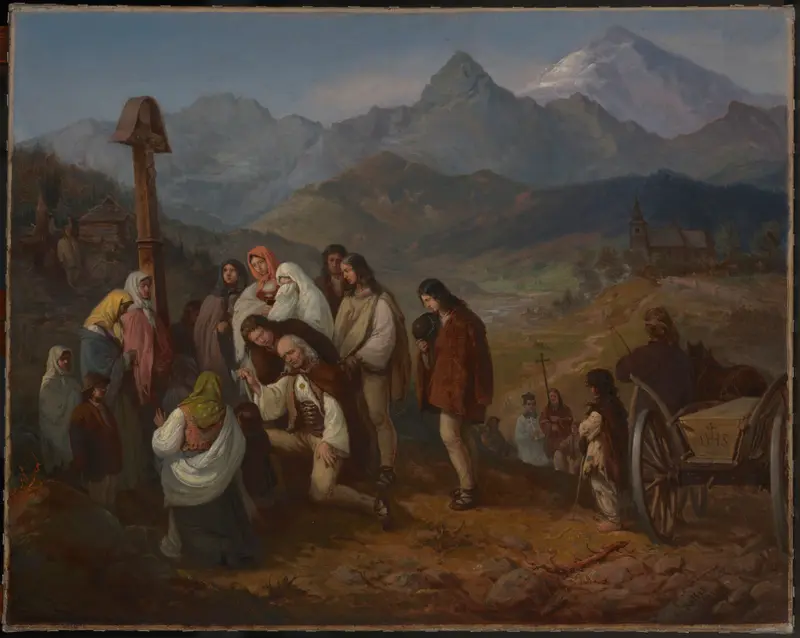
A Highlander's Funeral
Aleksander Kotsis
More Genre Scene Art

Banquet of the Officers of the St George Civic Guard
Frans Hals

Rembrandt and Saskia in the Scene of the Prodigal Son
Rembrandt van Rijn

Bal du moulin de la Galette
Pierre-Auguste Renoir

Quadrille at the Moulin Rouge
Henri de Toulouse-Lautrec

A Burial at Ornans
Gustave Courbet

When Will You Marry?
Paul Gauguin