
Nachtwächter bei Mondschein, Hund und Katze — History & Facts
In a world swirling with change and impermanence, the act of capturing a moment becomes an act of defiance against the passage of time, a tender rebellion steeped in nostalgia. Look closely at the solitary figure in Nachtwächter bei Mondschein, Hund und Katze. The watchman, cloaked in shadows, stands sentinel beneath the soft glow of the moonlight, which bathes his surroundings in a silvery hue. The dog and cat, companions of the night, are poised with an air of quiet vigilance.
Observe how the play of light reveals the intricate folds of the watchman’s coat and the gentle curvature of the animals’ forms, framing a moment that feels both serene and laden with unspoken stories. Beneath this tranquil exterior lies a profound sense of loss. The watchman embodies the invisible weight of duty and solitude—his focus outward hints at a world that may have been left behind. The moon, a distant observer, casts a glow that suggests longing, illuminating the deep emotional contrasts between companionship and isolation, vigilance and vulnerability.
Each brushstroke resonates with a gentle reminder of what has been lost, echoing the grief that lingers even in the quietest of nights. Carl Spitzweg painted this work in 1870, a period marked by societal changes in Germany and a growing interest in capturing the everyday life of ordinary people. During this time, Spitzweg was exploring themes of solitude and introspection in his art, reflecting both personal experiences and the transitional nature of contemporary life. As the world shifted around him, he found solace in the serene, often melancholic moments that reveal the deeper emotional currents within the human experience.
More Artworks by Carl Spitzweg
Browse all →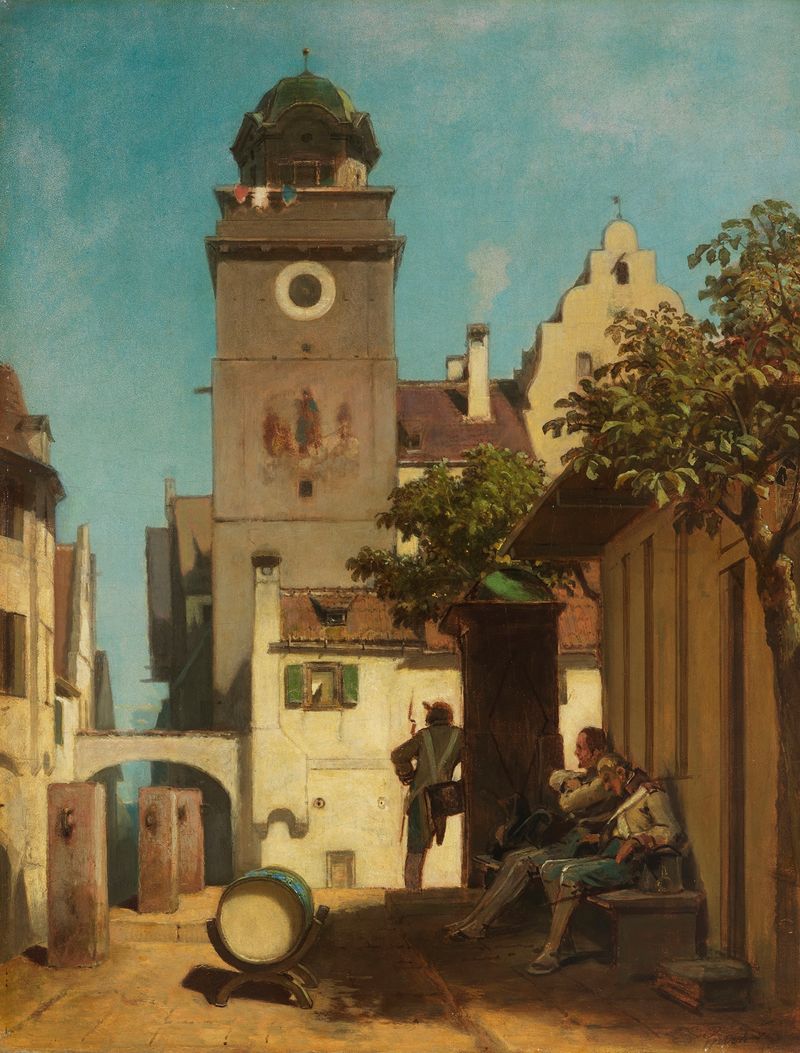
Die Stadtwache
Carl Spitzweg
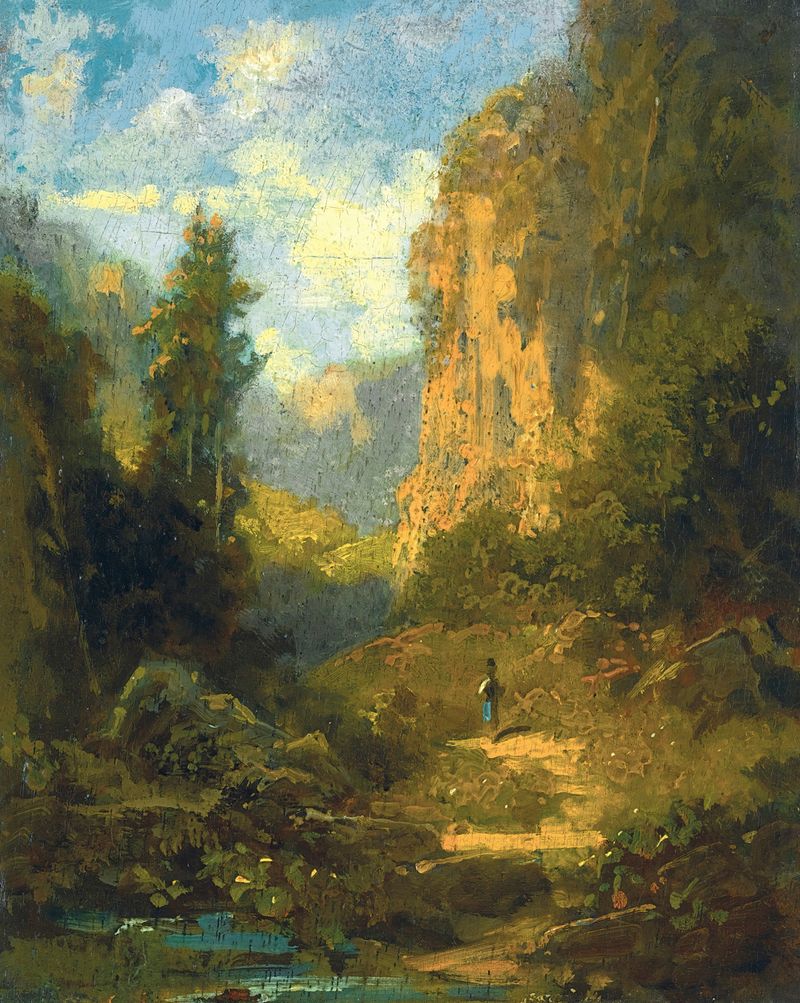
Gebirgslandschaft
Carl Spitzweg

In the Alpine High Valley (Landscape with Mt. Wendelstein)
Carl Spitzweg

Gebirgsmühle
Carl Spitzweg
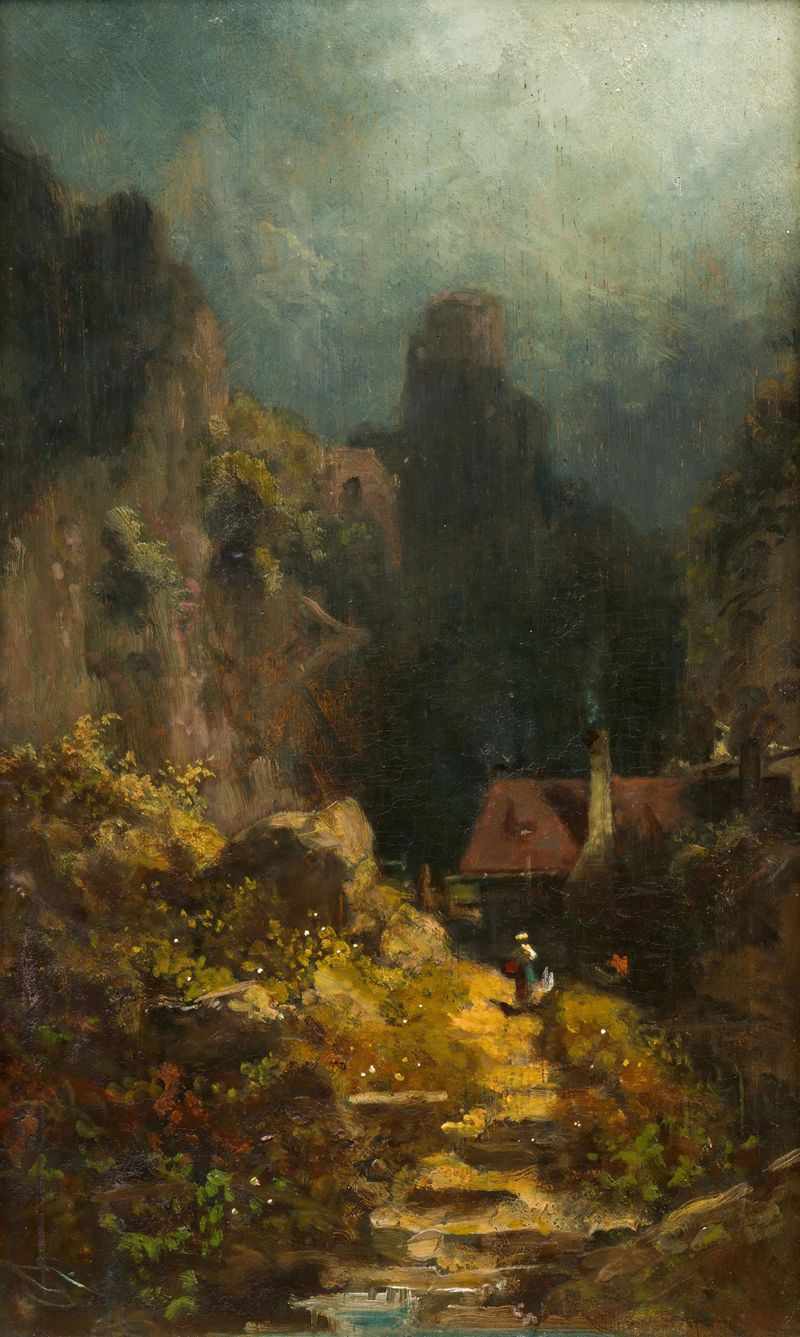
In der Schlucht
Carl Spitzweg
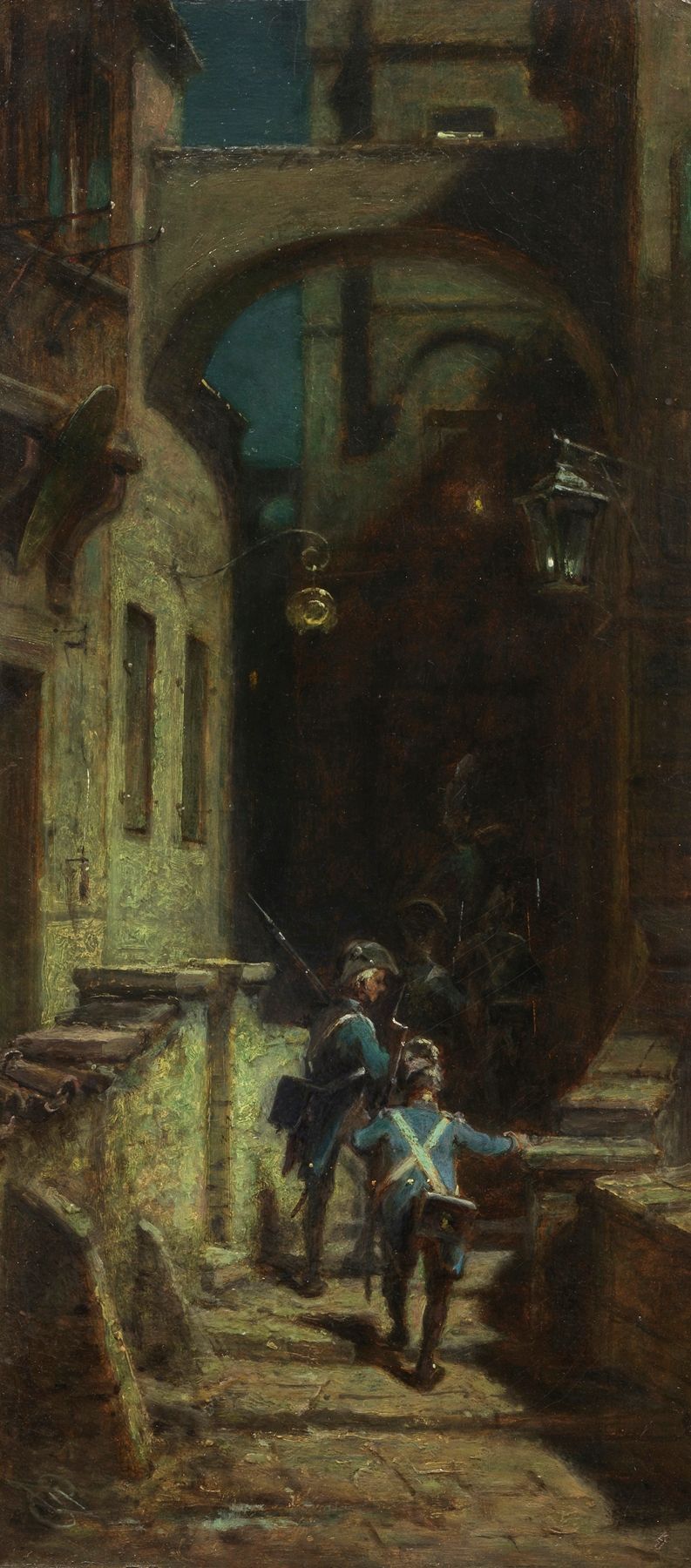
Die Scharwache
Carl Spitzweg

Einsiedler mit Mädchen
Carl Spitzweg

Lagernde Karrner (Rast der Streuner)
Carl Spitzweg
Im Walde
Carl Spitzweg
Moonlit Scene with Castle Ruins
Carl Spitzweg





