
Nocturn in the Parc Royal, Brussels — History & Facts
This poignant reflection captures the essence of life’s dualities, much like the scene presented in Nocturn in the Parc Royal, Brussels. It invites viewers to contemplate the silent moments of rebirth that often emerge from the shadows of despair. Look to the center where the park’s path weaves gently through the lush foliage, illuminated by soft, glowing lanterns. The rich, deep greens of the trees contrast with the warm, golden light, creating an atmosphere of tranquil mystery.
Notice how the brushwork subtly shifts from fluid strokes in the natural surroundings to sharper, defined edges around the light sources, suggesting a world both alive and ethereal. As night descends, the scene evokes a balance between serenity and longing. The lanterns symbolize hope, casting their light upon the darkness, while the figures, slightly blurred in the background, embody the quiet intimacy of connection amidst solitude. This visual tension encapsulates the essence of rebirth—the idea that from the depths of night, new possibilities may emerge, cloaked in luminous beauty. In 1897, William Degouve de Nuncques was deeply immersed in the Symbolist movement, which sought to capture emotion through evocative imagery.
During this period, he was exploring the interplay of light and color, often drawing inspiration from his surroundings in Brussels. The world of art was shifting, with a growing emphasis on personal expression and the exploration of the subconscious, guiding his brush as he painted this poignant nocturne.
More Artworks by William Degouve de Nuncques
Browse all →
La Grotte Du Drac, Manacor
William Degouve de Nuncques
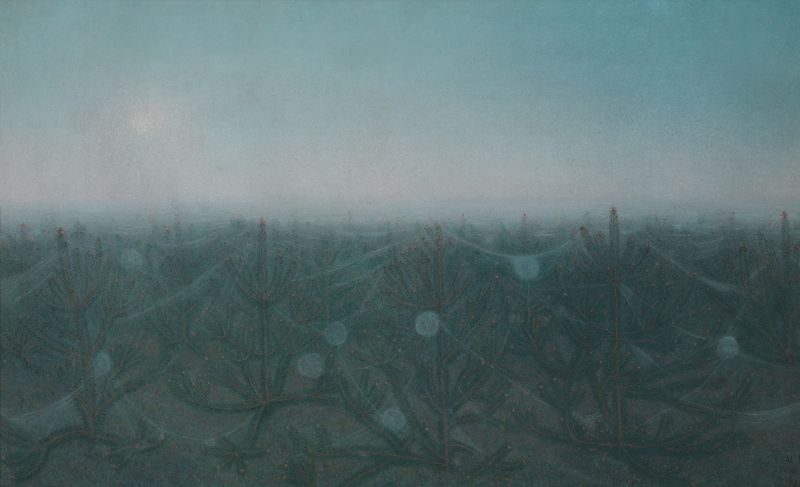
De dageraad
William Degouve de Nuncques
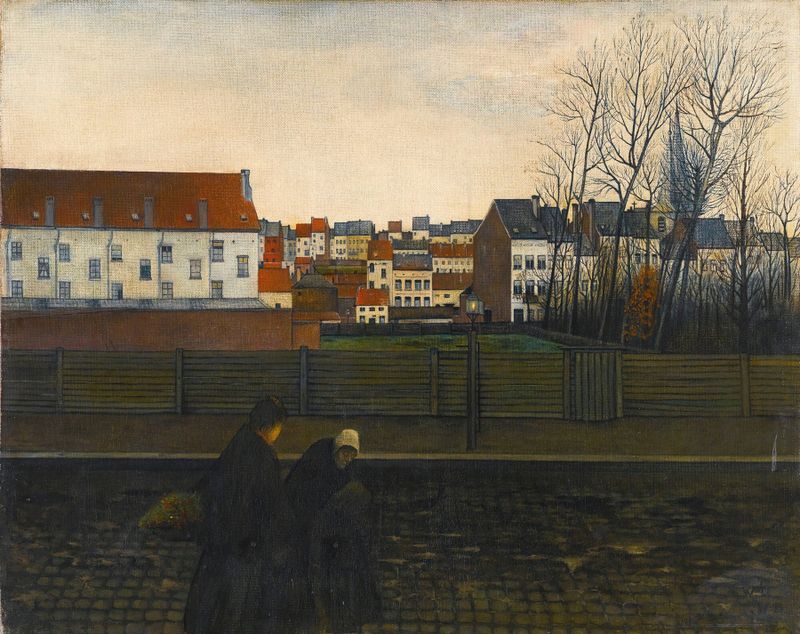
Paysage Bruxellois
William Degouve de Nuncques
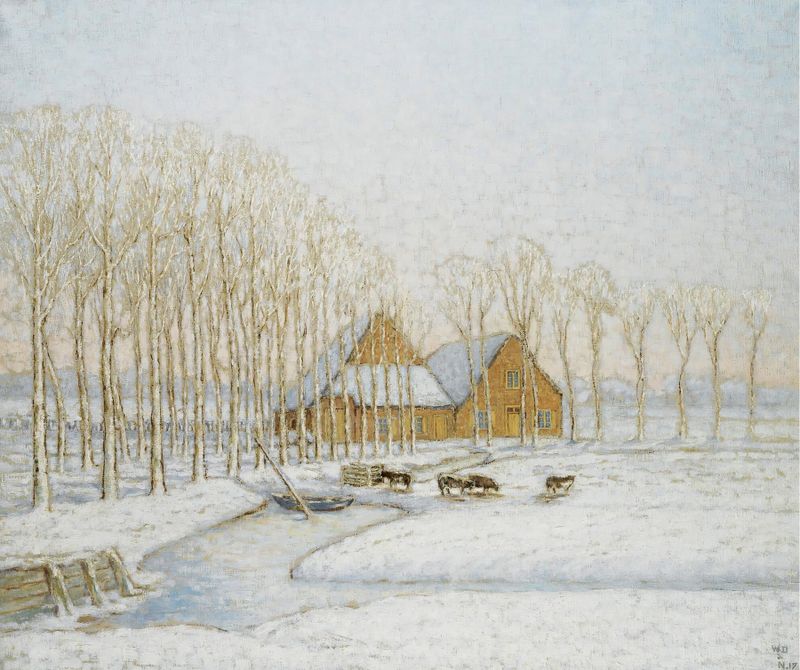
Paysage D’hiver
William Degouve de Nuncques

Hiver Dans La Foret
William Degouve de Nuncques

Les flamands blancs
William Degouve de Nuncques
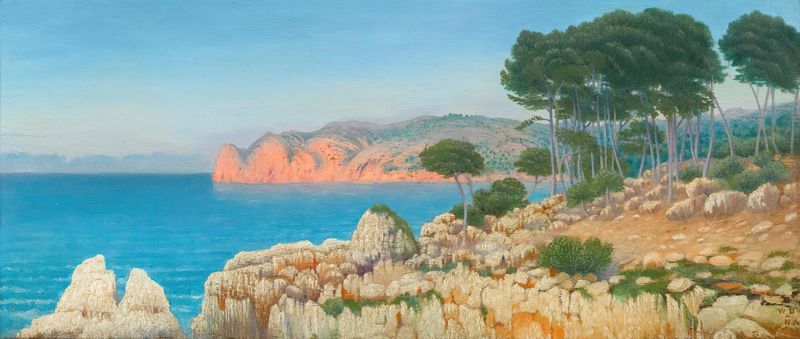
Côte Aux Baléares (Majorque, Cala San Vicente)
William Degouve de Nuncques

Snow landscape
William Degouve de Nuncques
The Caravan
William Degouve de Nuncques
Moutons Aux Amandiers
William Degouve de Nuncques





