
Passing Song — History & Facts
No one knows exactly when Passing Song was painted, nor for whom, but its creation is wrapped in the same quiet mystery that surrounds much of Albert Pinkham Ryder’s work. Ryder, often working alone in his New York studio, was notorious for reworking his canvases for years—sometimes decades—leaving behind paintings that seem to hover between completion and dissolution. Scholars have long debated whether Passing Song was ever truly “finished” in Ryder’s eyes, as he was known to return to old works and alter them, sometimes to the point of near-total transformation.
The painting’s uncertain date and medium are emblematic of Ryder’s elusive process, which has left conservators and art historians with more questions than answers. The scene Ryder chose for Passing Song is one of quiet melancholy: a solitary figure, perhaps a singer or poet, drifts across a moonlit landscape, their form half-swallowed by shadow. The figure’s posture—head bowed, hand raised as if in farewell—suggests a moment of departure or loss, while the faint glimmer of light on the horizon hints at hope or memory. The darkness is not oppressive but enveloping, as if the night itself listens to the song.
Ryder’s thick, textured brushwork and muted palette heighten the sense of dreamlike unreality, setting his vision apart from the crisp naturalism of contemporaries like Winslow Homer. Where Homer’s seascapes are clear and immediate, Ryder’s world feels suspended, as if time itself pauses to listen. Passing Song has spent much of its life in relative obscurity, like many of Ryder’s works, which were often kept in private hands or left unfinished in his studio. The lack of a clear provenance or exhibition history has only deepened the painting’s air of enigma.
Today, it is recognized as a quintessential example of Ryder’s late style, where narrative dissolves into mood and atmosphere. Its uncertain origins and haunting presence have made it a favorite among those who seek the quieter, more introspective side of American art. The painting remains a testament to Ryder’s singular vision, haunting viewers much as it must have haunted the artist himself.
More Artworks by Albert Pinkham Ryder

The Toilers of the Sea
Albert Pinkham Ryder
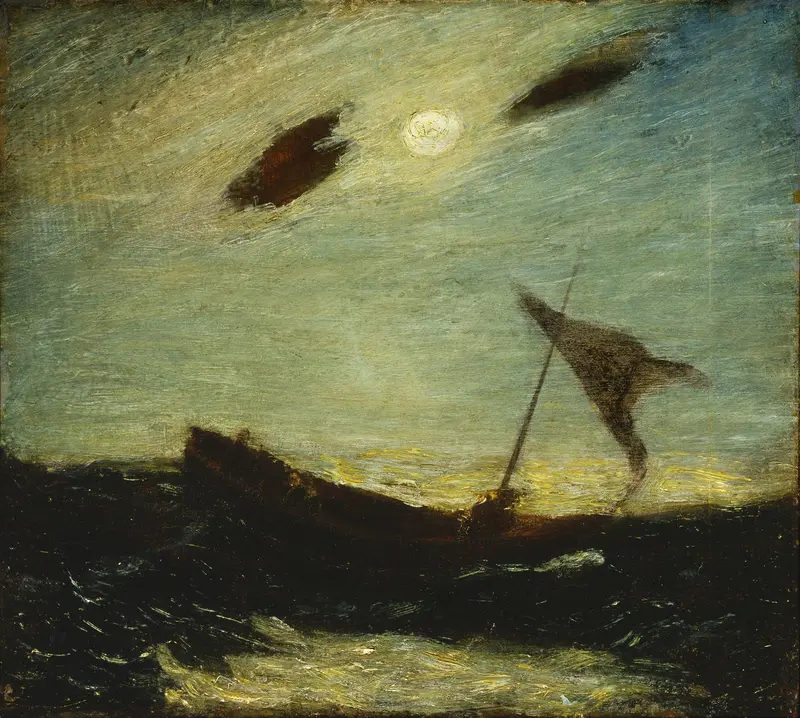
Moonlight
Albert Pinkham Ryder
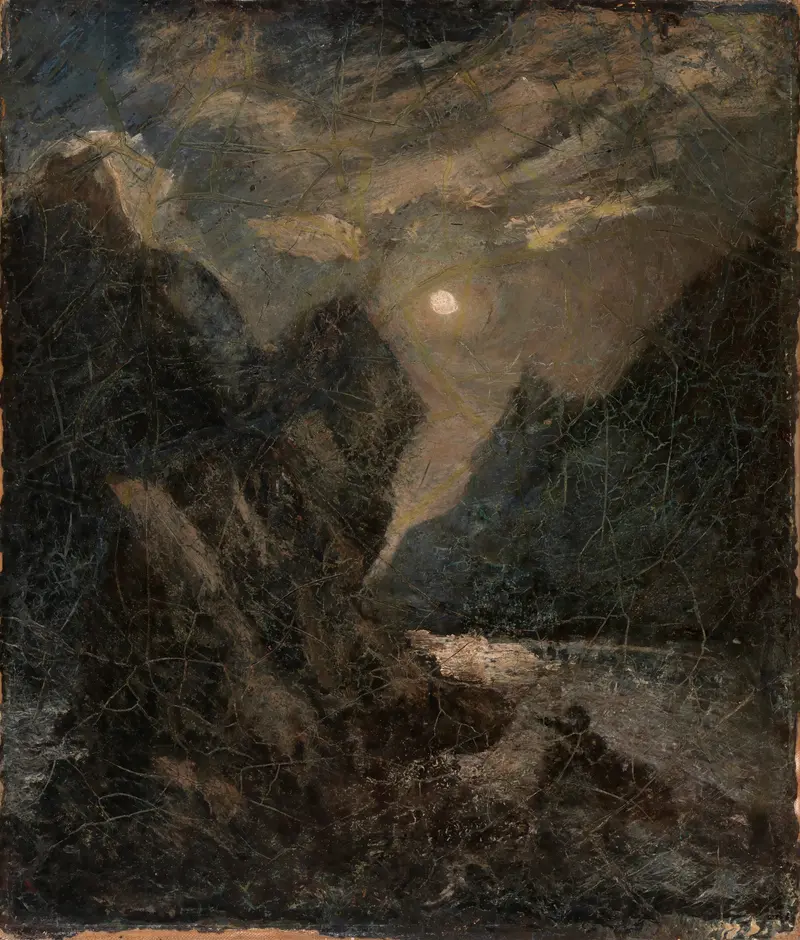
The Lorelei
Albert Pinkham Ryder
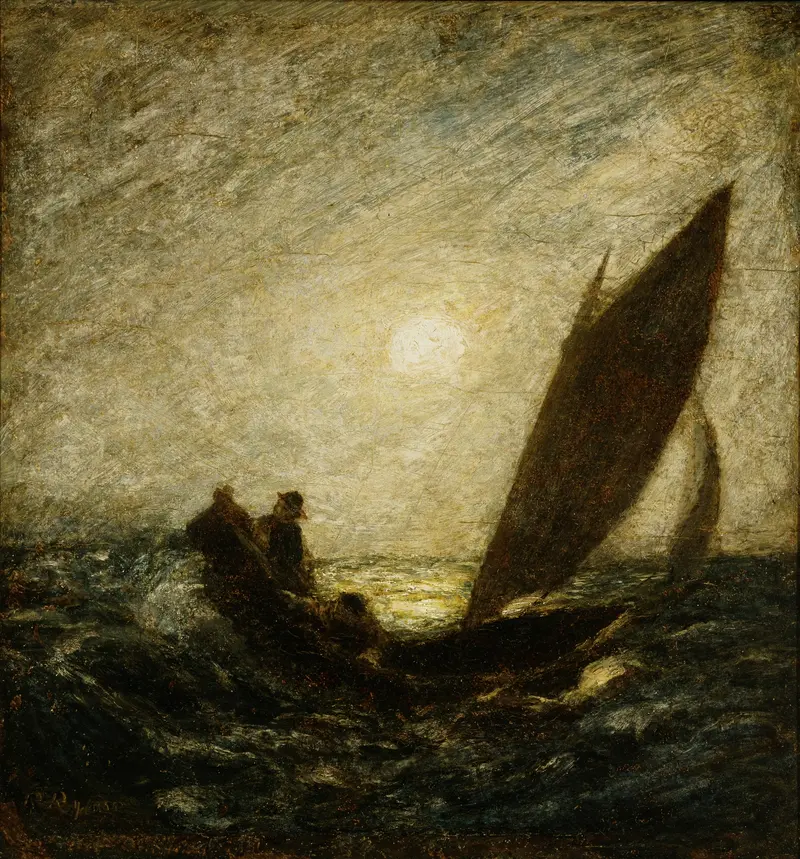
With Sloping Mast And Dipping Prow
Albert Pinkham Ryder
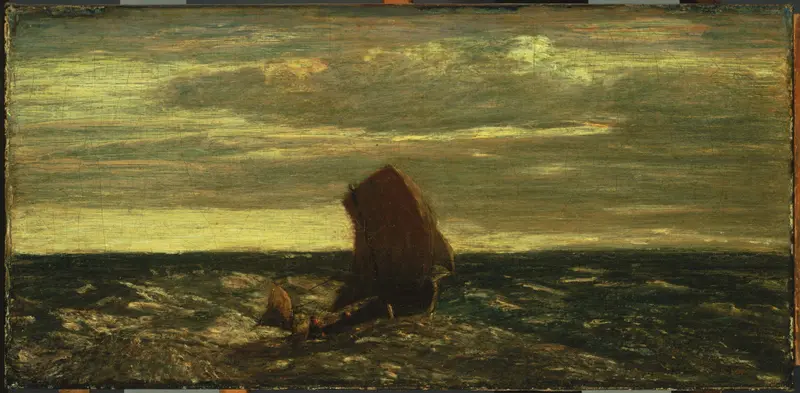
Homeward Bound
Albert Pinkham Ryder
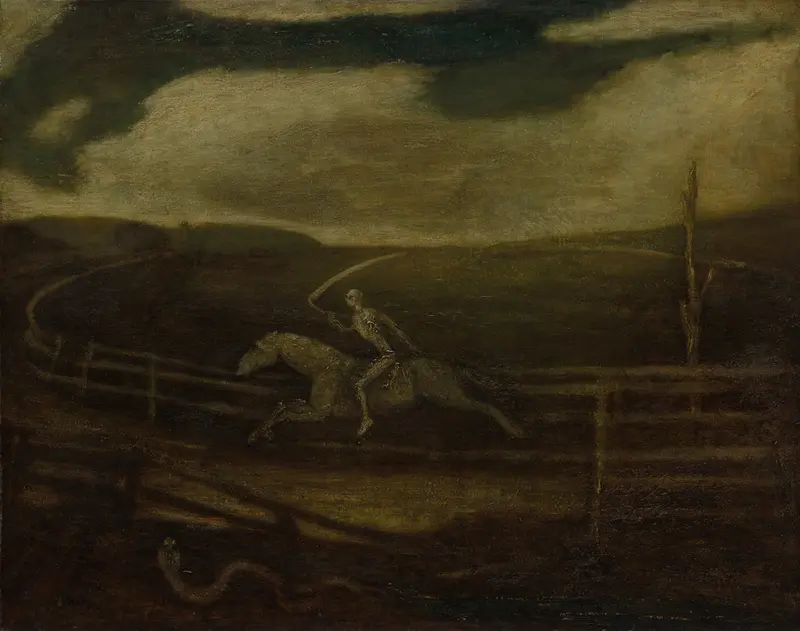
The Race Track (Death on a Pale Horse)
Albert Pinkham Ryder
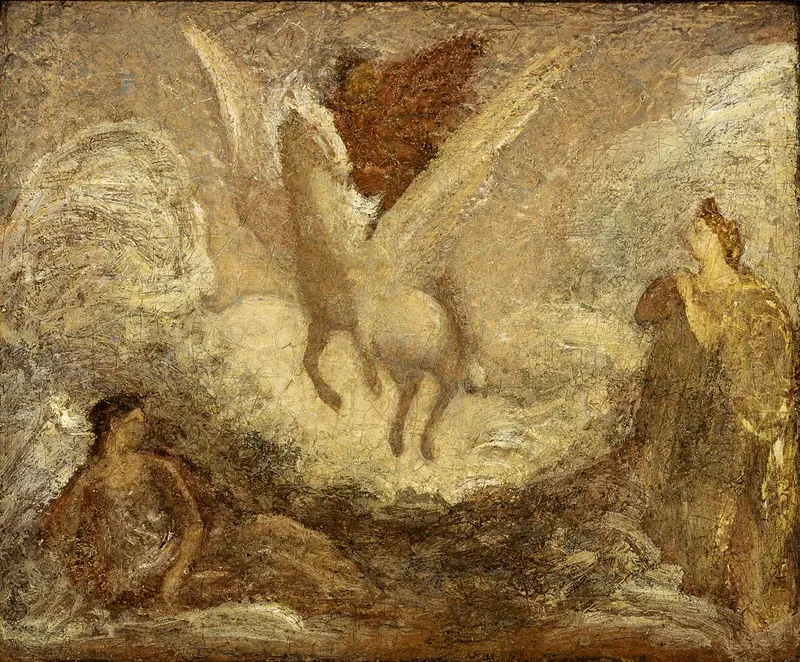
Pegasus Departing
Albert Pinkham Ryder
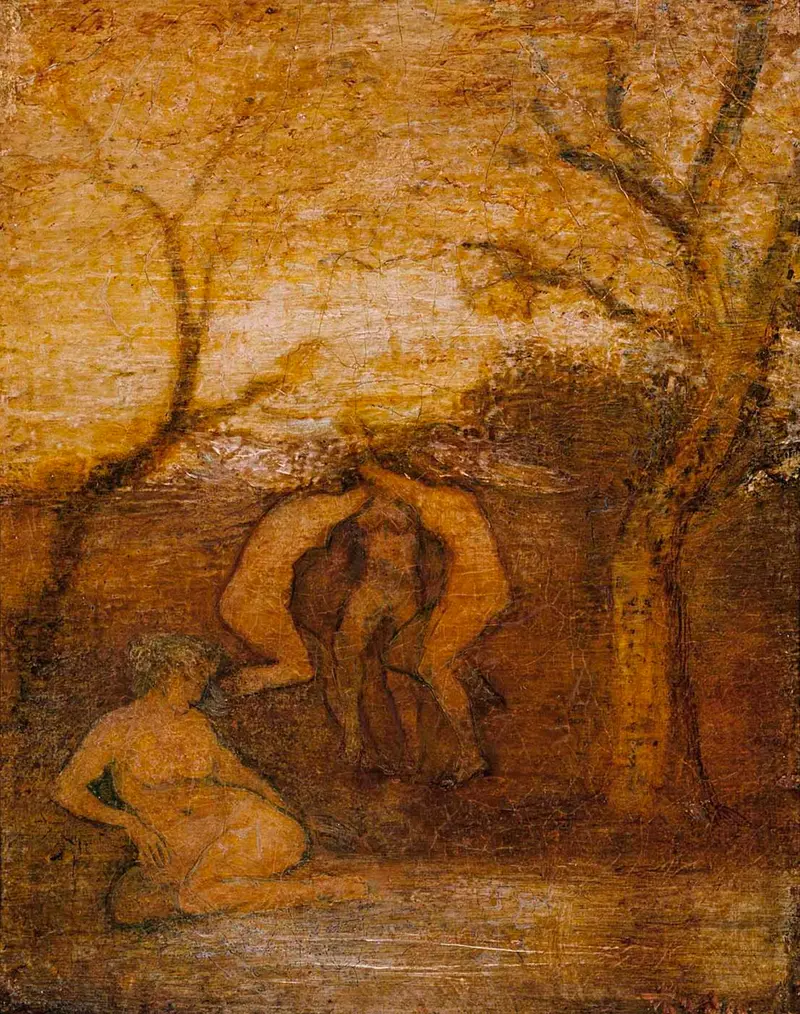
Dancing Dryads
Albert Pinkham Ryder
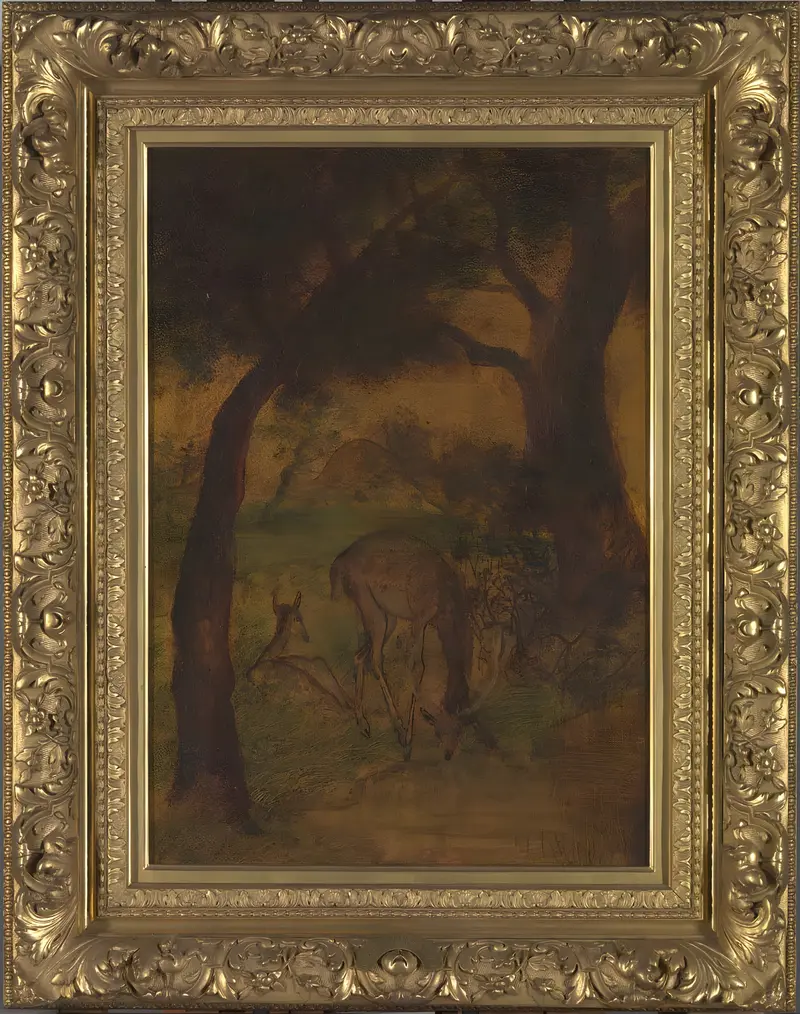
A Stag Drinking
Albert Pinkham Ryder
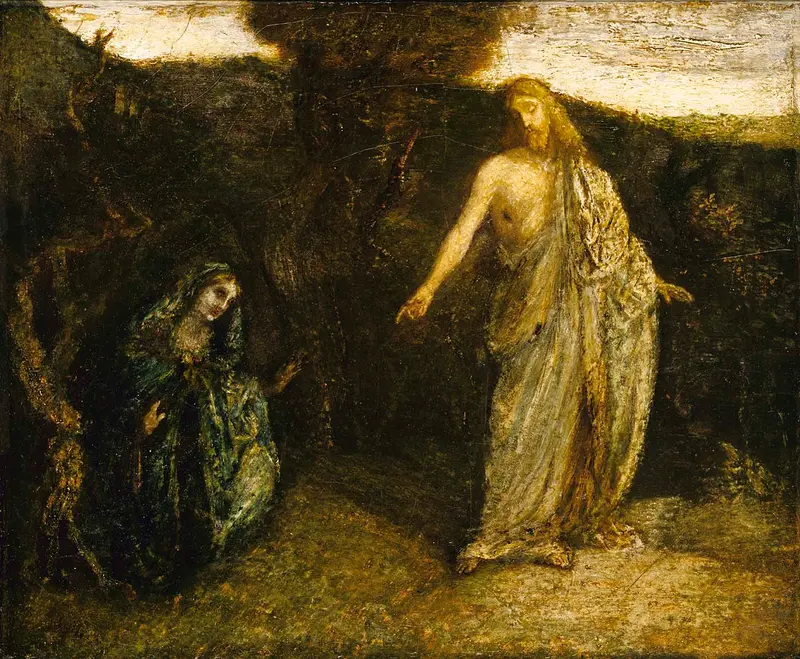
Christ Appearing to Mary
Albert Pinkham Ryder



