Paysage de Picardie — History & Facts
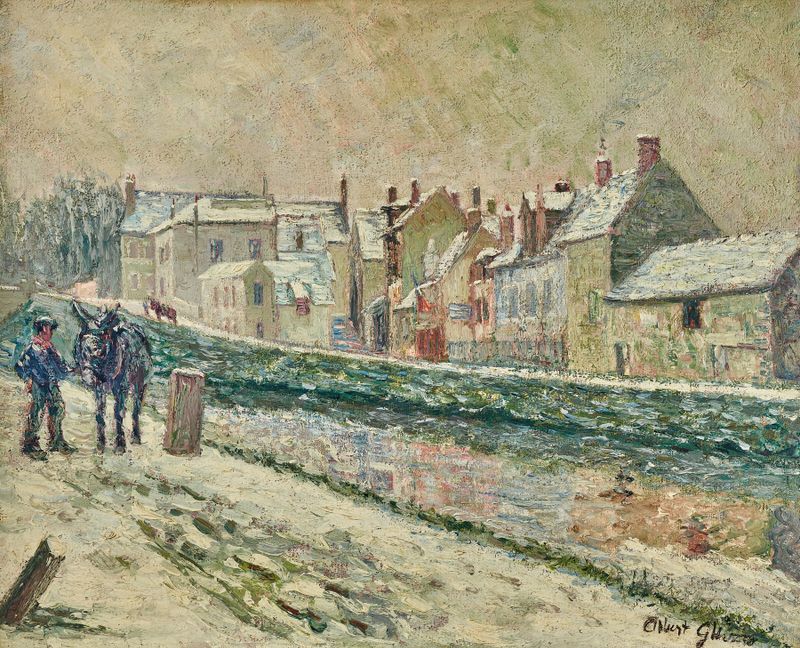
What if silence could speak through light? In Paysage de Picardie, the beauty of nature is rendered with an awe-inspiring clarity that invites contemplation and reverence. Focus on the horizon, where gentle curves of rolling hills meet a vast sky, painted in serene pastels. Notice how the brushstrokes dance across the canvas, creating a rhythmic texture that breathes life into the landscape. The interplay of light and shadow reveals a moment frozen in time, while vibrant greens and yellows harmonize to evoke the warmth of the sun filtering through the leaves.
Every detail, from the wispy clouds to the distant trees, invites you to explore the serene expanse, leading your eye deeper into the tranquil scene. Beneath the surface of this pastoral beauty lies a profound commentary on the relationship between humanity and nature. The juxtaposition of the soft landscape against the sharpness of the brushwork suggests a tension between the organic flow of life and the artist's deliberate hand. This contrast not only heightens the depth of the scene but also invites the viewer to reflect on the fragility of nature, underscoring a moment of stillness amid the cacophony of existence. In 1903, Gleizes was immersed in the burgeoning movement of Cubism, which sought to redefine artistic representation.
At this time, he was living in Paris, engaging with innovative ideas that challenged traditional perspectives. Painted in a period of artistic exploration, Paysage de Picardie reveals a moment of transition, where the artist balances his avant-garde approach with a love for the natural world, capturing a fleeting sense of peace that resonates through the ages.