
Portrait of Igor Stravinsky — History & Facts
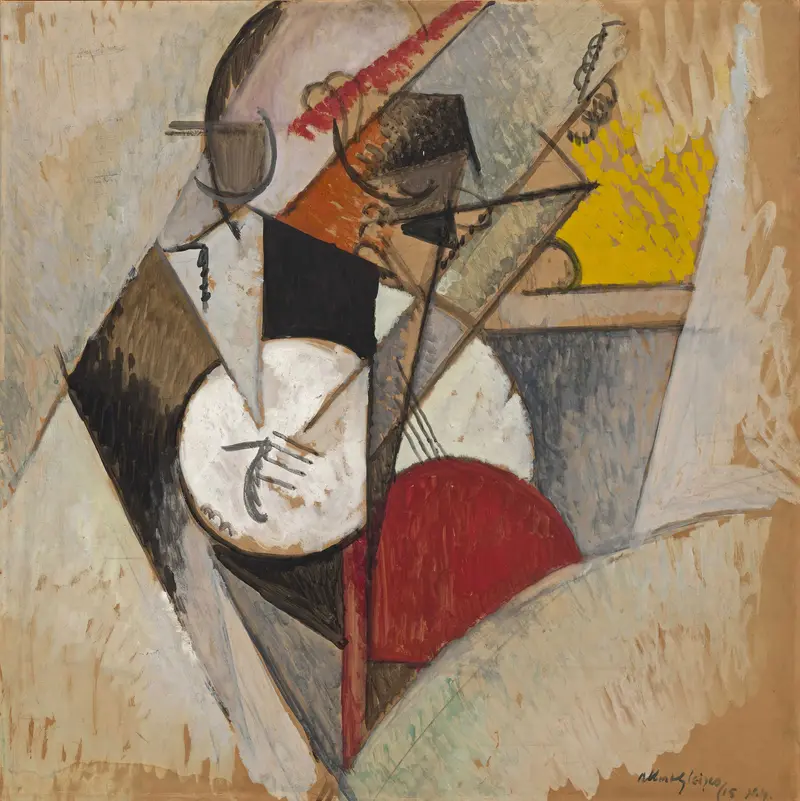
What first catches the eye is the way Albert Gleizes fractures the figure into sharp planes and bold color blocks, as if music itself has exploded onto the canvas. The sitter—identified in the title as Igor Stravinsky—emerges only gradually from a kaleidoscope of geometry: a head angled in thought, a hand poised above a sheet of music, the crisp front of a formal jacket. The composition pulses with energy, the lines and colors jostling like notes in a modern score.
Gleizes does not so much paint a portrait as orchestrate one, inviting us to see the composer not as a likeness but as a living force, mid-creation. This work was painted in 1914, at the height of the Cubist movement, when artists like Gleizes were breaking apart the old rules of representation. Portraiture, once the domain of faithful likeness, became a stage for experimentation and abstraction. In this painting, the musical staff and treble clef are unmistakable, anchoring the image in Stravinsky’s world, but the rest is suggestion and rhythm: the yellow arc might be a sleeve, the black wedge a shadowed lapel.
Such portraits were not made for family mantelpieces—they were declarations of a new way of seeing, born in the ferment of pre-war Paris. Now in the collection of MoMA, this painting stands as a record of that restless moment, still challenging us to look again, and listen.
More Artworks by Albert Gleizes

Paysage de Picardie
Albert Gleizes
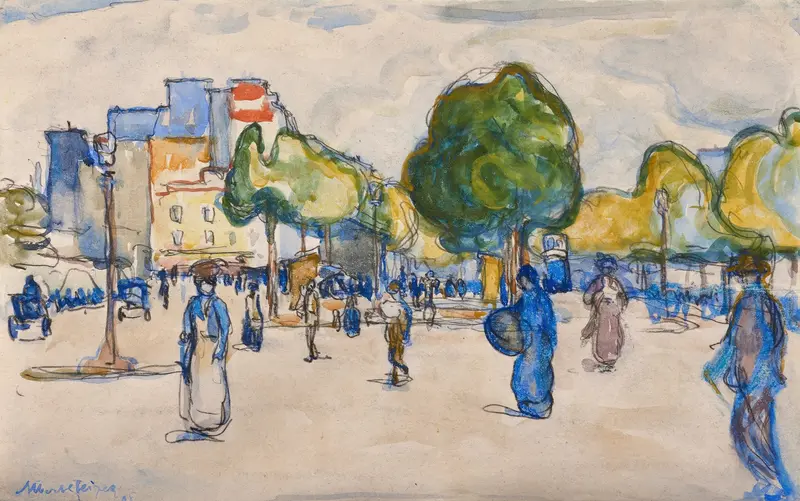
Place animée à Bagnères-de-Bigorre
Albert Gleizes
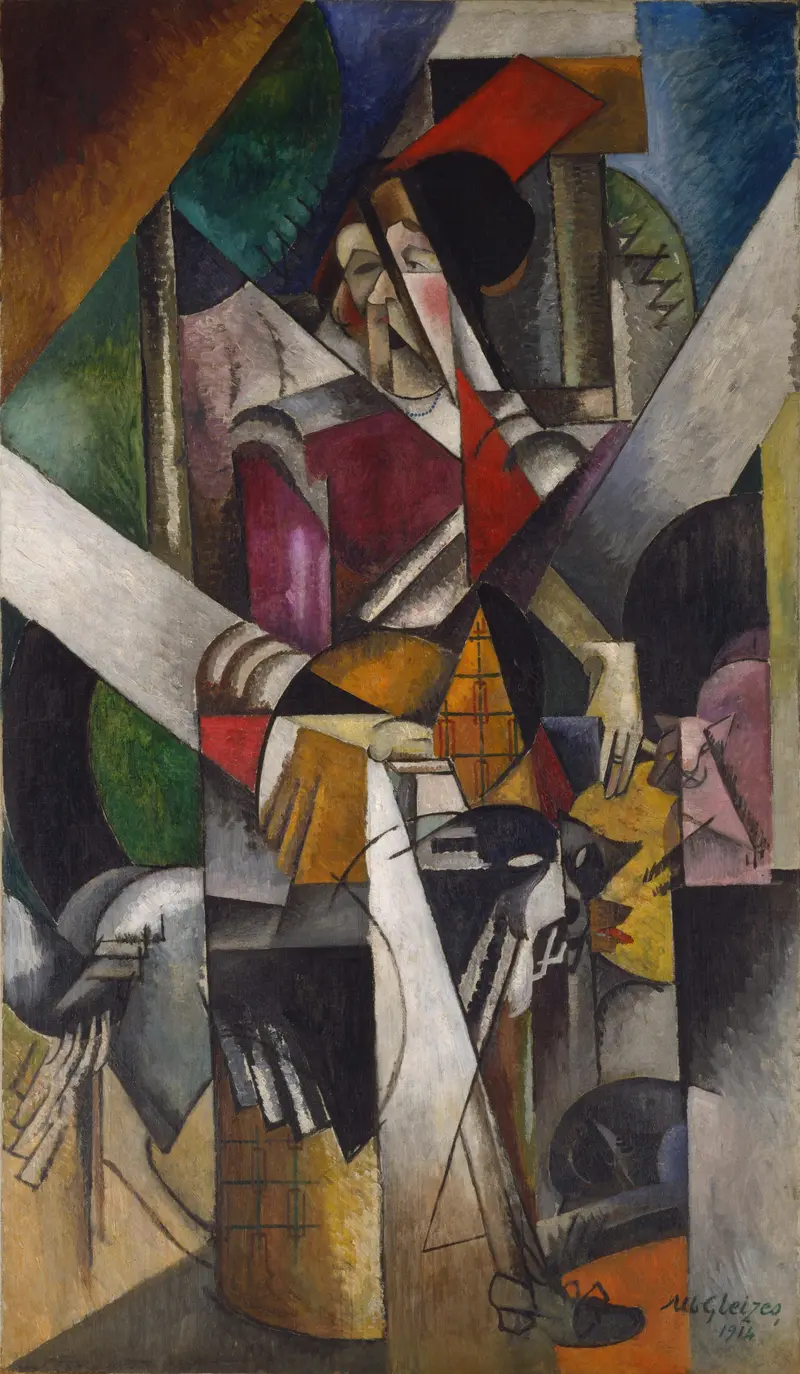
Woman with animals
Albert Gleizes
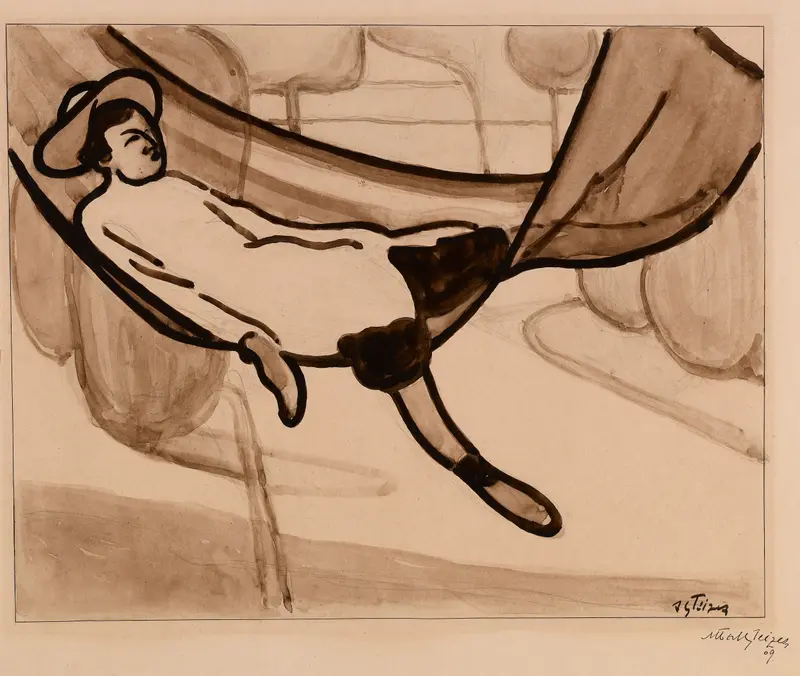
Man in a Hammock
Albert Gleizes
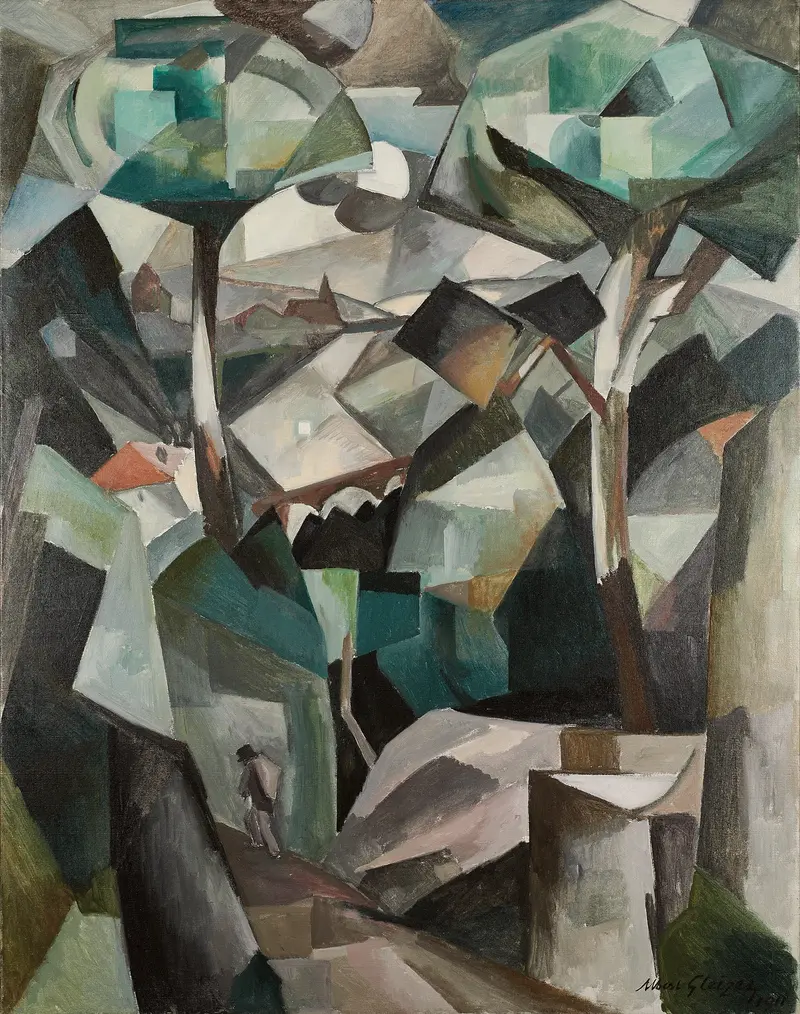
Le Chemin, Paysage à Meudon
Albert Gleizes
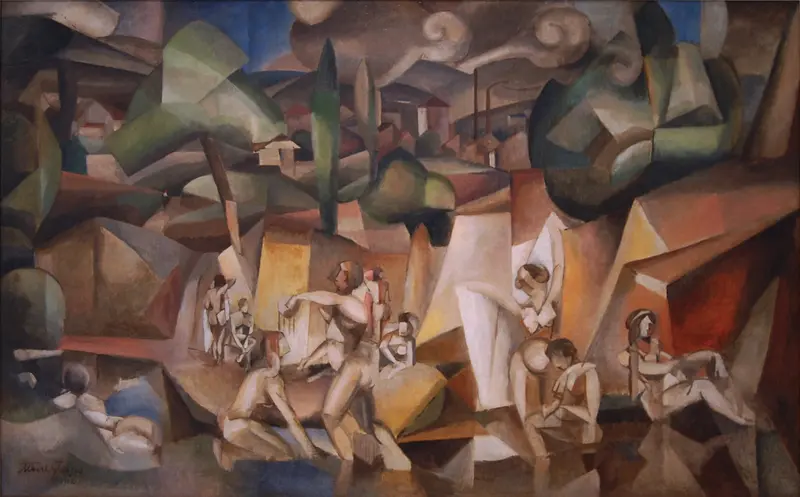
The Bathers
Albert Gleizes
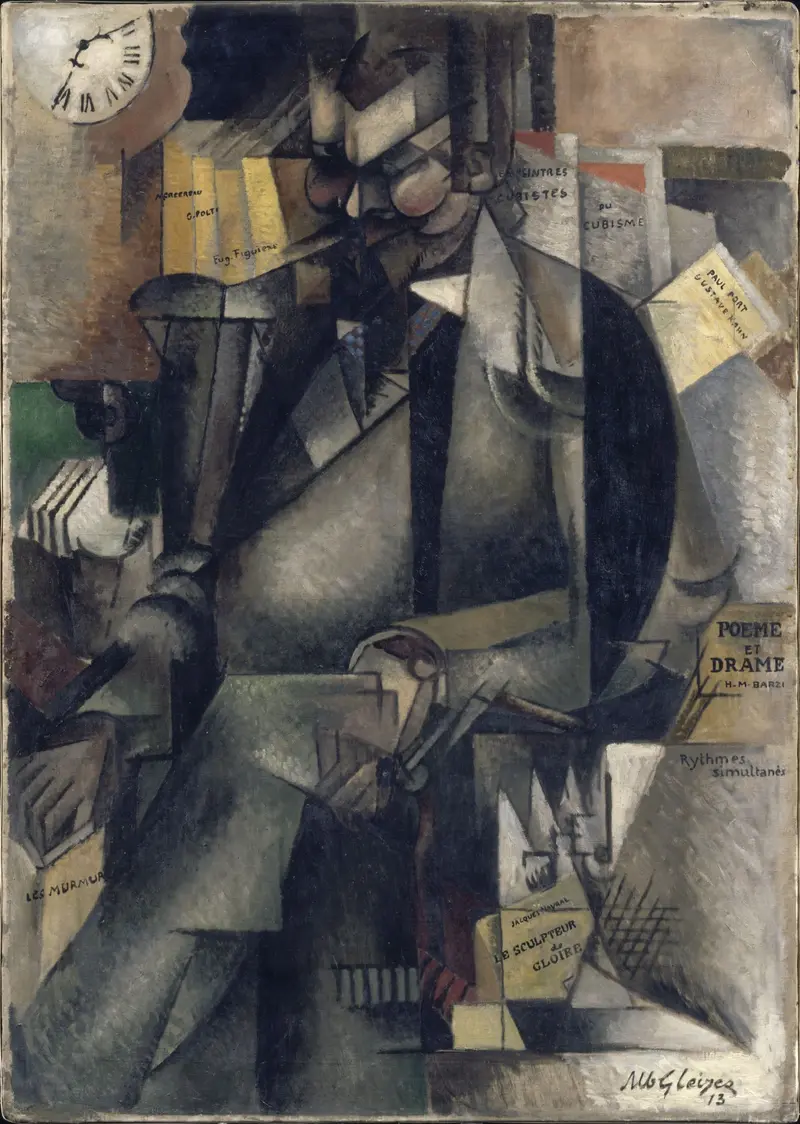
The Publisher Eugène Figuière
Albert Gleizes
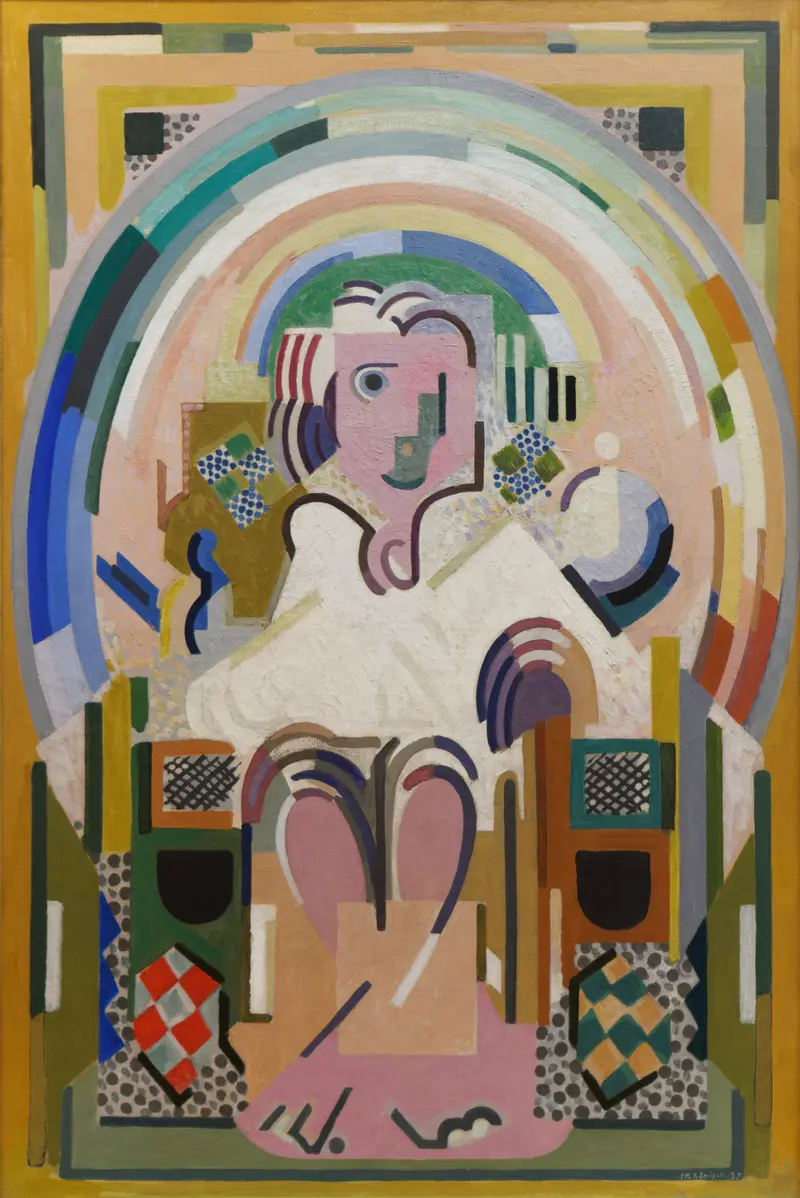
GLEIZES - Le législateur
Albert Gleizes
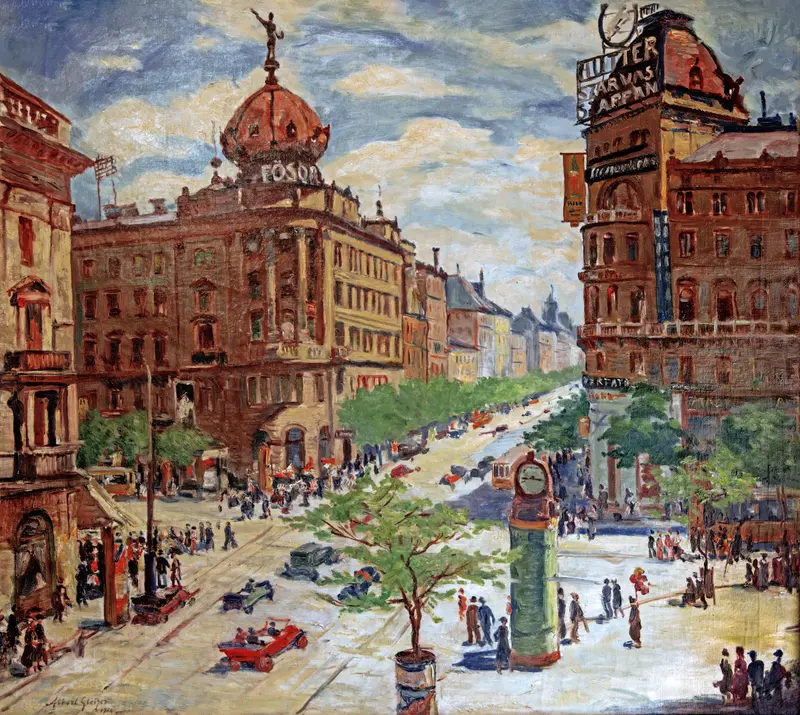
View of Budapest
Albert Gleizes
Composition for "Jazz"
Albert Gleizes





