
Pêcheurs à marée basse — History & Facts
What if beauty was never meant to be finished? In Pêcheurs à marée basse, a fleeting moment captures the raw truth of life along the shore, where the rhythm of the tide shapes both the landscape and the labor of the fishermen. Look closely at the foreground, where rugged figures bent over their nets speak of toil and dedication. The muted palette of earthy browns and blues contrasts with the shimmering light on the water’s surface, drawing the eye toward the gentle undulations of the tide. Notice how the soft brushwork captures the sky’s diffused glow, creating a serene backdrop that envelops the scene, while shadows delineate the figures, lending them an almost sculptural presence. Within this tranquil vista lies a profound tension between human endeavor and nature's indifference.
The fishermen, silhouetted against the sprawling horizon, embody resilience amidst the relentless ebb and flow of the sea. Additionally, the starkness of their task serves as a reflection of existential persistence — they work against time, grappling with the truth of their existence amidst the beauty of the bay. The calm interplay of light and shadow hints at the balance between struggle and serenity that defines the human experience. Eugène Isabey created this piece in 1855 during a period when he was deeply engaged in depicting maritime life, reflecting his own experiences as a traveler and painter along the French coast.
Amidst a broader movement that sought to capture the essence of nature, Isabey's work resonated with the Romantic era's emphasis on emotion and individual perception, marking a significant moment in the evolution of landscape painting.
More Artworks by Eugène Isabey
Browse all →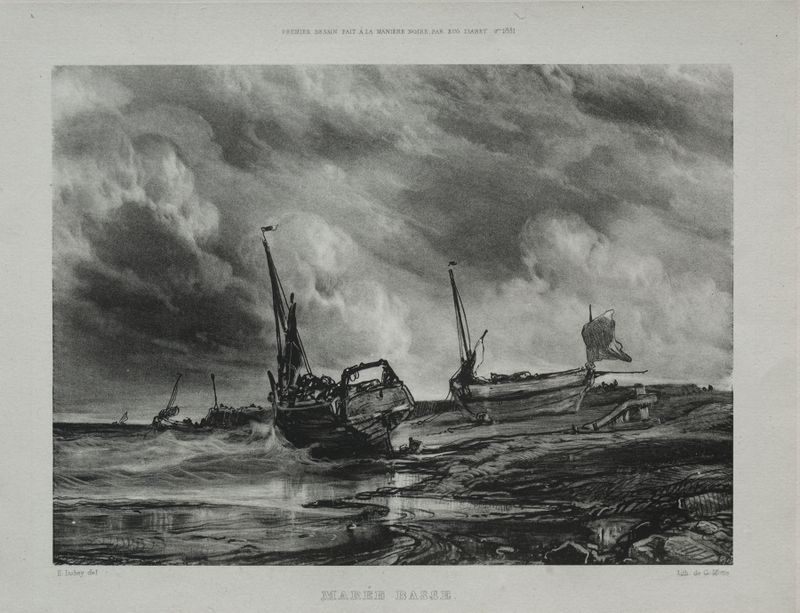
Marée basse
Eugène Isabey

Shipwreck
Eugène Isabey

Shipwreck
Eugène Isabey

The Wreck
Eugène Isabey
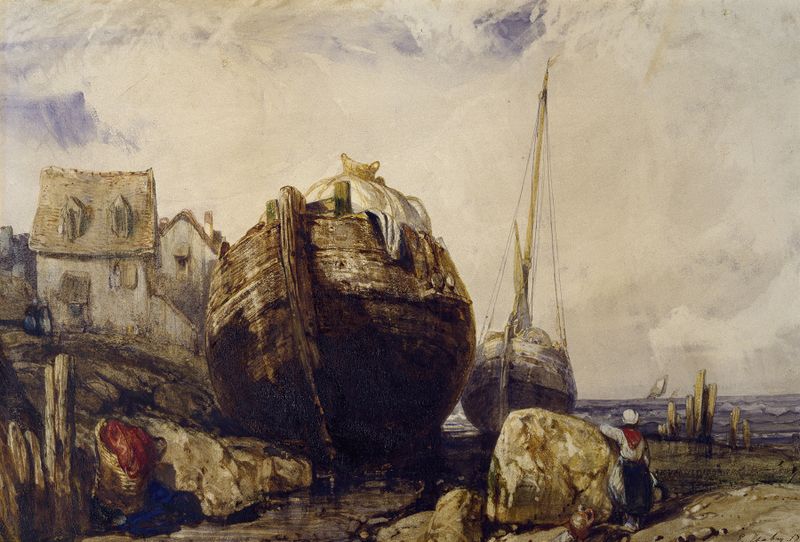
Fishing Boats
Eugène Isabey
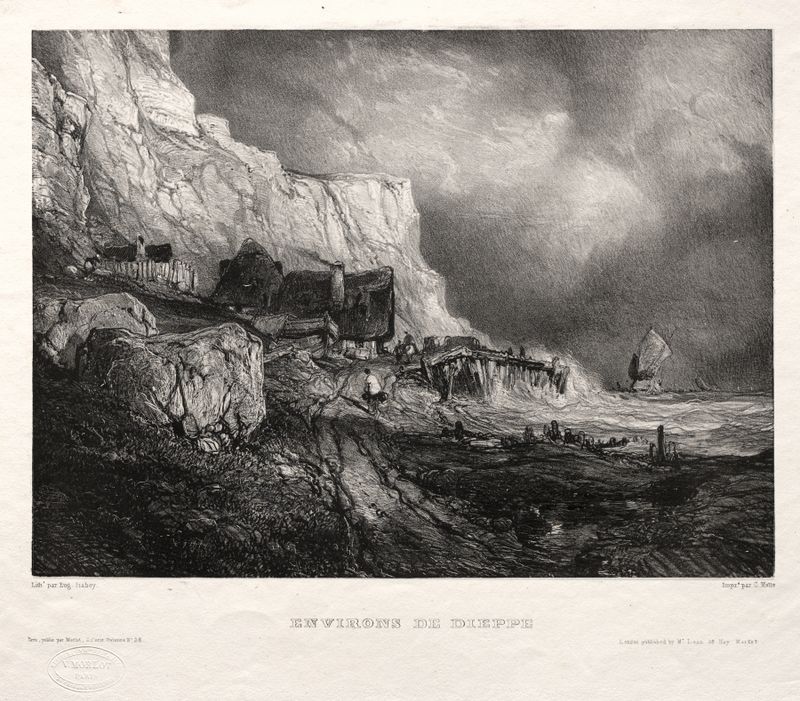
Environs de Dieppe
Eugène Isabey
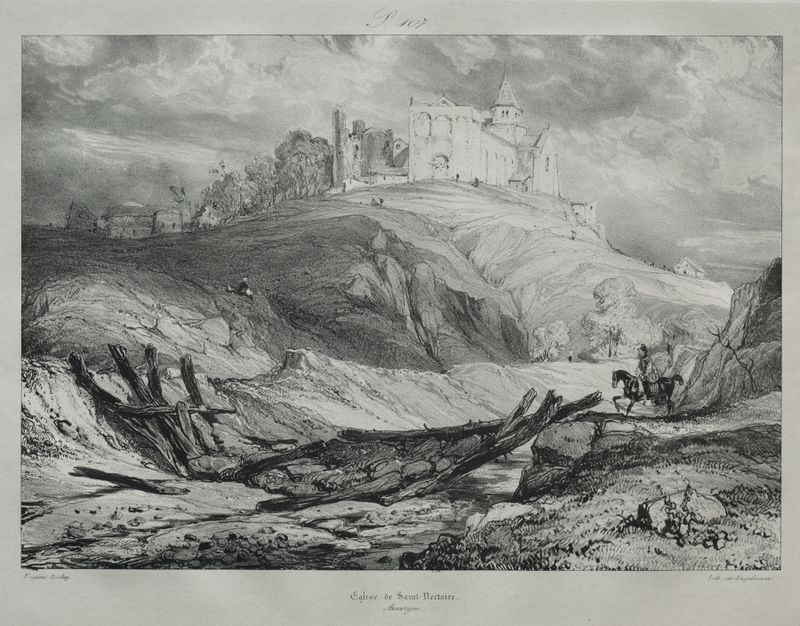
Église de St. Nectaire
Eugène Isabey

Fishing boat at the seaside
Eugène Isabey

Sunset on the Normandy Coast
Eugène Isabey
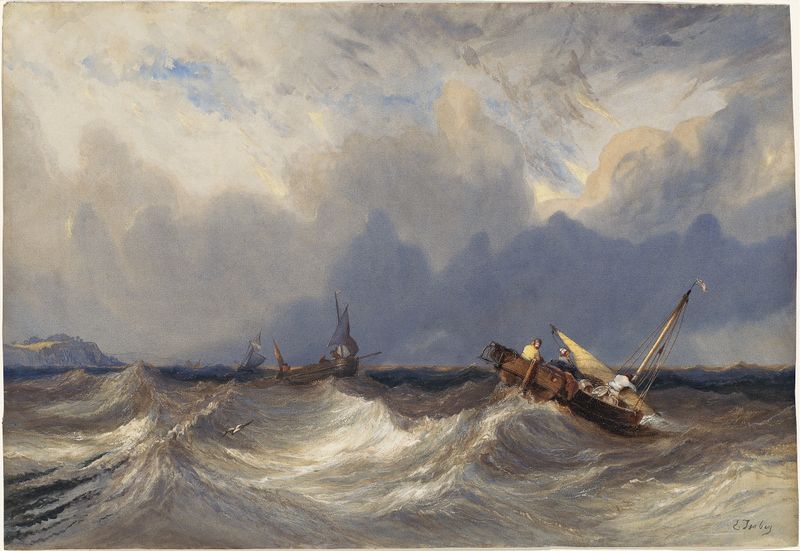
Fishing Boats Tossed before a Storm
Eugène Isabey





