
Peasant Feast — History & Facts
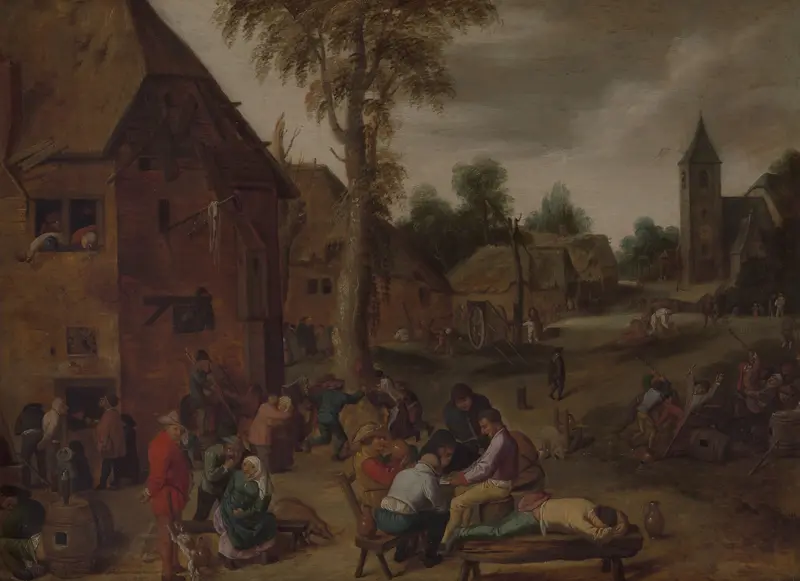
What grabs the eye first in Peasant Feast is the riot of gestures and faces, each one animated by drink, music, and the rough camaraderie of rural life. The painter, Adriaen Brouwer, leads us straight into the heart of the gathering: a fiddler leans back, lost in his tune, while his companions shout, laugh, and raise their mugs in raucous approval. The light falls thickly on their flushed cheeks and battered hats, picking out the glint of pewter and the pale sweep of a woman's apron as she restrains a child bent on mischief.
Every vessel and gesture is a clue—here, a jug stands ready for another round, there, a hand is thrown up in song or mock protest, and everywhere the air seems thick with the smell of ale and woodsmoke. This is the world of the early seventeenth-century Low Countries, where scenes of peasant revelry became a favored subject for collectors eager to display both humor and a touch of moral warning. Around 1625-1626, when this work was painted, such images by Brouwer and his contemporaries were prized for their lively brushwork and earthy wit—pictures meant for private rooms, not grand halls, where the follies of ordinary folk could amuse, instruct, or simply entertain. The painting’s journey has left few traces, but its survival in a collection today allows us to see how, centuries ago, the everyday pleasures and vices of village life were made into art.
Step closer, and let your eye wander: the story is in every face, every spill, every note of the fiddler’s tune.
More Artworks by Adriaen Brouwer

The Smokers
Adriaen Brouwer
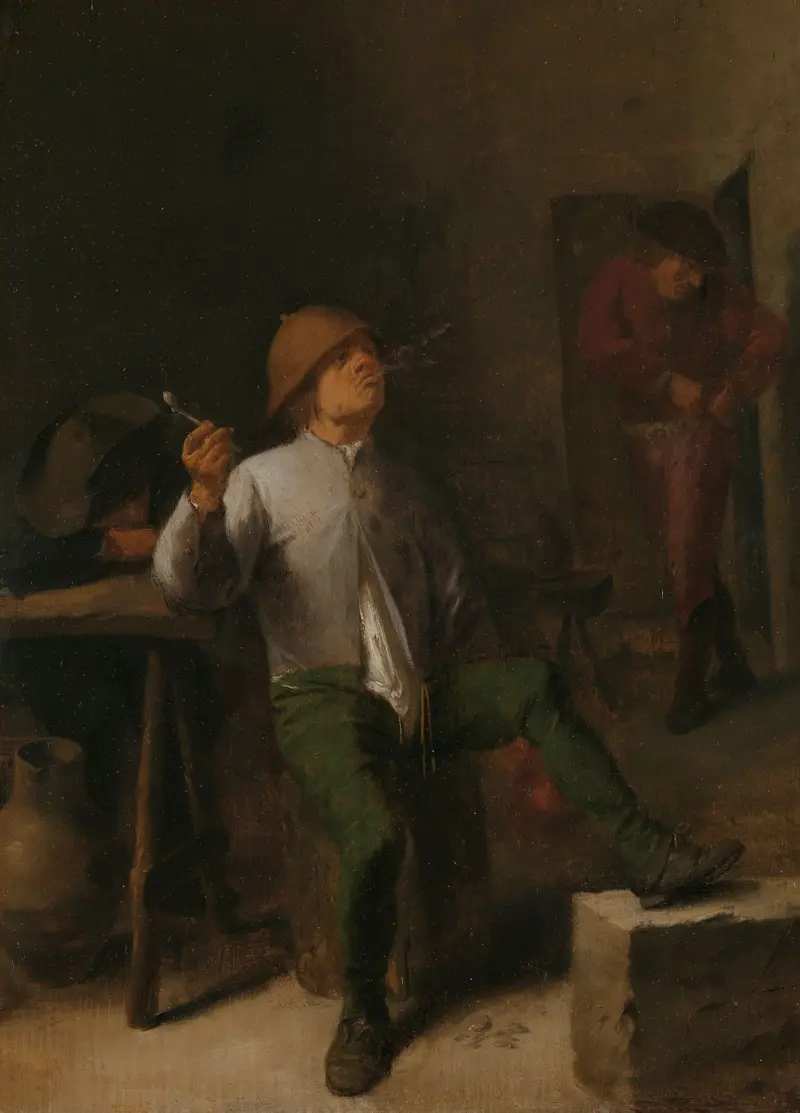
The Smoker
Adriaen Brouwer
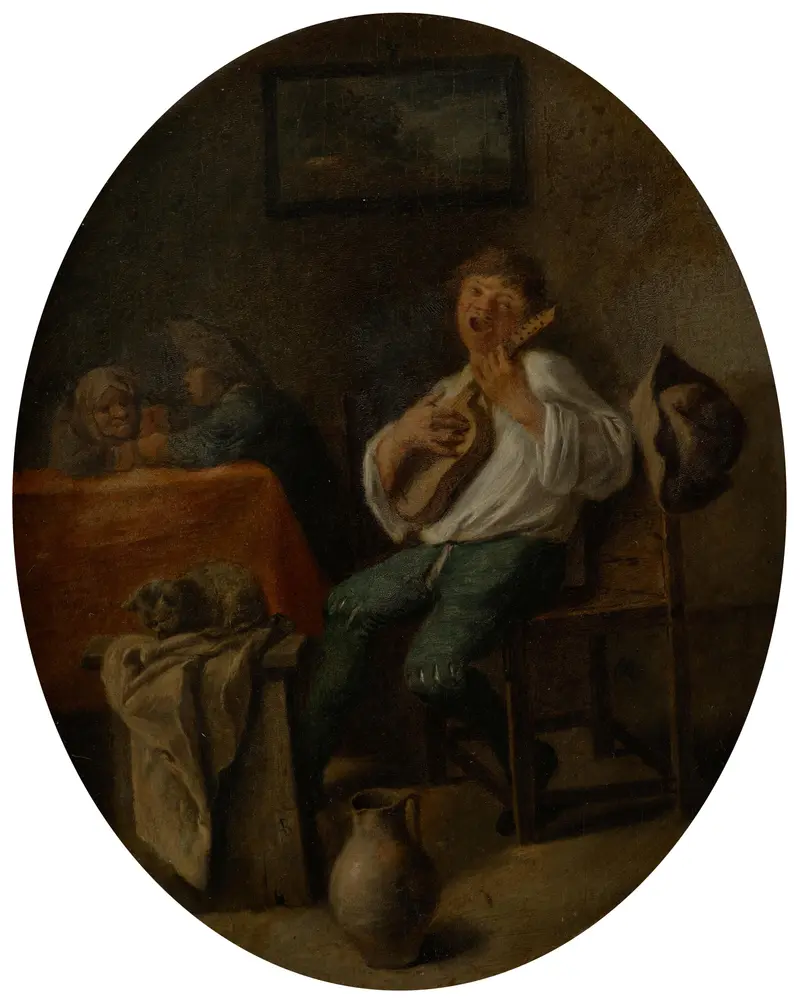
The Guitar Player
Adriaen Brouwer
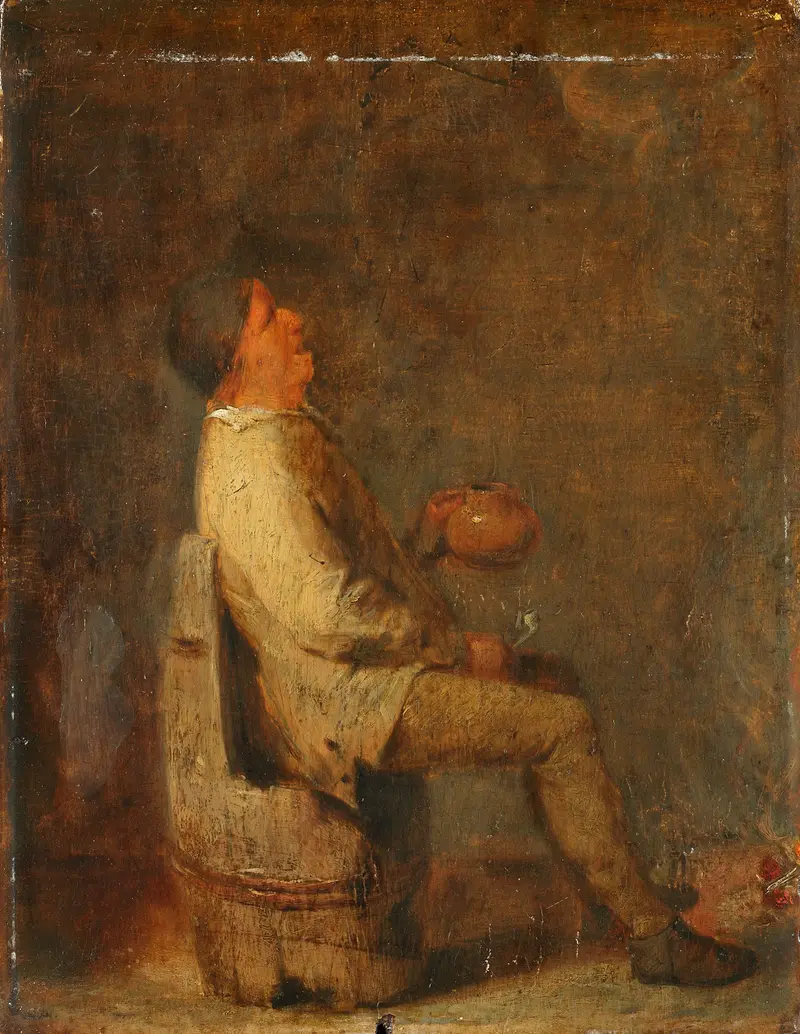
A Peasant Singing
Adriaen Brouwer
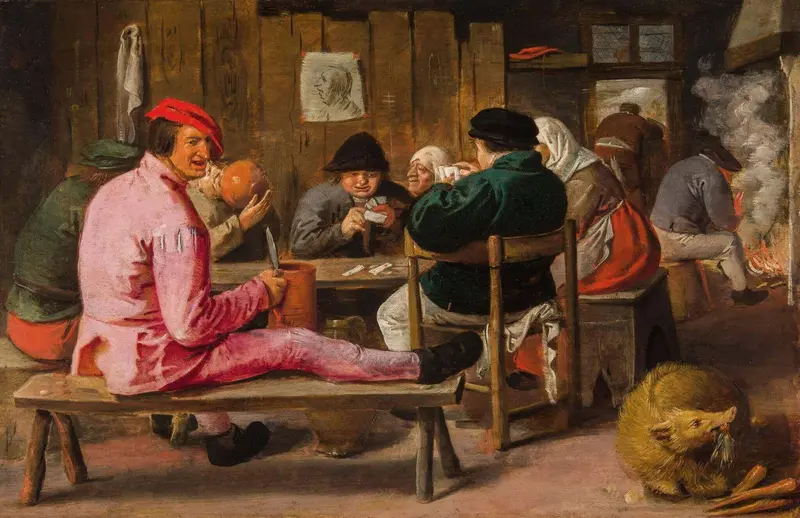
Merry Peasants in an Inn
Adriaen Brouwer
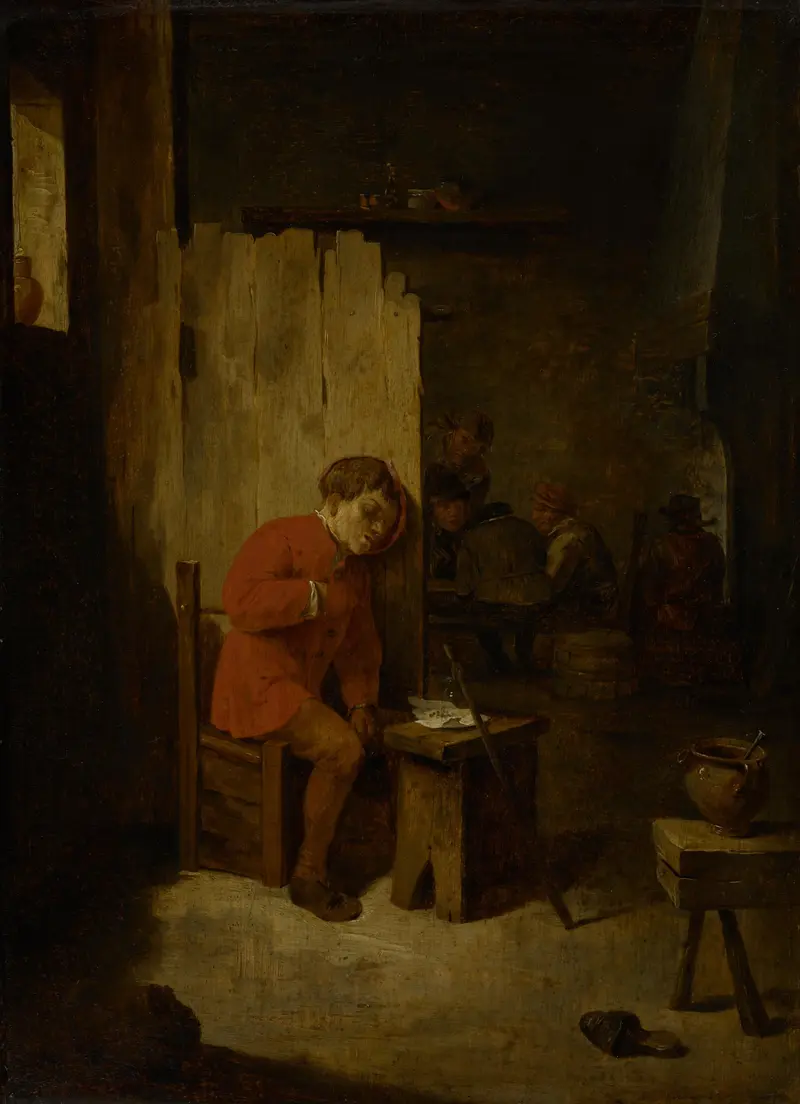
Nachahmer, Schlafender Bauer 853G Gemäldegalerie
Adriaen Brouwer
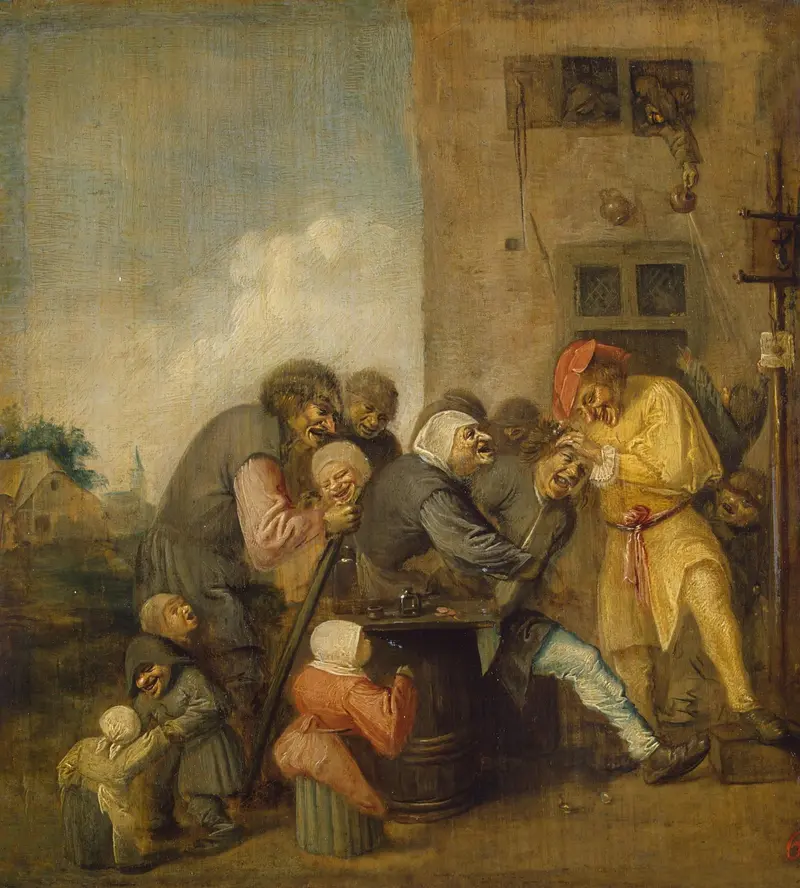
Village Charlatan (The Operation for Stone in the Head)
Adriaen Brouwer
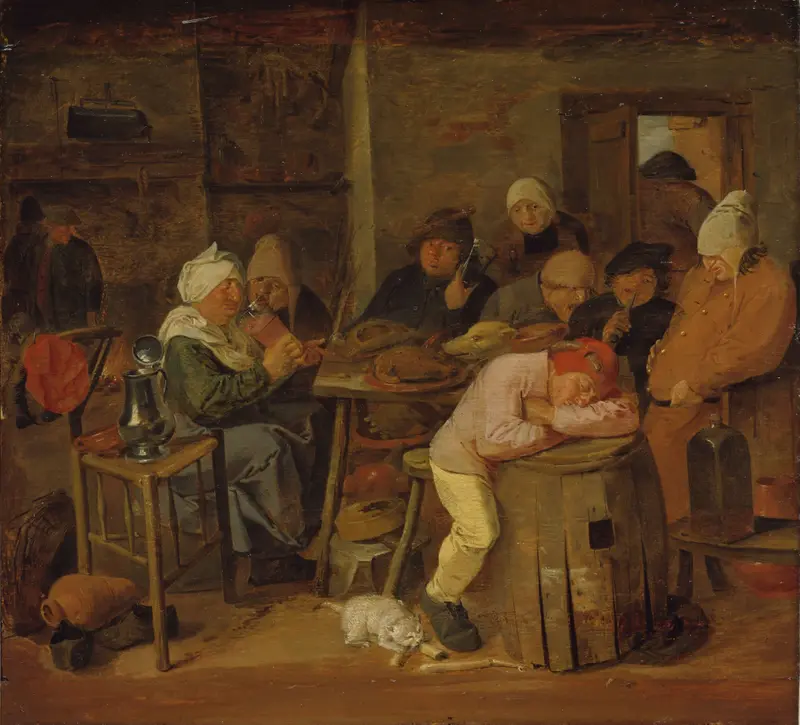
Peasants in an interior (The slaughter feast)
Adriaen Brouwer
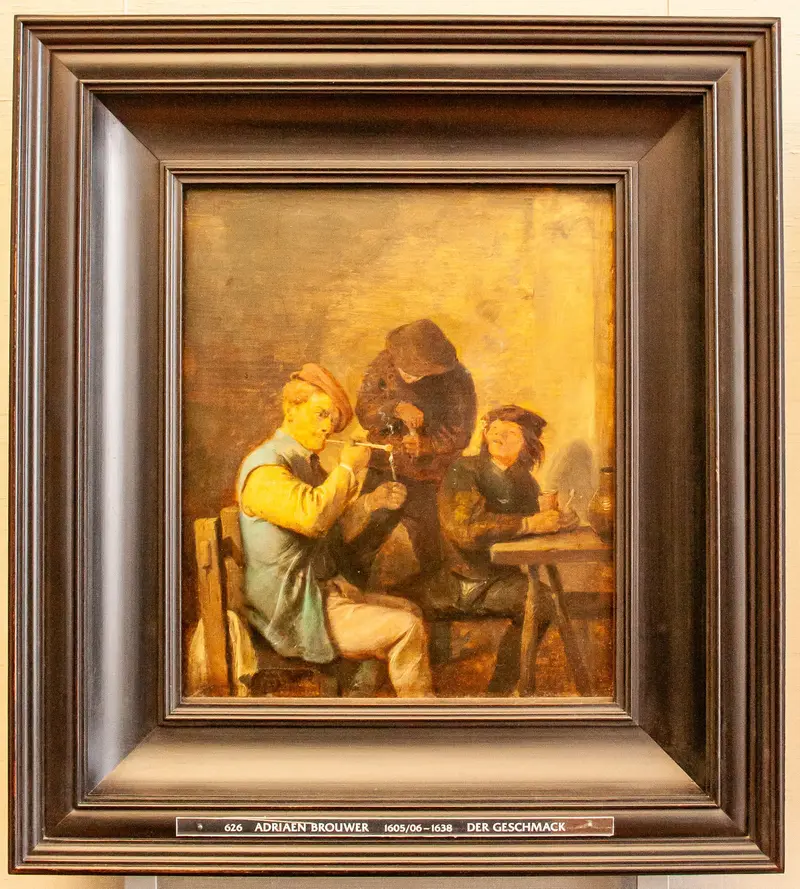
The Taste
Adriaen Brouwer
A Fair
Adriaen Brouwer
More Genre Scene Art

Banquet of the Officers of the St George Civic Guard
Frans Hals

Rembrandt and Saskia in the Scene of the Prodigal Son
Rembrandt van Rijn

Bal du moulin de la Galette
Pierre-Auguste Renoir

Quadrille at the Moulin Rouge
Henri de Toulouse-Lautrec

A Burial at Ornans
Gustave Courbet

When Will You Marry?
Paul Gauguin