
Peasant’s Cottage (recto) — History & Facts
A quietly remarkable aspect of Peasant’s Cottage (recto) is that it offers a rare glimpse into the everyday world of rural Holland, as seen through the eyes of Abraham Bloemaert, one of the leading figures of Dutch art in the late sixteenth and early seventeenth centuries. Unlike his grand religious altarpieces or mythological scenes, this work turns its attention to the humble and ordinary—a subject that would later become central to Dutch Golden Age painting. The precise date and circumstances of its creation remain unknown, adding an air of mystery to its origins and purpose. In the scene, we are invited to linger outside a weathered cottage, its thatched roof sagging under the weight of years.
A peasant figure, perhaps returning from the fields, is caught mid-step, while a dog waits by the doorway and chickens scratch in the dirt. Bloemaert’s careful attention to the textures of wood, straw, and earth brings the rural setting to life, while the play of light across the cottage façade suggests the passing of a quiet afternoon. Unlike the bustling, moralizing village scenes of Pieter Bruegel the Elder, Bloemaert’s approach here is intimate and almost contemplative, focusing on the dignity and simplicity of rural existence rather than on narrative drama. The physical history of Peasant’s Cottage (recto) is not fully documented, a common fate for works depicting everyday life rather than grand narratives or illustrious patrons.
It likely began as a study or independent work, reflecting Bloemaert’s keen interest in landscape and genre subjects, which he explored alongside his more formal commissions. Over time, such images would become highly sought after by collectors eager for glimpses of Dutch rural life. Today, the work is preserved in a museum collection, valued both as a window onto the artist’s versatility and as an early example of the genre scenes that would come to define Dutch art for generations.
More Artworks by Abraham Bloemaert

Adam and Eve
Abraham Bloemaert
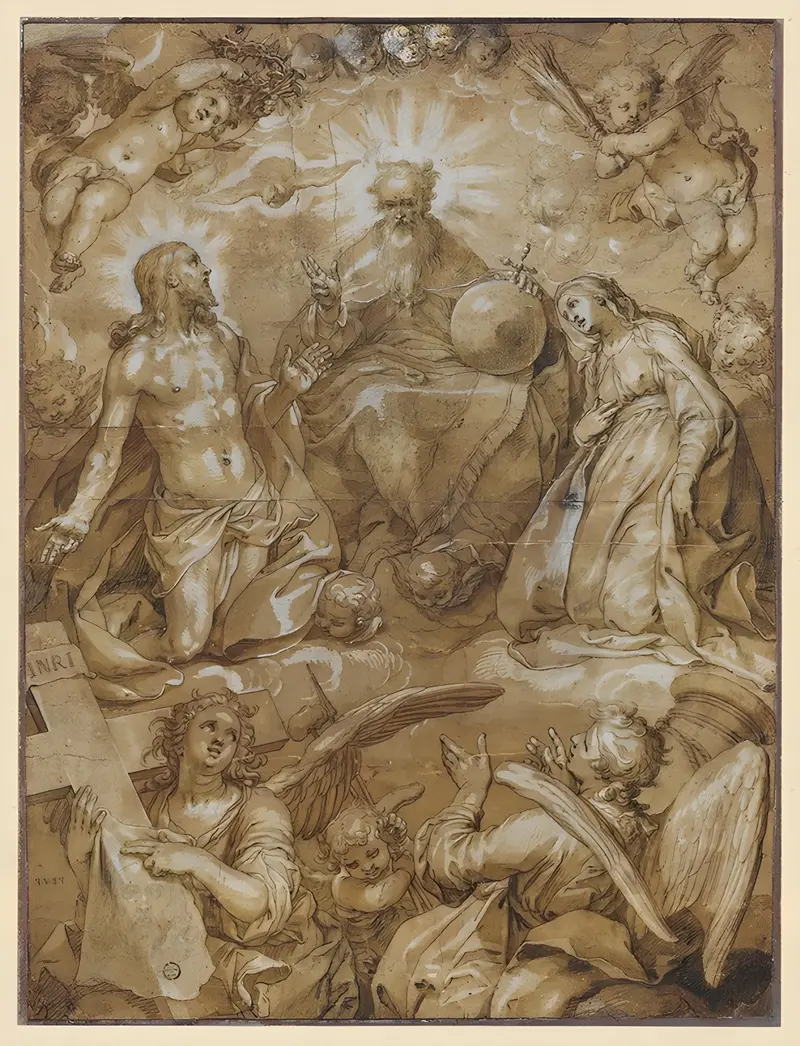
Intercession of Christ and Mary before God the Father
Abraham Bloemaert
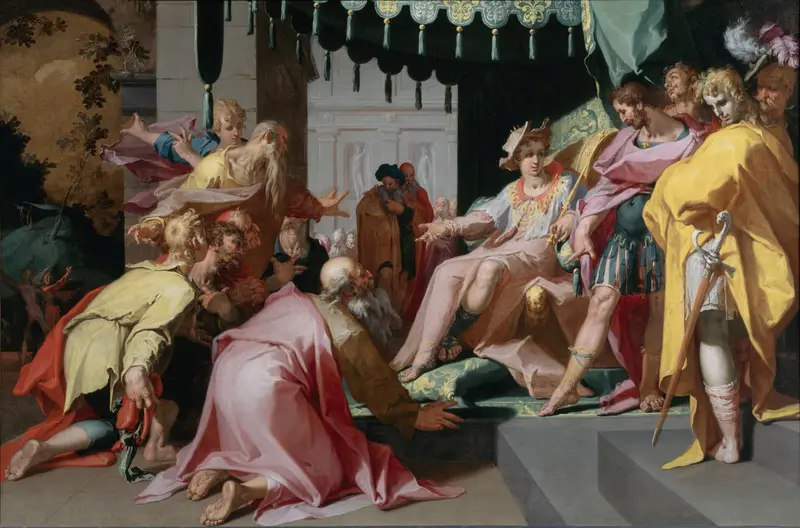
Joseph and his Brothers
Abraham Bloemaert
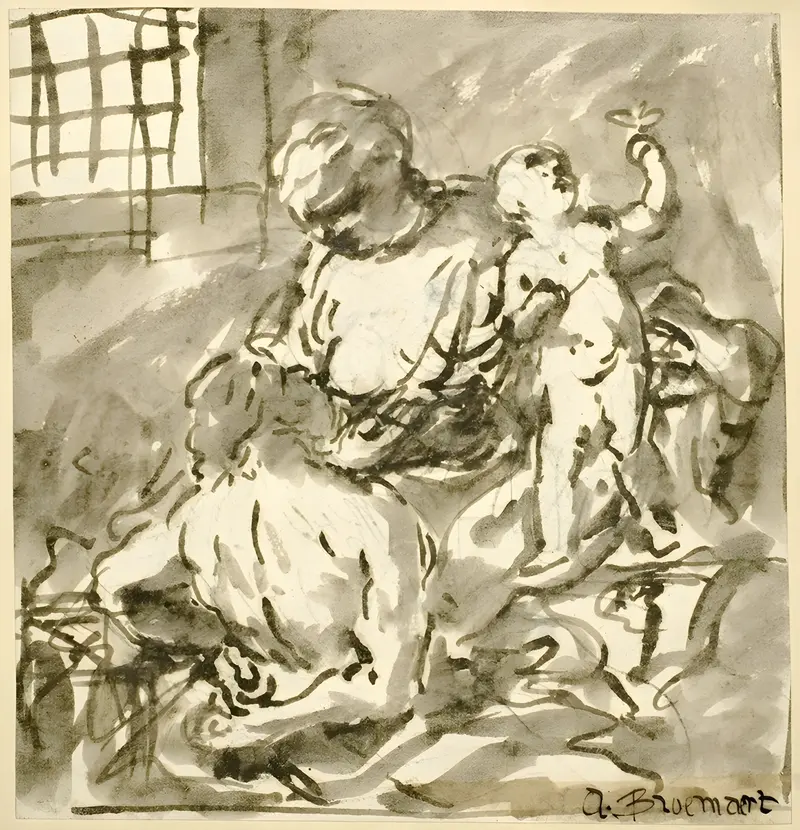
Caritas Romana
Abraham Bloemaert
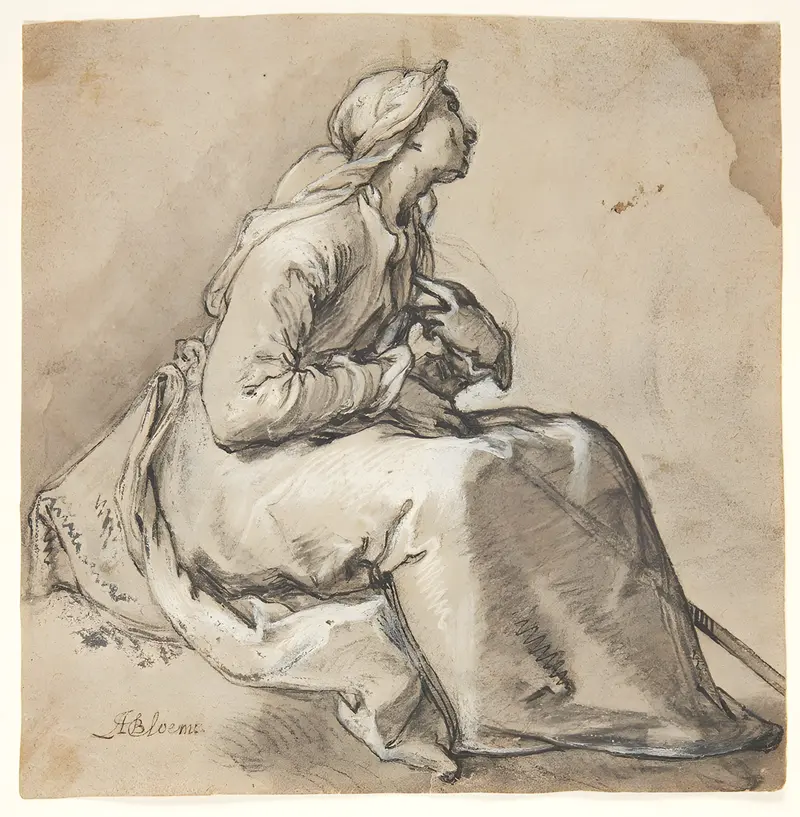
A seated woman facing right
Abraham Bloemaert
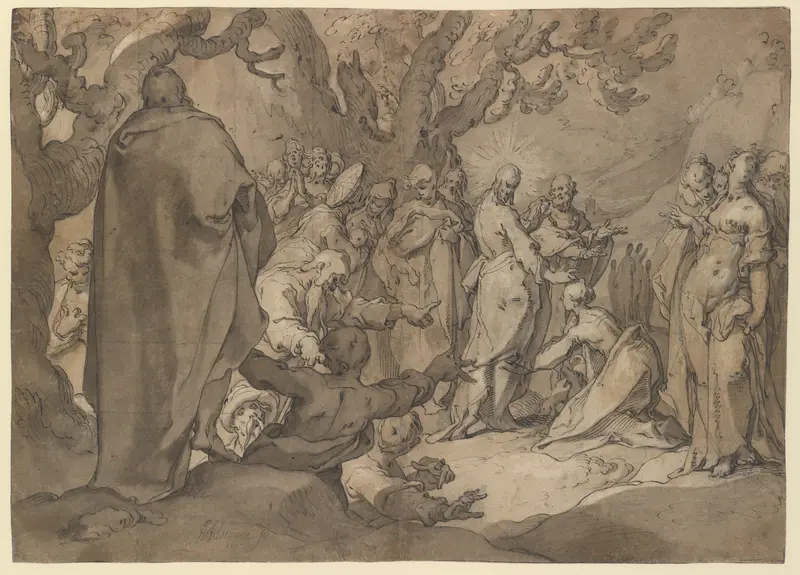
Christ and the Canaanite Women
Abraham Bloemaert
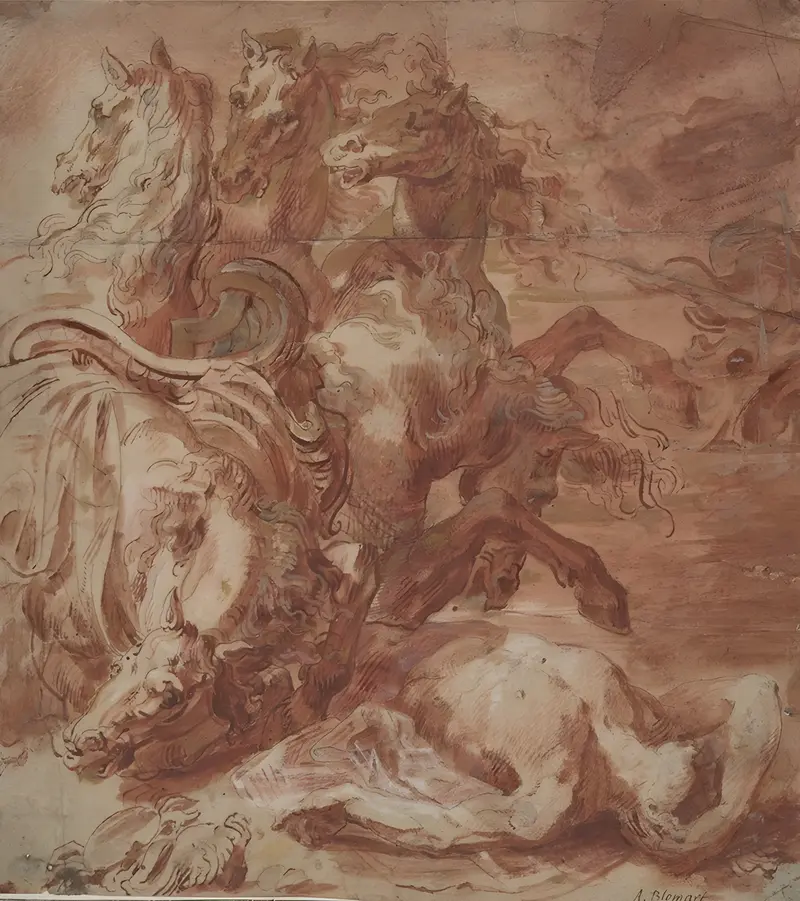
Hippolytus
Abraham Bloemaert
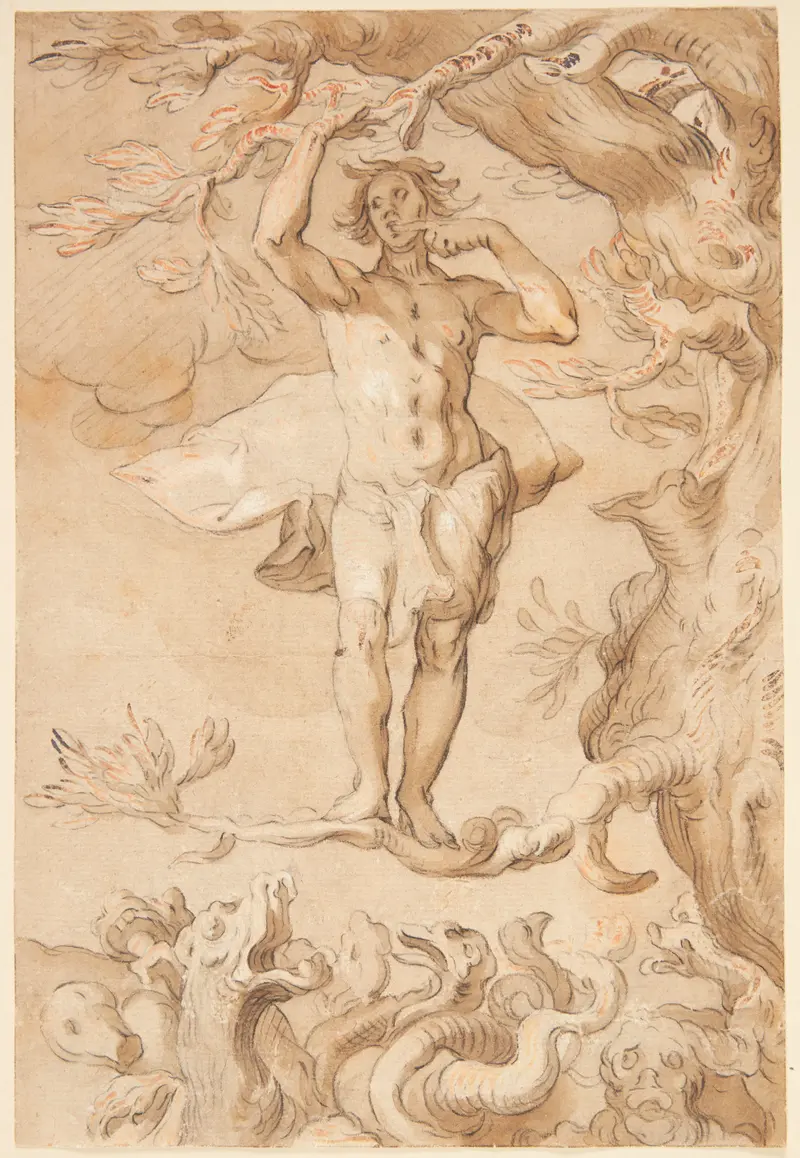
Den menneskelige glædes skrøbelighed En mand, der jages af en drage, klynger sig til en gren, mens han slikker honning af sin finger
Abraham Bloemaert

Moses Striking the Rock
Abraham Bloemaert
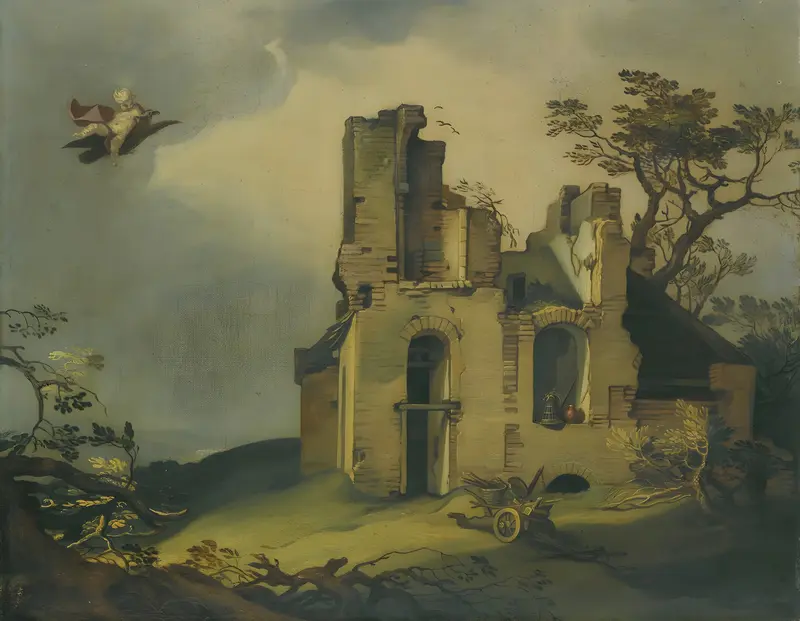
A Landscape With Ruins, With The Rape Of Ganymede
Abraham Bloemaert
More Genre Scene Art

Banquet of the Officers of the St George Civic Guard
Frans Hals

Rembrandt and Saskia in the Scene of the Prodigal Son
Rembrandt van Rijn

Bal du moulin de la Galette
Pierre-Auguste Renoir

Quadrille at the Moulin Rouge
Henri de Toulouse-Lautrec

A Burial at Ornans
Gustave Courbet

When Will You Marry?
Paul Gauguin