
Peasant Woman Seated in the Grass — History & Facts
When Peasant Woman Seated in the Grass appeared at the Salon des Indépendants in Paris in 1883, it was met with confusion as much as curiosity—critics noted the painting’s "odd mistiness," a direct result of Georges Seurat’s early experiments with optical color mixing. This work stands at the threshold of a revolution: just before Seurat would fully develop the Pointillist technique that would make him famous. Here, he is caught in the act of discovery, still working out the science of color and light that would soon upend the art world.
It is a rare glimpse into the laboratory of a painter on the verge of changing how we see. A young woman, her back slightly hunched, sits alone in a patch of grass, her simple dress blending with the earth beneath her. The moment is quiet, almost meditative—she is neither at work nor at rest, but somewhere in between, her gaze lost in thought. The brushwork is soft, the outlines blurred, as if the summer air itself is vibrating around her.
Seurat’s choice to render the figure with such restraint, using muted greens and browns, marks a sharp contrast with the vivid, sunlit peasantry of Jean-François Millet or the bold, energetic strokes of Vincent van Gogh. Instead, Seurat invites us to pause, to notice the harmony between the woman and her surroundings, hinting at the dignity and solitude of rural life. The painting’s provenance is less dramatic than its artistic significance; it was never commissioned, and its early history remains somewhat obscure, typical for studies and sketches from Seurat’s formative years. It is believed to have remained in the artist’s studio until after his untimely death in 1891, when many such works were dispersed among friends and collectors.
Today, Peasant Woman Seated in the Grass is valued not only as an artwork in its own right, but as a crucial step in the evolution of Neo-Impressionism. It stands as a testament to Seurat’s relentless pursuit of a new visual language—a quiet, searching moment before the dazzling parade of dots.
More Artworks by Georges Seurat
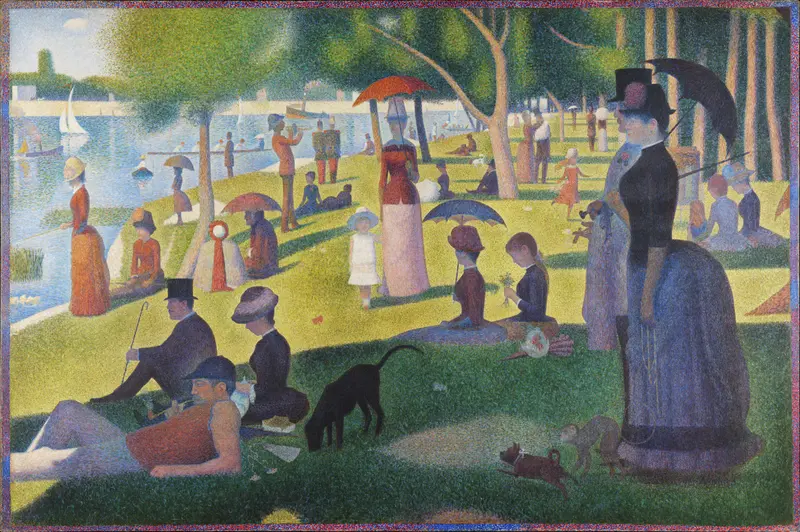
A Sunday Afternoon on the Island of La Grande Jatte
Georges Seurat
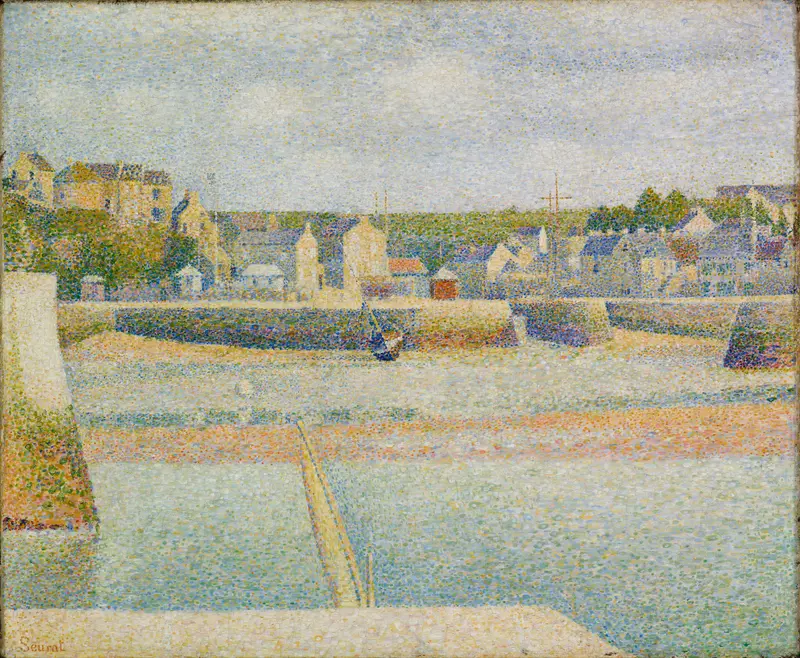
Port-en-Bessin, The Outer Harbor (Low Tide)
Georges Seurat
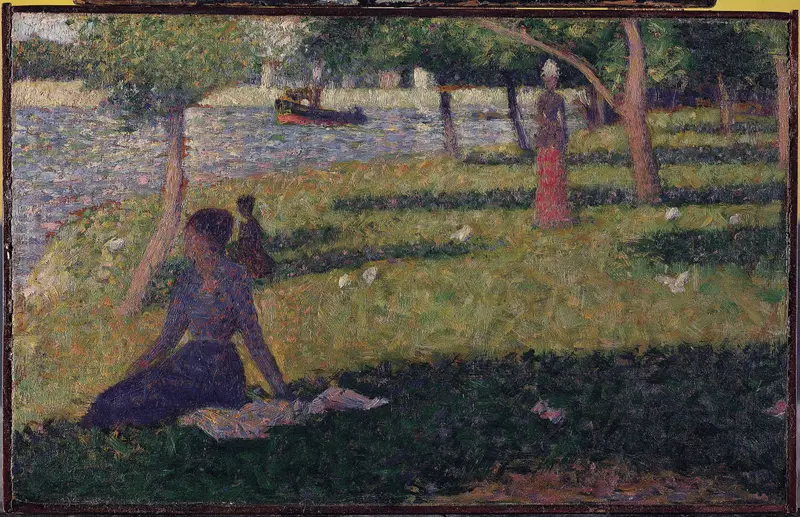
Étude pour ‘La Grande Jatte’ (Study for ‘La Grande Jatte’)
Georges Seurat
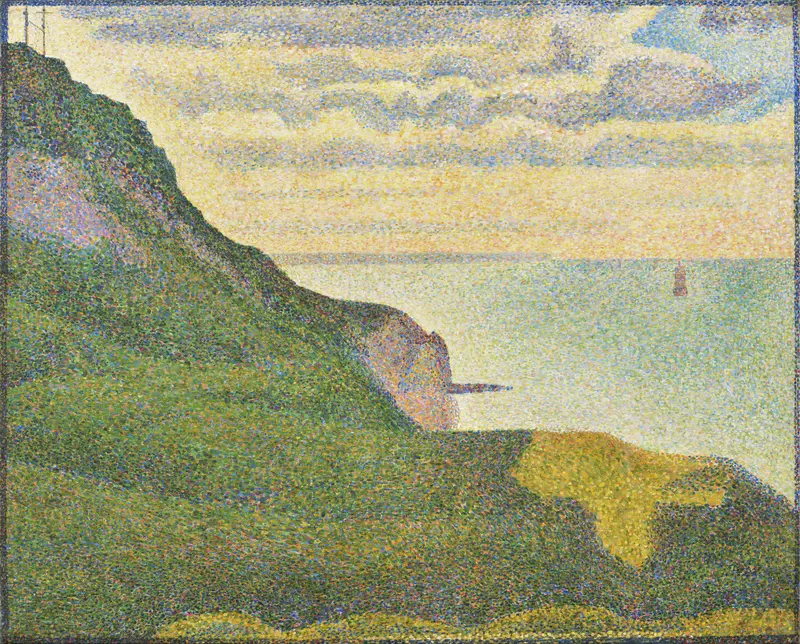
Seascape at Port-en-Bessin,Normandy
Georges Seurat
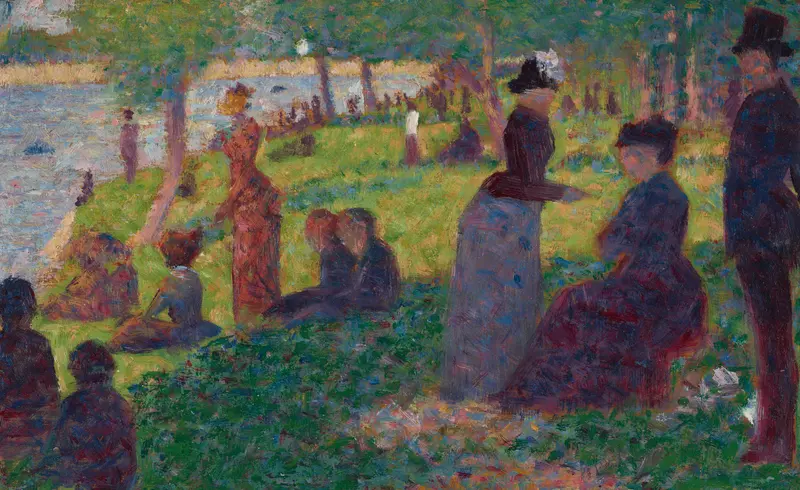
Oil Sketch for "A Sunday on La Grande Jatte — 1884"
Georges Seurat
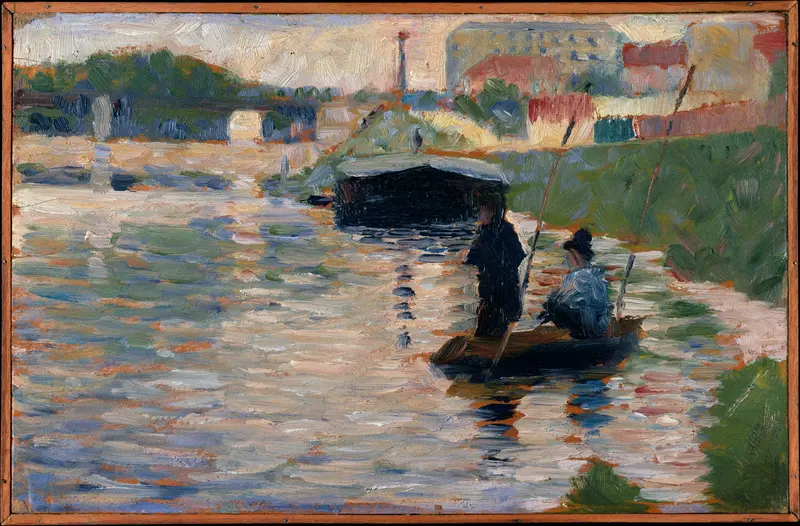
View of the Seine
Georges Seurat
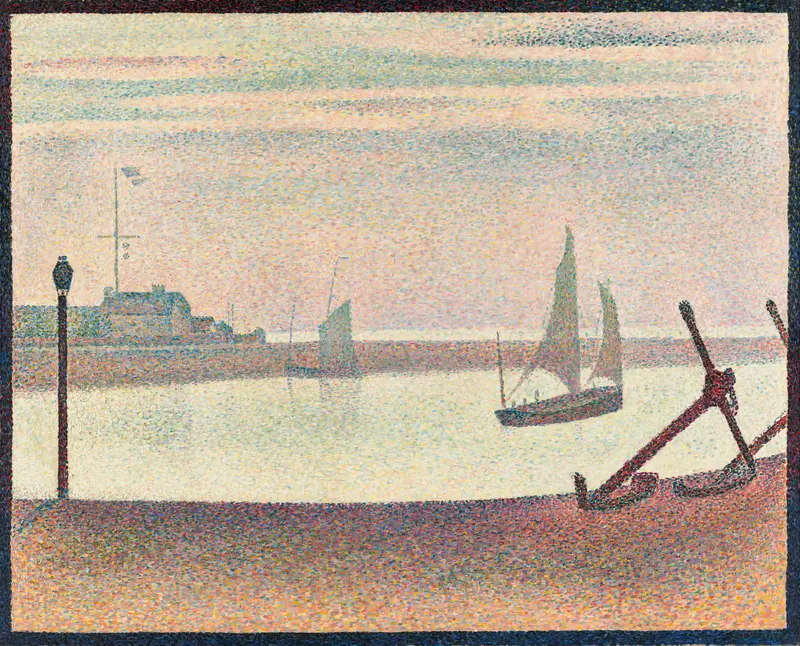
The Channel at Gravelines, Evening
Georges Seurat
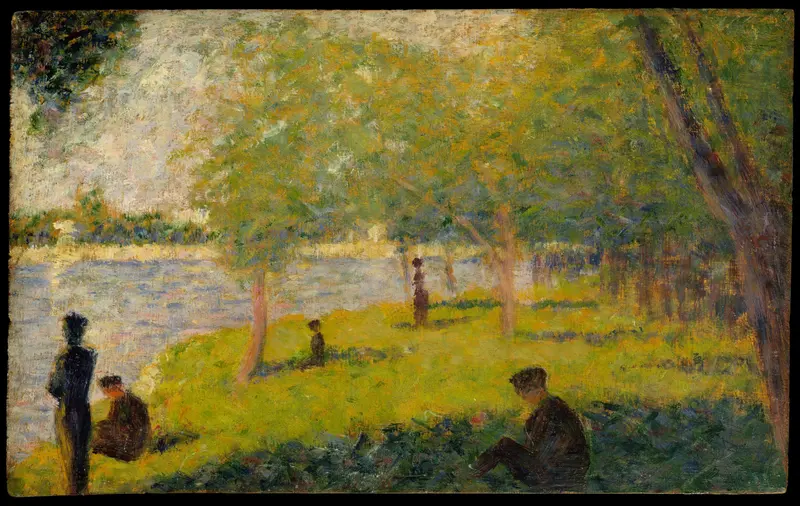
Study for ‘A Sunday on La Grande Jatte’
Georges Seurat
Study for A Sunday on La Grande Jatte
Georges Seurat
The Channel of Gravelines, Petit Fort Philippe
Georges Seurat
More Genre Scene Art

Banquet of the Officers of the St George Civic Guard
Frans Hals

Rembrandt and Saskia in the Scene of the Prodigal Son
Rembrandt van Rijn

Bal du moulin de la Galette
Pierre-Auguste Renoir

Quadrille at the Moulin Rouge
Henri de Toulouse-Lautrec

A Burial at Ornans
Gustave Courbet

When Will You Marry?
Paul Gauguin