
Peeckelhaering (The merry reveler) — History & Facts
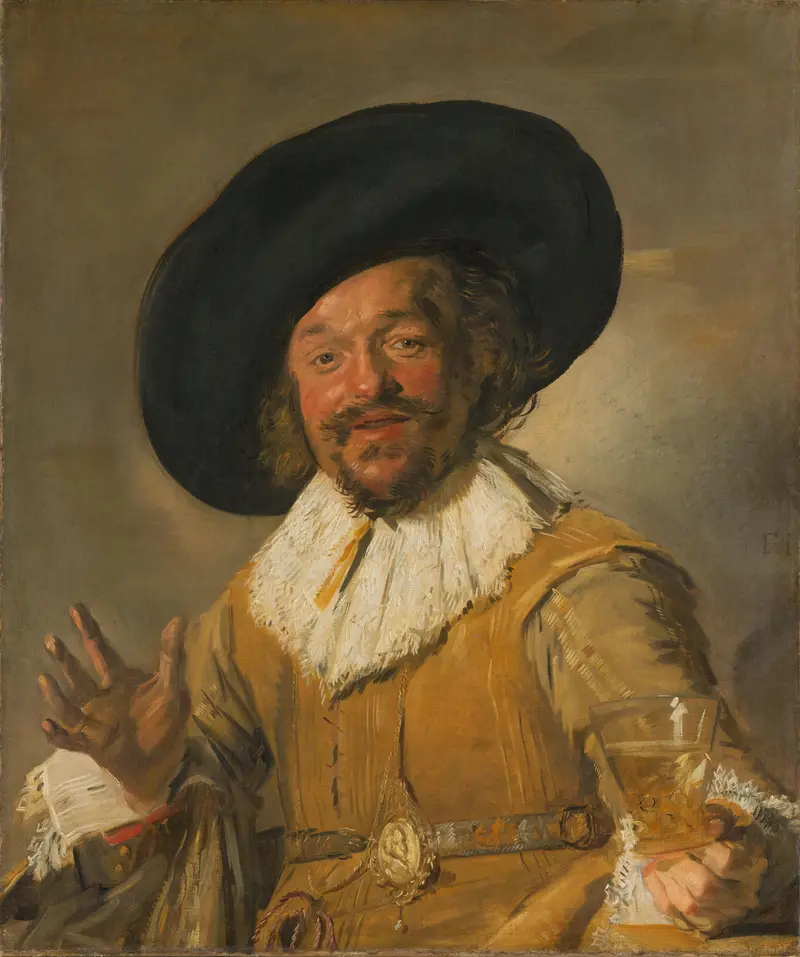
Few paintings of the Dutch Golden Age have given rise to as much cheerful speculation as Peeckelhaering (The merry reveler) by Frans Hals. The subject, a red-nosed, laughing man with a tankard in hand, was so popular in seventeenth-century Haarlem that the word "Peeckelhaering" became slang for a habitual drinker. The painting’s fame was such that it inspired numerous copies and engravings in its own time, and even today, several versions exist, making it a touchstone for debates about authenticity and attribution in Hals’s oeuvre. At the heart of the image is a moment of raucous, infectious laughter.
The reveler, caught mid-toast, leans forward as if to invite the viewer to join in his merriment. His open mouth, sparkling eyes, and flushed cheeks signal the effects of drink, while the pewter tankard and the extravagant, feathered cap speak to the pleasures of tavern life. The loose, rapid brushwork—so characteristic of Frans Hals—gives the figure a sense of spontaneity and immediacy.
Unlike the more moralizing tone of Jan Steen’s tavern scenes, Hals here offers no overt warning, only the exuberance of the moment. The precise origins of this particular version remain uncertain, as is often the case with Frans Hals’s genre portraits. It is thought to have been painted around 1628, when Hals was at the height of his powers and demand for his lively character studies was growing. While the identity of the sitter is unknown—perhaps a Haarlem actor or a local wit—the painting has long been admired for its vitality.
Over the centuries, Peeckelhaering has passed through private hands before entering public collections, and today it stands as a testament to Hals’s unrivaled ability to capture the fleeting joys of everyday life.
More Artworks by Frans Hals

Banquet of the Officers of the St George Civic Guard
Frans Hals

Portrait of Jacob Pietersz Olycan (1596-1638)
Frans Hals
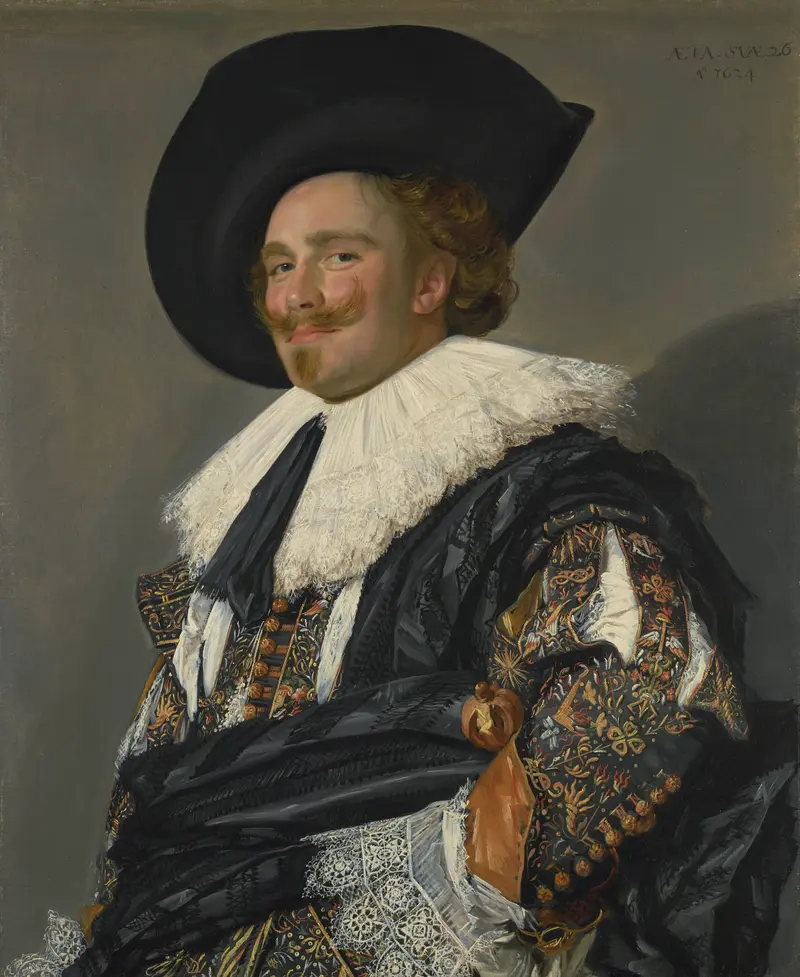
Laughing Cavalier
Frans Hals

Militia Company of District XI under the Command of Captain Reynier Reael, Known as ‘The Meagre Company’
Frans Hals
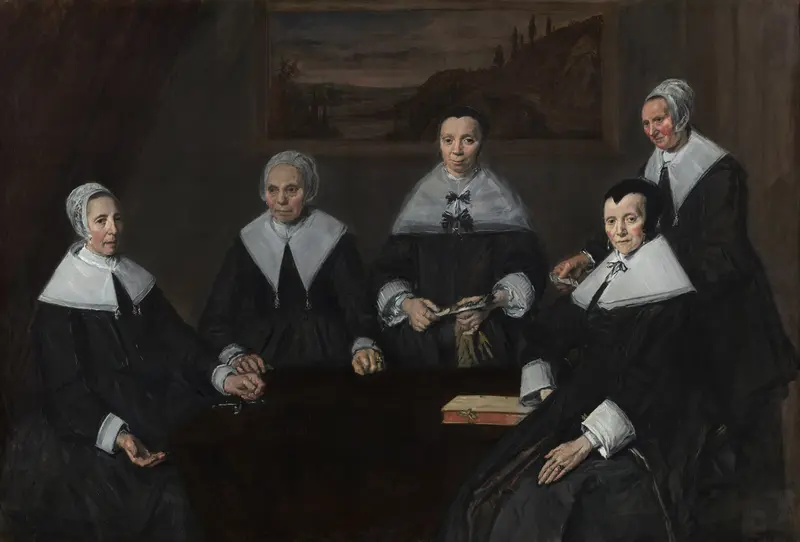
Regentesses of the Old Men's Alms House
Frans Hals
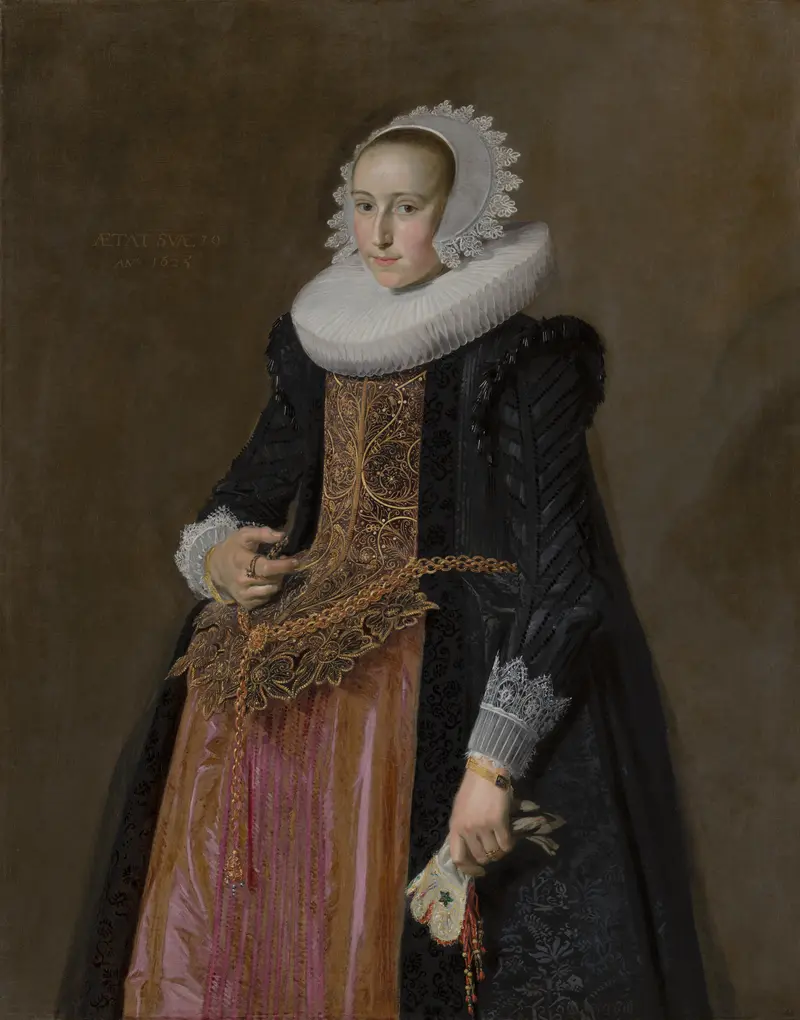
Portrait of Aletta Hanemans (1606–1653)
Frans Hals
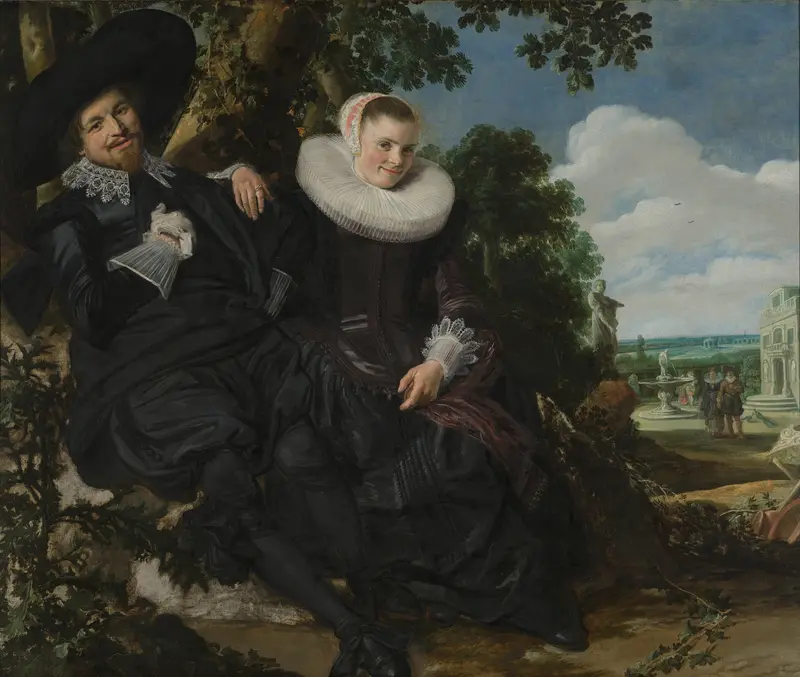
Portrait of a Married Couple, Likely Isaac Abrahamsz Massa and Beatrix van der Laen
Frans Hals
The Merry Drinker
Frans Hals
Portrait of Paulus Verschuur
Frans Hals
Portrait of Pieter van den Broecke
Frans Hals
More Genre Scene Art
Banquet of the Officers of the St George Civic Guard
Frans Hals

Rembrandt and Saskia in the Scene of the Prodigal Son
Rembrandt van Rijn

Bal du moulin de la Galette
Pierre-Auguste Renoir

Quadrille at the Moulin Rouge
Henri de Toulouse-Lautrec

A Burial at Ornans
Gustave Courbet

When Will You Marry?
Paul Gauguin